Updated October 2026 · Reviewed for current Texas market ranges
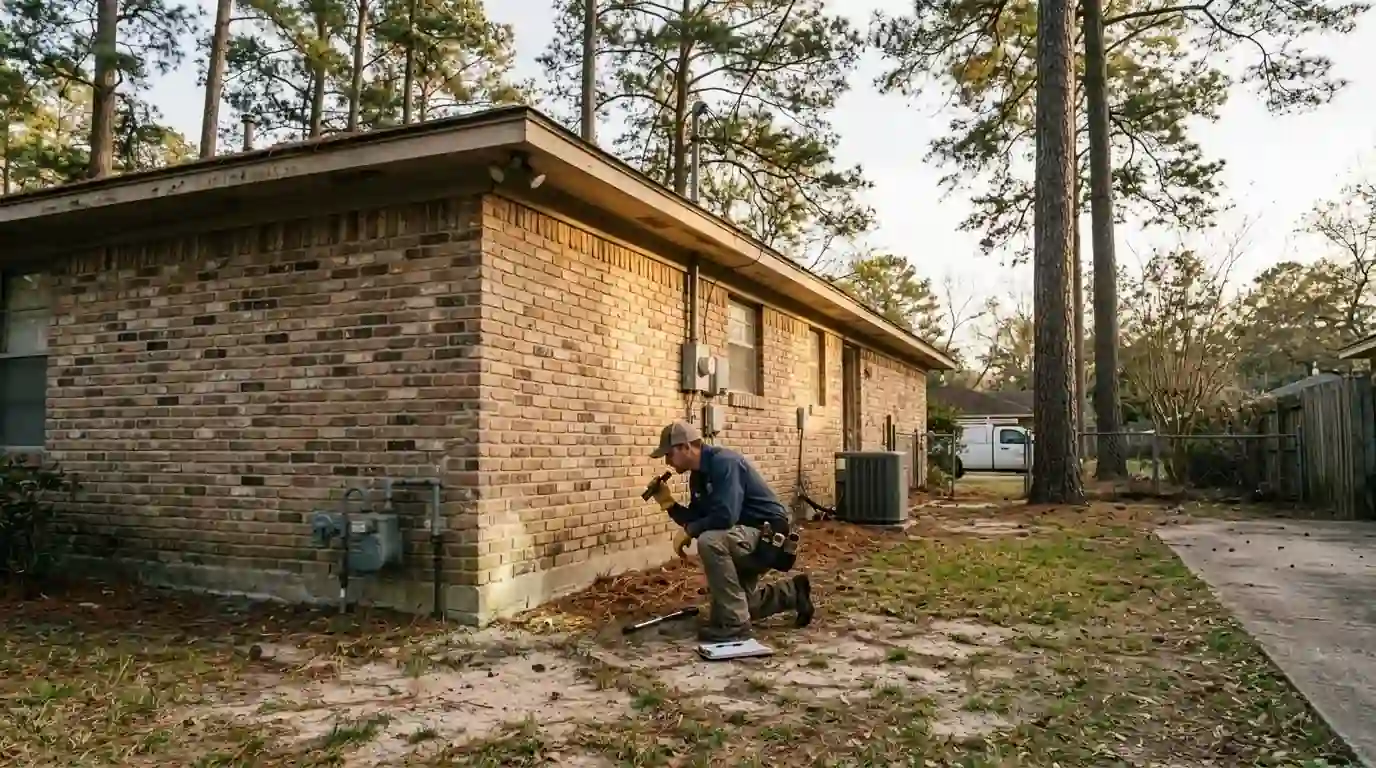
Ant control in Conroe, TX starts with species identification, because the bait that collapses one colony gets ignored by another: sugar-feeding house ants, protein-cycling fire ants and bait-resistant crazy ants each need a matched approach. The treatment pairs interior baits the workers carry home with a non-repellent exterior barrier, so the colony dies instead of detouring.
Why the spray bottle keeps losing
Kill the colony or meet the trail again
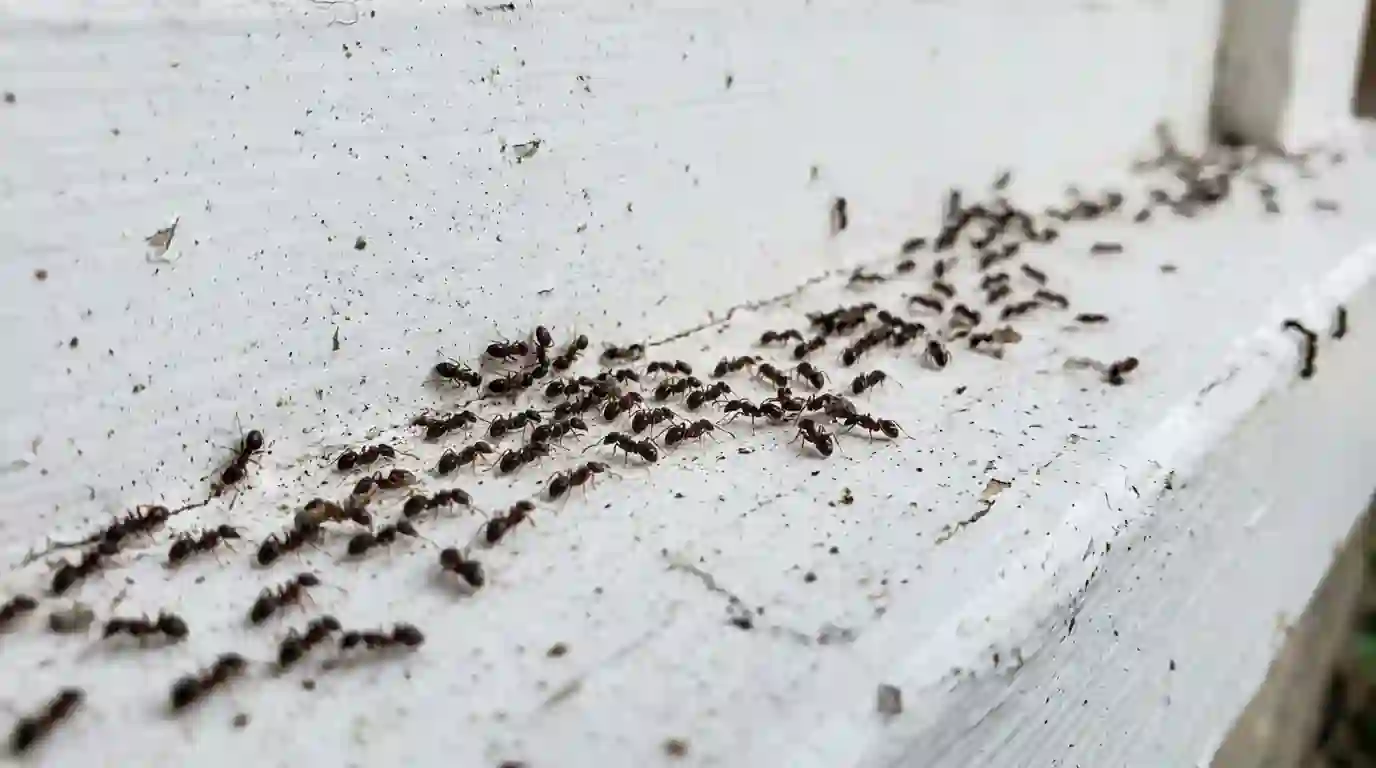
An ant trail is replaceable labor. Spray it and the colony, hundreds of thousands strong for some local species, reroutes through the wall void and sends a fresh trail by the weekend. Worse, repellent sprays can split certain colonies into several, a stress response called budding that turns one problem into four.
Baiting works with the ants' own logistics: slow-acting bait placed on active trails gets carried to the queens and brood, and the colony starves from the head down. The catch is matching the bait to the species and the season, because ant food preferences swing between sugars and proteins through the year.
The exterior half seals the result: a non-repellent band at the foundation, granular treatment through beds and mulch, and the entry points, weep holes, slab gaps, window frames, treated so the next scout finds a dead end instead of a doorway.
Inside the visit
What the ant visit covers
- Species identification from live specimens
- Interior gel and station baiting on trails
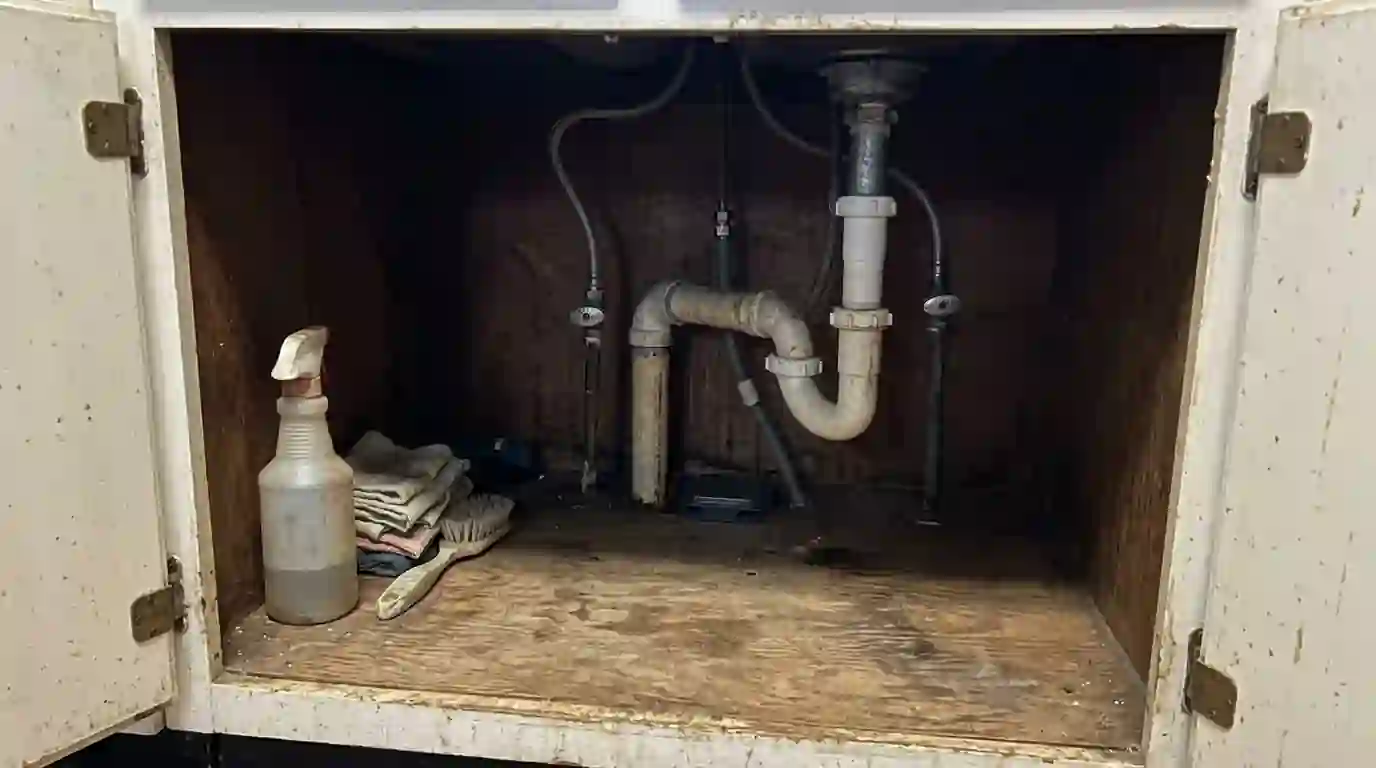
- Dishwasher, sink and void placements
- Exterior nest location and direct treatment
- Non-repellent foundation band
- Granular bed and turf margin coverage
- Weep-hole and entry-point treatment
- Follow-up check on multi-queen species
The method in three moves
Identify, bait the trail, treat the source
Species identification first
Five minutes with the actual ants saves weeks of wrong treatment. Odorous house ants, rover ants, acrobat ants, Pharaoh ants and tawny crazy ants all run Conroe kitchens, and they split sharply on what bait they will take and whether spraying makes them worse. We identify from specimens on site, and you can shortcut the visit by not wiping out the trail before we arrive: a live trail is diagnostic gold.
Interior baiting programs
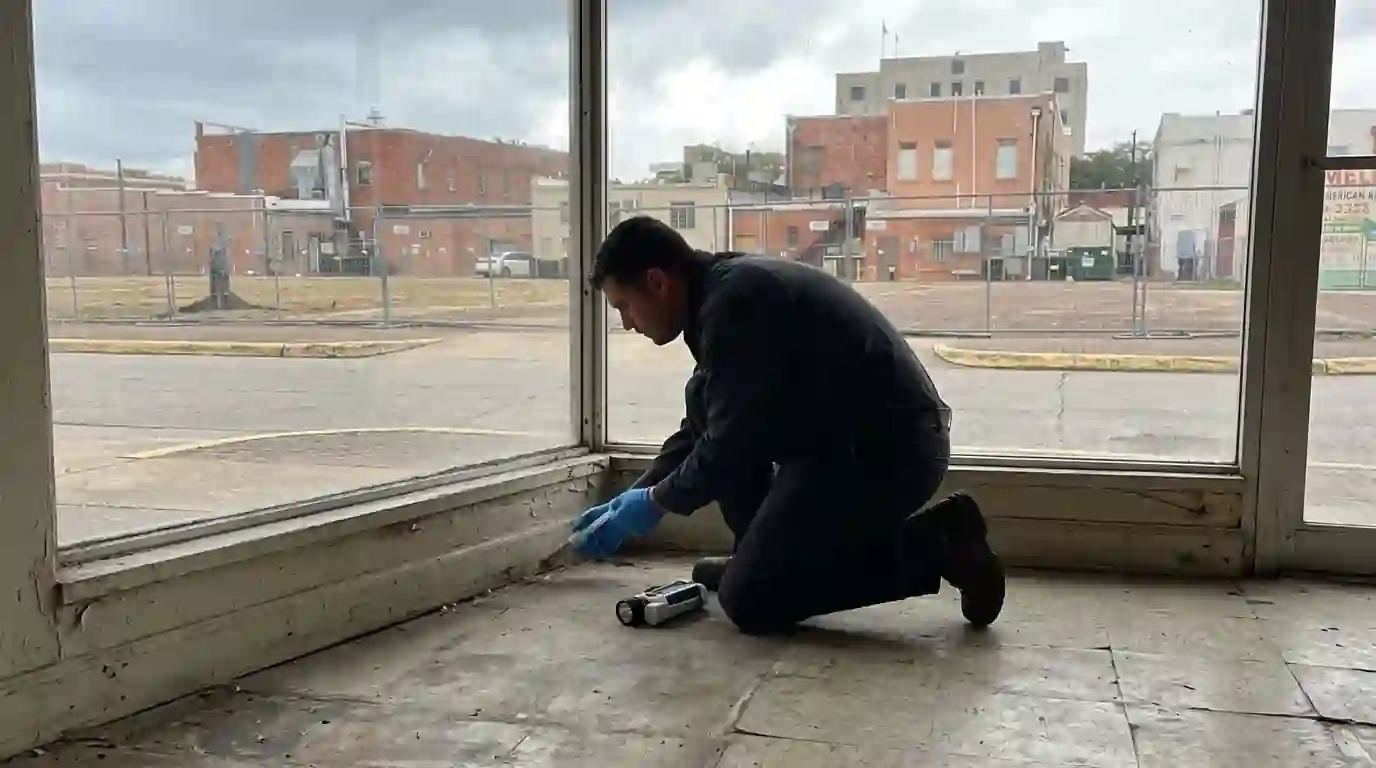
Gel and station baits go exactly on the highways the ants reveal, along the caulk line, behind the dishwasher kick plate, at the window corner, matched to the species' current food phase. Expect the trail to feed heavily for a day or two; that is the colony dosing itself, and wiping the bait away mid-feed is the one way to lose. Pharaoh ant work runs baits exclusively, since sprays scatter that species into every void in the house.
Exterior colony work
Most kitchen trails start outdoors, so the yard side gets the muscle: nests located along the foundation, in beds and under stepping stones get treated directly; a non-repellent barrier band goes down where the foragers walk through it unknowingly; and granular coverage runs through the mulch and turf margins that feed the whole population. The combination is what turns one quiet kitchen into a quiet season across the property.
What moves the price
What ant treatment pricing turns on
Published Texas general ranges frame it; the species and nest picture set the rest.
Species in play
A straightforward house ant job and a crazy ant supercolony are different commitments.
One-time range
Published Texas one-time treatments run $150 to $350, and most single-species ant jobs fit it.
Nest accessibility
Colonies under slabs and in walls take more placement work than bed nests.
Structure size
Barrier footage and the number of active rooms scale the visit.
Recurring pressure
Monthly service publishes at $40 to $75 and suits properties that re-break seasonally.
Follow-up visits
Multi-queen species like Pharaoh ants get a planned re-visit, priced up front.
The $150 to $350 and $40 to $75 figures are published 2026 Texas planning ranges, not a quote; your number is confirmed on the phone once the species and spread are described.
On our Conroe routes
The ant lineup on Conroe counters
Montgomery County has a documented tawny crazy ant presence, and that one species changes local ant work: crazy ant supercolonies shrug off the standard bait rates that collapse ordinary house ant colonies, so a misidentified infestation can eat weeks of wrong treatment. It is part of why homeowners around Conroe, Willis and Spring who schedule their pest work seasonally see the best results on ants too, with baiting rhythms set to the spring and fall foraging swings rather than to whenever the kitchen trail finally forces the issue.
How this job runs
From counter trail to closed case
- 1
Leave the trail alone
A live trail identifies the species and maps the route; resist the spray.
- 2
Identify on site
Specimens checked, species named, bait strategy matched to it.
- 3
Place the baits
Gels and stations on the active highways, indoors where kids and pets cannot reach.
- 4
Treat the exterior
Nests, barrier band and granular margins handled in the same visit.
- 5
Confirm the collapse
Trails thin over days; anything persisting at follow-up gets re-matched.
Timeline
Days of feeding, weeks to done
Expect the trail to feed for a day or two after baiting, thin sharply inside a week, and be gone with the colony behind it in one to three weeks depending on species and size. Fast-acting sprays beat that timeline only in the sense that they also guarantee a rematch.
Asked about this job
Ant questions from local kitchens
Usually a preference miss: the colony was cycling protein while the bait was sugar, or the species, crazy ants especially, does not respond at consumer rates. Matching bait to species and season is most of this job, which is why identification comes before placement.
Saturated soil floods ground nests, and the colonies move their brood up into walls, slabs and kitchens until the yard drains. The surge is predictable here, and a standing exterior barrier plus ready bait placements is what turns storm week into a non-event.
Placements go where hands and paws do not: behind kick plates, inside stations, along caulk lines under lips. The bait doses are sized for insects, and we walk you through every placement location before leaving so nothing is a mystery.
Bathroom trails often mean a moisture-loving species nesting in the wall void behind the tile, not stragglers from the kitchen. They are treatable, but with void placements rather than counter-top baits, and persistent bathroom ants are worth mentioning when you book.
The treated colonies die permanently; the neighborhood keeps producing new queens every spring. A treated, sealed, baited structure turns those arrivals into failures, and that is the honest promise: not an ant-free universe, a kitchen that stays boring.
Jobs that pair with this one
Related work from the same crews
Fire Ant Control
The stinging species with its own yard method.
Carpenter Ant Control
The big ants that mean damp wood.
Residential Pest Control
The whole-house line ant work slots into.
Quarterly Pest Control Plans
The standing rhythm for seasonal re-pressure.
Plant the flag on it
Do not wipe the trail yet.
A live trail tells us the species and the route; call while it is moving and the diagnosis starts on the phone.