Updated October 2026 · Reviewed for current Texas market ranges
Carpenter bee treatment in Conroe, TX targets the tunnels the bees bore into fascia, eaves, deck rails, fences and outdoor furniture: each gallery gets an insecticidal dust that bees carry through the tunnel, holes are left open a few days so returning bees contact it, and then the holes are plugged and sealed. Painting or staining bare wood afterward is what keeps them from coming back.
What carpenter bees actually do
Tunnels, not hives, in the wood you can see
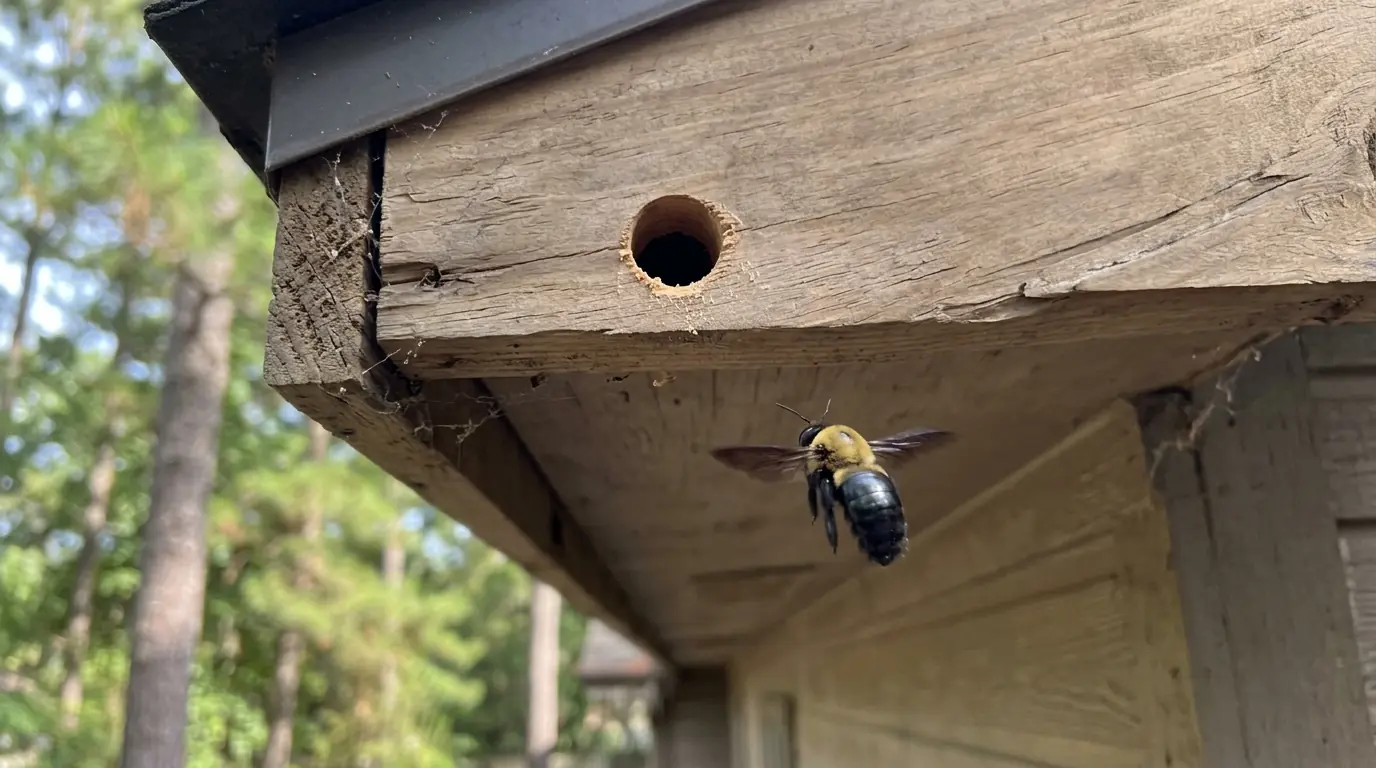
Carpenter bees look like bumblebees with a shiny black abdomen. Females chew perfectly round entry holes about half an inch wide, then turn and run a tunnel along the grain to lay eggs. Fine sawdust below the hole and yellowish staining on the wood are the usual signs.
They prefer bare, weathered or softwood surfaces: fascia boards, rafter tails, deck rails, pergolas, fences and wooden play sets. One gallery is cosmetic; years of reuse by the next generations weaken the wood and draw woodpeckers that tear it open to reach the larvae.
Males hover and dart at people but cannot sting, and females rarely do, so the issue is the wood rather than the stings. The job is to end the active galleries and make the wood unattractive.
Inside the visit
Where we check for galleries
- Fascia and rafter tails
- Eaves and soffit edges
- Deck rails and steps
- Fences and gates
- Pergolas and arbors
- Wooden play sets
- Outdoor furniture
- Woodpecker damage notes
How the treatment works
Dust, wait, plug, then paint
Gallery dusting
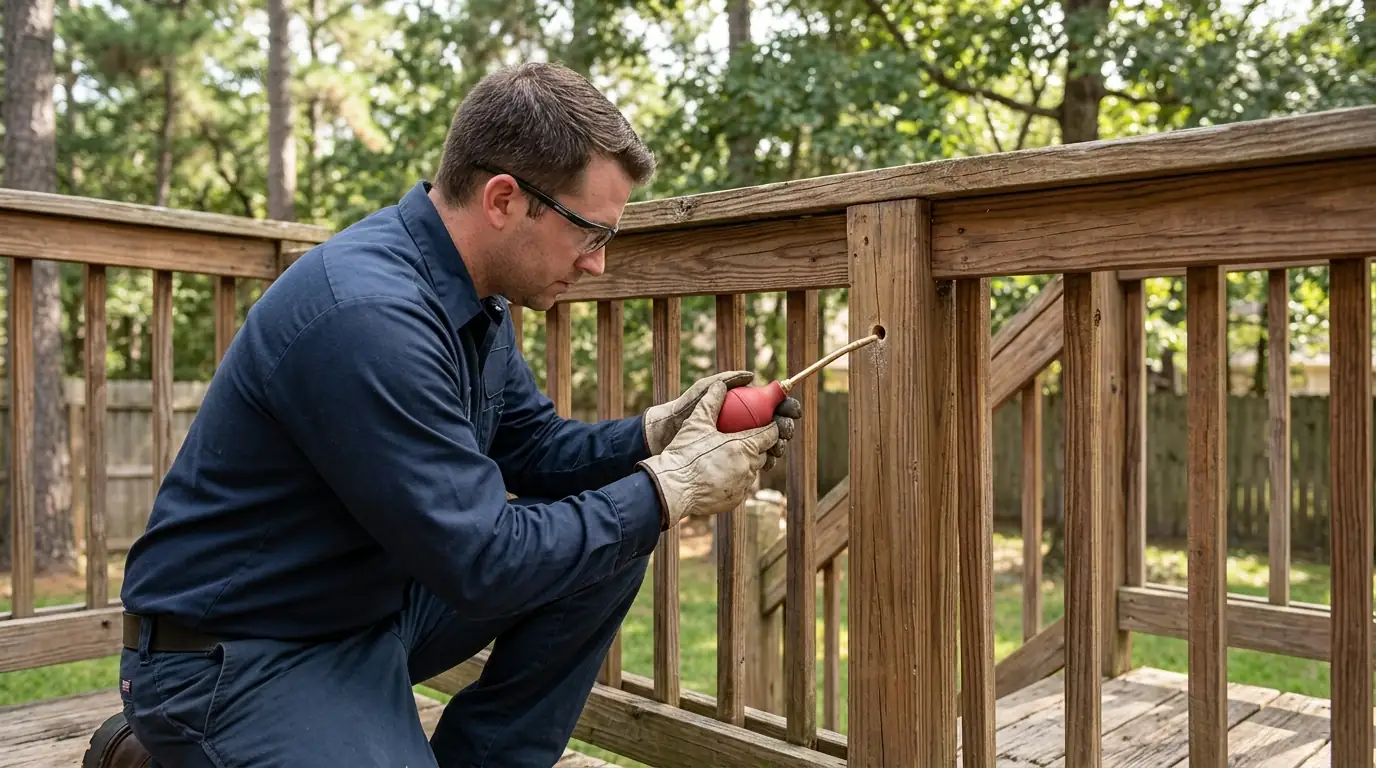
Each active hole gets a puff of insecticidal dust pushed into the tunnel with a hand duster. Dust works better than spray here because it coats the gallery walls, and bees moving in and out carry it to the brood. The holes stay open for a few days so every returning bee passes through the treated entry before anything is sealed.
Plugging and sealing
Once activity stops, each hole is plugged with a wooden dowel or filler and sealed so the next generation cannot reuse the old tunnel and new bees are not drawn to the scent. On fascia and trim we point out boards with heavy reuse or woodpecker damage so a carpenter can replace them before the next season. Plugs are primed and painted to match where the trim allows.
Prevention finishes
Carpenter bees avoid painted wood and favor bare or weathered surfaces. Painting or applying a solid stain to fascia, rafter tails and deck rails is the most effective long-term prevention. A light residual on the favorite boards in early spring, when females are choosing sites, adds a second layer for lots that keep getting hit. Hardwoods and painted vinyl or composite rails are rarely drilled.
Worth a phone call when you see
Signs carpenter bees are drilling
Round holes in wood
Clean half-inch holes on the underside of fascia, rails or eaves.
Sawdust below
Small piles of coarse sawdust under the hole.
Yellow staining
Streaks of pollen and waste below the entry.
Bees hovering at the eaves
Large black bees patrolling the same spot every day.
Woodpecker damage
Torn-open trim where birds dug for the larvae.
What moves the price
What carpenter bee work costs turn on
Most jobs are a single treatment visit plus a short follow-up.
Number of galleries
A few holes in one fascia board is quicker than dozens along a deck.
Height and access
Second-story fascia and gable ends need ladders or extension tools.
Plugging and sealing
Sealing every hole after treatment adds a short second visit.
Wood condition
Boards with woodpecker damage may need replacing by a carpenter.
Prevention treatment
An early-spring residual on favorite boards is optional.
Bundling
Carpenter bee work can ride along with a quarterly visit.
Carpenter bee jobs are quoted on the phone from the number of holes and where they are.
On our Conroe routes
Wooded lots, weathered trim
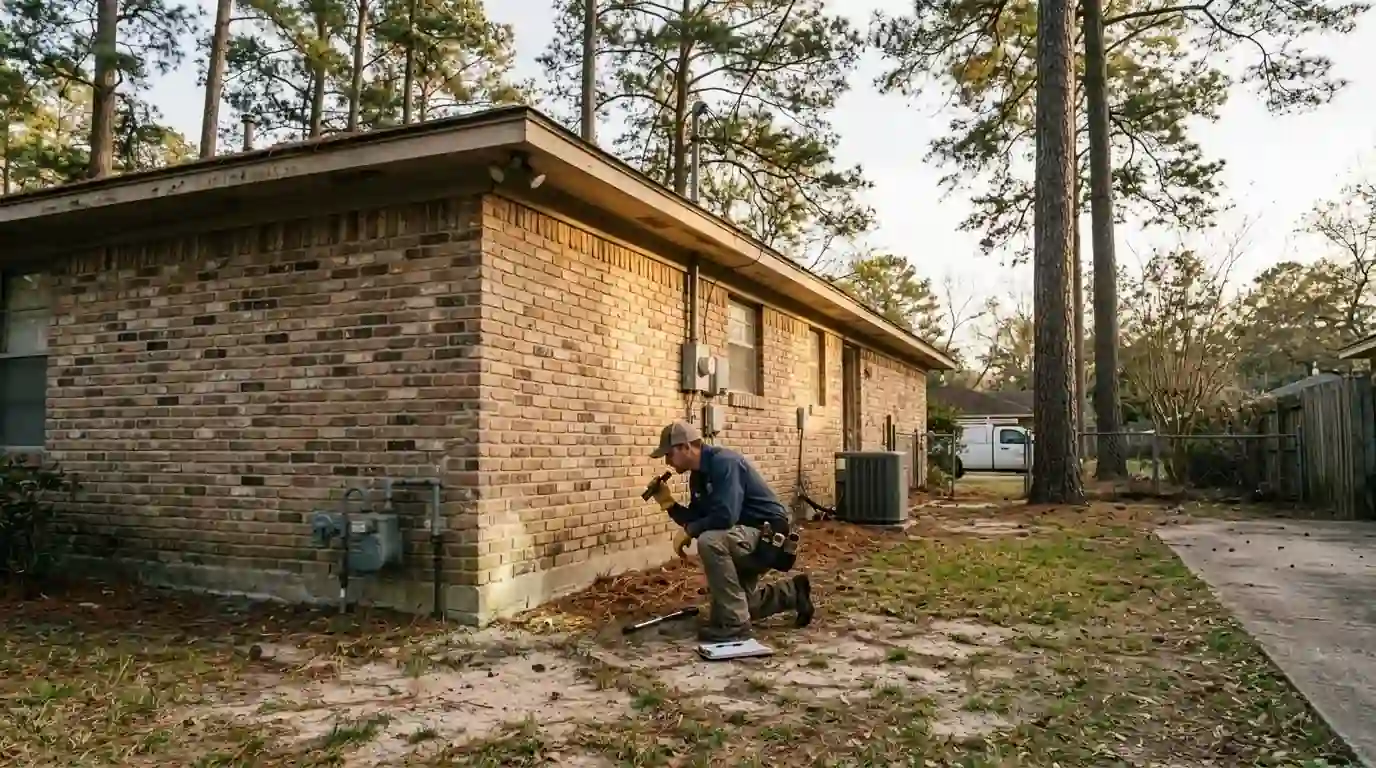
Conroe homes under pine and hardwood canopy tend to carry a lot of exposed wood: cedar fences, unpainted pergolas, deck rails and fascia boards that weather quickly in the heat and humidity. Those surfaces are exactly what carpenter bees look for each spring. Most of the calls we get come in March through May, when the females are drilling new galleries, and the same houses tend to call again a year later unless the wood is finished.
How this job runs
From sawdust piles to sealed wood
- 1
Describe the holes
Where they are, how many, and how high.
- 2
Find every gallery
The tech checks fascia, eaves, decks, fences and furniture.
- 3
Dust each hole
Insecticidal dust into every active gallery.
- 4
Plug and seal
Holes closed once activity stops.
- 5
Finish the wood
Paint or stain notes to keep bees away.
Asked about this job
Carpenter bee questions
Males cannot sting, though they buzz at people. Females can but rarely do unless handled.
No. They nest alone in wood tunnels rather than in hives, and they do not make honey stores in your walls.
Sealing a hole with bees inside can lead them to chew a new exit. Treat first, then seal once activity stops.
Painted or solid-stained wood is much less attractive. Bare and weathered wood gets drilled most.
Spring, when females start drilling, is the best time, with a check in late summer when new adults emerge.
Related guide: Wasp Nest on the Eaves: What to Do First
Jobs that pair with this one
Related work from the same crews
Wasp & Hornet Nest Removal
Paper nests under the same eaves.
Carpenter Ant Control
The other insect hollowing out wood.
Bee Swarm Removal
Honeybees, a different job entirely.
Drywood Termite Treatment
Pellet frass instead of sawdust.
Plant the flag on it
Holes in the fascia again?
Tell us where they are; the treatment and sealing get scheduled on the call.