Updated October 2026 · Reviewed for current Texas market ranges
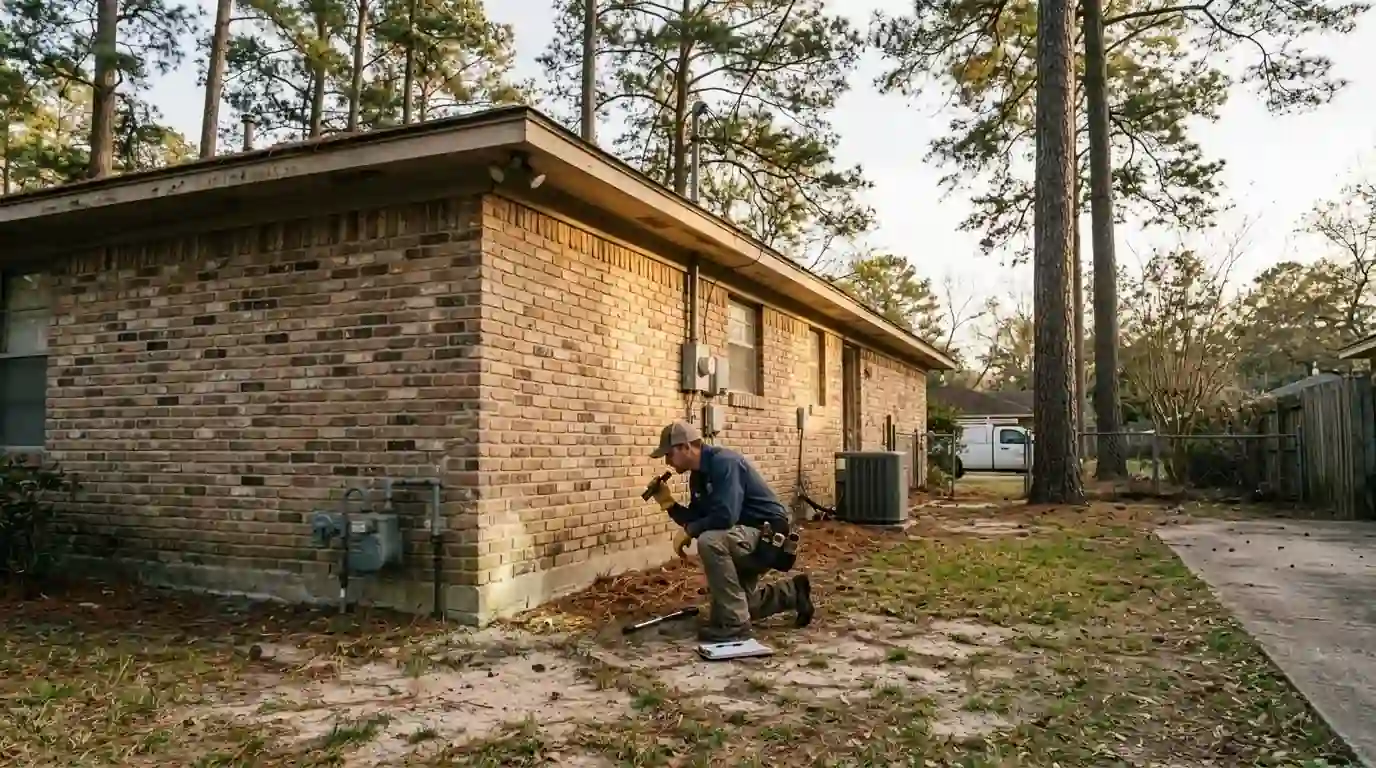
Rodent control in Conroe, TX handles the rats and mice already inside with traps placed along their runways in attics, walls and kitchens, removes them on follow-up visits, and maps every entry point they are using. Roof rats travel from trees and wires onto the roof here, so the inspection works the roofline as hard as the foundation. Lasting results come from pairing control with exclusion.
Worth a phone call when you see
Five signs to call this week
Scratching at night
Noise in the attic or walls after dark is the most common first sign.
Droppings
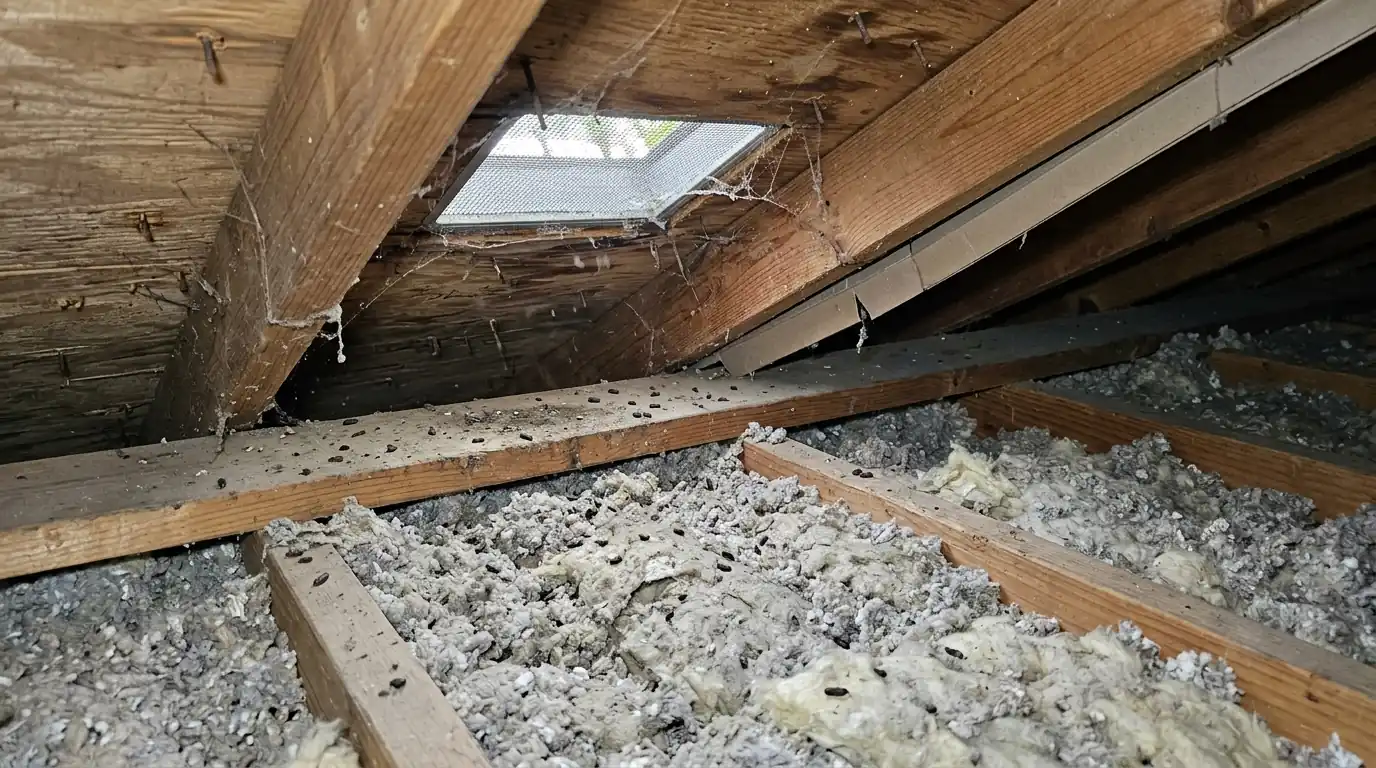
Dark pellets along counters, in drawers or along attic insulation.
Gnawed wires or food
Chewed packaging, cables or soft wood.
Greasy rub marks
Dark smudges along walls and beams where rodents run.
Pets staring at walls
Dogs and cats often notice rodents before you do.
How rodent control actually works
Remove the ones inside, then close the doors
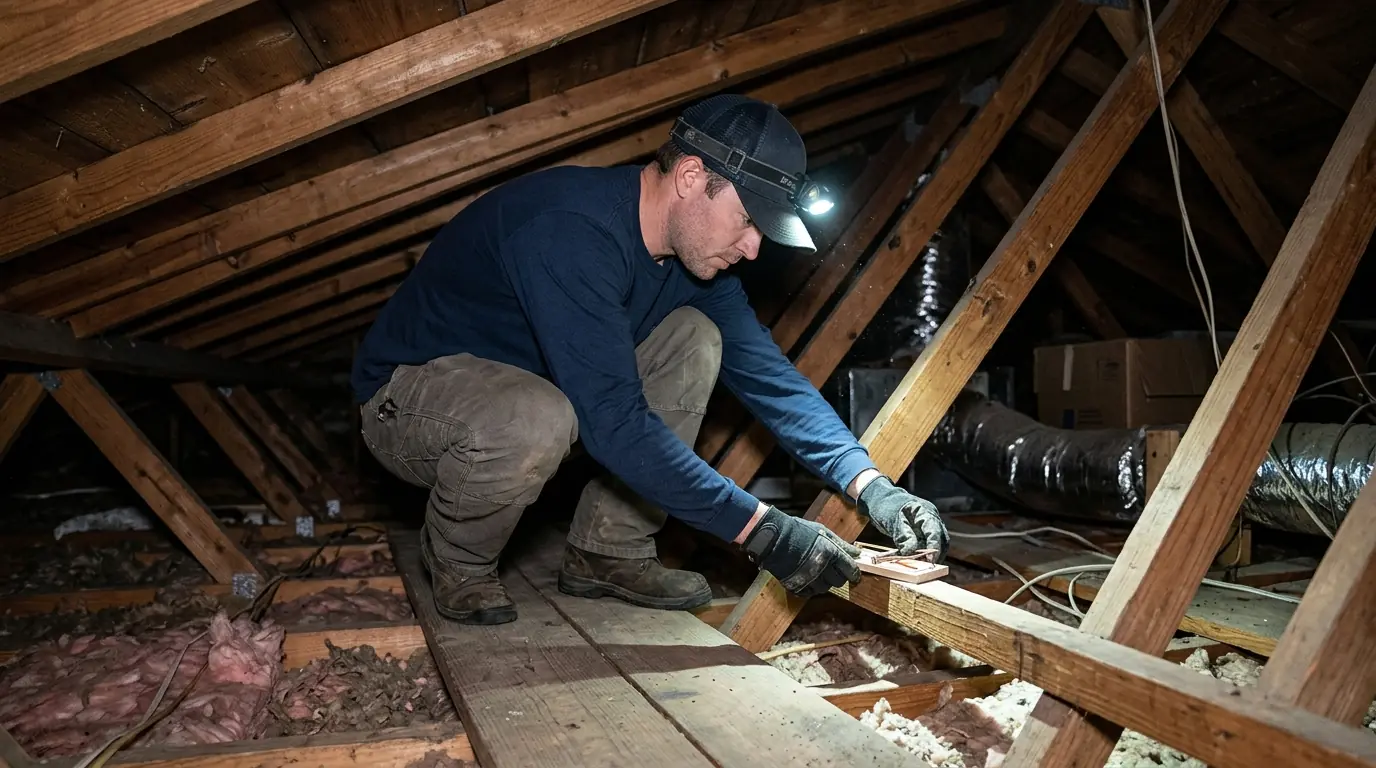
Rodents inside a house follow fixed routes: along walls, beams and pipes, through gaps they have already chewed or found. Traps placed on those runways catch far more than traps placed in the open, which is why the first visit is an inspection of droppings, rub marks, gnawing and nesting before any trap goes down.
Snap traps in tamper-resistant boxes are our default inside living space because they do not leave rodents dying inside walls. Exterior bait stations are used where they fit, locked and anchored. Every trapped rodent is removed on follow-up visits, and traps are reset until activity stops.
Control without exclusion is a subscription. The same visit records every entry point, roof returns, soffit gaps, plumbing penetrations, garage door corners, and the exclusion work that seals them is quoted alongside the trapping.
Three kinds of rodent call
Attic rats, kitchen mice, and the yard that feeds them
Roof rats in the attic
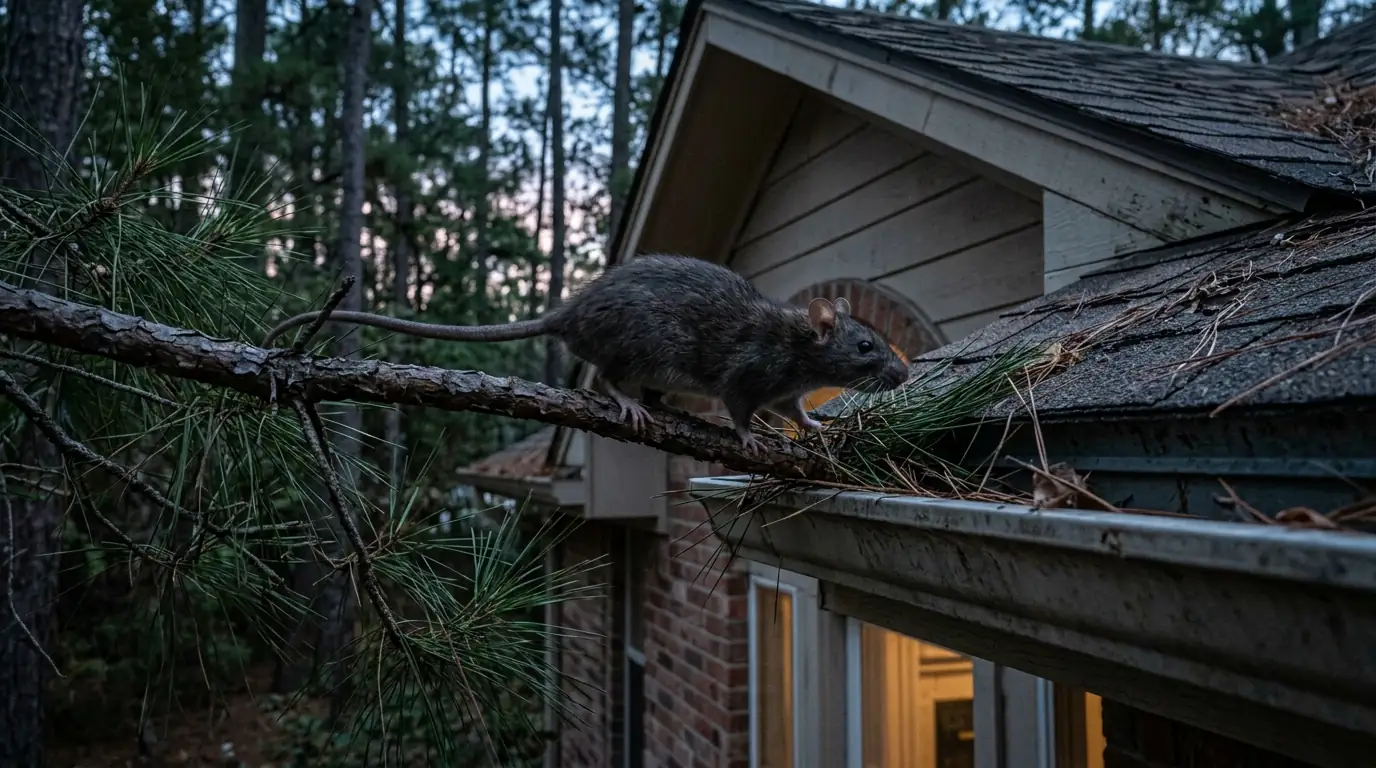
Roof rats are the climbers: they run power lines, fences and overhanging branches onto the roof and enter through roof returns, vents and soffit gaps. Attic activity shows as scratching at night, droppings along the insulation, and trails in the blown-in material. Traps go on the rafters and top plates they use, and the roofline is mapped for every gap a rat can squeeze through.
Mice in kitchens and walls
House mice need a gap the size of a pencil and live close to food: under cabinets, behind appliances, inside wall voids. Traps go along kitchen kick plates, behind the stove and refrigerator and in the garage, and the entry points are usually at plumbing penetrations, door sweeps and gaps where the slab meets the siding. Mice breed fast, so a few sightings are worth a quick call.
Exterior and yard pressure
Outdoor sources keep feeding indoor problems: bird feeders, pet food left out, compost, woodpiles and dense ivy along fences. Exterior bait stations around the perimeter reduce the population before it reaches the house, and the visit notes the yard conditions that keep drawing them in so you can cut the food and cover. Thinning ivy at the foundation, raising woodpiles off the ground and taking feeders in at night all make the perimeter far less inviting while the traps work inside.
Timeline
A week to quieter, a few visits to done
Most rodent jobs show a drop in activity within the first week and wrap trapping in two to four visits. Sealing the entries is what keeps the attic quiet afterward; without it, new rodents find the same doors.
On our Conroe routes
Roof rats are a local regular
Roof rats, along with the big palmetto bugs, are routine calls across Conroe and Montgomery County, and the pine canopy over most local neighborhoods is the reason: rats travel branch to roof without touching the ground, so an attic infestation often has no visible sign outside at all. That is why our rodent inspections here start at the roofline and the trees around it, not just at the foundation and garage door.
How this job runs
From scratching to silence
- 1
Call it in
Tell us what you are hearing or finding and where.
- 2
Inspect the runways
Droppings, rub marks, gnawing and nests located.
- 3
Set the traps
Tamper-resistant traps on the rodents' own routes.
- 4
Remove and reset
Follow-up visits remove catches until activity stops.
- 5
Seal the entries
Entry map delivered and exclusion quoted.
What moves the price
What rodent control costs turn on
A published program range frames it; entry points and spread set the rest.
Published program range
Rodent control programs publish at $200 to $600 depending on visits and spread.
Number of follow-ups
Trapping runs until activity stops, typically two to four visits.
Attic access
Low-clearance attics and multiple attic spaces take more time.
Exterior stations
Perimeter bait stations add equipment and service visits.
Exclusion scope
Sealing entry points is quoted separately once mapped.
Cleanup
Droppings and contaminated insulation cleanup is a separate service if needed.
The $200 to $600 figure is a published planning range for rodent control programs, not our quote; your price follows the inspection.
Asked about this job
Rodent questions from Conroe homes
Poisoned rodents often die inside walls and attics, leaving odor and flies, and bait inside the home is a risk for pets and kids. Traps inside, locked stations outside, is the safer approach.
Usually from trees, power lines or fences onto the roof, then through roof returns, vents or soffit gaps. The inspection maps the exact routes.
Dropping size, noise level and where activity happens usually tell us. Rats leave larger droppings and travel higher; mice stay closer to food and leave tiny droppings.
Droppings and urine can carry disease. Do not sweep or vacuum heavy accumulations dry; contaminated insulation is a cleanup job with protective equipment.
If entry points stay open, yes. Exclusion is what makes rodent control last.
Related guide: Noises in the Attic: Roof Rats in Conroe Homes
Jobs that pair with this one
Related work from the same crews
Rodent Exclusion & Proofing
Sealing the gaps rodents use.
Attic Cleanup & Sanitation
Restoring insulation after rodents.
Squirrel Removal
The other attic climbers.
Opossum, Armadillo & Skunk Removal
Larger animals in walls and crawls.
Plant the flag on it
Something in the attic tonight?
Call any hour; the inspection and trapping get scheduled on the same call.