Updated October 2026 · Reviewed for current Texas market ranges
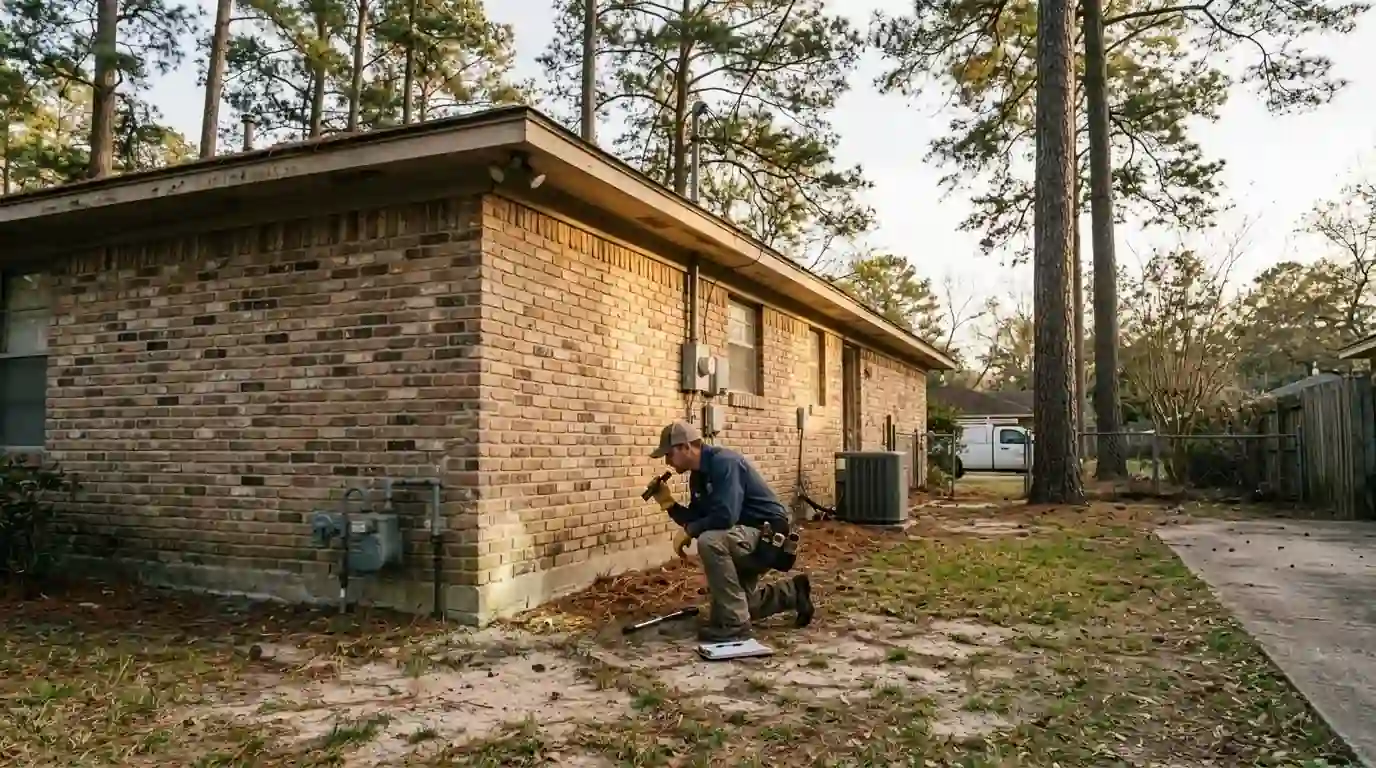
Drywood termite treatment in Conroe, TX targets the wood itself, because these colonies live entirely inside it: galleries are located by their pellet frass and kick holes, then treated by direct injection and foam into the infested members, with borate applications protecting surrounding wood. Localized colonies respond well to spot treatment; a structure-wide infestation is a fumigation conversation, and we will say which one you have.
A different termite, a different fight
No soil, no tubes, just quiet galleries
Everything homeowners learn about subterranean termites misleads them here. Drywood colonies arrive as a swarming pair, bore into a rafter, sill or furniture piece, and live their whole existence inside it. No soil travel means no barrier to trench; treatment has to reach the gallery itself.
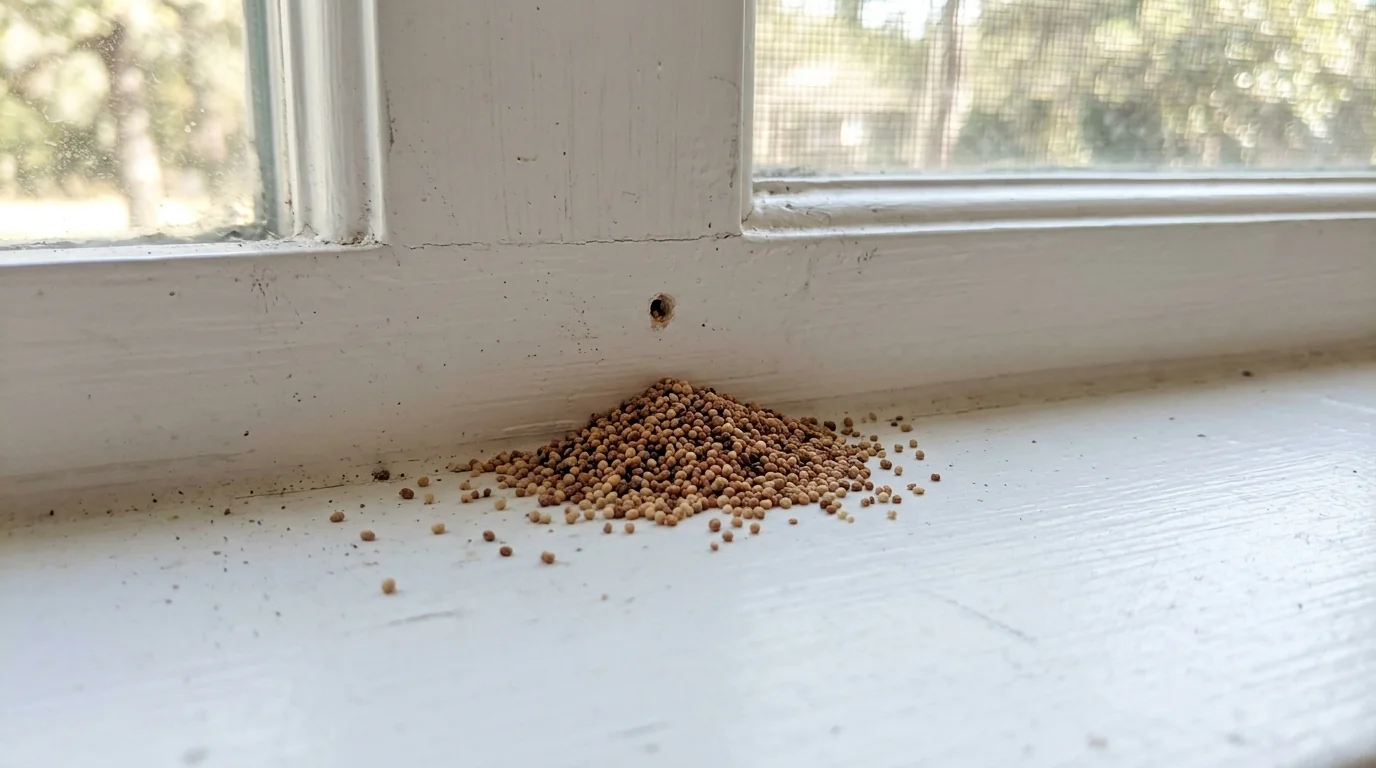
Their tell is tidy: waste pushed out of kick holes leaves piles of six-sided pellets on the surface below, and fresh piles returning after you vacuum them are the clearest live-activity sign this species gives.
Treatment is surgical: mapped galleries get drilled and injected directly, surrounding accessible wood gets borates so the colony cannot relocate next door, and every member treated is documented. Smaller colonies respond very well; the limits of spot work are real, and we draw them honestly.
Where the work happens
In the rafters, in the trim, sometimes in the furniture
Localized wood injection
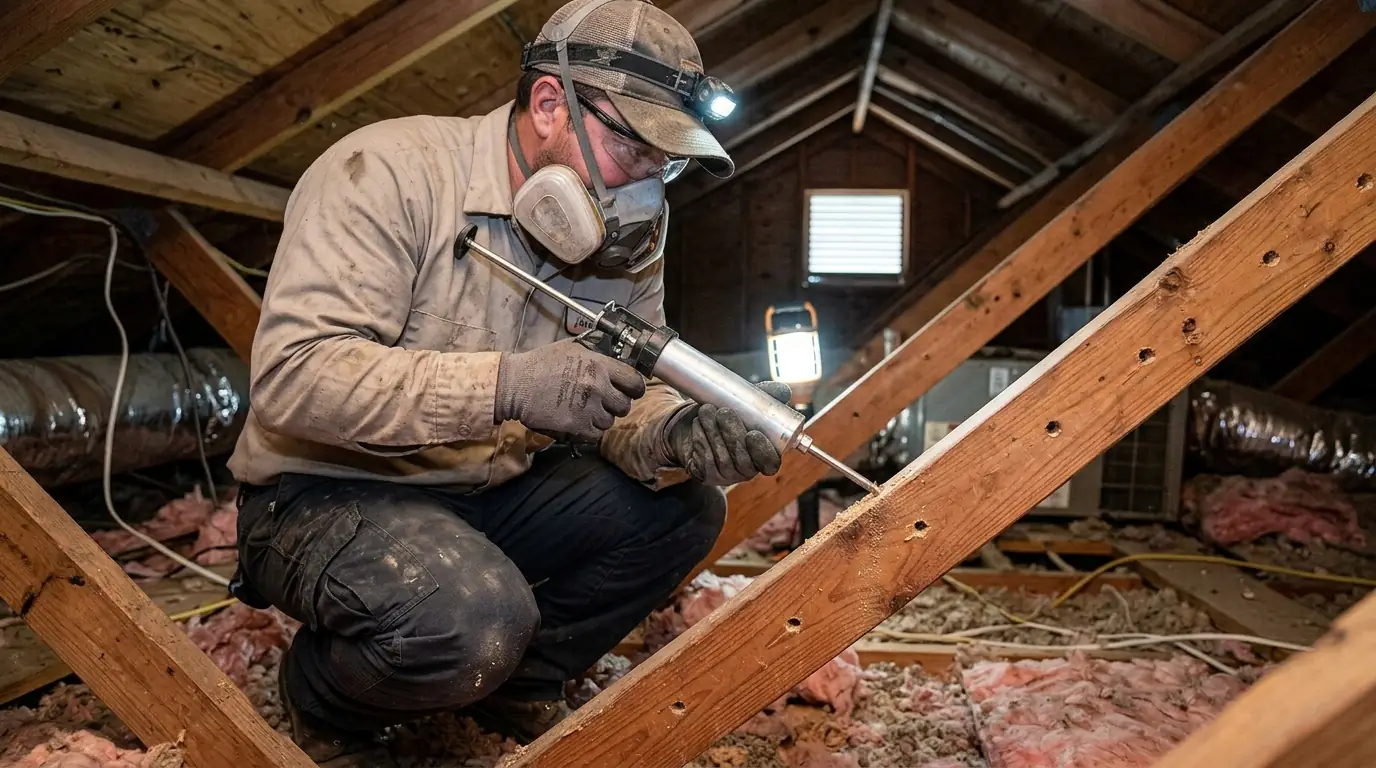
The core method: galleries are mapped by their frass piles, kick holes and sounding, then drilled at intervals along the run and injected so the product moves through the colony's own tunnels rather than sitting on the surface. Trim, sills, rafters and door frames are the usual patients. The holes are small and get filled after treatment, so the repair footprint on finished wood stays minimal.
Frass identification calls
Half of drywood work is the diagnosis, because pellet frass gets mistaken for carpenter ant sawdust and vice versa, and the treatments could not be more different. Bring us the pile before anyone sells you anything: pellets mean drywoods, fibrous shavings mean carpenter ants, and the photos you text to the line often settle the question before any truck rolls out.
Furniture and small-structure jobs
Drywoods ride into houses inside antiques, reclaimed-wood pieces and secondhand furniture more often than people expect, and a colony in a dresser can seed the room around it. Individual pieces can be injection-treated on their own, and small detached structures like sheds and playhouses are handled the same surgical way. It beats discarding a good piece, or ignoring a small building, over a colony that is entirely treatable.
Worth a phone call when you see
The evidence drywoods leave behind
Pellet piles that come back
Heaps of uniform six-sided pellets under trim or rafters, reappearing after cleanup.
Pinholes in painted wood
Round kick holes the diameter of a pin, often above a frass pile.
Swarmers at the windows
Winged termites emerging indoors late in the day, without any mud tubes in sight.
Hollow trim and fascia
Window surrounds and fascia sounding papery or giving under a probe.
Blistered paint runs
Paint rippling over galleries just beneath the surface.
Damage with no soil trail
Termite-style damage in attics or upper floors a soil colony could not reach cleanly.
What moves the price
What drywood treatment costs turn on
Spot work is affordable; whole-structure infestations are a different budget, and the inspection tells you which you have.
Colony count and spread
One trim run versus a dozen separated attic galleries is the main cost axis.
Access to the wood
Open attic framing injects quickly; finished ceilings take patching time.
Borate protection scope
Borating surrounding wood adds material but blocks relocation.
Furniture pieces
Single-piece treatments are priced per piece and are usually modest.
The fumigation threshold
Published guides put whole-structure tenting at $2,000 to $8,000; when an infestation genuinely needs it, pretending spot work will do is the expensive choice.
Repair coordination
Weakened members get flagged for your carpenter; we treat, not rebuild.
The $2,000 to $8,000 tenting figure is a published national range for drywood fumigation, included so the spot-versus-tent decision has real numbers behind it. Localized injection work is quoted per gallery map after inspection.
On our Conroe routes
Drywoods in a subterranean county
Drywood termites are the least common of the three species on a Conroe WDI report, but least common is not rare: the inspection standard here names subterranean, drywood and Formosan termites together because all three turn up in Montgomery County structures. For homeowners the practical difference is where we look, attic framing, fascia, window and door trim, and detached garage lumber, rather than the slab line, and a frass pile in any of those places is worth a call the same week.
How this job runs
Finding and killing an in-wood colony
- 1
Describe the evidence
Frass piles, pinholes or swarmers; photos to the line speed the diagnosis.
- 2
Map the galleries
Frass sources traced, wood sounded, infested members and spread documented.
- 3
Call the scope
Spot-treatable or structure-wide, said plainly with numbers attached.
- 4
Inject and protect
Galleries drilled and treated, surrounding wood borated, holes filled.
- 5
Re-check the piles
Treated zones get a follow-up; fresh frass after treatment gets us back out.
Asked about this job
Drywood questions from Conroe attics
Subterranean colonies live underground and commute into wood through mud tubes; drywood colonies live inside the wood and never touch soil. A soil barrier therefore does nothing against drywoods, which is why treatment moves to the lumber.
Check the texture: drywood frass is pelletized, uniform grains with flat sides like coarse ground pepper, while carpenter ant debris is fibrous shavings with insect parts mixed in. The distinction decides the treatment, and a clear photo usually settles it.
Usually not. Most Conroe drywood finds are localized and respond to direct injection. Tenting earns its published $2,000 to $8,000 price only when colonies are scattered beyond reach through the structure, and the gallery map makes that call defensible either way.
Both directions happen: swarmers from a structural colony settle into furniture, and an infested antique can seed a house. New frass under a wooden piece earns the same call a windowsill pile does.
The holes are small, placed along the gallery line and filled after treatment. Painted trim hides them under touch-up; on stained wood they go as discreetly as the map allows, shown to you before drilling.
Frass is the scoreboard: treated galleries stop producing fresh pellets within weeks. Cleaned piles get marked and dated at treatment, the follow-up reads them, and a pile that rebuilds is re-treated under the original scope.
Related guide: Early Signs of Termites in Southeast Texas Homes
Jobs that pair with this one
Related work from the same crews
Termite Inspections & WDI Reports
The WDI inspection that catches drywoods early.
Subterranean Termite Treatment
The soil species that causes most local damage.
Carpenter Ant Control
The frass look-alike with a different fix.
Occasional Invader Control
The rest of what turns up in Conroe attics.
Plant the flag on it
Keep the frass pile. Call us before you clean it.
A photo of the pile tells us half the story.