Updated October 2026 · Reviewed for current Texas market ranges
Pantry pest control in Conroe, TX starts with finding the infested product, because Indian meal moths, flour beetles, weevils and cigarette beetles breed inside stored food rather than in the house itself. Infested goods are discarded, shelves are vacuumed and treated along the cracks where larvae pupate, and pheromone traps confirm the population is gone instead of hiding in the next bag of birdseed in the garage.
Where pantry pests really live
Find the bag, end the problem
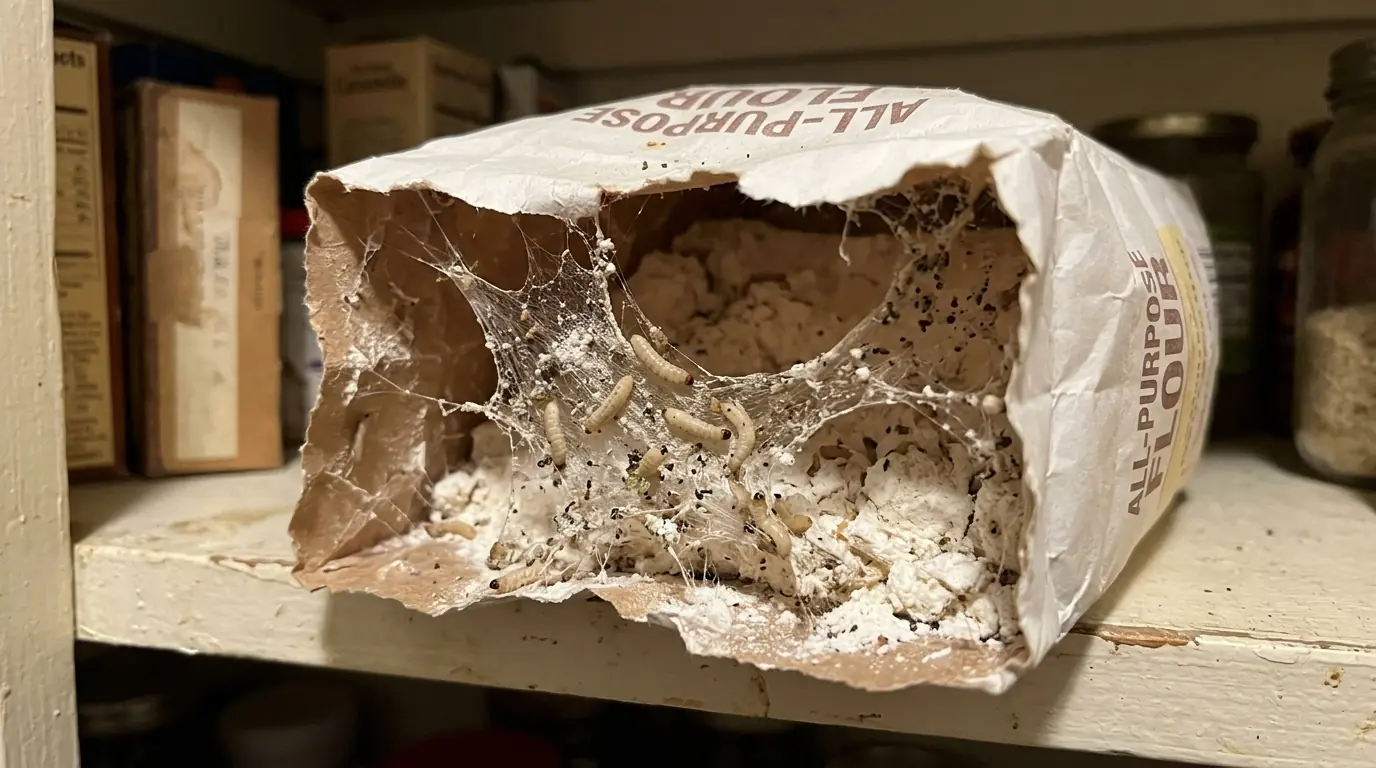
Almost every pantry infestation traces to one or two products: flour, cornmeal, rice, cereal, dried fruit, nuts, spices, dry pet food or birdseed. The larvae feed inside, adults spread to nearby open packages, and moths wander the kitchen far from the original source.
That is why sprays alone fail. The visit is mostly detective work: checking every dry good for webbing, larvae, holes and live adults, including the overlooked spots like the pet food bin, decorative jars, spice racks and the bag of birdseed in the garage.
Inside the visit
What the pantry visit covers
- Every dry good opened and checked
- Pet food, birdseed and feed checked
- Spice racks and decorative jars
- Shelf vacuuming guidance
- Crack and joint treatment
- Ceiling corner pupation check
- Pheromone trap placement
- Sealed-container storage notes
The common culprits
Moths, beetles, and the bag in the garage
Indian meal moth programs
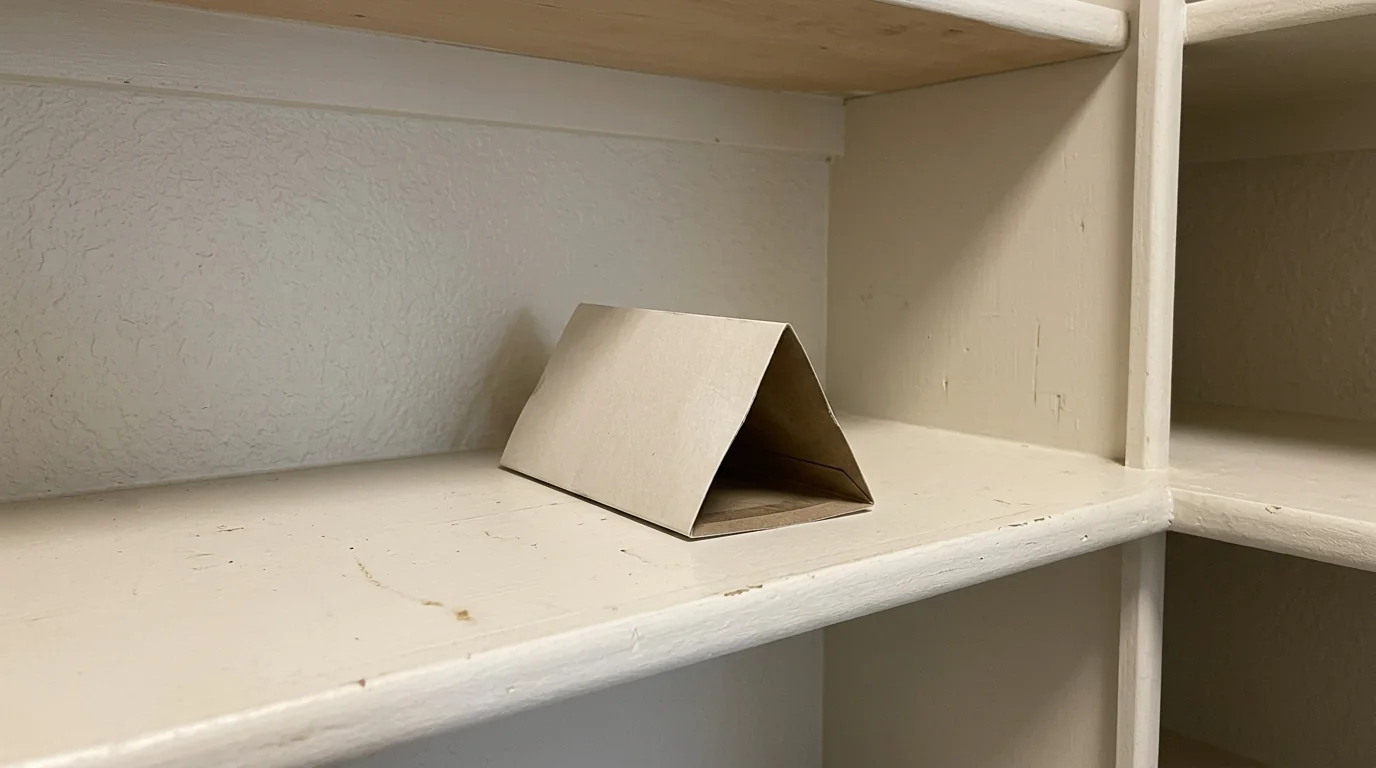
Indian meal moths are the small bronze-and-gray moths that flutter around kitchens at dusk. Their larvae spin webbing in grains, nuts, dried fruit and pet food, then crawl away to pupate in shelf cracks and even ceiling corners. Treatment pairs product removal with crack treatment along shelving and pheromone traps that catch males and show, week by week, whether breeding has stopped.
Beetles and weevils
Flour beetles, sawtoothed grain beetles, cigarette beetles and rice weevils are smaller and harder to spot, often noticed only when they appear crawling on a counter or floating in a bowl of cereal. They chew into sealed cardboard and thin plastic, so the inspection opens and checks every dry product. Cigarette beetles also favor spices and dried flowers, which surprises people.
Garage and pet food sources
Dry pet food, birdseed, grass seed and stored feed in garages and laundry rooms are common sources that keep re-seeding a cleaned pantry. Those get checked on every visit, and moving them into sealed hard containers off the floor is the step that keeps the problem from coming back in a month. Large paper bags of dog food and wild bird mixes are the usual offenders, and checking the bottom inch of a bag often finds what the top looks clean on.
What moves the price
What pantry pest work costs turn on
Most jobs are a single visit plus monitoring.
Number of storage areas
Pantry only versus pantry, garage and laundry room.
Infestation spread
Moths that reached closets and ceilings take more crack work.
Monitoring
Pheromone traps and a check-back visit are included in the quote.
Commercial storage
Restaurants and warehouses need recurring programs.
Clearing assistance
We sort products with you; disposal is your choice.
Published context
Published Texas one-time treatments run $150 to $350, and most pantry jobs fit inside it.
The $150 to $350 figure is the published 2026 Texas one-time range, given for context; your price is confirmed on the call.
On our Conroe routes
Why the garage matters here
Many Conroe homes store bulk dog food, birdseed and deer corn in warm garages and utility rooms, and those big, half-open bags are where a lot of local pantry infestations actually start before moths drift into the kitchen. Summer heat in an unconditioned garage speeds up the life cycle, so a moth problem that seemed small in spring can be everywhere by July. Checking those bags is the first stop on every pantry visit we run.
How this job runs
From moths at dusk to clean shelves
- 1
Describe what you see
Moths, beetles or larvae, and where they show up.
- 2
Find the source
Every dry good checked, including pet food and birdseed.
- 3
Clear and clean
Infested goods removed, shelves vacuumed.
- 4
Treat the cracks
Shelf joints and pupation sites treated.
- 5
Monitor
Pheromone traps confirm when breeding has stopped.
Asked about this job
Pantry pest questions
Usually, yes. Eggs or larvae ride in on packaged dry goods, often from warehouses rather than the store itself. It says nothing about your housekeeping.
Only infested products and anything open that shows webbing, larvae or holes. Sealed, clean products can stay, ideally moved into hard containers.
Food comes out of the treatment area first, treatment goes into cracks and joints rather than on shelves where food sits, and the tech tells you when shelves can be restocked.
Adults die off within a couple of weeks once the source is gone. Traps catching nothing for several weeks is the sign it is over.
Freezing flour, grains and birdseed for several days after purchase kills hidden eggs and is a good habit if you have had a pantry problem before.
Jobs that pair with this one
Related work from the same crews
Fly Control
Fruit and drain flies near the same food.
Rodent Control
The other pest drawn to stored food.
Restaurant & Food Service Pest Control
Commercial storage with inspection clocks.
Residential Pest Control
The general home service line.
Plant the flag on it
Moths at dusk again?
Call and describe what you are seeing; finding the source starts on the phone.