
Updated October 2026 · Reviewed for current Texas market ranges
Fly control in Conroe, TX starts by identifying the fly, because each species points to a different breeding site: house flies to trash and organic waste, drain flies to slime in drains, fruit flies to fermenting produce, and blow flies to something dead in a wall or attic. Killing adults without finding the source only buys a few days. The visit locates and treats the source, then adds baits, lights and drain treatments where needed.
Why swatting never works
Every fly problem has an address
A fly population is a breeding site with wings. A single drain line coated with organic film, an overflowing outdoor bin or a dead rodent inside a wall can produce flies for weeks. Sprays and swatters reduce the adults you see while the source keeps producing more.
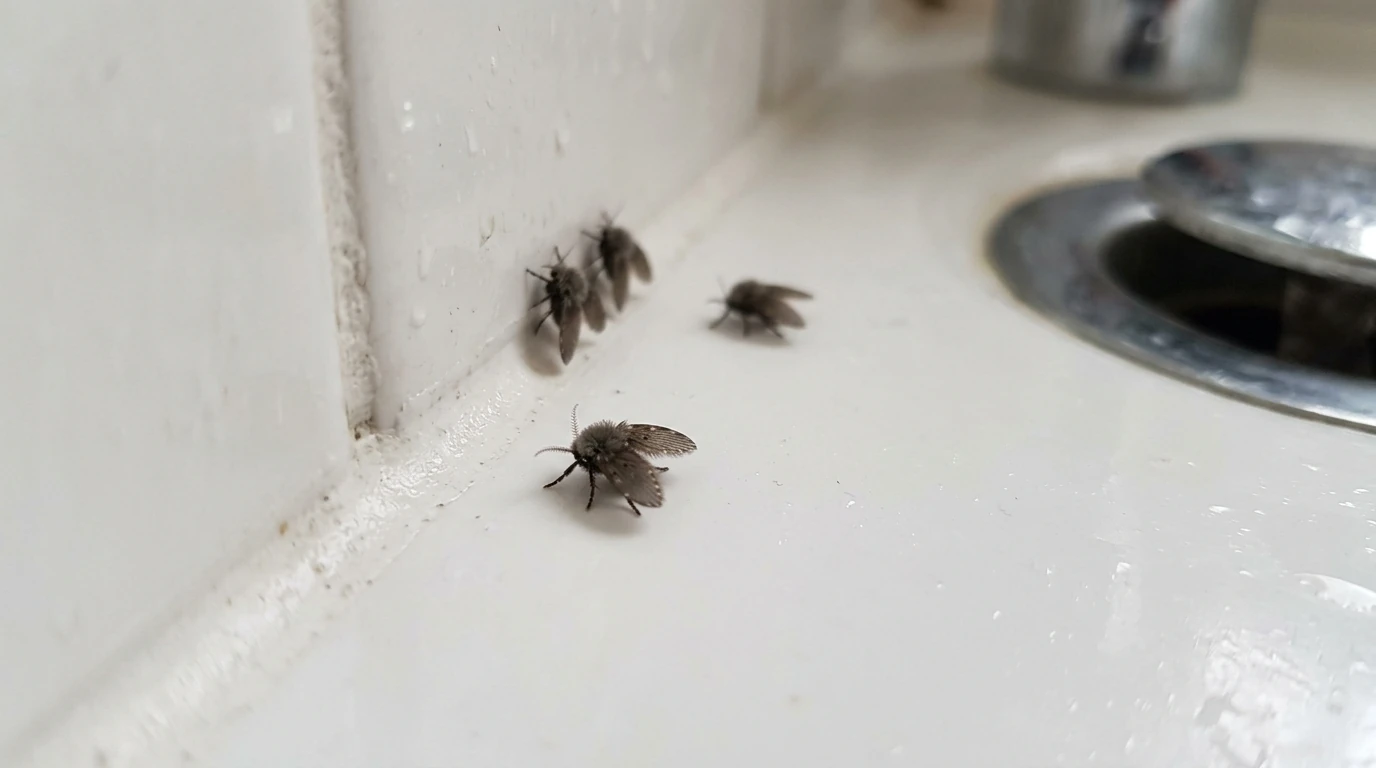
Identification is fast and decides everything: small fuzzy moth-like flies near sinks are drain flies; tiny tan flies near the fruit bowl are fruit or vinegar flies; large shiny metallic flies appearing suddenly indoors usually mean a carcass; ordinary house flies point to garbage and outdoor waste.
Inside the visit
What the fly visit covers
- Fly species identification
- Drain inspection and treatment
- Trash and dumpster area check
- Produce, pantry and recycling check
- Pet waste and animal area check
- Wall, attic and crawl check for carcasses
- Bait and trap placement
- Screen and door exclusion notes
Three kinds of fly problem
Drains, garbage, and the one in the wall
Drain and fruit fly work
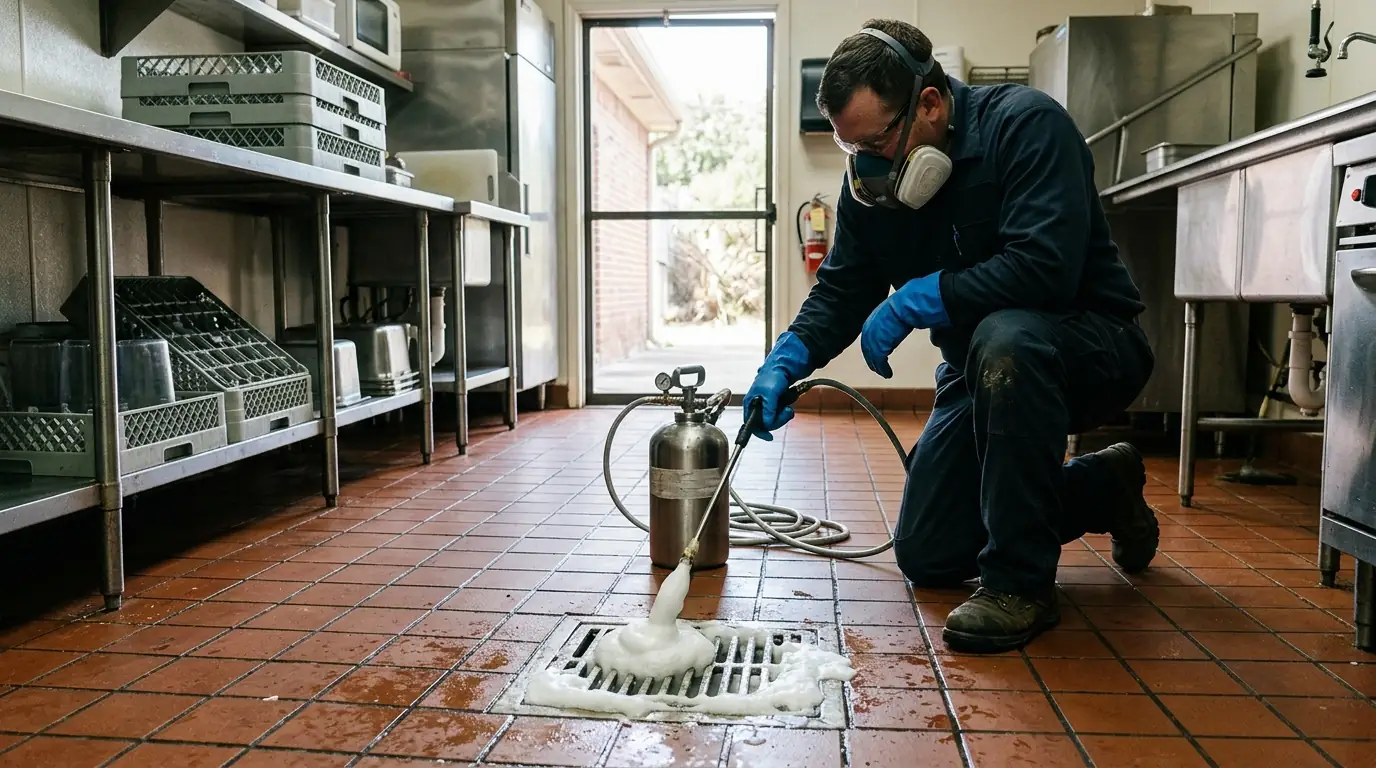
Drain flies breed in the film inside sink, shower and floor drains, and fruit flies in fermenting produce, recycling and the gunk under appliances. The fix is cleaning and treating the drain itself with an enzyme or foam treatment that breaks down the film, removing the produce or residue, and trapping the remaining adults. Restaurants and commercial kitchens get the same approach at the floor drains and under equipment.
House fly and outdoor sources
House flies breed in garbage, pet waste, compost and spilled feed. The visit checks bins, dumpster pads, compost and animal areas, treats resting surfaces with residual products where appropriate, and places baits outside away from doors. Self-closing doors and screens get checked, because indoor house flies need a way in. For commercial properties the same check covers dumpster pads, grease bins and loading doors, which are where most restaurant house fly problems actually begin long before anyone sees a fly inside.
Blow flies and sudden swarms
Large metallic flies appearing suddenly, often at windows, usually mean something died in a wall, attic or crawl space, very often a rodent. Treating the flies alone misses the point: the carcass has to be found and removed, and the entry the animal used sealed. Those calls connect directly to our rodent and wildlife work. Odor near a wall, ceiling stains or a sudden stop to scratching sounds in the attic all point the search, and the visit follows those clues rather than guessing.
What moves the price
What fly control costs turn on
It depends far more on the source than on the number of flies.
Fly species
Drain fly work differs from a blow fly search for a carcass.
Source location
An accessible drain is quick; a carcass inside a wall takes time.
Property type
Commercial kitchens need more drains and equipment treated.
Lights and bait stations
Commercial fly lights are an equipment cost.
Recurring service
Food businesses often need monthly service for inspections.
Published context
Published Texas one-time treatments run $150 to $350 for typical residential jobs.
The $150 to $350 figure is the published 2026 Texas range for one-time treatments, for context; fly work is quoted after we know the species and likely source.
On our Conroe routes
Heat, humidity and long seasons
Montgomery County’s insect season runs roughly March through October and peaks in early summer, and flies follow the same heat and humidity: trash breaks down faster, drains stay warm and wet, and populations cycle in days instead of weeks. That is why a fly problem in Conroe in July can go from a few to a swarm in under a week, and why the source search matters so much more than the spray here.
How this job runs
From swarm to source
- 1
Describe the flies
Size, color and where they gather identify the species.
- 2
Find the source
Drains, bins, produce, pet areas and walls inspected.
- 3
Treat the source
Drains cleaned and treated, waste addressed, carcasses removed.
- 4
Reduce the adults
Baits, traps or lights placed where appropriate.
- 5
Prevent the next round
Sanitation and exclusion findings given in writing.
Asked about this job
Fly questions we hear
Large metallic flies appearing at once usually mean something died nearby, often a rodent in a wall or attic. The carcass needs to be found and removed; the flies stop when the source does.
They rarely remove the film the larvae live in. A brush and an enzyme or foam drain treatment break that film down, which is why professional drain work lasts longer.
We rely on source removal, baits and traps indoors, and use residual products only on appropriate surfaces outside food-prep areas. Food businesses get methods that fit their health inspections.
Yes, with recurring service, fly lights and drain programs set up for inspection records. Our commercial and restaurant service lines cover the details.
Once the source is removed, adult numbers drop within days, since most adults live only a couple of weeks. A lingering population means a second source still producing.
Jobs that pair with this one
Related work from the same crews
Restaurant & Food Service Pest Control
Commercial kitchens with inspection clocks.
Rodent Control
Where blow fly swarms usually start.
Pantry & Fabric Pest Control
The other small flyers near food.
Commercial Pest Control
Facility programs with fly lights.
Plant the flag on it
Flies keep coming back?
Tell us what they look like and where they gather; the likely source and the plan come back on the call.