Updated October 2026 · Reviewed for current Texas market ranges
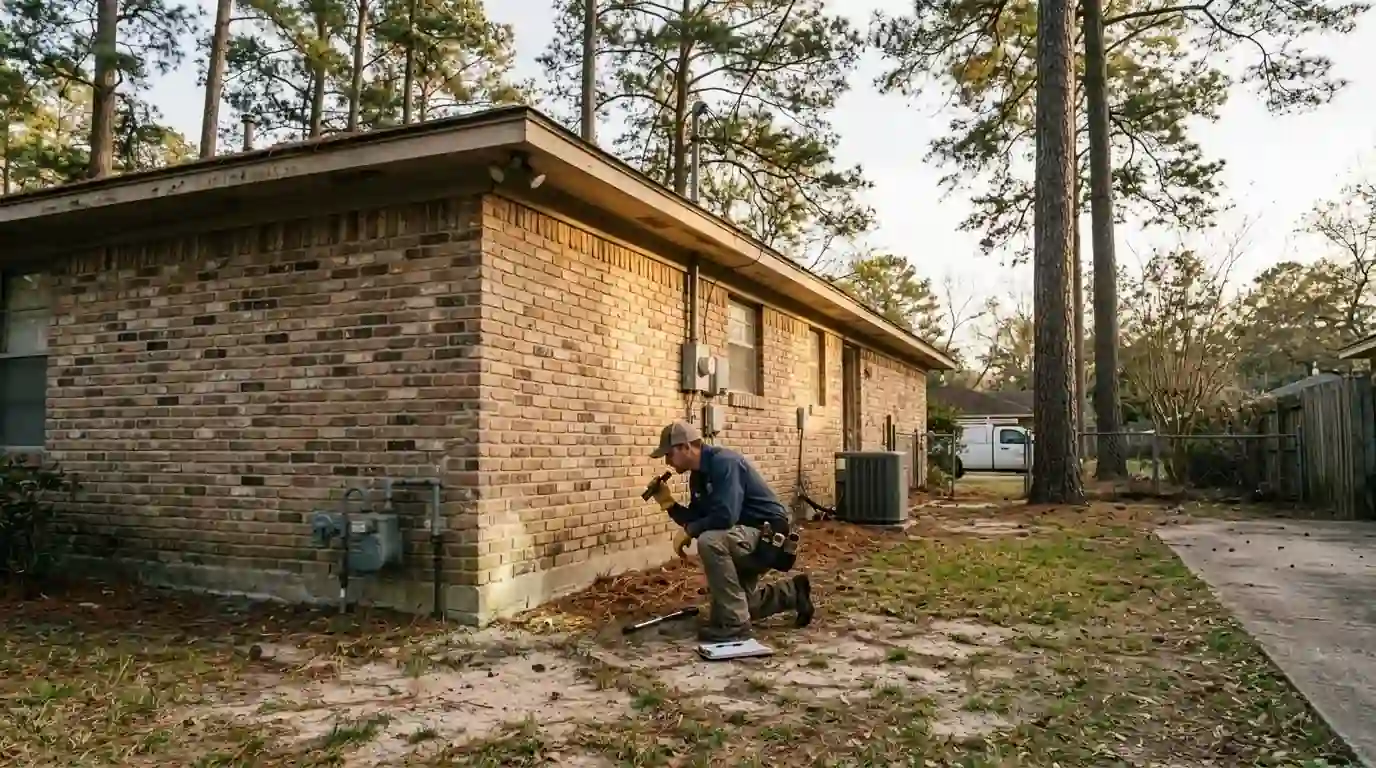
Commercial pest control in Conroe, TX is a scheduled program built around the facility: an initial inspection, a written service plan, exterior rodent bait stations and interior monitors, regular visits timed to avoid business hours, and service logs kept for audits and landlords. Response between visits is included, and pricing depends on the building's size, use and visit frequency.
How commercial programs differ
A plan, a schedule, and a paper trail
A business needs more than a spray: it needs consistency, documentation and discretion. Programs start with an inspection of the building, the loading areas, dumpsters and landscaping, then a written plan listing what will be done, where, and how often.
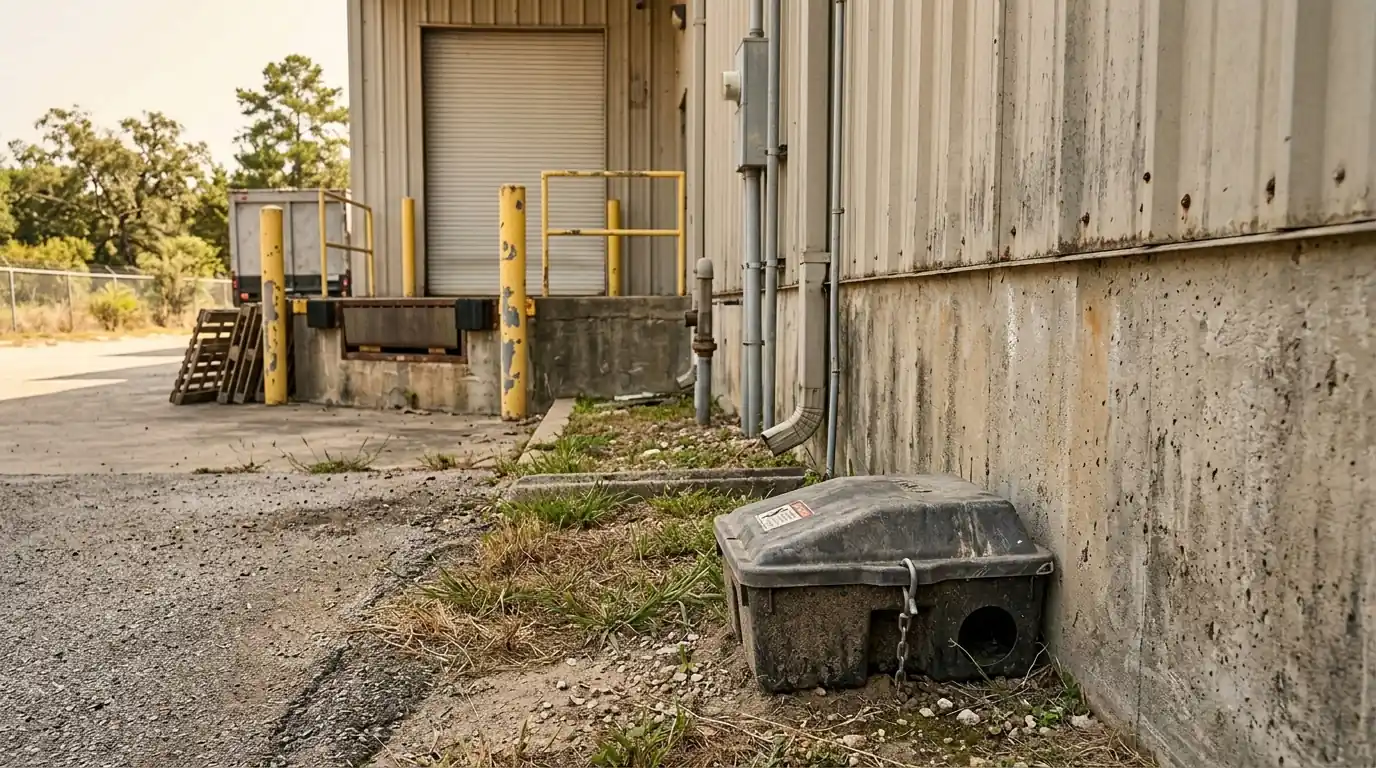
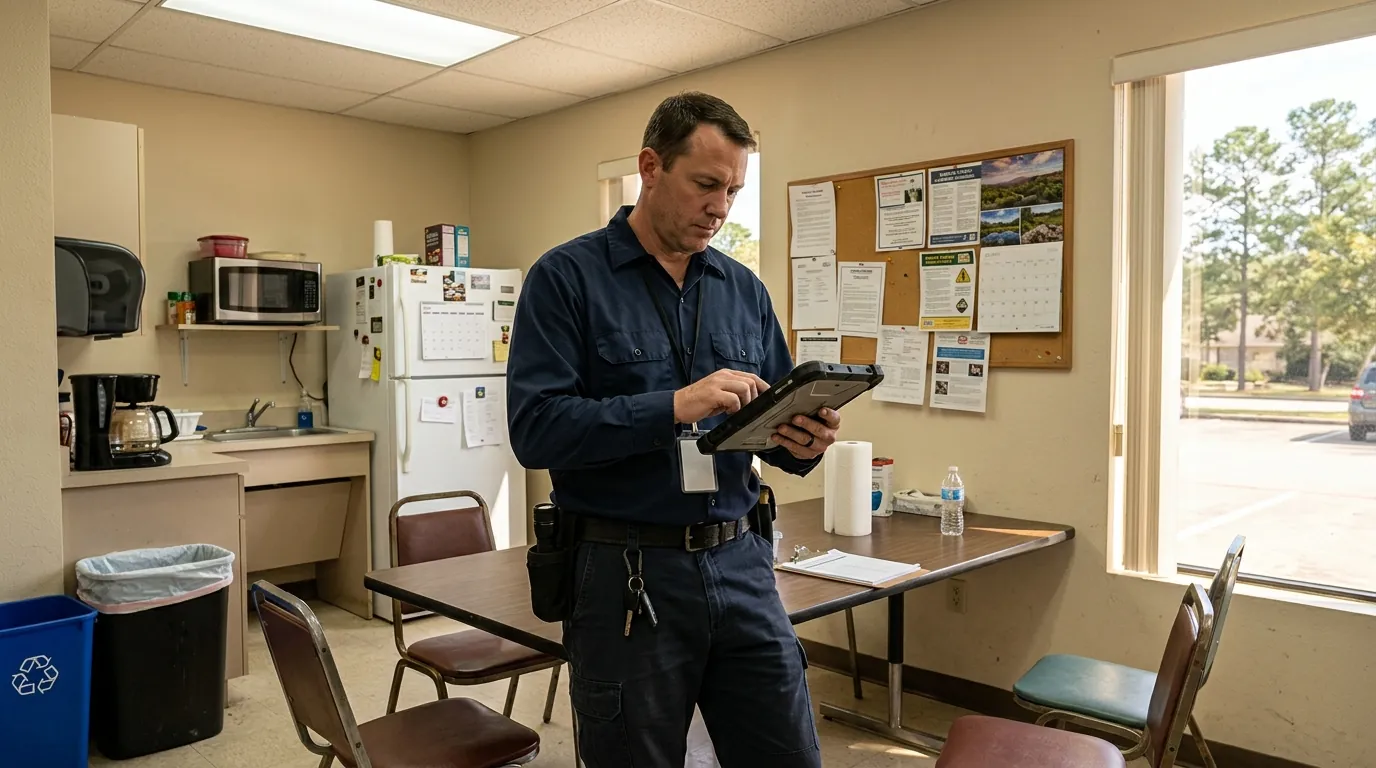
Rodent stations around the exterior, interior monitors in storage and break areas, and targeted treatments for crawling pests form the core. Every visit is logged with findings, products used and recommendations, which is what auditors, health inspectors and property managers ask to see.
Visits are scheduled before opening, after closing or on weekends so customers and staff never see a technician at work.
Inside the visit
What a commercial program includes
- Facility inspection and written plan
- Exterior rodent bait stations
- Interior monitoring devices
- Break room and restroom treatment
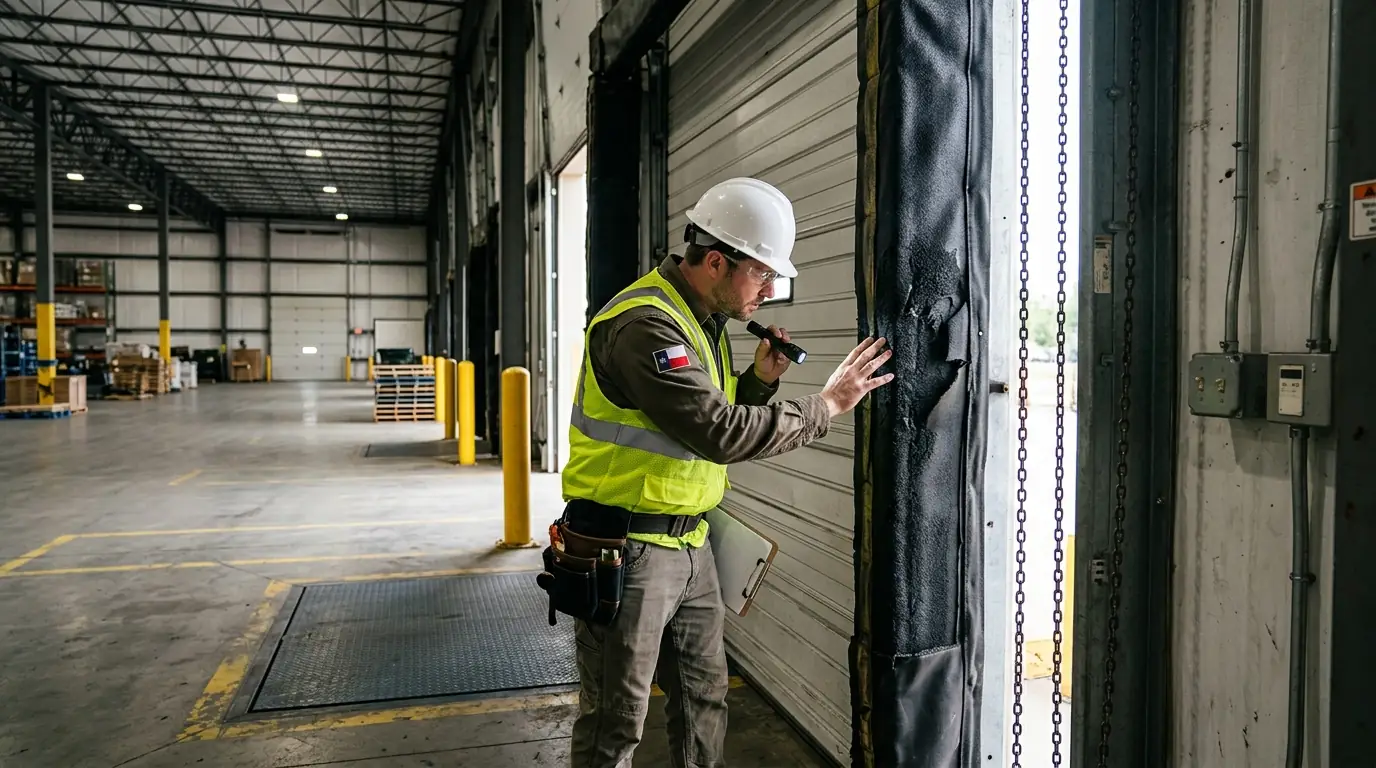
- Loading dock and door inspection
- Dumpster and landscaping notes
- Service logs and reports
- After-hours scheduling
Facility types we service
Offices, warehouses, and sensitive sites
Offices and retail
Offices and retail spaces mostly battle ants, roaches in break rooms and restrooms, and occasional rodents from neighboring units. Service focuses on those zones, with discreet monitors and baits and an exterior barrier. Visits are scheduled outside business hours, and the service log is kept available for property managers who need it. Shared-wall tenants in strip centers get extra attention at the party walls, where pests move between suites, and findings that point to a neighboring unit are noted for the landlord.
Warehouses and distribution
Warehouses bring loading docks, pallets, stored goods and large perimeters. Programs use numbered exterior rodent stations at set spacing, interior monitors along walls, dock door inspections and stored-product pest monitoring where goods are at risk. Findings are mapped by station number so trends are easy to spot over time. Dock levelers, trailer seals and pallet storage are common harborage points, and recommendations for door seals and storage spacing are included in each report so maintenance can act on them between visits.
Medical, schools and sensitive sites
Clinics, schools and daycares need careful product choices, strict timing and clear communication. Programs lean on monitoring, exclusion and baits, with treatments scheduled when buildings are empty and notices provided where required. Documentation is kept detailed because these sites are inspected often. Product lists and safety data sheets are provided to facility managers in advance, and service times are coordinated with administrators so no treatment overlaps with patients, students or staff in the space. Exterior work and monitoring carry most of the load at these sites.
What moves the price
What commercial programs cost turn on
Pricing follows the building, its use and the visit schedule.
Building size
Square footage and number of floors.
Facility type
Warehouses and food-adjacent sites need more monitoring.
Visit frequency
Monthly, twice-monthly or quarterly.
Station count
Exterior rodent stations and interior monitors.
After-hours timing
Visits outside business hours are standard.
Documentation
Logs and audit-ready reports are included.
Commercial programs are quoted per facility after an initial inspection; describe the building and its use and we give a range on the call.
On our Conroe routes
Big grounds, persistent ants
Tawny crazy ants have been documented in Montgomery County, and they form supercolonies that standard baits struggle to control, which matters most on commercial properties with large landscaped grounds, drainage areas and stored materials around the building. A business park or warehouse lot can hold a huge population that spills into buildings and equipment, so commercial programs here monitor the grounds as carefully as the interior.
How this job runs
From inspection to a running program
- 1
Inspect the facility
Inside, outside, docks and dumpsters.
- 2
Write the plan
What, where and how often, in writing.
- 3
Install stations
Exterior rodent stations and interior monitors.
- 4
Service on schedule
Visits outside business hours, logged every time.
- 5
Respond between visits
Calls about new activity get prompt service.
Asked about this job
Commercial program questions
No. Visits are scheduled before opening, after closing or on weekends, and technicians work discreetly.
Yes. Every visit is logged with findings, products and recommendations, and reports are available on request.
It depends on the facility. Offices often do well quarterly; warehouses and food-related sites usually need monthly service.
Yes. Programs can be set up for several sites with consistent reporting.
Call us. Response between visits is part of the program.
Jobs that pair with this one
Related work from the same crews
Restaurant & Food Service Pest Control
Programs built for food service.
Apartment & Property Management Pest Control
Multi-unit residential properties.
Rodent Control
Rodent work that commercial sites need.
Fly Control
Fly lights and drain programs.
Plant the flag on it
Need a program for your building?
Call and we will schedule an inspection around your hours.