Updated October 2026 · Reviewed for current Texas market ranges
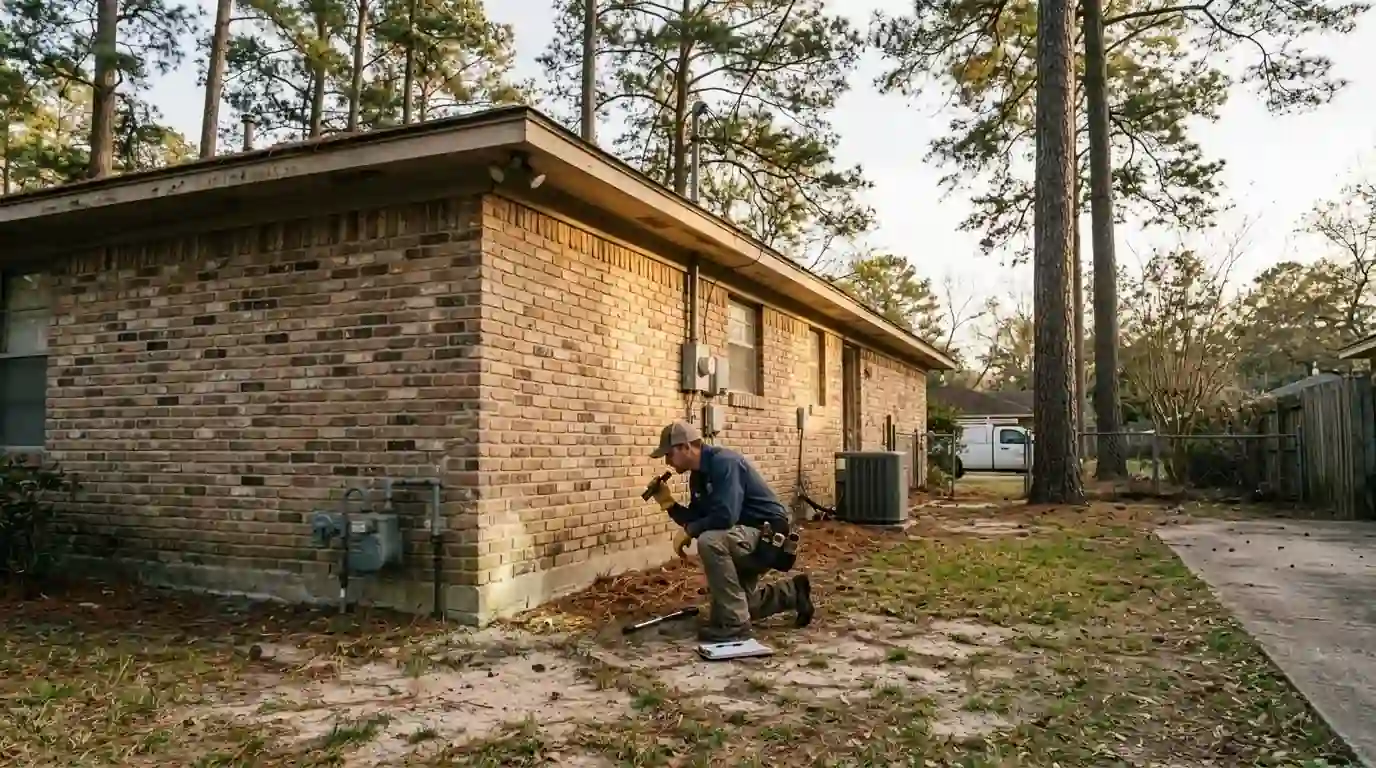
Restaurant pest control in Conroe, TX runs on a monthly or twice-monthly schedule built around health inspections: German cockroach baiting in kitchens, drain and floor treatment for flies, exterior rodent stations, stored-product checks in dry storage, and detailed service logs kept on site. Visits are scheduled before service or after close, and urgent calls between visits get fast response.
Why kitchens need their own program
Heat, water, food, and a health inspector
Commercial kitchens give pests everything at once: warmth from equipment, water at sinks and drains, food everywhere, and hiding places under every piece of stainless steel. German cockroaches, drain flies, house flies and rodents are the usual problems.
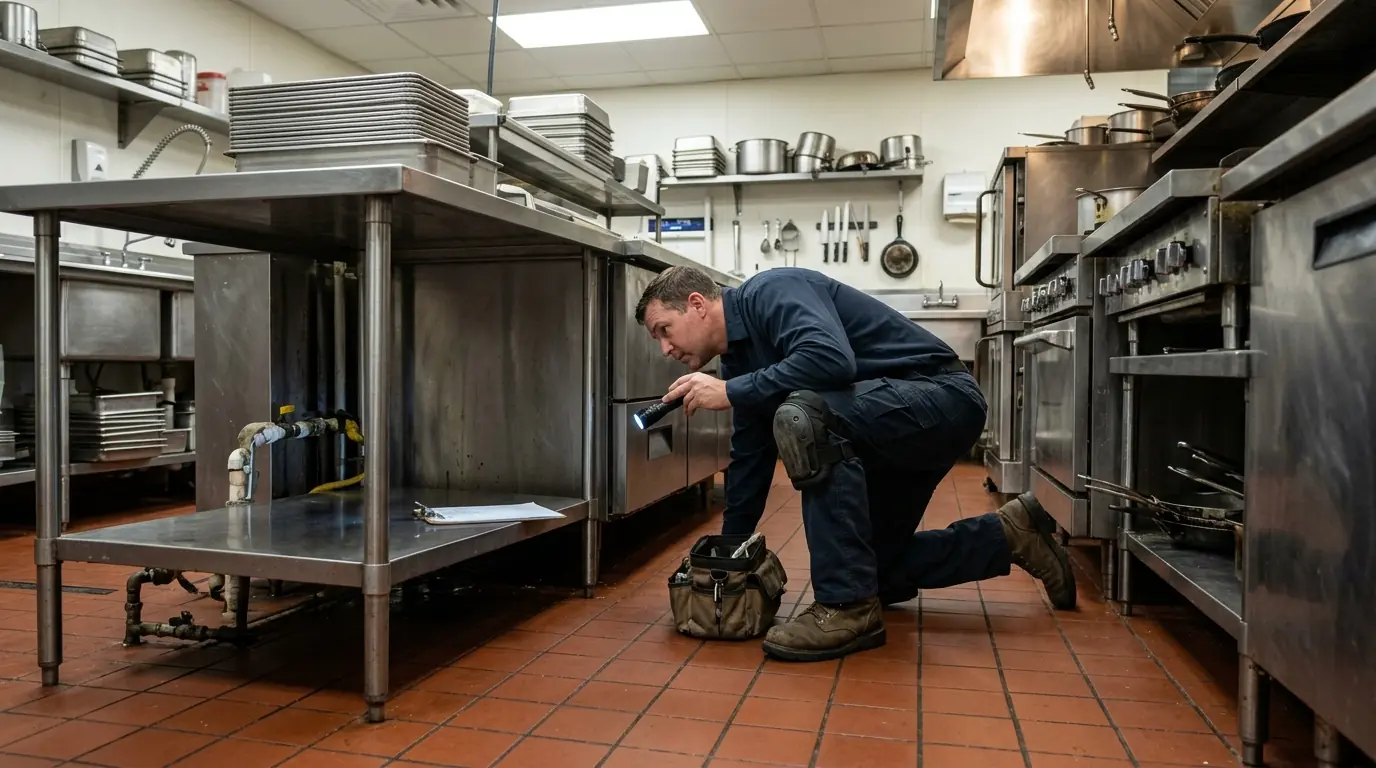
A restaurant program is built around those pressures. Gel baits and growth regulators go into equipment voids and hinge lines, drains are cleaned and treated, fly lights are placed and serviced, exterior stations keep rodents away from back doors and dumpsters, and dry storage is checked for stored-product pests.
Documentation matters as much as treatment. Inspectors expect service records, and our logs show dates, findings, products and corrective recommendations.
Inside the visit
What every kitchen visit covers
- Equipment and wall-void baiting
- Insect growth regulator program
- Floor drain treatment
- Fly light placement and service
- Exterior rodent stations
- Dry storage inspection
- Door sweep and gap checks
- Inspection-ready service logs
What the program covers
Roaches, drains, and storage
German roach programs
German cockroaches are the most common restaurant pest and the one most likely to fail an inspection. Programs use rotated gel baits, insect growth regulators and monitors placed in equipment, under counters and in wall voids, serviced on a tight schedule. Sanitation and maintenance notes, such as gaps behind equipment and leaking lines, go into every report so the kitchen can close the harborage.
Drain and fly control
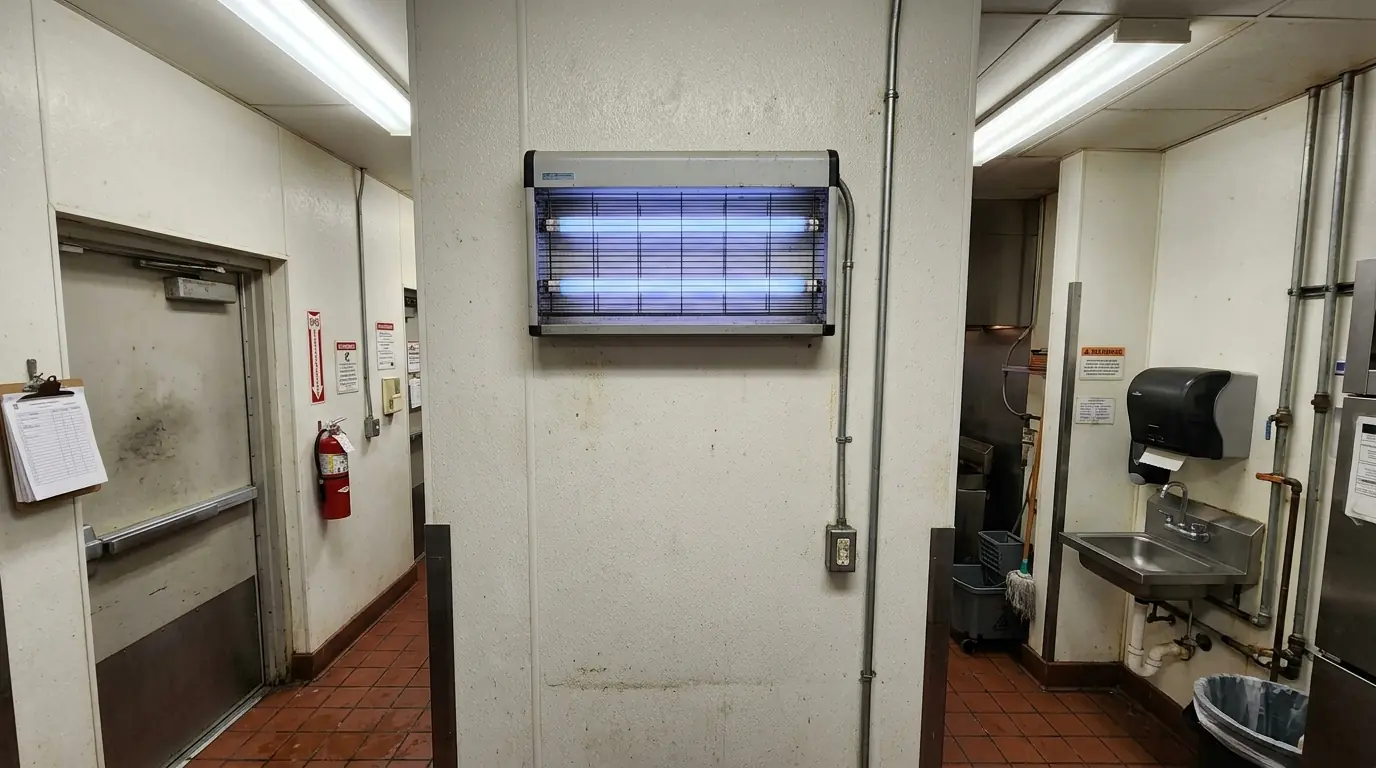
Floor drains, grease traps and under-equipment buildup breed drain flies and fruit flies. Drains are treated with foam or enzyme products, fly lights are placed away from food prep and serviced on schedule, and back doors and dumpster areas are checked for house fly sources. Most fly problems in kitchens trace to one or two drains. Cleaning staff get specific notes on the drains that need extra attention.
Rodents and stored products
Exterior stations around back doors and dumpsters, interior monitors in dry storage, and door sweep and gap checks keep rodents out. Dry storage is inspected for pantry pests, and stock rotation notes help prevent infestations in flour, grains and spices. Back doors propped open for deliveries or ventilation are one of the most common rodent entries in restaurants, and self-closing hardware and air curtains are recommended where they help. Station findings are logged by number, so a sudden spike points straight to the source area.
What moves the price
What restaurant programs cost turn on
Pricing follows the kitchen, the visit frequency and the equipment.
Visit frequency
Monthly or twice-monthly service.
Kitchen size
Square footage and equipment count.
Fly lights
Number of units and servicing.
Drain program
Number of floor drains and traps.
Rodent stations
Exterior and interior station count.
Existing activity
An active German roach problem needs an initial cleanout.
Restaurant programs are quoted after a kitchen inspection; describe the kitchen and we give a range on the call.
On our Conroe routes
Shared walls and back alleys
Restaurants around the downtown Conroe square and along the I-45 frontage roads often share walls, back alleys and dumpster pads with neighboring businesses, which means pests move between kitchens no matter how clean one is. Programs for these locations put extra attention on shared-wall voids, back-door seals and dumpster areas, and keep notes that help owners raise problems with landlords or neighbors when the source sits next door.
How this job runs
From first inspection to a clean log
- 1
Inspect the kitchen
Equipment, drains, storage and exterior.
- 2
Clean out activity
Initial treatment if pests are present.
- 3
Set the program
Baits, monitors, fly lights and stations.
- 4
Service on schedule
Before service or after close, every visit logged.
- 5
Respond fast
Urgent calls between visits get quick service.
Asked about this job
Restaurant program questions
No. Visits are scheduled before opening or after close.
Yes. Every visit is documented with dates, findings, products and recommendations.
Most kitchens need monthly service; busy or older kitchens often need twice-monthly.
Call us right away. We respond quickly with treatment and documentation for the follow-up.
Yes. Programs scale to the size of the operation.
Jobs that pair with this one
Related work from the same crews
German Cockroach Control
The roach program kitchens rely on.
Fly Control
Drain and fly work.
Commercial Pest Control
Programs for other business types.
Pantry & Fabric Pest Control
Stored-product pests in dry storage.
Plant the flag on it
Inspection coming up?
Call and we will set up a kitchen program and the logs to go with it.