Updated October 2026 · Reviewed for current Texas market ranges
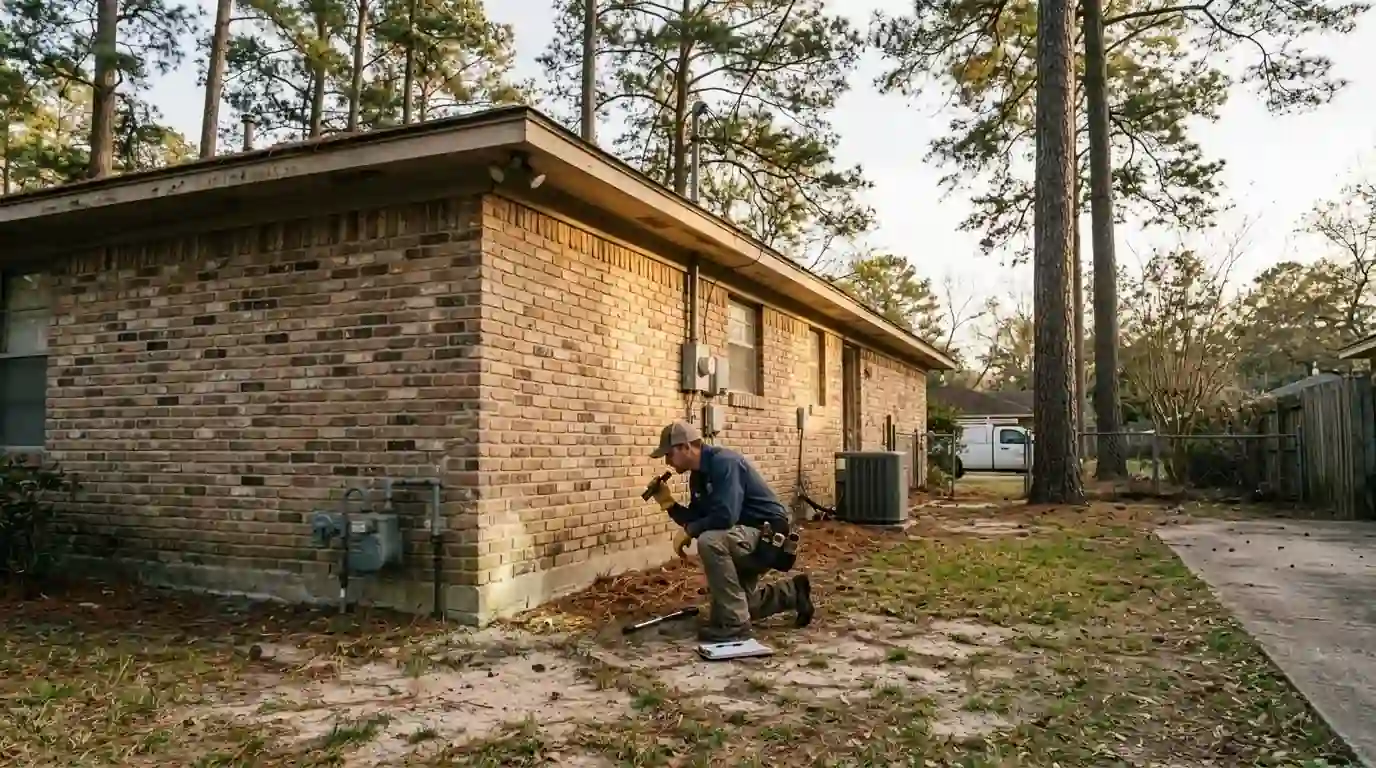
Fire ant control in Conroe, TX works in two layers: a broadcast bait across the whole yard that foraging workers carry down to their queens, and direct treatment of large or badly placed mounds for fast knockdown. Bait alone kills colonies but takes days; mound drenches are instant but miss the colonies you cannot see yet. Together they clear a lawn and keep it clear through the season.
Why mounds keep coming back
The colony lives deeper than the dirt pile
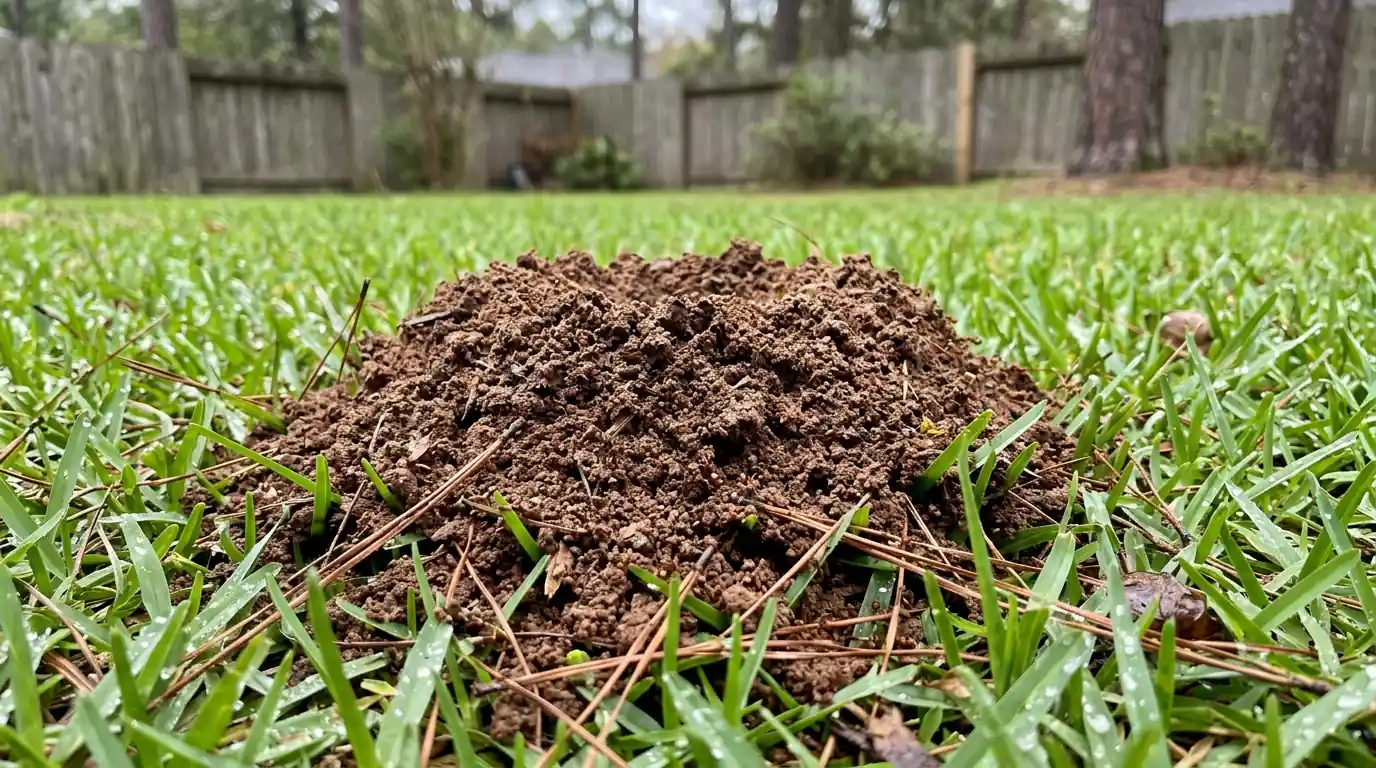
The mound is not the colony; it is the visible roofline of tunnels running feet deep and wide, and a queen that senses an attack simply relocates. That is why boiling water, grits and shovel justice all produce the same result: a new mound six feet away within the week.
Broadcast baiting inverts the problem. Granules spread across the entire yard get collected by foragers from every colony on the property, including the young ones with no mound yet, and carried to the queens. The colonies die from the inside over days, quietly.
Direct mound treatment still has its place: the mound against the AC pad, beside the swing set, or at the mailbox gets drenched for same-day knockdown while the bait handles everything else.
Choosing between the options
Bait, drench, or the hardware store
Kills every colony on the property including the ones without mounds yet; takes days to finish the queens. The right base layer for any yard.
Priced by turf areaSame-day kill of one visible colony; does nothing for its neighbors. Right for urgent placements, wrong as a whole-yard strategy.
Per mound, modestThe products work when measured and timed correctly; most DIY failures are rate and timing failures, not product failures. We will say honestly when your situation is a one-bag job.
DIY, variableHow the work splits
Bait the yard, drench the problem mounds
Broadcast yard baiting
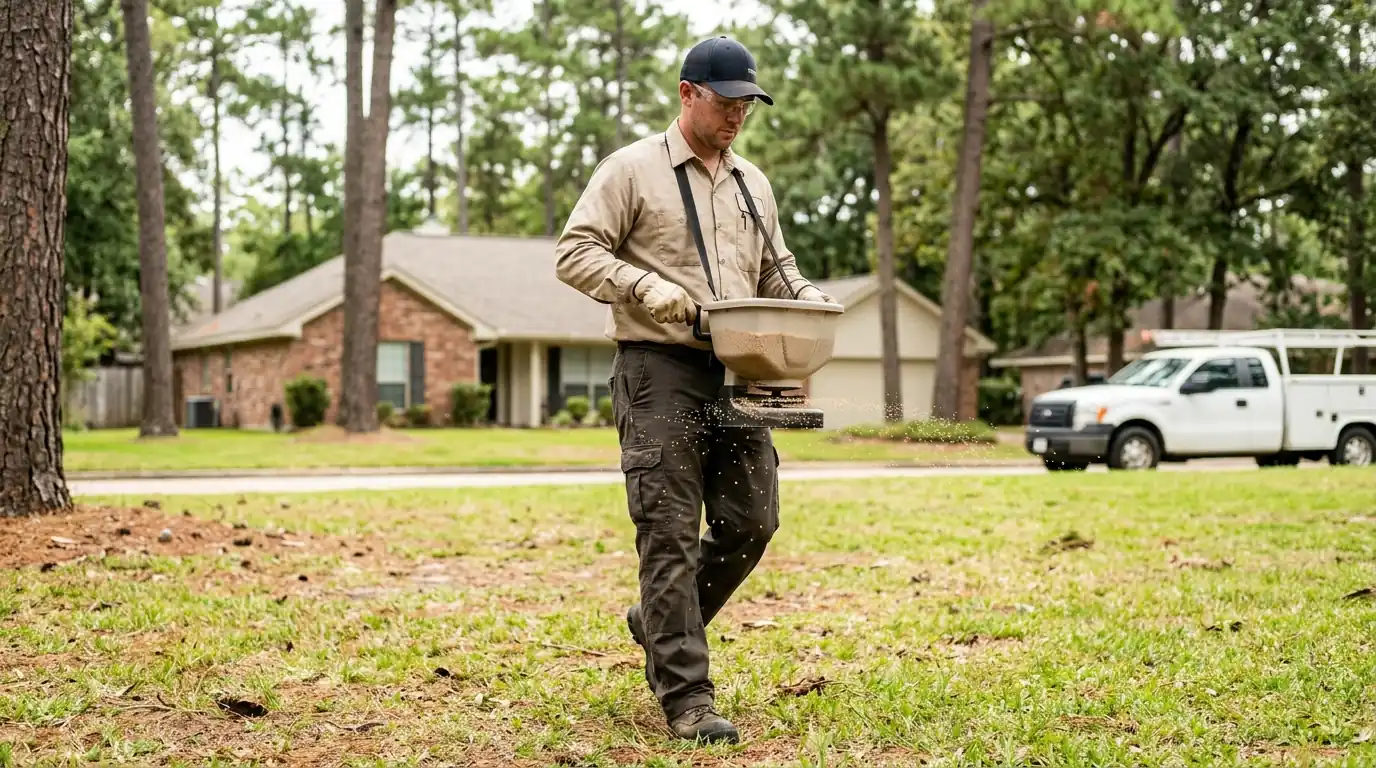
The backbone of real fire ant control: a measured bait application across every treated square foot of turf, timed for dry weather when foragers are active so the granules get collected instead of rained into the soil. It reaches established colonies, satellite colonies and the invisible new ones at once, which is why a baited lawn stays quiet while a mound-by-mound lawn plays whack-a-mole all summer.
Direct mound treatment
For mounds that cannot wait days, against foundations, in play areas, around utility boxes where fire ants love the warmth, a drench or injection kills that colony the same day. We flag treated mounds, warn you which ones will boil with activity for an hour as it works, and pair every mound job with baiting so the rest of the yard does not simply refill the vacancy.
Season-long programs
One treatment clears the yard; the neighborhood pressure never stops arriving. A spring and late-summer baiting rhythm kills new colonies while they are still small and queenless enough to die quietly, and riding the applications on a quarterly pest plan prices lower than booking them as separate visits. Acreage, pastures and ballfields get volume pricing by the treated acre rather than the suburban flat rate.
What moves the price
What fire ant work costs turn on
Yard size does most of the pricing; here is the rest of it.
Treated square footage
Bait is applied by the measured square foot of turf, so lot size is the base number.
Mound count and placement
A handful of drench-now mounds adds modest time; dozens add more.
One-time versus program
Published Texas one-time general treatments run $150 to $350; season programs price per visit, lower.
Bundling
Riding fire ant baiting on a quarterly plan visit trims the combined price.
Acreage and pastures
Beyond a residential lot, pricing moves to the treated acre.
Re-treatment window
A follow-up pass after heavy rain weeks is quoted up front, not sprung later.
The $150 to $350 figure is the published 2026 Texas range for one-time general treatments, given for context; your yard's number is confirmed on the phone from the lot size.
On our Conroe routes
Why Conroe lawns erupt after rain
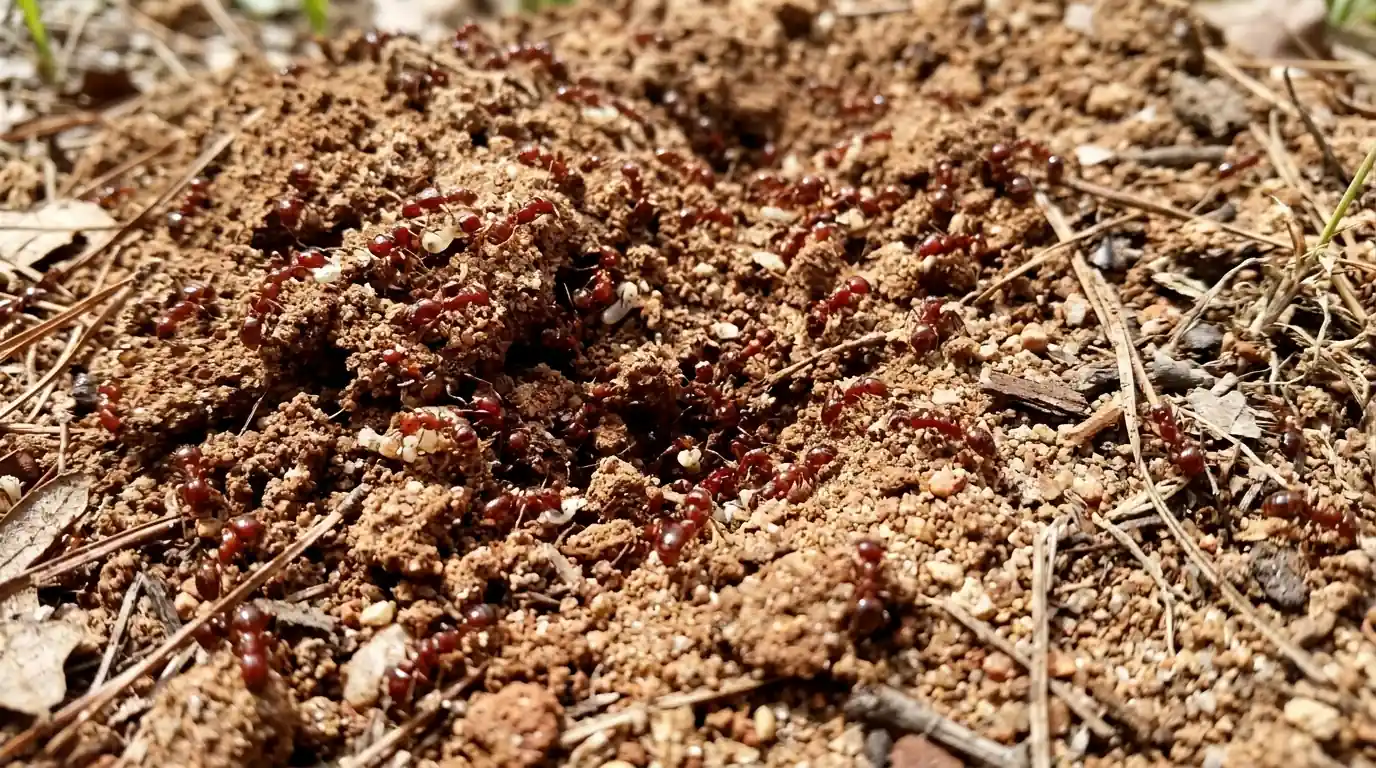
Red imported fire ants thrive in Montgomery County’s warm, moist soil, and the mounds that seem to appear overnight after a storm were there all along: rain drives the colonies upward, so the fresh dirt piles across a lawn are existing nests surfacing, not new arrivals. Spring and early summer bring the region’s biggest fire ant surge, which is why our heaviest baiting weeks run right after the first warm soaking rains, when foraging is frantic and bait uptake is at its best.
How this job runs
From eruption to empty mounds
- 1
Describe the yard
Lot size, mound count and where they are sitting sets the plan.
- 2
Walk and flag
The tech maps mounds, checks bait conditions and flags priority drenches.
- 3
Broadcast the bait
Measured application across the full turf while foragers are active.
- 4
Drench the urgent
Mounds at foundations, play areas and equipment get same-day treatment.
- 5
Check the collapse
Dead mounds stop rebuilding; anything active at follow-up gets re-treated.
Timeline
An hour on site, a week underground
Baiting a typical Conroe lot takes under an hour, drenches minutes per mound, and the colonies collapse over three to ten days as the bait reaches the queens. Mounds built during that window are colonies dying loudly, not treatment failure; the follow-up check is where the yard gets called clear.
Asked about this job
Fire ant questions from Conroe yards
Rain pushes existing colonies upward out of saturated tunnels, so the fresh mounds across a wet lawn are nests you already had, surfacing. It is also the best treatment window: colonies near the surface forage hard, and bait put down then gets taken fast.
The bait goes down at ounces per thousand square feet, scattered thin, not piled, and we go over the short re-entry window for that day's product with you. Mound drenches are flagged while wet. Tell us about chickens, gardens and ponds and the plan routes around them.
Pressure from next door is real, but a baited yard kills arriving queens' new colonies before they establish. Expect an occasional small mound at the fence line between treatments, not a re-infestation; the program rhythm exists exactly for that drift.
Yes. Indoor fire ant trails usually track back to a colony against the slab or under it, so the fix pairs interior treatment with drenching and baiting the source side outside. An indoor sighting is worth a same-week call; colonies under slabs get harder to reach, not easier.
Fire ants are drawn into electrical housings, AC contactors, well pumps and utility boxes, and they destroy equipment by packing contacts with soil and bodies. Mounds near any equipment pad get priority drenching, and it is worth telling us about every box on the property.
Related guide: Why Fire Ant Mounds Erupt After Conroe Rains
Jobs that pair with this one
Related work from the same crews
Ant Control
The other ant species on the same lawns.
Quarterly Pest Control Plans
The plan fire ant baiting rides on.
Flea & Tick Treatment
Yard biters sharing the same turf.
Residential Pest Control
The whole-house service line.
Plant the flag on it
Stop stomping mounds. Start counting dead ones.
Give us the lot size; the yard price comes back on the call.