By Hugh Satterfield, Pest Control Guides Editor · Updated October 2026 · 5 min read
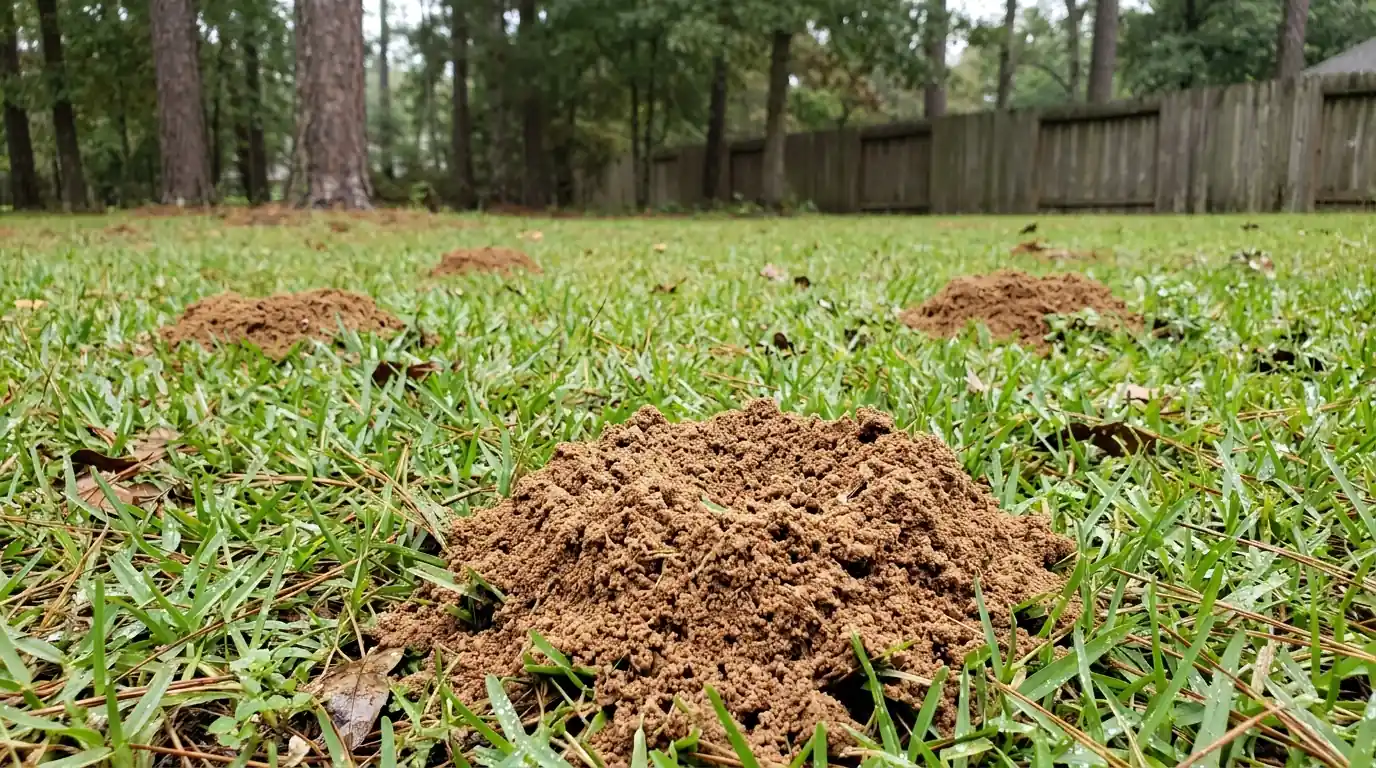
Fire ant mounds appear across Conroe, TX lawns after rain because saturated soil drives existing colonies upward, so the fresh mounds are nests that were already there, not new arrivals. The best time to treat is a day or two after the ground dries, when foragers are active, using a broadcast bait across the yard and direct treatment only for mounds near people, pets or equipment.
Key points from this guide
- Mounds that appear after rain are existing colonies moving up, not new arrivals.
- Kicking or drenching single mounds usually just moves the colony a few feet.
- Broadcast bait on dry ground, when foragers are active, reaches the queens.
- Treat the whole yard first, then spot-treat mounds near doors and equipment.
- A spring and late-summer baiting rhythm keeps new colonies from building up.
What the rain actually does
Red imported fire ants thrive in Montgomery County's warm, moist soil. When heavy rain floods their tunnels, colonies move brood and workers up toward the surface and build fresh mounds to stay above the water. The colony did not arrive overnight; it surfaced.
That is also why mounds sometimes appear at the slab line, in flowerbeds against the house or inside AC pads after a storm: the colony is looking for the driest, warmest ground it can find.
Why kicking or drenching single mounds rarely works
Disturbing a mound sends the queen deeper or sideways, and a new mound appears a few feet away within days. Boiling water and home remedies kill some workers, but they rarely reach the queen and can damage lawns and plants.
A yard also holds colonies that have not built a visible mound yet. Treating only the mounds you can see leaves those colonies alone, and they fill the space within weeks.
Bait timing that actually works
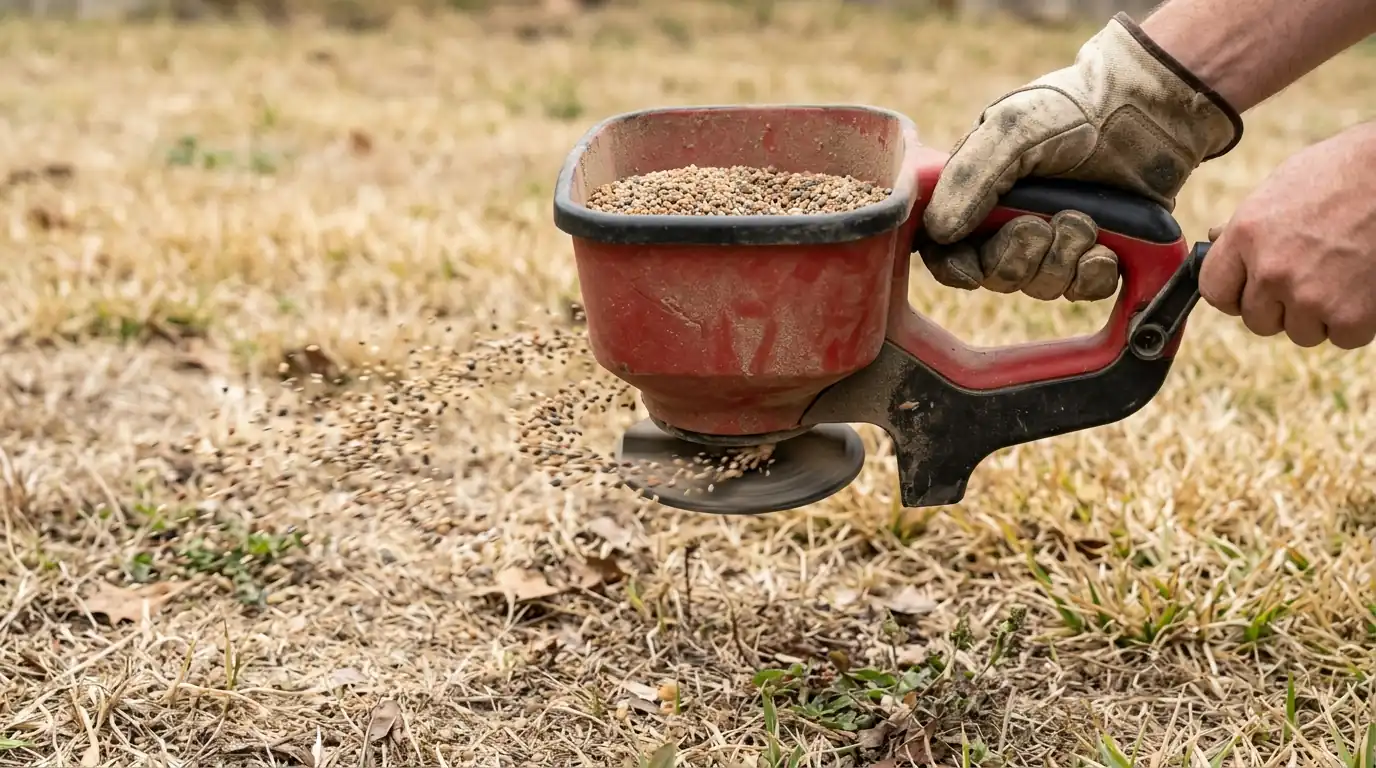
Broadcast bait works because foragers from every colony carry it back to the queen. It needs dry ground and active foragers, so apply it after the soil has dried, when no rain is expected for a day or two, and when temperatures are warm enough for ants to forage. Bait that gets soaked loses its appeal quickly.
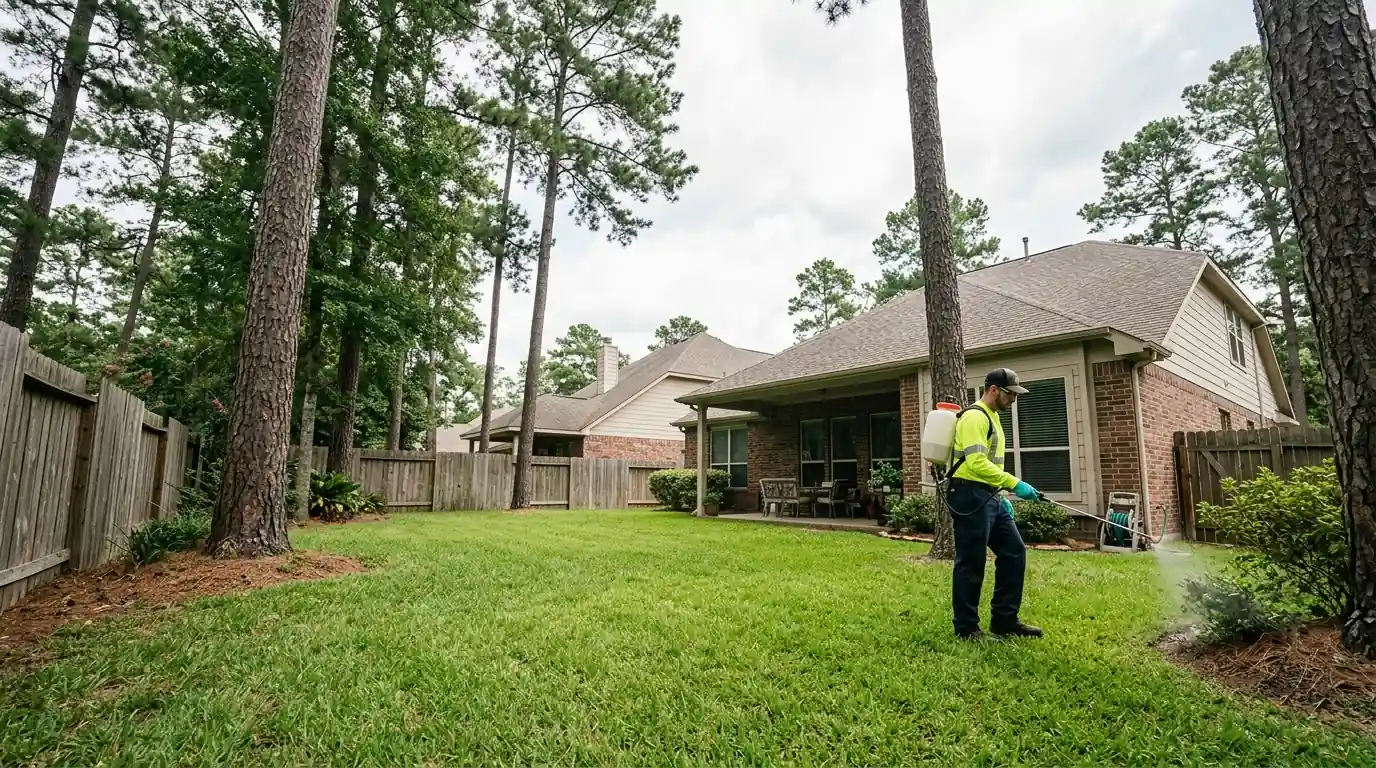
Many Texas homeowners use the two-step approach: broadcast bait over the whole yard first, then treat individual mounds that sit in high-traffic spots. It is the same logic our fire ant service follows.
Seeing this at your place?
Describe what you found and we will tell you on the phone what it is likely to take.
Call (281) 626-0856Spring is the big push
Spring and early summer bring the region's biggest surge in fire ants, mosquitoes and cockroaches. Baiting after the first soaking rains of spring sets the yard up for the season, and a second pass in late summer handles new colonies before fall. Riding those passes on a quarterly plan is usually cheaper than booking them separately.

A year-round plan for one yard
In early spring, after the first soaking rains, broadcast bait across the whole yard once the ground dries. Through late spring and summer, treat individual mounds that pop up near doors, play areas and equipment. In late summer, a second broadcast catches colonies that started from spring mating flights. In fall and winter, colonies slow down, mounds may look abandoned, and that is a good time to note where the problem spots are for next year.
New construction changes the picture. Conroe is Montgomery County's fastest-growing city, and building disturbs soil and pushes displaced fire ant colonies into neighboring yards. If a lot next to you was just cleared, expect more mounds along that side for a season and bait that edge first.
Keep records of when you baited and how the yard responded. Two seasons of notes usually show a clear pattern, and that makes it easy to time the next round before mounds return.
Mistakes that make fire ants worse
Raking or kicking mounds scatters the colony and starts new mounds nearby. Watering a lawn right after spreading bait ruins it, because wet bait loses its appeal. Spreading bait in the heat of the afternoon, when foragers stay underground, wastes it as well; early morning or evening is better in summer.
Using too much bait does not work faster. Bait is designed to be spread thinly over the whole yard so foragers find and carry it home, and piling it on mounds can make the colony avoid it.
Finally, treating only the front yard leaves the back yard and fence lines as a reservoir. Treat the whole property at once, then spot-treat mounds that appear near doors, play areas and equipment.
Protecting kids, pets and equipment
Mark mounds near play areas and keep pets away until the yard is treated. Mounds around AC units, well pumps and electrical boxes deserve quick attention, because fire ants pack contacts with soil and can damage equipment. If anyone in the house has a sting allergy, treat a mound near a doorway or play set as urgent.
Common questions
Questions readers ask about this
Wait until the ground dries a bit. Bait works best on dry soil with active foragers, usually a day or two after the rain.
Mostly no. Rain pushes existing colonies up, so the fresh mounds are nests that were already in the yard.
It kills some workers but rarely the queen, and it can damage grass and plants. Bait is far more reliable.
Usually several days to a couple of weeks, as the bait reaches the queens. Mounds may stay active during that time.
Follow the product directions and the technician's advice; most programs allow normal use once the bait settles, but check for your specific product.
New queens fly in from surrounding properties every year, so some return is normal. A spring and late-summer baiting rhythm keeps them from building back up.
Yes. They are drawn to electrical contacts and can pack them with soil and bodies. Treat mounds near AC pads and electrical boxes quickly.