By Hugh Satterfield, Pest Control Guides Editor · Updated October 2026 · 5 min read
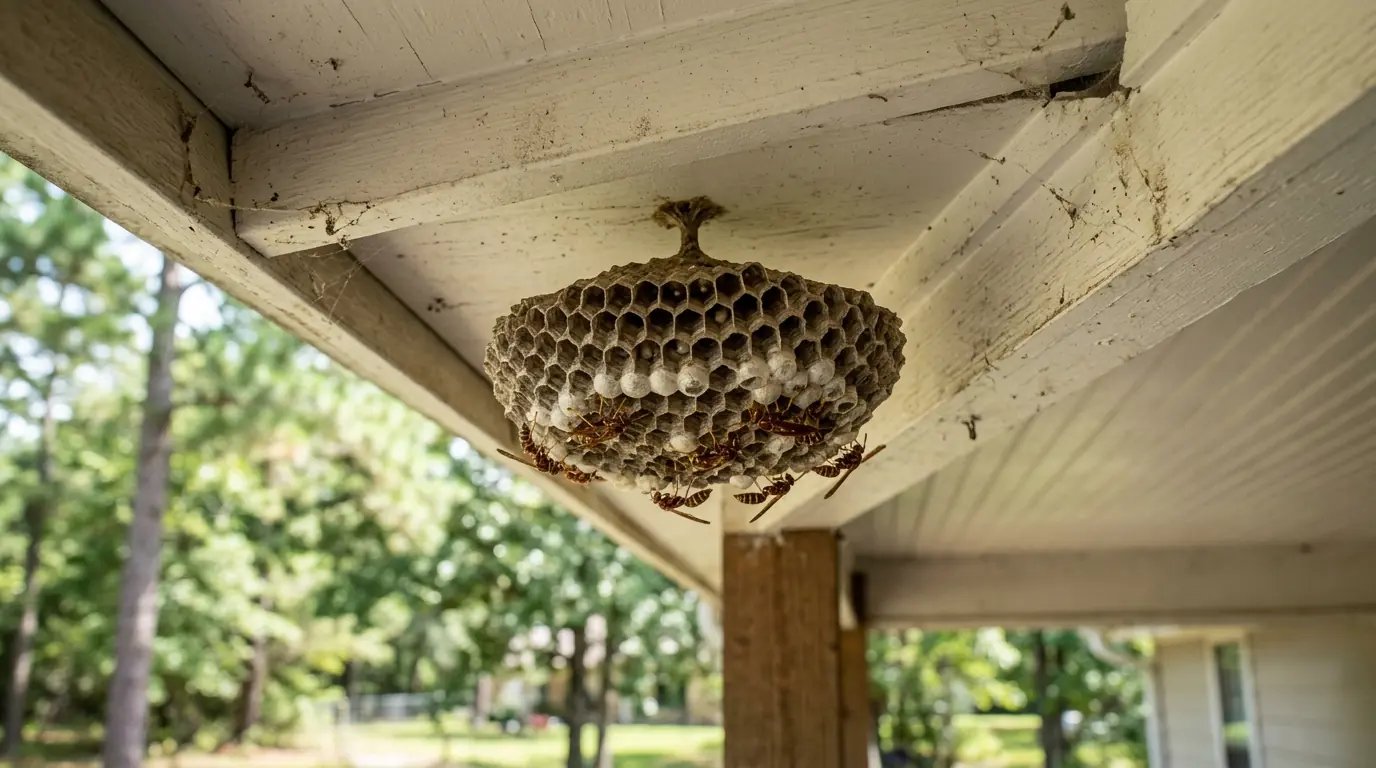
A wasp nest on the eaves of a Conroe home is usually paper wasps, which build open, umbrella-shaped combs and are less aggressive than hornets or yellow jackets. Leave it alone if it is small and away from doors; remove it if it sits over an entry, play area or grill. Treat at dusk when the colony is home, keep children and pets away, and call 911 for any sting with swelling beyond the site or trouble breathing.
Key points from this guide
- Open umbrella-shaped nests under eaves are usually paper wasps.
- Small nests away from doors and play areas can often be left until fall.
- Remove nests over entries, grills and play sets, ideally at dusk.
- Hidden ground or wall nests are usually yellow jackets; never seal an active hole.
- Call 911 for any sting with swelling beyond the site or trouble breathing.
Identify what you are looking at
Paper wasps build open combs, the cells visible from below, hanging from a single stalk under eaves, shutters and porch ceilings. Baldfaced hornets build enclosed gray paper balls, often in shrubs and trees. Yellow jackets nest out of sight, in the ground or inside wall voids, with one busy entrance. Mud daubers build mud tubes and rarely sting.
The type decides the risk. A small paper wasp nest is a manageable job; a hornet nest or a hidden yellow jacket colony is not one to tackle with a can from the store.
When it is fine to leave it
Paper wasps eat caterpillars and other pests, and a small nest high under the eaves on a side of the house nobody uses can be left until fall, when the colony dies off. The test is placement: is it near a door, a walkway, a window you open, a play set or a grill? If not, many homeowners leave it.
When to remove it
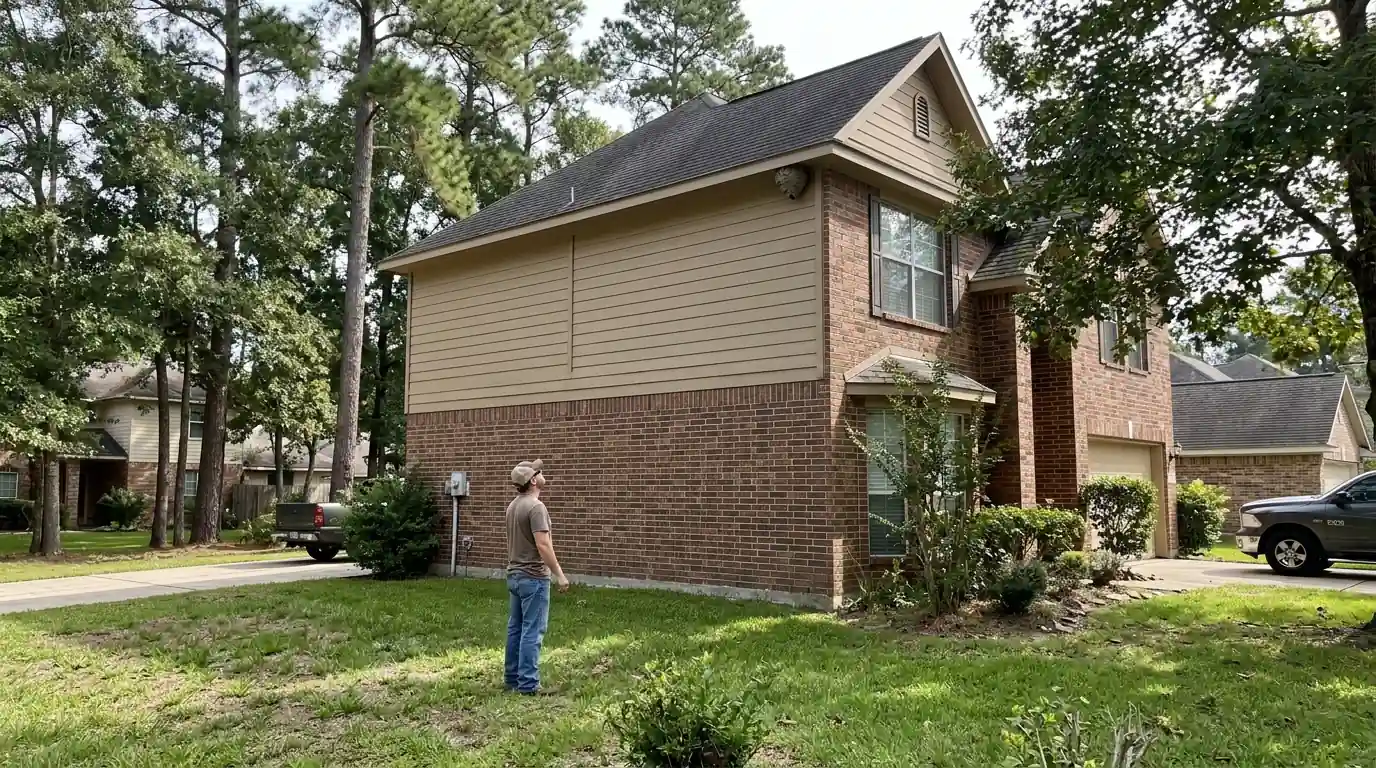
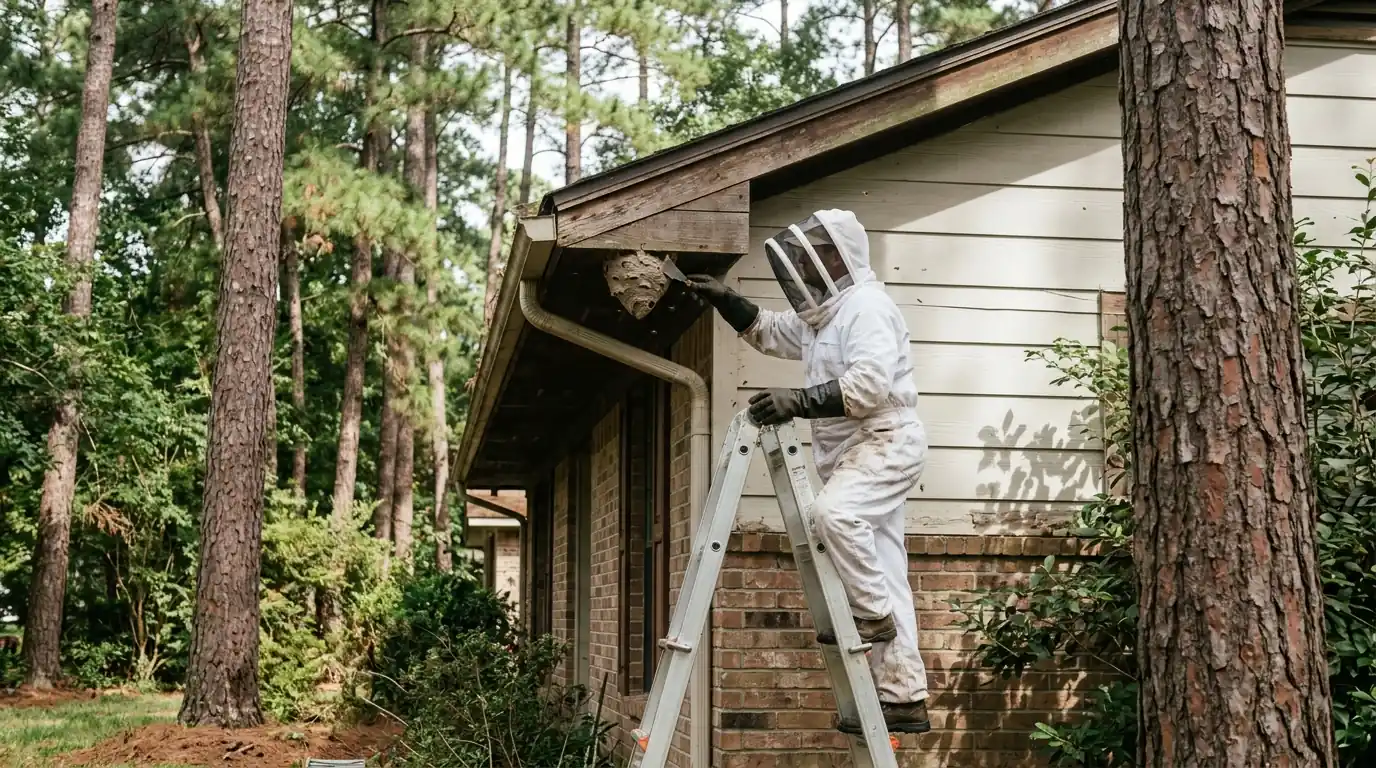
Remove nests over entries, near children's play areas, beside outdoor kitchens, or anywhere someone with a sting allergy spends time. Nests at second-story height, hornet nests and anything entering a wall gap are worth a professional nest removal, because ladders and angry wasps are a bad combination.
Wall-void and ground nests are usually yellow jackets. Do not seal the hole while they are active; they will chew through drywall into the house.
Seeing this at your place?
Describe what you found and we will tell you on the phone what it is likely to take.
Call (281) 626-0856If you do it yourself
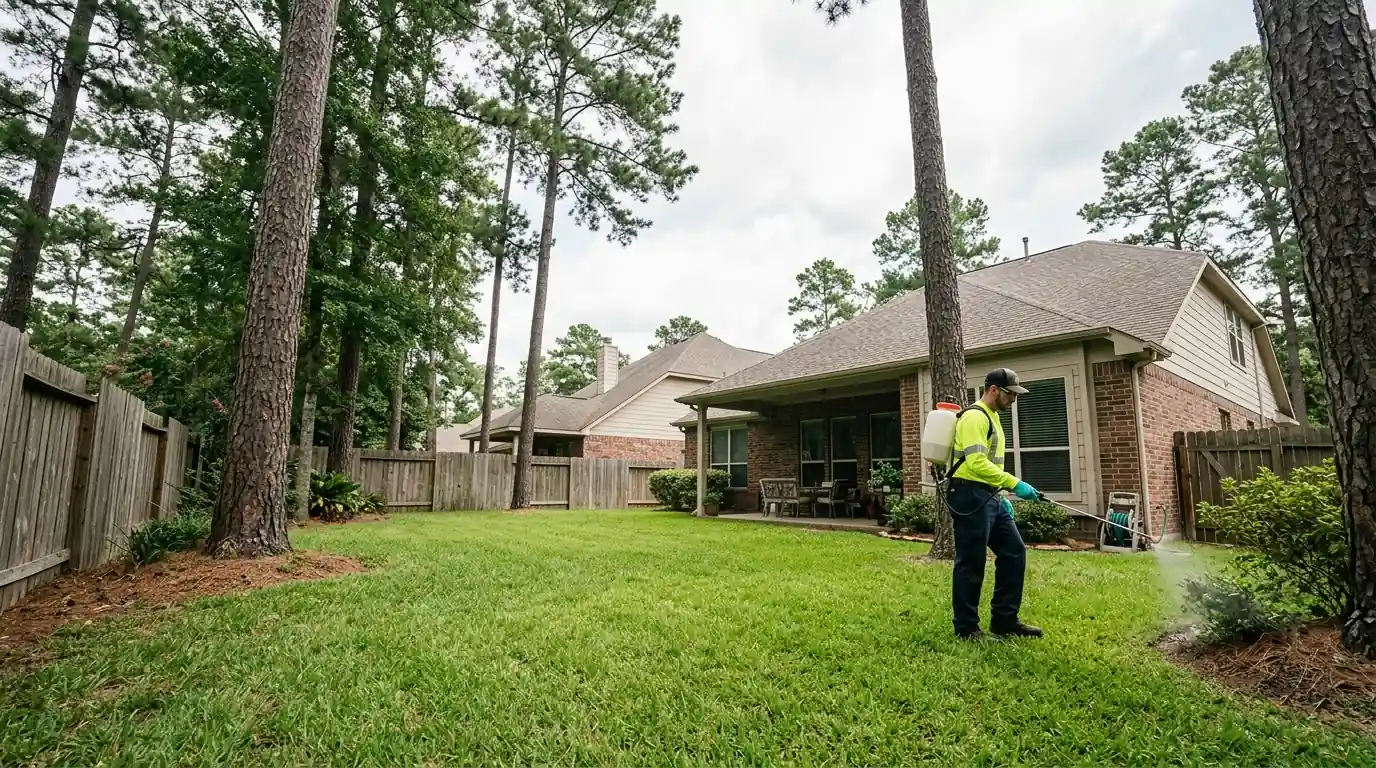
Treat at dusk, when the colony is home and calmer. Stand at a distance with a product labeled for wasps, keep an exit path clear, and wear long sleeves. Wait until activity stops before scraping the comb down, then clean the attachment point so the scent does not attract the next queen. If the nest is bigger than a fist or out of reach, stop and call.
Preventing next year's nests
Paper wasp queens start new nests in early spring, usually March and April around Conroe. At that stage a nest is the size of a coin with only the queen working it, and knocking it down with a long pole is easy and low-risk. A quick walk around the eaves every couple of weeks in spring prevents most summer nests.
Seal gaps in soffits, siding and around vents so wasps and yellow jackets cannot nest inside walls. Keep trash cans closed, clean up fallen fruit, and cover sweet drinks outdoors in late summer when yellow jackets switch to sugar.
Spots that held nests before are likely to attract them again. A light residual treatment at those corners in early spring, as part of a quarterly visit, discourages queens from choosing them.
Hornets and yellow jackets need more caution
Paper wasps are the most common nest on eaves, but two other stinging insects deserve more caution. Baldfaced hornets build enclosed gray paper nests, often in shrubs and trees, and defend a wide area around them. Yellow jackets nest in the ground or inside walls with one busy entrance, and colonies grow large by late summer.
Both sting repeatedly and recruit others to defend the nest, which is why they are not good do-it-yourself jobs. Mowing over a yellow jacket ground nest is the most common way people get stung many times at once.
If you see insects flying steadily in and out of one hole in the lawn or a gap in the siding, mark the spot from a distance, keep people and pets away, and call. Sealing the hole while the colony is active can push them into the house.
If someone is stung
Move away from the nest, remove any stinger if present, wash the area and use a cold pack. Call 911 for hives, swelling of the face or throat, dizziness or trouble breathing. People with known allergies should carry their prescribed medication when working outdoors.
Common questions
Questions readers ask about this
Paper wasp colonies die off in late fall, but queens may return to the same spot next spring if the old nest is left in place.
Less than hornets or yellow jackets, but they will defend the nest if it is disturbed.
Old comb and scent mark a proven site. Removing the comb and treating the spot discourages rebuilding.
Dusk is usually best. Full darkness makes it hard to see what you are doing on a ladder.
Honeybees are a different job. Live removal and comb cleanup are usually the right approach.
Some homeowners report fewer nests near decoy nests, but results are inconsistent. Checking eaves in early spring and removing founding nests works better.
Colonies are largest then, and yellow jackets in particular become more defensive and more drawn to food and sweet drinks.