By Hugh Satterfield, Pest Control Guides Editor · Updated October 2026 · 5 min read
Scratching in a Conroe attic at night is usually roof rats, which climb trees, fences and power lines onto the roof and enter through roof returns, vents and soffit gaps. Squirrels make similar noise but in daylight. Lasting control means trapping the rats already inside, then sealing every entry with metal, and published rodent control programs run about $200 to $600.
Key points from this guide
- Night-time scratching overhead is usually roof rats; daytime noise points to squirrels.
- Roof rats reach the roof from trees, fences and wires, then enter at roof returns and vents.
- Trap first, then seal every gap with metal, never foam alone.
- Avoid poison bait in the attic; rats that die in walls cause odor and flies.
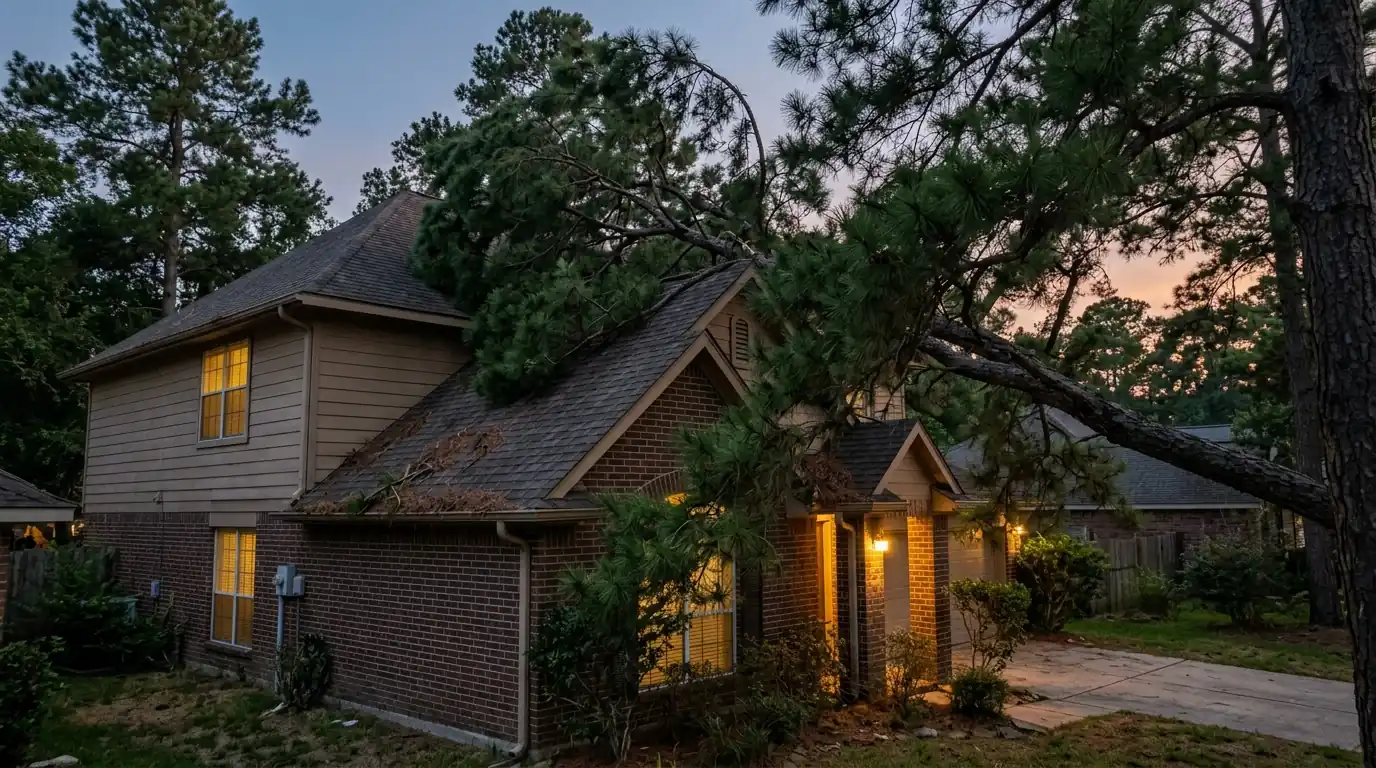
- Trim branches back from the roof to close the bridge rats use.
Rats or squirrels? Listen to the clock
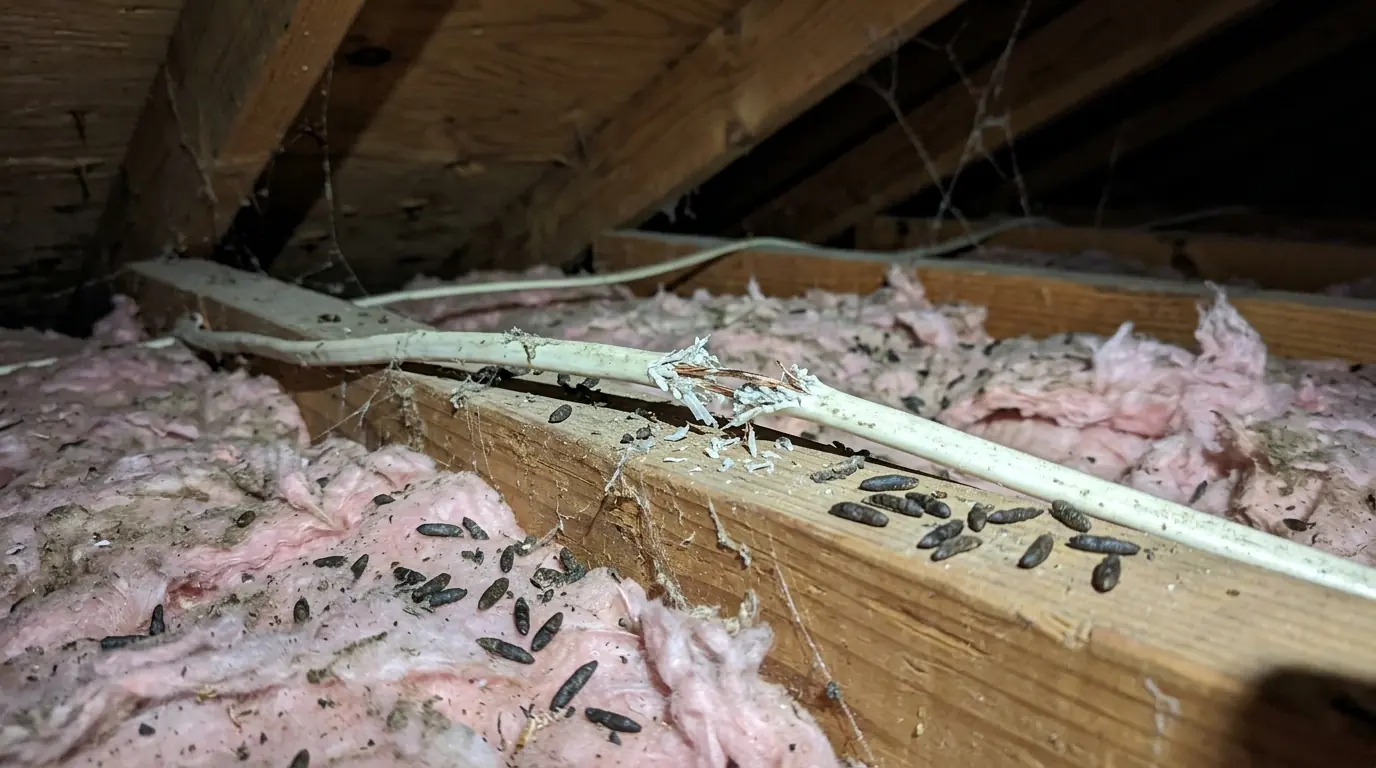
Timing is the best first clue. Roof rats are active at night, often starting soon after dark. Squirrels move during the day, especially early morning and late afternoon. Raccoons are much louder and heavier. Droppings settle it: roof rat droppings are about half an inch long and spindle-shaped, usually found along insulation, on top plates and near entry points.
Why roof rats are so common here
Roof rats are routine calls across Conroe and Montgomery County. Older street grids near Historic Downtown Conroe and along the I-45 corridor combine aging structures with mature pine canopy, and roof rats travel the overhanging branches straight onto rooflines. Newer neighborhoods under tall pines see the same pattern.
How they get into the attic
Roof returns, where a lower roof meets a second-story wall, are the most common entry. Gaps behind fascia, loose soffit panels, unscreened gable vents and gaps around plumbing vent boots are next. A roof rat needs an opening about the size of a quarter.
Once inside, they nest in insulation near the eaves and travel along rafters and wiring. Chewed wiring is the risk that worries electricians most, and contaminated insulation is the cleanup bill that follows a long infestation.
Seeing this at your place?
Describe what you found and we will tell you on the phone what it is likely to take.
Call (281) 626-0856The fix that lasts: trap, then seal
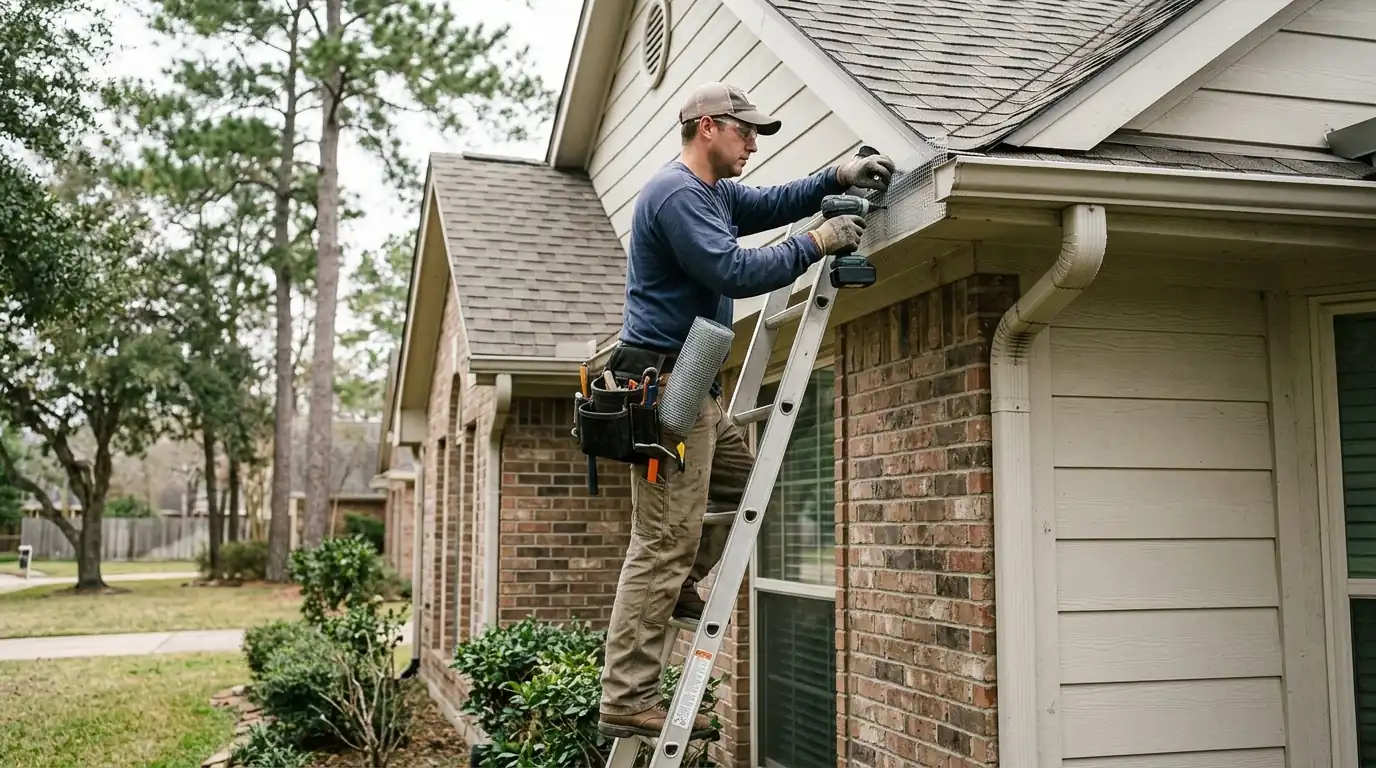
Trapping comes first, with traps placed on the rafters and runways the rats actually use, and follow-up visits until activity stops. Then exclusion seals every entry with galvanized mesh, metal flashing and sealant, because foam alone gets chewed through. Sealing before trapping traps rats inside the walls.
Trimming branches back from the roof closes the bridge rats use to reach it. If droppings and nesting are heavy, an attic cleanup removes contaminated insulation and restores what the rats flattened.
Signs besides the noise
Noise is usually the first clue, but roof rats leave others. Look for dark greasy smudges along beams, top plates and the edges of attic openings where their fur rubs as they travel. Check the garage for droppings near stored pet food, birdseed or boxes. Outside, look for chewed citrus or other fruit still on the tree, and gnawed insulation on the AC line set where it enters the wall.
Pets often notice first: a dog or cat staring at the ceiling or a particular wall at night is worth taking seriously. A musty, ammonia-like smell near the attic access usually means droppings and urine have built up.
Write down when and where you hear activity. A simple log of times and rooms helps the technician place traps on the right runways and find the entry faster.
Roof rats or Norway rats?
Two rat species turn up in Conroe homes, and they behave differently. Roof rats are slim, agile climbers with long tails, and they live high: attics, upper walls and trees. Norway rats are heavier, burrow in the ground, and usually enter low, through gaps at the slab, garage doors and crawl spaces.
Knowing which one you have changes where traps go and which gaps get sealed first. Roof rat work focuses on rafters, roof returns and branches touching the roof; Norway rat work focuses on burrows along the foundation, garage corners and ground-level openings.
Droppings help tell them apart: roof rat droppings are smaller and pointed at the ends, while Norway rat droppings are larger and blunt. Mice leave much smaller droppings and can share space with either species. If you are not sure, photograph the droppings next to a coin and send the picture when you call. Placement of traps and the order of sealing both depend on which rodent is living in the house, so this small step saves a visit.
What not to do
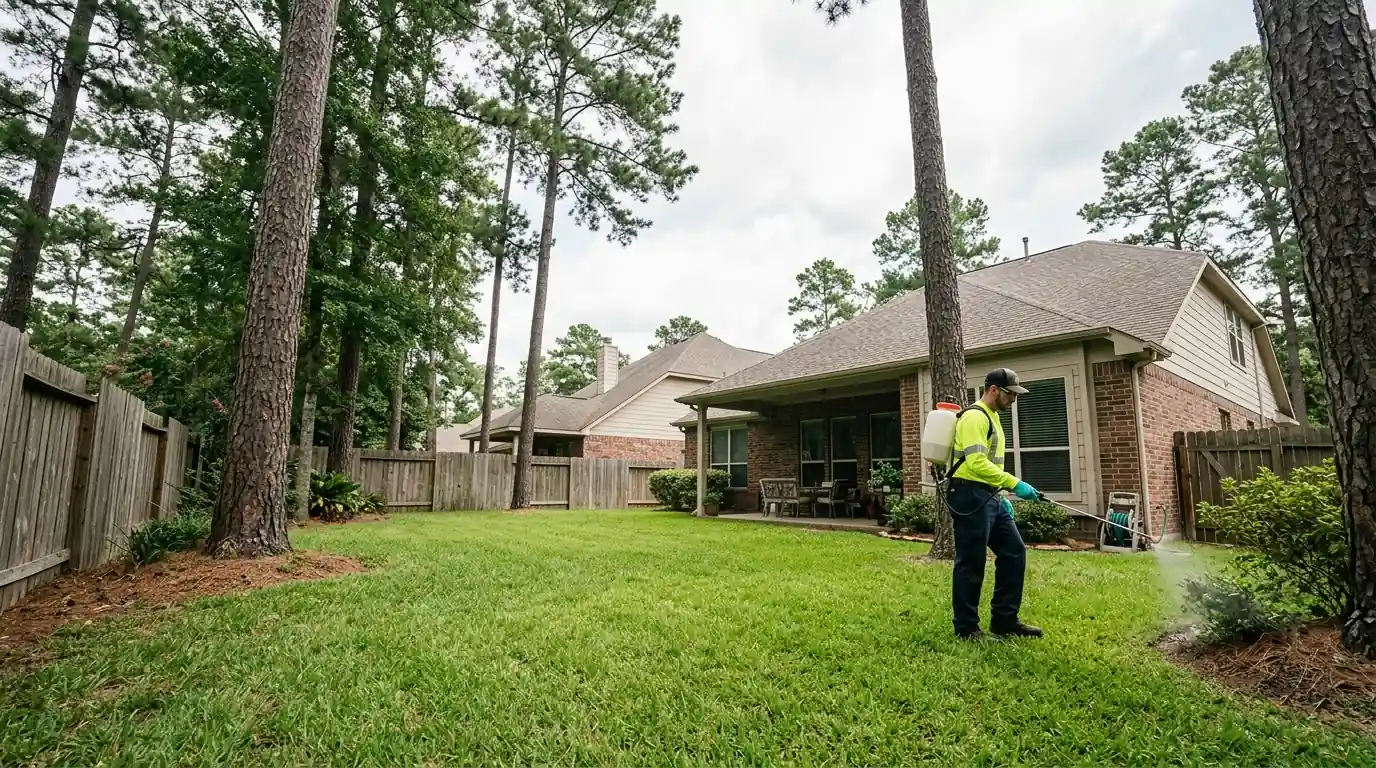
Avoid scattering poison bait in the attic. Poisoned rats often die in walls, leaving odor and flies for weeks. Do not sweep or vacuum heavy dropping piles dry without protection. And do not seal a hole while you can still hear activity inside.
Common questions
Questions readers ask about this
Rarely. An attic with warmth, nesting material and a safe entry is a home they keep using.
Trapping usually shows results within a week and wraps up in two to four visits, followed by sealing.
They chew wiring and contaminate insulation with droppings and urine, and those can carry disease. That is why cleanup is done with protective gear.
There is little evidence they keep rats out long-term. Trapping and sealing work.
Published rodent control programs run about $200 to $600, with exclusion and cleanup priced separately after inspection.
Yes. They travel down wall voids, plumbing chases and gaps around attic access panels into kitchens and pantries, especially when food is easy to reach.
Cats may catch some, but they rarely solve an attic infestation. Trapping and sealing are still needed.