By Hugh Satterfield, Pest Control Guides Editor · Updated October 2026 · 5 min read
The earliest signs of termites in Southeast Texas homes are pencil-width mud tubes on the foundation, swarms of winged termites or piles of shed wings near windows in spring, and wood that sounds hollow or blisters under paint. Drywood termites leave small piles of pellet frass instead. Finding any of these is worth a professional inspection the same week, before you disturb the evidence.
Key points from this guide
- Mud tubes on the slab, piers or garage joints are the most common early sign.
- Swarmers or piles of equal-length wings near windows mean a colony is close.
- Pellet-shaped frass points to drywood termites living inside the wood.
- Leave evidence in place and photograph it before calling for an inspection.
- Check the slab line, garage, bathrooms and attic edges twice a year.
Mud tubes on the slab or piers
Subterranean termites, the most common kind around Conroe, cannot survive in open air, so they build mud tubes from the soil up to the wood they are eating. Look along the slab edge, at garage expansion joints, around plumbing penetrations and on crawl-space piers. A live tube breaks open moist with small pale insects inside; a dry, crumbling tube may be old, but it still means a colony found the house once.
Do not knock tubes down before an inspection. An intact tube shows the inspector where the colony enters and whether it is active, which is exactly what a treatment plan is built around.
Swarmers and shed wings in spring
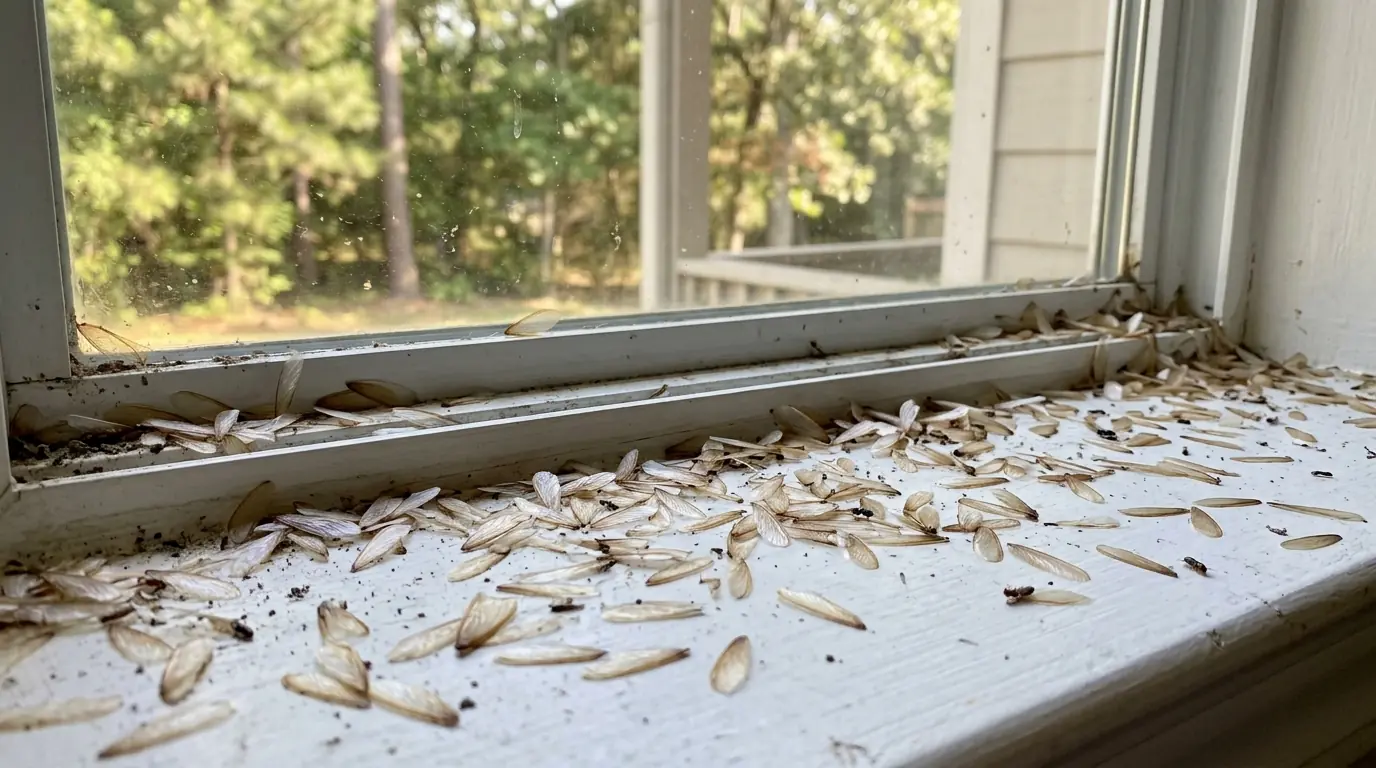
Mature colonies send out winged reproductives, and in Southeast Texas that usually happens from late winter through spring. Native subterranean swarms tend to come out in daylight, often after a warm rain, while Formosan swarms come out at dusk in late spring and are drawn to lights.
Swarmers indoors, or piles of equal-length wings on windowsills and in light fixtures, mean a colony is close enough to the house to matter. Flying ants look similar; termites have straight antennae, a thick waist and four wings of equal length.
Frass, soft wood and paint that bubbles
Drywood termites live entirely inside wood and push their waste out of tiny holes, leaving piles of six-sided pellets that look like coarse sand or ground pepper below trim, sills or rafters. Fresh piles that return after you clean them are a strong sign of a live colony.
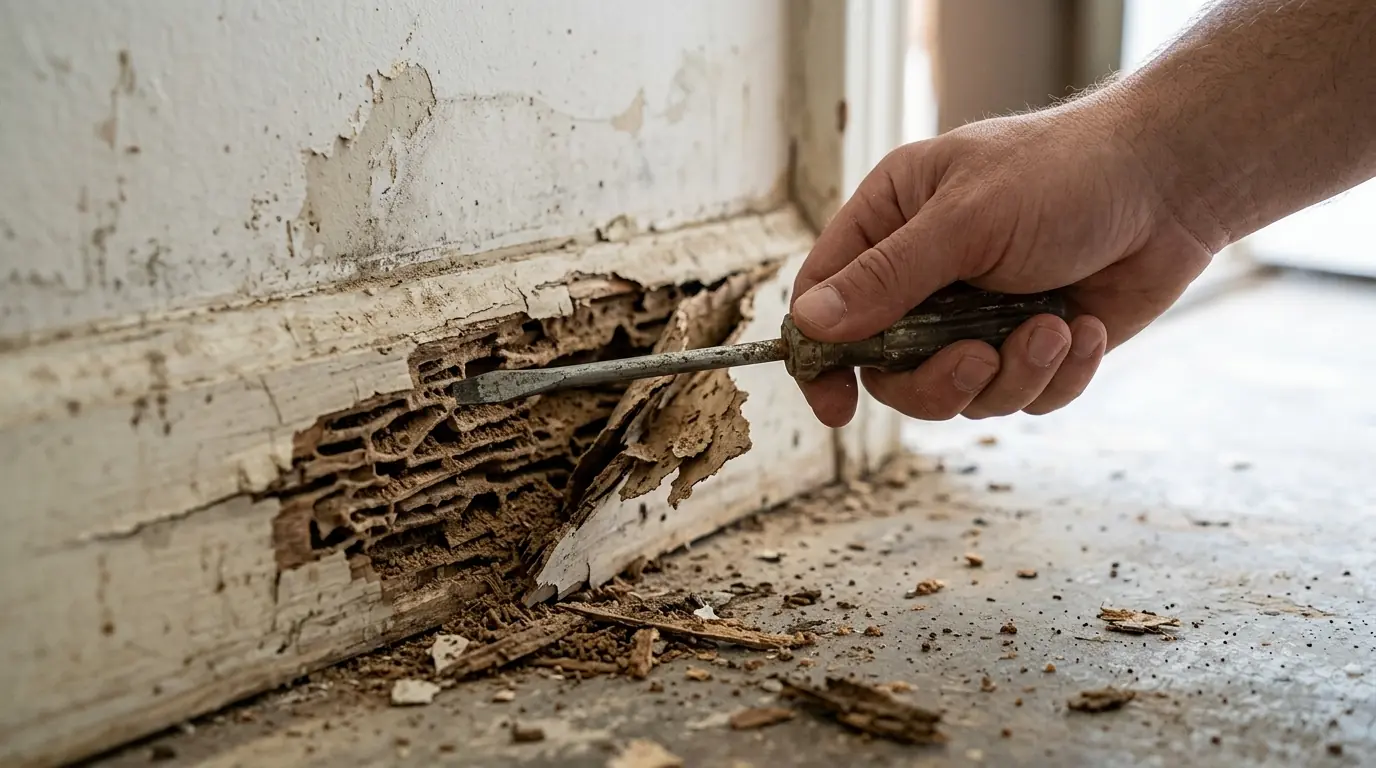
Subterranean damage shows differently: baseboards or trim that sound hollow when tapped, paint that bubbles or blisters, and doors or windows that suddenly stick near a damp wall. Probing with a screwdriver often reveals galleries packed with soil.
Seeing this at your place?
Describe what you found and we will tell you on the phone what it is likely to take.
Call (281) 626-0856Why Conroe homes see more of this
Conroe-area homes face three termite types: subterranean, drywood and Formosan. Montgomery County's clay-heavy soil holds moisture and lets subterranean colonies stay active through the year, and the Piney Woods canopy keeps foundations shaded and damp. That is why inspections here check the attic and rafters as well as the slab line, and why a yearly inspection is cheap insurance.

A twice-a-year walk-around routine
Most early finds come from homeowners who simply look. Twice a year, in late winter before swarm season and again in early fall, walk the outside of the house with a flashlight and check the slab edge on every side, the garage expansion joints, the spots where plumbing enters the slab, and anywhere soil, mulch or pavers sit higher than the foundation line.
Inside, check windowsills and light fixtures for wings, look under sinks where pipes enter the floor, and tap baseboards in bathrooms and along exterior walls. In the attic, look at the rafter ends near the eaves for frass piles or soft wood. Outside, check fence posts, deck ledgers and any firewood stacked near the house.
Keep firewood well away from the foundation, pull mulch back a few inches from siding, and fix dripping hose bibs and AC condensate lines that keep soil wet against the slab. Those small changes make a home far less inviting.
Termite or carpenter ant? A quick comparison
Both insects damage wood and both swarm, so they get confused constantly. Termite galleries are lined or packed with soil and look rough and dirty; carpenter ant galleries are smooth and clean, with fibrous shavings pushed out below. Termite swarmers have straight antennae, a thick waist and four wings of equal length; winged carpenter ants have elbowed antennae, a pinched waist and a shorter back pair of wings.
The treatments are completely different, so getting the identification right comes first. A clear photo of a swarmer, a wing pile or the debris below a hole usually settles it. When in doubt, keep a few specimens in a sealed bag and show them to the inspector.
If you find both, which happens in shaded, damp corners, both problems need attention, and the moisture behind them is usually the common cause.
What to do the day you find something
Leave the evidence in place, take photos, and note where and when you saw it. Avoid spraying store-bought products on tubes or swarmers; it kills a few insects and scatters the evidence without touching the colony. Call for an inspection and ask the inspector to name the species and show you the activity before quoting.
Common questions
Questions readers ask about this
Not necessarily. Flying ants have elbowed antennae, a pinched waist and uneven wings. Termite swarmers have straight antennae, a thick waist and equal wings. A photo usually settles it.
Mature colonies usually swarm each year in spring. A swarm indoors means the colony is in or near the structure.
Rarely. Workers avoid light and open air, so the signs are tubes, wings, frass and damage rather than the insects themselves.
Old damage needs a structural look, and an inspection should confirm the colony is truly inactive. Dry, empty galleries with no fresh tubes are a good sign.
It depends on colony size and species. Large Formosan colonies work faster than native ones, which is why early detection matters most here.
Yes. Brick veneer sits on the slab, and termites can travel up behind the brick through weep holes and gaps to reach the wood framing. Brick hides tubes rather than stopping them.
A treated colony dies, but new colonies can find gaps where soil is disturbed later. Yearly inspections catch that early.