Updated October 2026 · Reviewed for current Texas market ranges
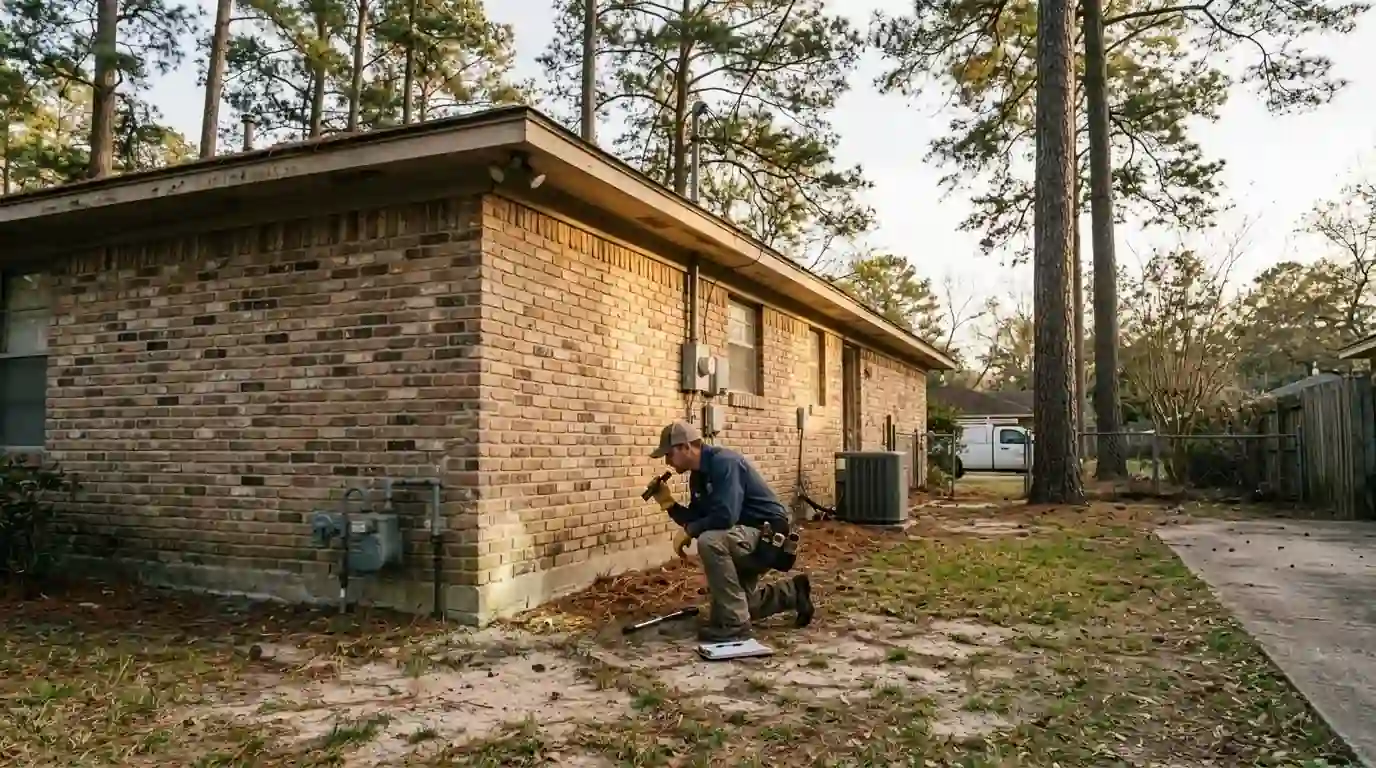
Large roach control in Conroe, TX targets the outdoor sources: smokybrown and American cockroaches, the local palmetto bugs, breed in mulch beds, tree holes, attics and drain lines and wander indoors rather than living there. Treatment works the perimeter, the landscape harborages and the attic, pairs it with granular and bait placements outside, and flags the entry routes worth sealing.
Know which roach you have
Outdoor breeders that treat from the outside
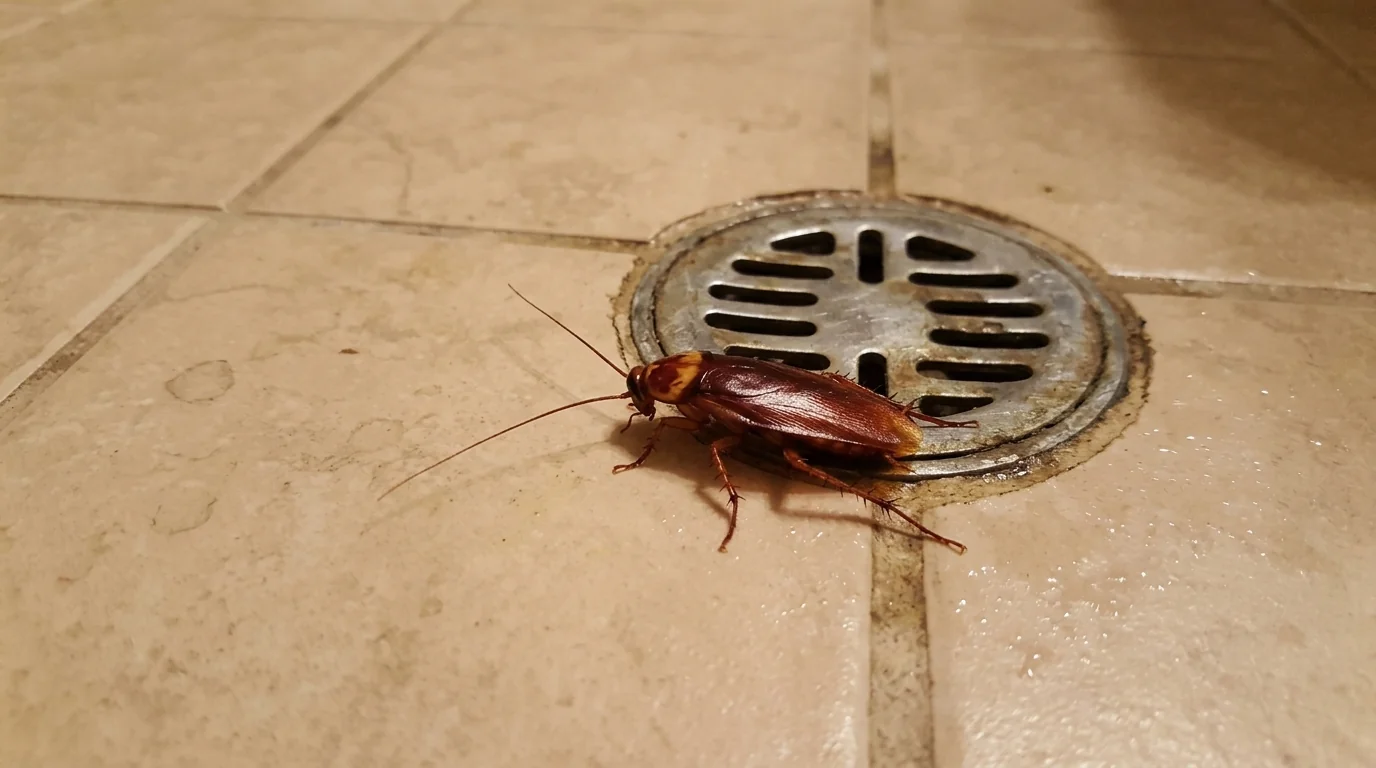
Size is the tell. The small tan roach that scatters in the kitchen is a German cockroach and an indoor problem; the big reddish-brown or mahogany roach that appears in a bathroom or garage is a palmetto bug, breeding outside in mulch, ivy, tree holes, woodpiles and sewer lines. The treatments are opposites, which is why identification opens every roach call.
Because the population lives outdoors, indoor spraying is theater. The visit works where the roaches actually are: granular bait through the mulch and bed lines, treatment into weep holes and the garage slab joints, attention to the attic where smokybrowns love to settle, and perimeter band work at the foundation.
The sightings themselves are route information. A roach in the same bathroom repeatedly points at a dry drain trap or a plumbing wall gap; one in the hallway near the garage points at the door sweep. The visit ends with those routes named so the cheap fixes get made.
Inside the visit
The large-roach visit, itemized
- Species confirmation from your description or specimen
- Granular bait through mulch and bed lines
- Tree-hole and stump cavity treatment
- Woodpile and fence-line attention
- Attic inspection and dusting where settled
- Weep-hole and garage slab-joint treatment
- Drain-route check and trap guidance
- Written entry-route and sealing findings
Where the treatment lives
Landscape, drains, and the seasonal waves
Source and harborage treatment
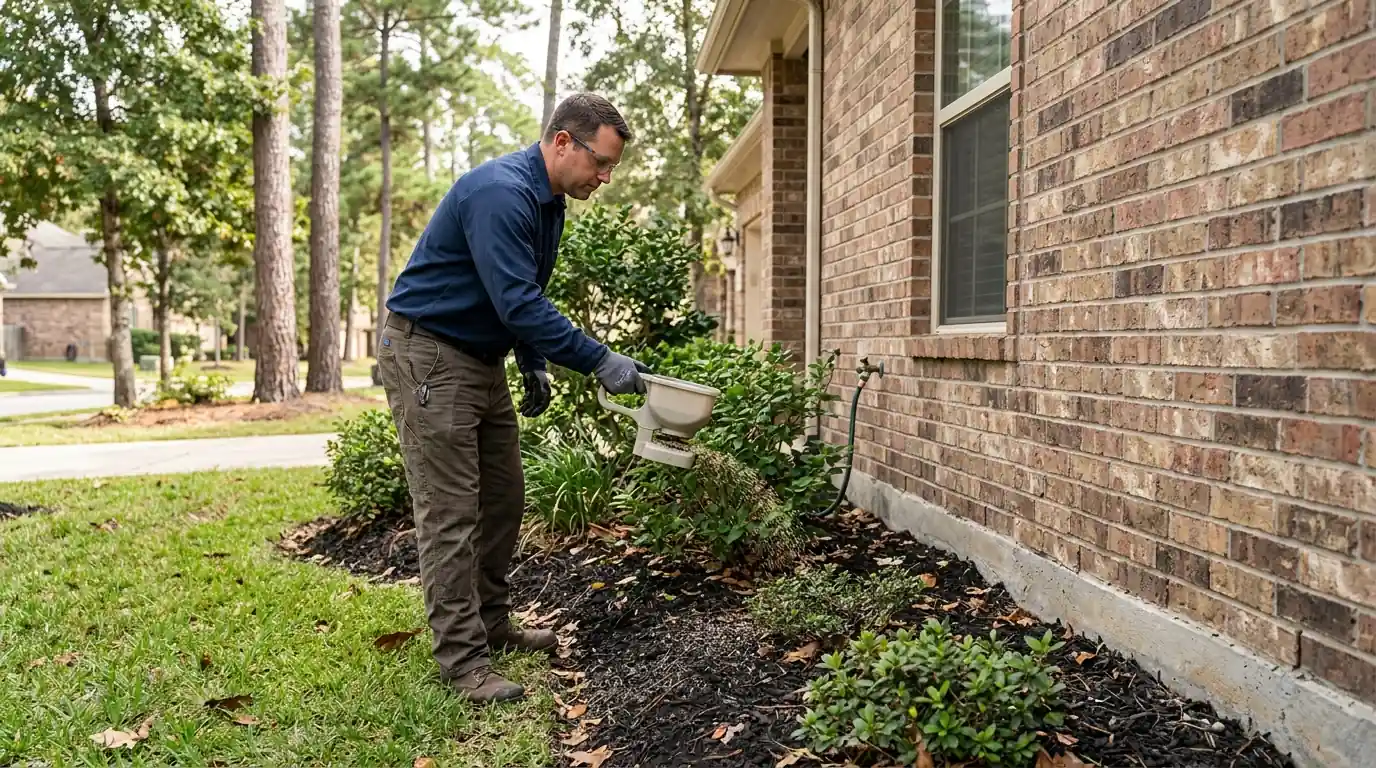
Palmetto bug pressure is built in the landscape, so that is where the work goes: granular bait through mulch beds and ground cover, direct treatment of tree holes and stump cavities, woodpile and fence-line attention, and bait placements along the routes between harborage and house. Attics get checked on every smokybrown call, because a warm attic with any moisture is this species' favorite address in town.
Drain and moisture routes
American cockroaches run sewer and drain lines, which is how one appears in a second-floor bathroom with no other explanation. Floor drains, rarely used tubs and utility sinks with evaporated traps are open doors; the fix is water in the traps, treatment at the drain perimeter, and attention to the damp spots, water heater closets, AC drain lines, crawl spaces, that hold them. Repeated same-drain sightings get said out loud at booking.
Seasonal surge response
The first hot weeks and the first cool snap each push a wave of large roaches toward structures, and storm weeks flush them out of saturated mulch all at once. A standing exterior program absorbs those waves invisibly; for everyone else, surge weeks are the busiest large-roach window on our calendar, and a treated perimeter before the season beats a reactive visit during it.
What moves the price
What large-roach work costs turn on
It prices like exterior pest work, because that is what it is.
Lot and bed footage
Mulch lines, ground cover and tree count set the treated area.
Published range
Published Texas one-time general treatments run $150 to $350 and most palmetto jobs fit inside it.
Attic involvement
A settled attic population adds dusting and access time.
Drain picture
Multiple suspect drains add treatment points and trap-priming guidance.
Standing service
Riding large-roach work on a quarterly plan covers the seasonal waves at plan pricing.
Sealing follow-through
Door sweeps and gap sealing are your cheap half of the fix; we name them, you keep the savings.
The $150 to $350 figure is the published 2026 Texas planning range for one-time treatments, for context; your quote follows the lot description on the phone.
On our Conroe routes
Palmetto bugs are a Conroe constant
Smokybrown and American cockroaches, locally lumped together as palmetto bugs, are routine calls across Conroe and Montgomery County, and the local landscape explains it: pine litter and mulched beds hold exactly the warm moisture the species breed in, and mature canopy gives smokybrowns the tree-hole harborage they prefer. The practical meaning for a homeowner is that a big roach indoors is rarely an infestation of the house itself, it is the yard's population finding a route, and the route is what we go looking for.
How this job runs
From midnight sighting to quiet hallways
- 1
Describe the sightings
Size, color, rooms and timing separate palmetto bugs from German roaches.
- 2
Walk the sources
Beds, trees, woodpiles, attic and drains checked for harborage.
- 3
Treat the landscape
Granular bait, harborage treatment and perimeter band in one pass.
- 4
Close the routes
Weep holes and slab joints treated; sealing fixes named in writing.
- 5
Hold the line
Surge-season re-treatment or plan coverage, your call, quoted plainly.
Timeline
An hour outside, quieter nights inside
The exterior work runs about an hour on a typical lot, and sightings fall off over the following one to two weeks as the harborage treatment takes hold and routes close. A lone straggler during a storm week is normal traffic, not failure; a pattern in the same room is a route we re-check.
Asked about this job
Palmetto bug questions from this county
Almost never, with this species. Palmetto bugs breed outdoors and wander or fly in, so a sighting means a route, not a resident population. German roaches are the indoor breeders, and telling the two apart is exactly why we ask about size and color first.
They run plumbing lines and moisture, and an unused drain with an evaporated trap is an open corridor. Nighttime is just when the species moves. Running water into rarely used drains weekly is the cheapest roach control you will ever do, and we mean that literally.
Smokybrowns fly readily on warm nights and are drawn to lights, which is how one ends up on the porch ceiling or sailing past you at the door. It also means exterior lighting choices, and keeping door-adjacent lights yellow or off, measurably cut indoor incidents.
The yard sits in a wooded, mulched county that produces this species continuously, so the honest goal is a treated perimeter and closed routes that make indoor sightings rare events instead of a weekly ritual. That is achievable, and it is what the program maintains.
For smokybrowns, often the decisive part: they settle warm attics with any moisture source and drop into living space along wall voids. A recurring upstairs sighting makes the attic check non-optional, and dusting it is routine work, not a special project.
Related guide: German Roaches vs Palmetto Bugs: Which Is in Your Kitchen?
Jobs that pair with this one
Related work from the same crews
German Cockroach Control
The small indoor breeder with the opposite program.
Occasional Invader Control
The rest of the perimeter wanderers.
Quarterly Pest Control Plans
Plan coverage that absorbs the seasonal waves.
Attic Cleanup & Sanitation
When the attic has hosted more than roaches.
Plant the flag on it
Big roach, small problem, if you treat the yard.
Tell us the size, the color and the room; identification and the exterior plan start on the phone.