Updated October 2026 · Reviewed for current Texas market ranges
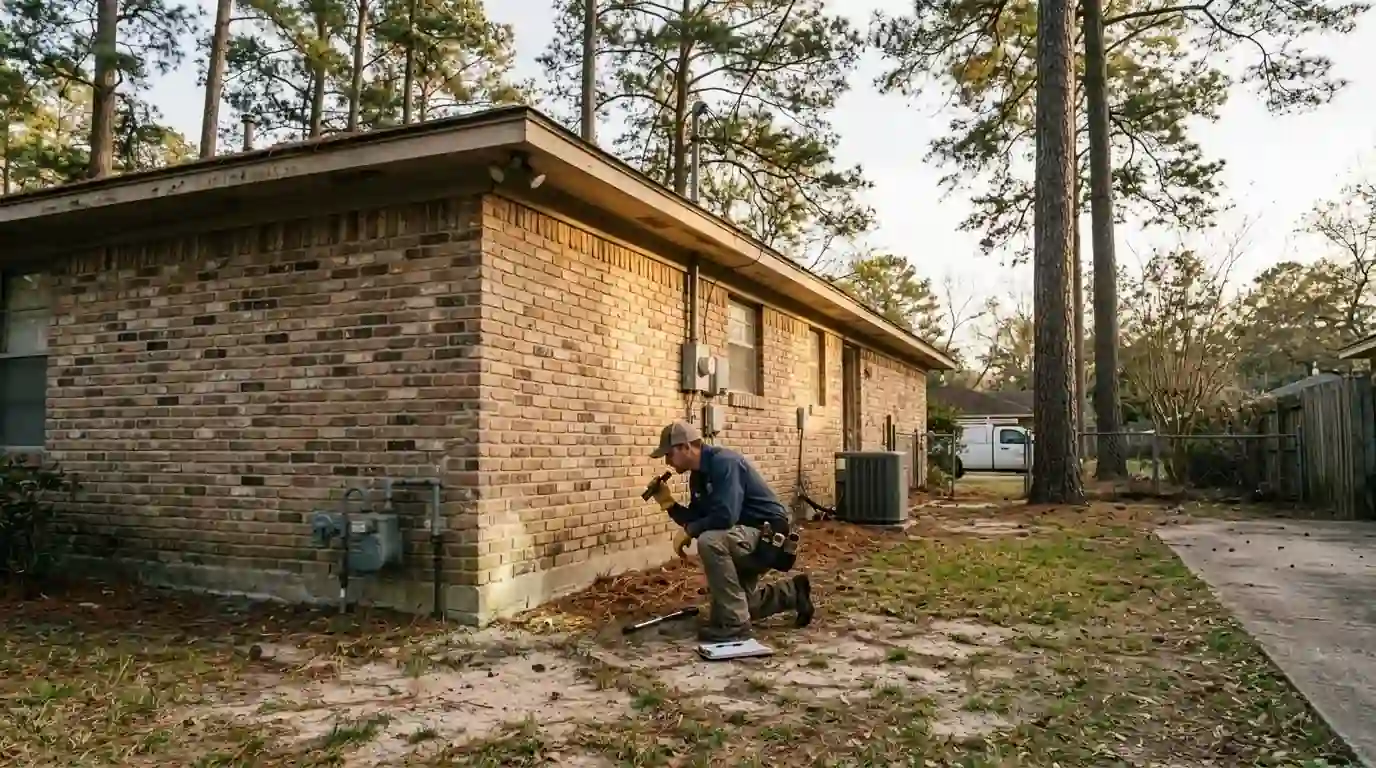
Squirrel removal in Conroe, TX uses one-way exclusion doors at the main entry, so squirrels leave the attic to forage and cannot get back in. Other gaps are sealed first, babies are checked for in spring and fall litters, and once the attic is empty the entry is repaired with metal. Trimming branches within reach of the roof keeps them from testing the repair.
How squirrel removal works
Let them out, keep them out
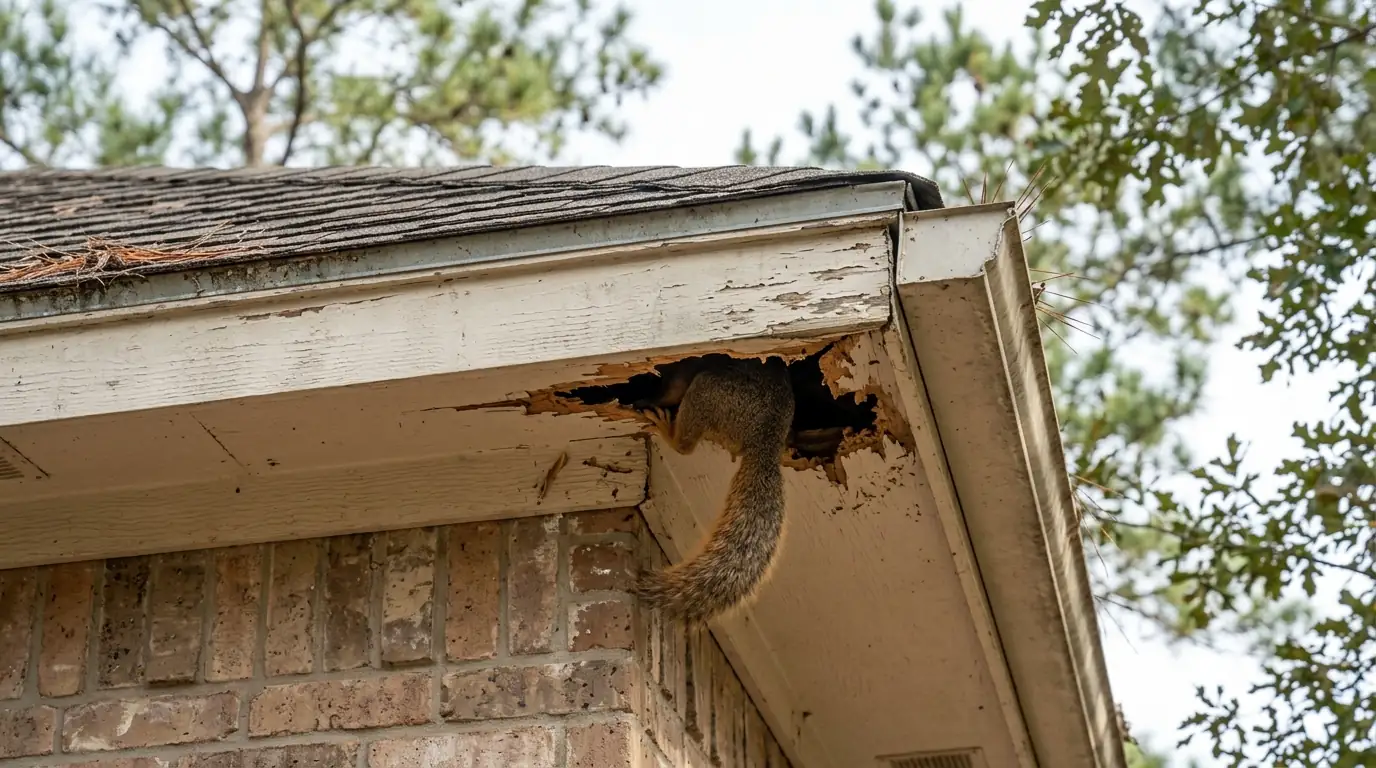
Squirrels move during the day, which is how you can tell them from rats: scratching and running in the eaves at dawn and late afternoon. They enter through gnawed soffit corners, roof returns, gable vents and gaps around plumbing vents.
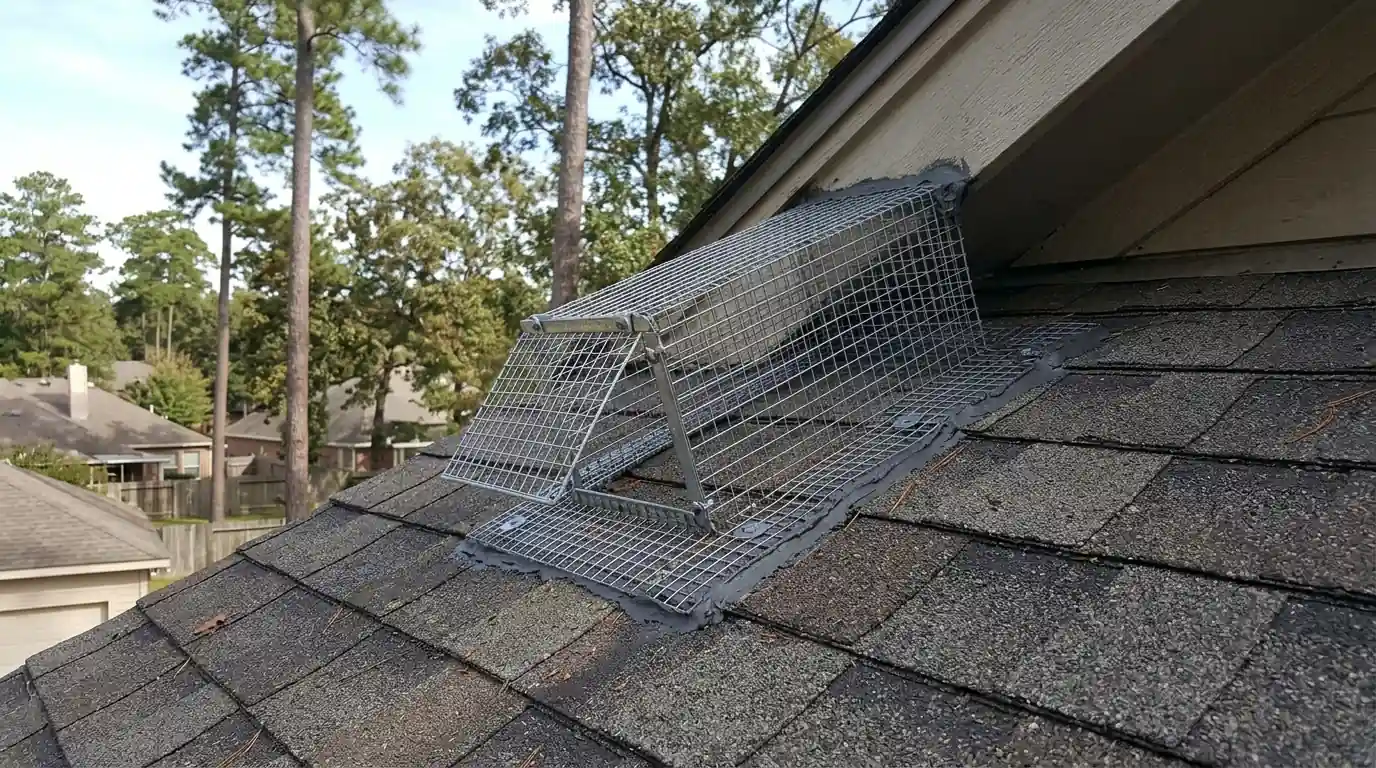
One-way doors installed over the main entry let squirrels leave but not return. Secondary gaps are sealed before the door goes on, so the animals have only one way out. In litter seasons, young are checked for and removed by hand if needed.
Because squirrels chew, repairs use metal flashing and mesh rather than wood or foam alone.
Choosing between the options
Exclusion, trapping, or repellents
Humane, no handling of adults; takes several days.
Standard methodUsed when exclusion is not practical; involves handling and relocation rules.
Case by caseRarely effective once squirrels are nesting; not a substitute for exclusion.
Not recommendedThe removal steps
Doors, litters, and repairs
One-way exclusion
The one-way door is mounted over the active entry so squirrels can exit to feed but not re-enter. It stays in place for several days, until activity stops. This avoids trapping and handling adult squirrels and keeps them from being sealed inside to die in the walls. The door is checked on follow-up visits, and once no activity is seen for several days it comes down and the entry is closed permanently with metal.
Litter checks
Squirrels have litters in late winter and late summer. If young are present, they are located and removed by hand, then placed so the mother can retrieve them, before the attic is sealed. Skipping this step leads to crying babies, a frantic mother chewing new holes, and odor. Listening at the eaves early in the morning and checking insulation near the entry usually finds a nest quickly.
Repair and branch clearance
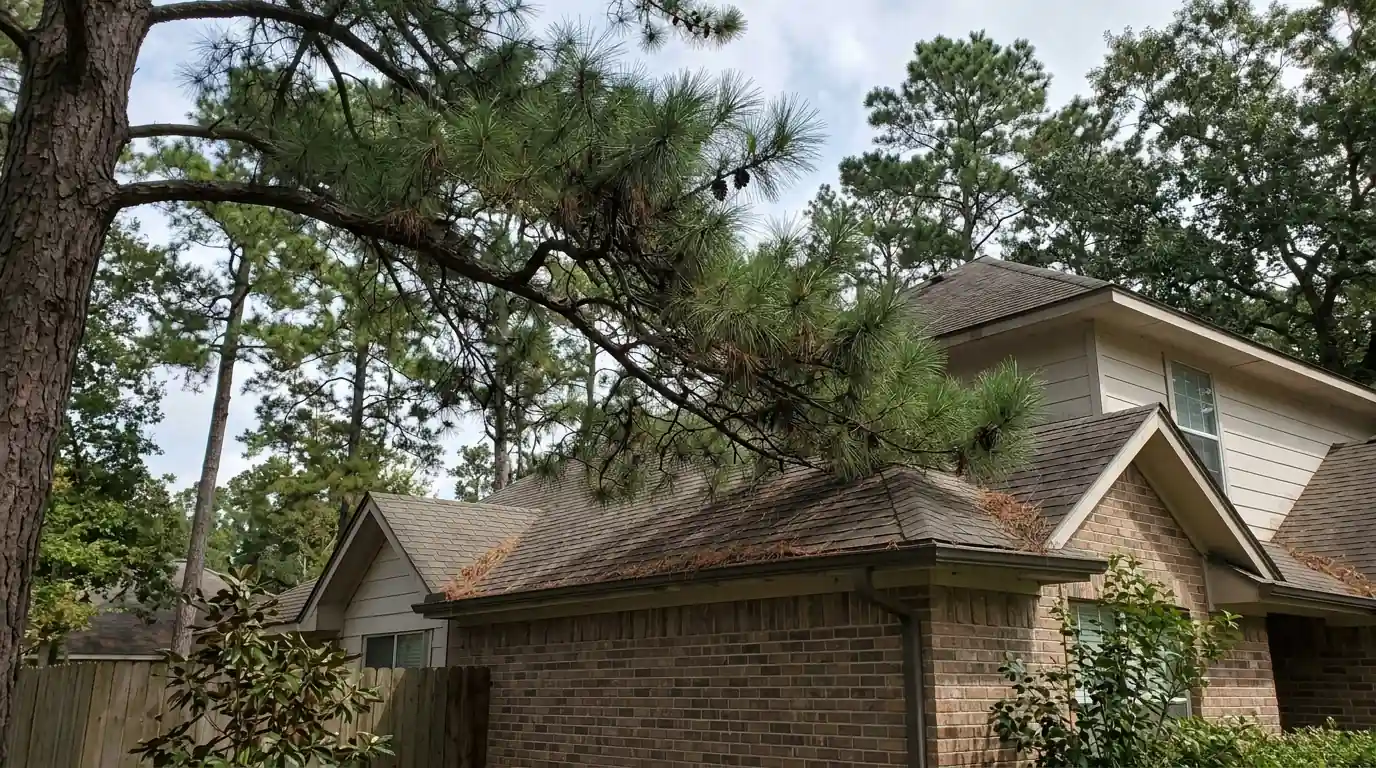
Chewed soffit corners and fascia are rebuilt and capped with metal. Branches within jumping distance of the roof are noted for trimming, since squirrels reach roofs mainly from trees. Gutter guards and vent covers are checked at the same time. Soffit vents and ridge vents with plastic or thin aluminum covers get upgraded to heavier metal where squirrels have tested them. Attic wiring near the entry is looked at for chew damage, and any you find is worth an electrician's look before the attic is closed up again.
What moves the price
What squirrel removal costs turn on
Removal, sealing and repair each add up.
Number of entries
One gnawed corner versus several gaps.
Roof height
Two-story and steep roofs take more equipment.
Litter removal
Young in the attic add a visit.
Repair material
Metal flashing and soffit rebuilds.
Attic cleanup
Nesting and droppings removal if needed.
Branch trimming
Noted for you or your tree service.
Squirrel removal is quoted after the entries are inspected; describe what you hear and where and we give a range on the call.
On our Conroe routes
New homes at the tree line
Much of the subdivision growth along the SH 242 corridor toward The Woodlands and Porter has been built into wooded tracts, which puts new rooflines right next to the pines and oaks squirrels live in. New construction also leaves soft spots at roof returns and soffit corners that squirrels find quickly, so a fairly new home here is not immune; we see squirrel entries in houses only a few years old.
How this job runs
From dawn scratching to a sealed roof
- 1
Inspect the roofline
Entries and secondary gaps located.
- 2
Seal secondary gaps
Everything except the main entry closed.
- 3
Install a one-way door
Squirrels leave and cannot return.
- 4
Check for litters
Young removed by hand if present.
- 5
Repair the entry
Metal repair once the attic is empty.
Asked about this job
Squirrel questions
Timing. Squirrels are active in daylight, especially early morning and late afternoon. Rats are active at night.
Yes. They chew constantly, and chewed wiring in attics is a fire risk. That is one reason to act quickly.
Not while squirrels are inside. They will chew a new hole or die in the attic. Exclusion lets them out first.
Late winter into spring and again in late summer. Inspections check for litters before sealing.
Yes. Branches within jumping distance of the roof give squirrels easy access. Trimming reduces repeat attempts.
Jobs that pair with this one
Related work from the same crews
Rodent Exclusion & Proofing
The same roofline sealing.
Attic Cleanup & Sanitation
Nesting and droppings cleanup.
Raccoon Removal
Larger roofline intruders.
Rodent Control
Rats in the same attics.
Plant the flag on it
Hear scratching at dawn?
Call and we will find the entry and set up humane removal.