Updated October 2026 · Reviewed for current Texas market ranges
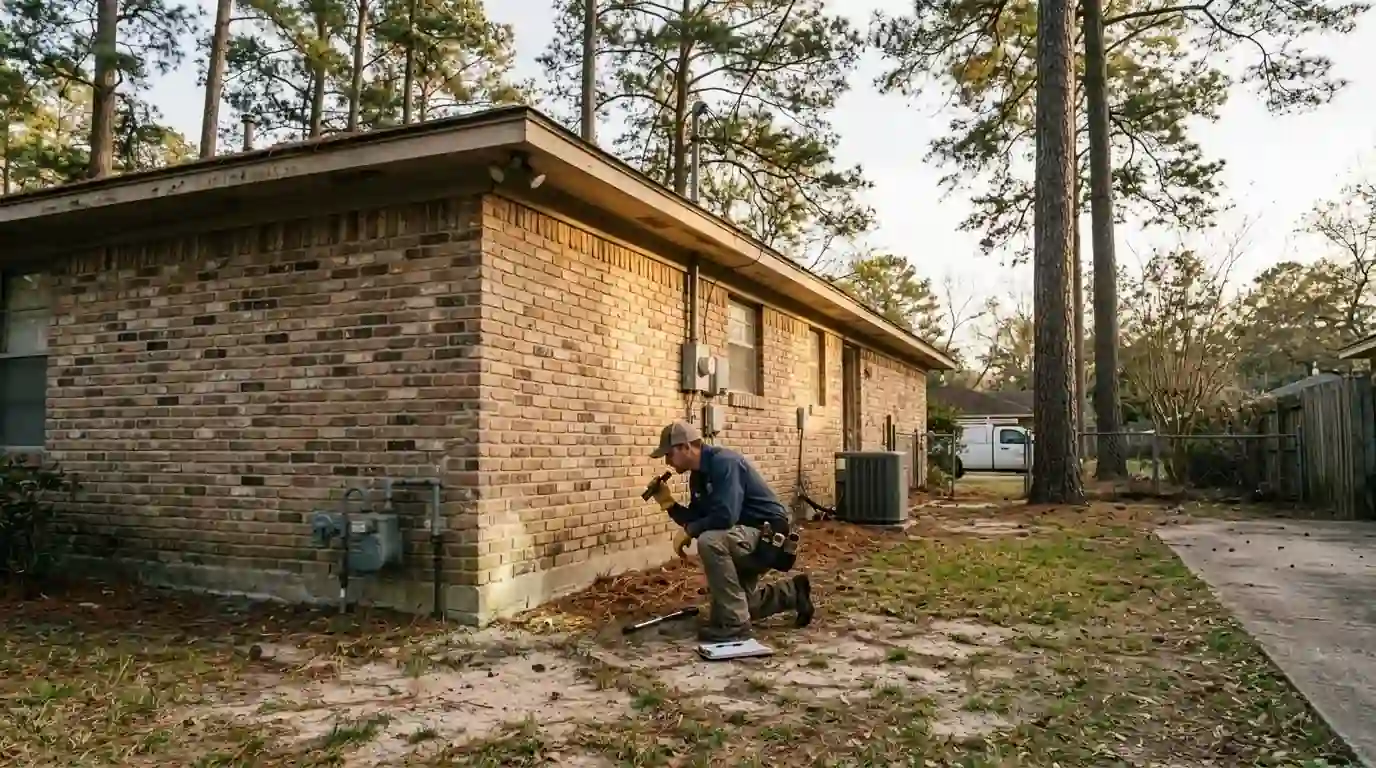
Carpenter ant control in Conroe, TX is nest work: the visible foragers are traced back to a parent nest, usually in moisture-damaged wood, plus the satellite nests the colony seeds through wall voids and attics, and each is treated directly with targeted dusts and non-repellent products. Published treatment pricing runs $250 to $1,000 depending on how many nests the structure is hiding.
What carpenter ants actually do
Excavators, not eaters, and moisture is the invitation
A carpenter ant colony in a house is almost always a moisture story. The parent nest sits in wood softened by a roof drip, a plumbing weep, a gutter overflow or ground contact, and from there the colony spreads satellite nests into perfectly dry voids nearby. Kill the satellites alone and the parent repopulates them.
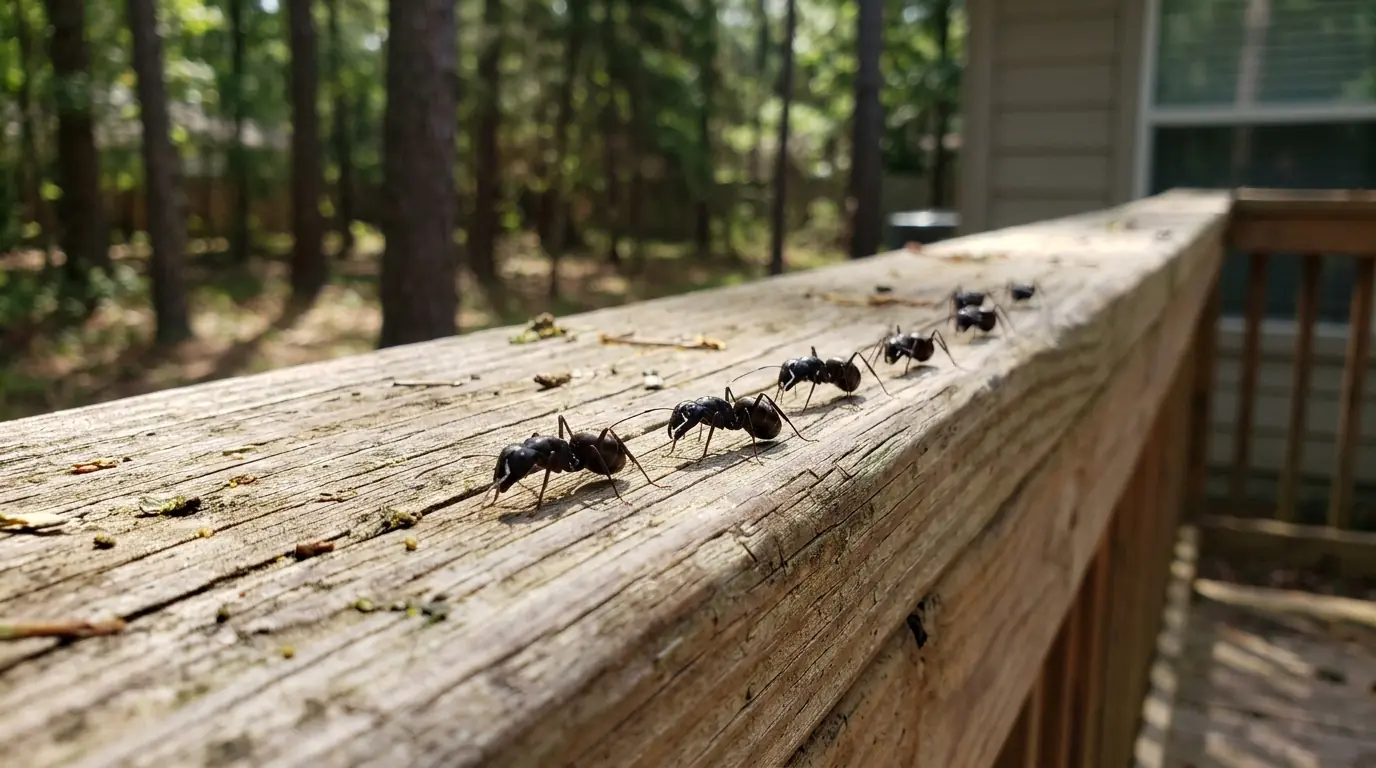
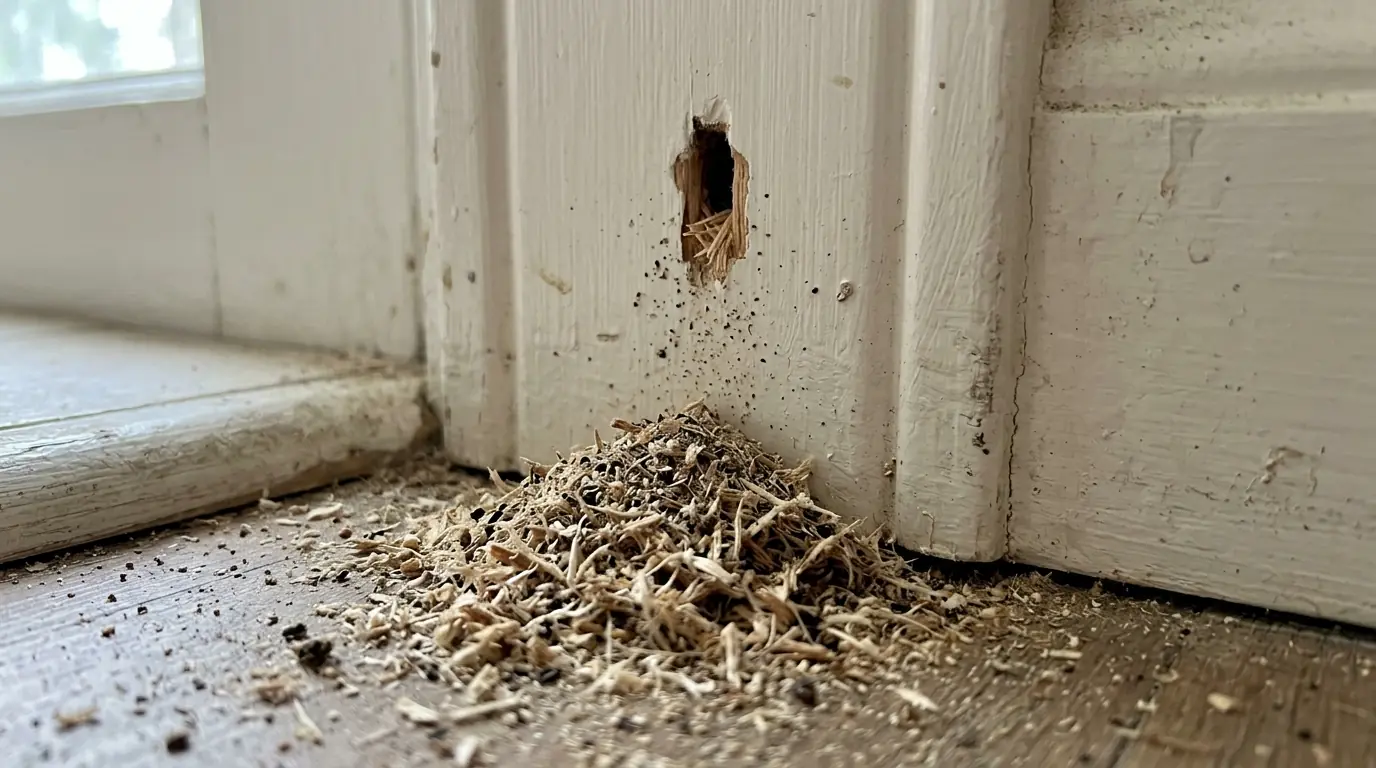
The evidence trail is readable: smooth-walled galleries that follow the wood grain, fibrous frass piles that look like pencil-sharpener shavings with insect parts mixed in, and large dark ants moving in loose trails at night, when the colony does most of its foraging.
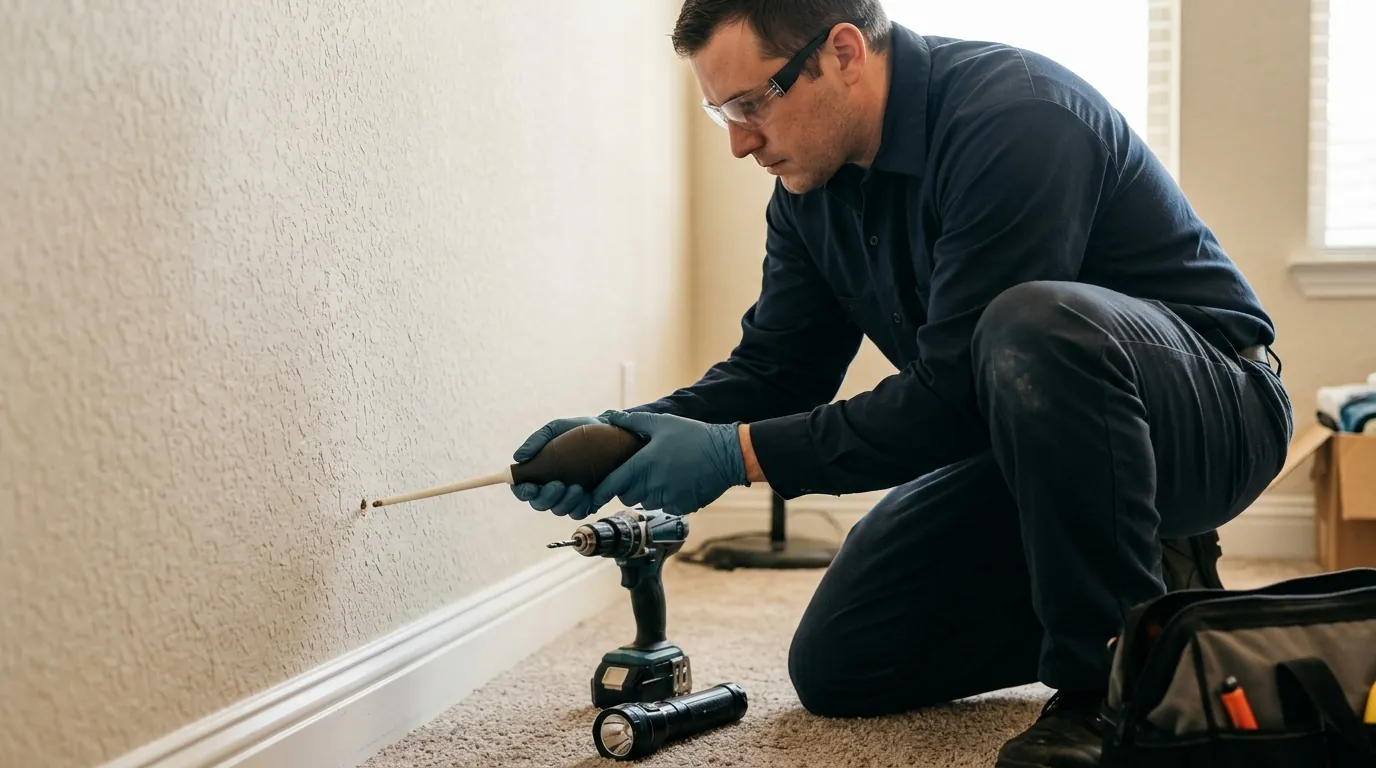
Treatment is targeted rather than broadcast: non-repellent products along the trails the workers themselves reveal, dust into the voids holding nests, and direct treatment of the parent nest once it is located. The visit ends with the part that keeps it fixed: where the moisture is, in writing.
How the job runs
Find the nests, settle the species, name the water
Nest location and treatment
The visit's core skill is finding the nests, because carpenter ant control without nest treatment is a subscription to carpenter ants. We trail-trace at the times ants actually move, sound suspect wood, read frass piles, and check the usual Conroe suspects: eave corners under pine canopy, deck ledgers, window headers and bath walls. Located nests get dusted or injected directly, parent and satellites both.
Termite or carpenter ant calls
Half the carpenter ant calls start as termite scares, and the distinction matters to your wallet: termite galleries are mud-lined and packed with soil, carpenter ant galleries are clean and smooth with frass dumped outside. We identify which insect owns the damage before anything is quoted, and when it is termites, the conversation moves honestly to the termite side of this site.
Repair and moisture follow-through
The ants came for damp wood, so lasting control names the water. Every job closes with the moisture findings in writing: the gutter run that overflows, the hose bib that weeps into siding, the grade that holds water at a corner. Fix those and re-infestation stops being a cycle; we treat structures, and the report tells your handyman exactly where to work.
Worth a phone call when you see
Five signs the wood is occupied
Fibrous sawdust piles
Pencil-shaving frass with insect parts, dumped below clean kick-out slits in wood.
Large ants at night
Big dark ants trailing after dusk along sills, counters or deck rails.
Smooth hollow galleries
Excavated wood that is clean inside, following the grain, no mud anywhere.
Rustling in walls
A dry crinkling in a wall or ceiling void on quiet nights is a working colony.
Winged ants indoors
Swarmers with pinched waists and elbowed antennae, ant, not termite, but a mature colony either way.
What moves the price
What carpenter ant jobs cost
A published national range frames it; nest count sets where you land in it.
Published range
Carpenter ant treatments publish at $250 to $1,000 nationally; single-nest jobs sit low, multi-nest structures high.
Nest count
A parent nest with two satellites is a different visit than one void.
Access
Open attic and crawl access treats faster than finished ceilings and wrapped beams.
Moisture extent
Widespread damp framing means more candidate wood to inspect and treat.
Exterior pressure
Heavy canopy and woodpiles add perimeter work to keep foragers off the structure.
Follow-up
A re-check on multi-nest jobs is included in the quote, not billed as a surprise.
The $250 to $1,000 figure is a published national planning range for carpenter ant treatment; your quote is written after the nest picture is known.
On our Conroe routes
Pine canopy, damp fascia, big ants
Conroe’s position at the southern edge of the East Texas Piney Woods is exactly why carpenter ants are routine here: heavy tree canopy keeps rooflines and fascia shaded and damp, pine debris bridges from the forest floor onto decks and fences, and overhanging limbs give colonies a highway straight to the eaves. Homes under mature pines get their carpenter ant pressure from above as much as below, which is why our nest search works the roofline and attic edges as hard as the foundation.
How this job runs
From night trails to empty galleries
- 1
Describe the sightings
Where the ants appear, when, and any sawdust piles you have found.
- 2
Trace and identify
Trails followed, wood sounded, species confirmed against termites.
- 3
Map the nests
Parent and satellite locations marked, moisture sources noted.
- 4
Treat the colony
Non-repellents on trails, dust in voids, direct nest treatment.
- 5
Deliver the findings
Moisture report in writing; follow-up scheduled on multi-nest jobs.
Asked about this job
Carpenter ant questions we get weekly
They damage wood more slowly and more visibly, but a colony given years in damp framing does real structural harm, and their presence always flags a moisture problem worth fixing for its own sake. Treat them promptly; panic is optional, delay is not free.
Carpenter ants forage in loose numbers and mostly at night, so a few daytime stragglers can represent a substantial colony. Scouts indoors during winter are a stronger signal still, because it means a nest is inside the heated envelope, not out in the yard.
Repellent sprays kill foragers and teach the colony to reroute, which scatters satellite nests deeper into the structure. The products that work are non-repellents the workers walk through and carry home, placed on the trails, plus direct nest treatment. It is a placement job, not a volume job.
Follow the water: bath and kitchen walls, window and door headers that leak, deck ledgers, eave corners under tree canopy, and firewood or stumps within reach of the house. The parent is often outdoors in a stump or fence post with satellites inside; both get treated.
Not from the treated colony. New pressure comes from the same conditions that invited the first one, which is why the moisture findings matter more than any product: dry wood plus trimmed canopy plus treated perimeter is what keeps the next queen from succeeding.
Jobs that pair with this one
Related work from the same crews
Termite Inspections & WDI Reports
Settles the ant-versus-termite question on paper.
Ant Control
The small-ant trails in the same kitchens.
Subterranean Termite Treatment
When the galleries turn out to be mud-lined.
Occasional Invader Control
The rest of what damp seasons push indoors.
Plant the flag on it
Found sawdust that was not there last week?
Photograph the pile and the slit above it and call; species identification often starts right on the phone.