Updated October 2026 · Reviewed for current Texas market ranges
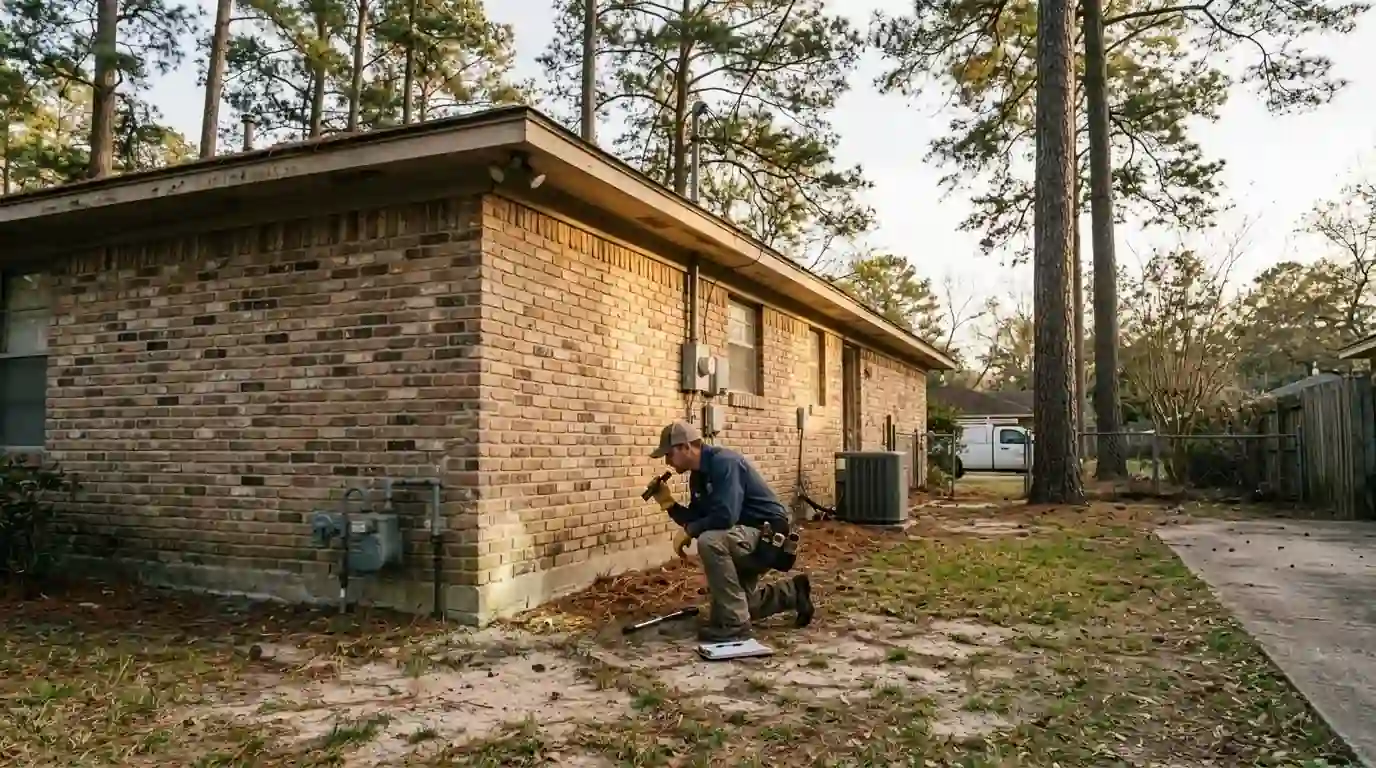
Bee swarm removal in Conroe, TX starts with telling a resting swarm from an established colony. A fresh swarm clustered on a branch or fence is boxed and removed live, often the same day. A colony already building comb inside a wall, soffit or meter box is cut out with its comb and moved, because leaving honey behind draws pests and seeps through drywall. Aggressive or inaccessible colonies are handled case by case.
Worth a phone call when you see
Five signs to call this week
A cluster on a branch or fence
A resting swarm is easy now and may move into a wall by tomorrow.
Bees flying into one gap
Steady traffic at a soffit or siding gap is an established colony.
A buzzing wall
A constant hum or warm spot in a wall means comb is already built.
Honey stains on drywall
Dark seepage means a large colony and urgent comb removal.
Bees near an allergic family member
Say so when you call; it changes the plan and the speed.
Swarm or colony?
Two very different jobs that look alike
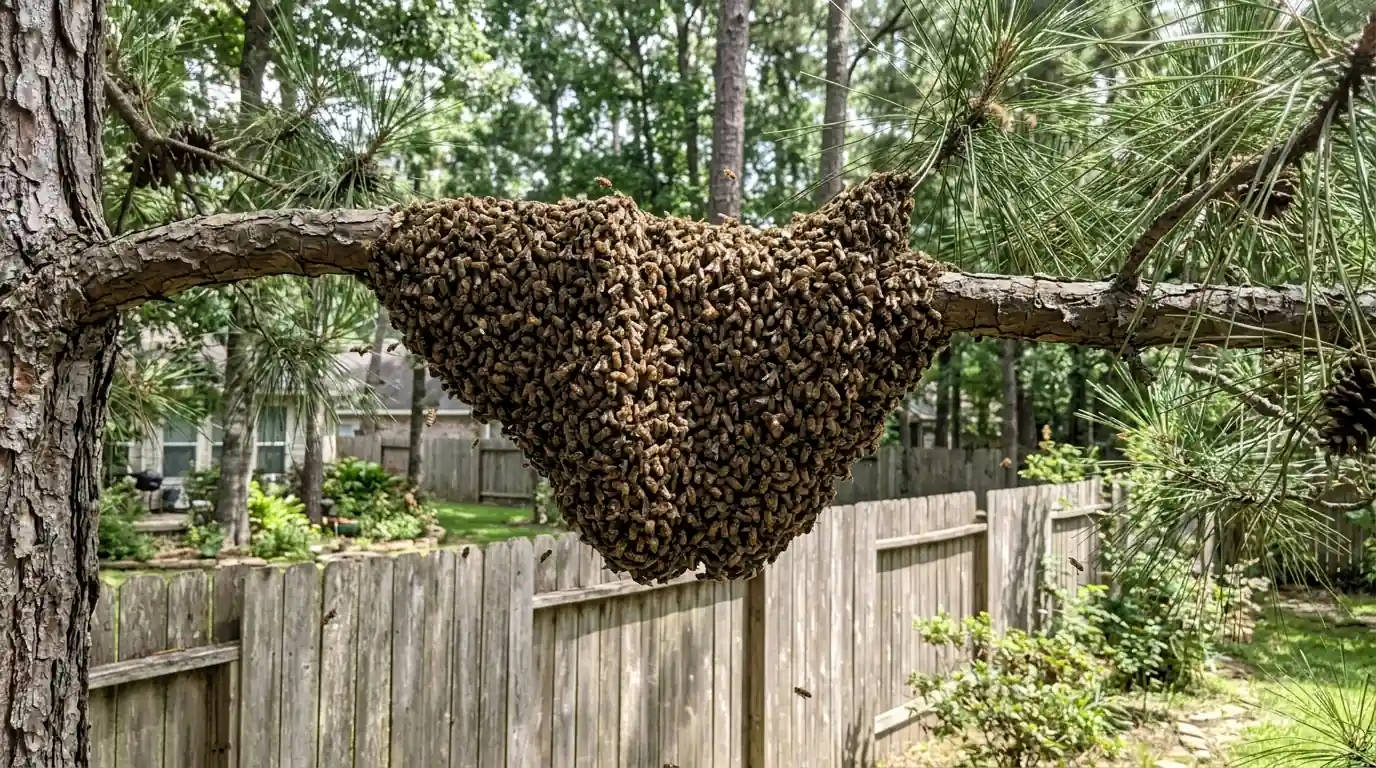
A swarm is a queen and thousands of workers between homes, hanging in a quiet cluster for a few hours to a few days while scouts look for a cavity. They are at their most docile in this state, and a swarm in a bush is the easiest bee job there is.
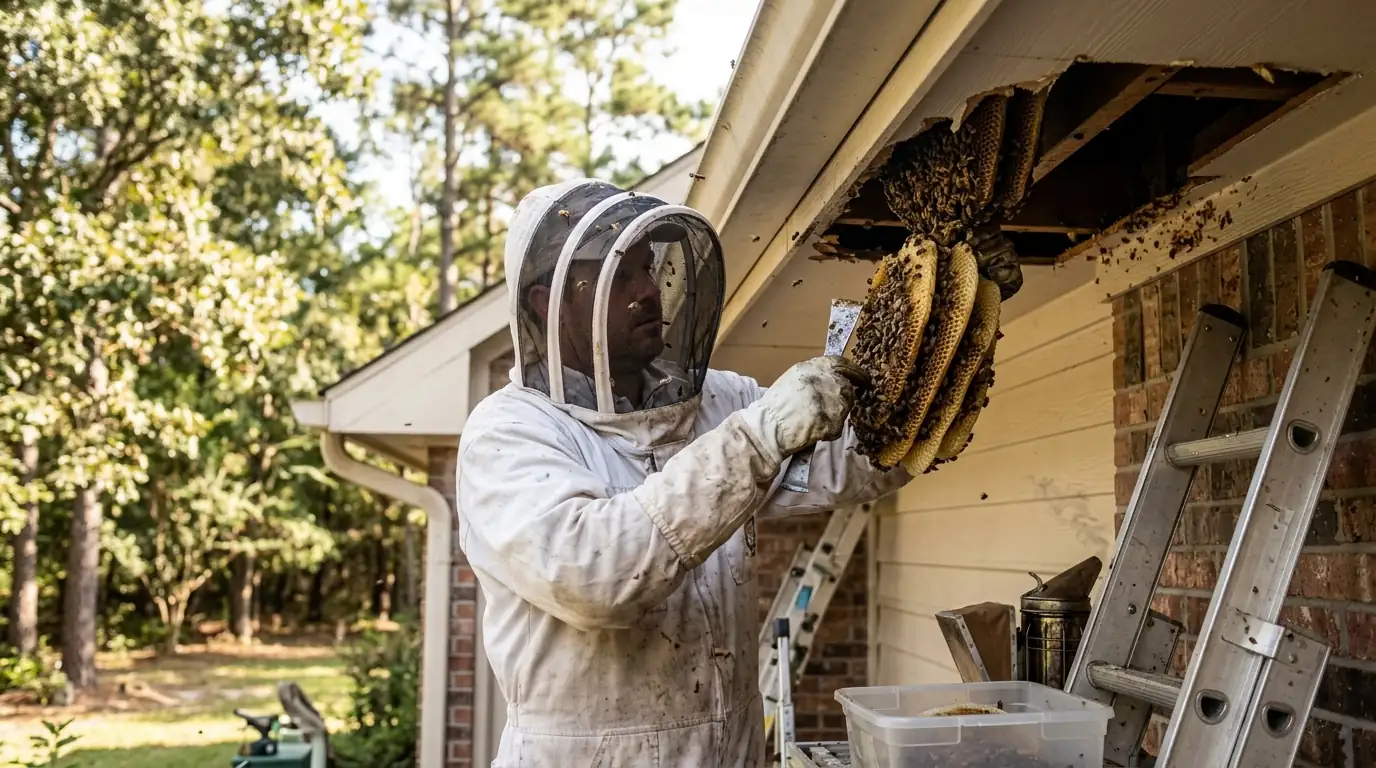
An established colony is the opposite: comb built inside a wall, soffit, chimney or irrigation box, honey stored, brood developing, and defenders at the entrance. Removing it means opening the cavity, cutting out the comb, collecting the bees, and cleaning the space, because comb and honey left inside attract ants, beetles and moths and can stain or soften drywall.
We favor live removal of honeybees because they matter, and because killing a colony inside a wall without removing the comb creates its own mess. When a colony is defensive, in a spot that cannot be opened safely, or a risk to someone with an allergy, the options get laid out honestly before any choice is made.
How the job runs
Swarm capture, cut-outs, and the hard cases
Live swarm capture
Clusters on branches, fences, mailboxes and eaves get shaken or brushed into a ventilated box with the queen, and the stragglers follow by evening. Most swarm calls are handled the same day because swarms move on unpredictably, sometimes into your soffit. The removed swarm is relocated rather than destroyed. If a swarm has been hanging in the same place for more than a day, scouts may already have chosen a cavity nearby, so the sooner it is boxed, the less chance it ends up inside your soffit instead of a hive box.
Cut-outs from walls and soffits
Established colonies require opening the structure: siding, soffit panels or interior drywall over the cavity, located with thermal reading and sound. The comb is cut out, the bees vacuumed into a box with a gentle bee vacuum, and the cavity cleaned and dried. Opening and closing finish work is part of the scope conversation; we leave the space clean and the entry sealed so scent does not draw the next swarm.
Defensive or unreachable colonies
Some colonies are aggressive, or sit inside a space that cannot be opened without major damage, such as a chimney flue or a masonry column. In those cases the honest options are a partial removal, a treatment followed by comb removal, or a sealed exclusion with a one-way exit. We explain the trade-offs and costs plainly, including what happens to honey left in place.
Timeline
An hour for swarms, a day for cut-outs
A swarm capture usually takes under an hour plus a return at dusk for stragglers. A cut-out runs a few hours to most of a day depending on comb size and access, and the cavity is left clean and sealed by the end of the visit.
On our Conroe routes
Woods, water and hollow cavities
Conroe sits at the southern edge of the East Texas Piney Woods, and that canopy supports a large honeybee population that swarms each spring looking for hollow cavities. Hollow pines, old outbuildings and the soffits and wall voids of houses near the tree line are exactly what scouts are searching for, which is why swarm calls here spike from March into June and why a swarm resting on a fence near the woods is worth a call before it picks your wall.
How this job runs
From cluster to clear cavity
- 1
Describe what you see
Clustered on a surface, or flying in and out of a hole: that one detail sets the job.
- 2
Keep a distance
Swarms are calm, but nobody should spray or disturb them.
- 3
Capture or open
Swarms boxed live; established colonies opened at the cavity.
- 4
Remove the comb
Comb, honey and bees taken out, cavity cleaned.
- 5
Seal the entry
Gap closed and scent cleaned so the next swarm passes by.
What moves the price
What bee removal costs turn on
Swarms are simple; cut-outs are construction work with bees in it.
Swarm or colony
A fresh swarm on a branch is the low end; an established cut-out the high end.
Cavity location
A ground-level soffit is easier than a second-story wall or a ceiling.
Comb volume
A season-old colony carries far more comb and honey to remove.
Opening and closing
Siding, soffit or drywall work around the cavity is scoped up front.
Height and access
Ladders, lifts and roof work add time and equipment.
Cleanup and sealing
Removing residual honey and sealing the entry prevents a repeat.
Bee work is quoted per job because swarm captures and cut-outs differ so much; describe what you see and the range comes back on the call.
Asked about this job
Bee questions from homeowners
Often, within a few days, but it may settle into your soffit or wall instead of a tree. If it is near the house, removing it while it is still a calm cluster is the cheaper choice.
Live removal is our default for honeybees. Treatment is reserved for colonies that are dangerous, unreachable or a real risk to someone allergic, and we explain that before doing anything.
Dead bees and a wall full of comb and honey leave a mess that attracts ants, beetles and moths and can soak through drywall. The comb has to come out either way, which is why cut-out is usually the better path.
Not by looking. Unusually defensive behavior is the warning sign, and it changes how the job is handled. Keep people and pets away from any colony that chases or stings without provocation, and say so when you call.
Remove all comb, clean the scent, and seal the entry gap. Bees choose cavities partly by smell, so a cleaned and sealed spot stops being attractive.
Jobs that pair with this one
Related work from the same crews
Wasp & Hornet Nest Removal
Open paper nests under eaves.
Yellow Jacket Control
Hidden ground and wall nesters.
Rodent Exclusion & Proofing
Sealing gaps cavities get used through.
Opossum, Armadillo & Skunk Removal
Other animals that move into soffits.
Plant the flag on it
Swarm on the fence right now?
Do not spray it. Call while it is still a cluster and it can usually be boxed today.