Updated October 2026 · Reviewed for current Texas market ranges
Attic cleanup in Conroe, TX removes droppings, nesting and urine-soaked insulation left by rodents, squirrels or raccoons, sanitizes the framing and decking, and installs new insulation to restore the attic's energy performance. Work is done with protective equipment and contained vacuum removal. It follows trapping and exclusion, so the cleaned attic stays clean.
Why the attic needs cleaning
Odor, contamination and lost insulation
Even after the last rodent is gone, the attic holds droppings, urine and nesting material. Odor lingers, pheromone trails invite new animals, and flattened or soiled insulation loses much of its value, which shows up in summer cooling bills.
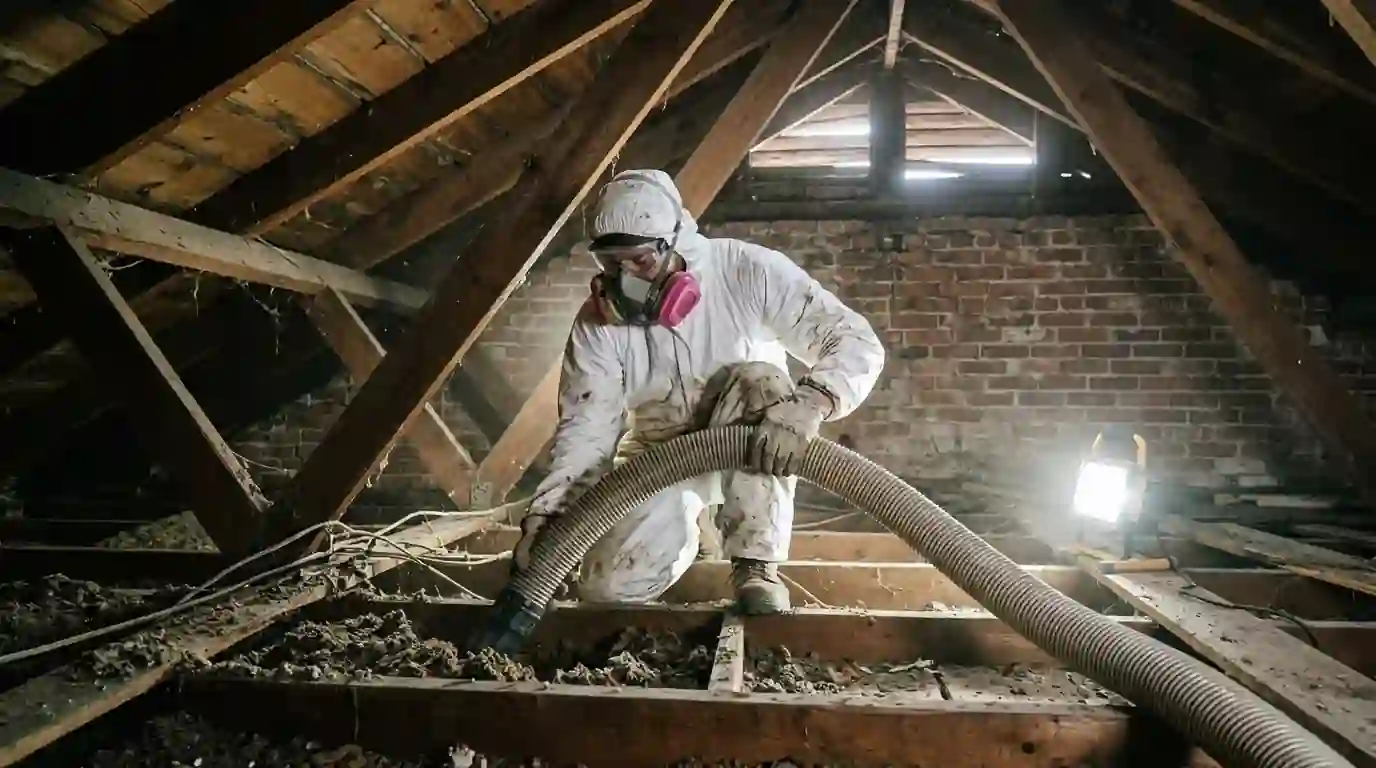
Cleanup is done carefully because droppings and dust can carry disease. Crews wear respirators and protective suits, contaminated insulation is removed with a high-powered vacuum into sealed bags, and surfaces are treated with an enzyme or disinfectant.
Inside the visit
What the cleanup covers
- Contamination assessment
- Protective equipment for the crew
- Vacuum removal into sealed bags
- Nesting debris removal
- Enzyme sanitizing
- Vent and baffle check
- Exclusion point confirmation
- New insulation install
The three stages
Remove, sanitize, restore
Contaminated insulation removal
Blown-in and batt insulation that is soiled or compacted gets removed with a commercial insulation vacuum that sends material straight into sealed bags outside, keeping dust out of the living space. Lightly affected areas may need spot removal only; the assessment tells you which before any work is quoted. Hoses run from the attic hatch or a gable to a collection unit outside, so nothing contaminated is carried through the house, and the bags are sealed and removed the same day the work is done.
Sanitizing and odor treatment
Once material is out, framing, decking and drywall tops are treated with an enzyme-based sanitizer that breaks down urine and odor. Nesting debris is removed from soffit cavities and vents. This step is what stops the smell and the scent trail that draws new animals. Heavy latrine areas from raccoons get extra attention, since their droppings carry roundworm eggs, and stained decking may be sealed with a primer after treatment to lock in any remaining odor.
Re-insulation
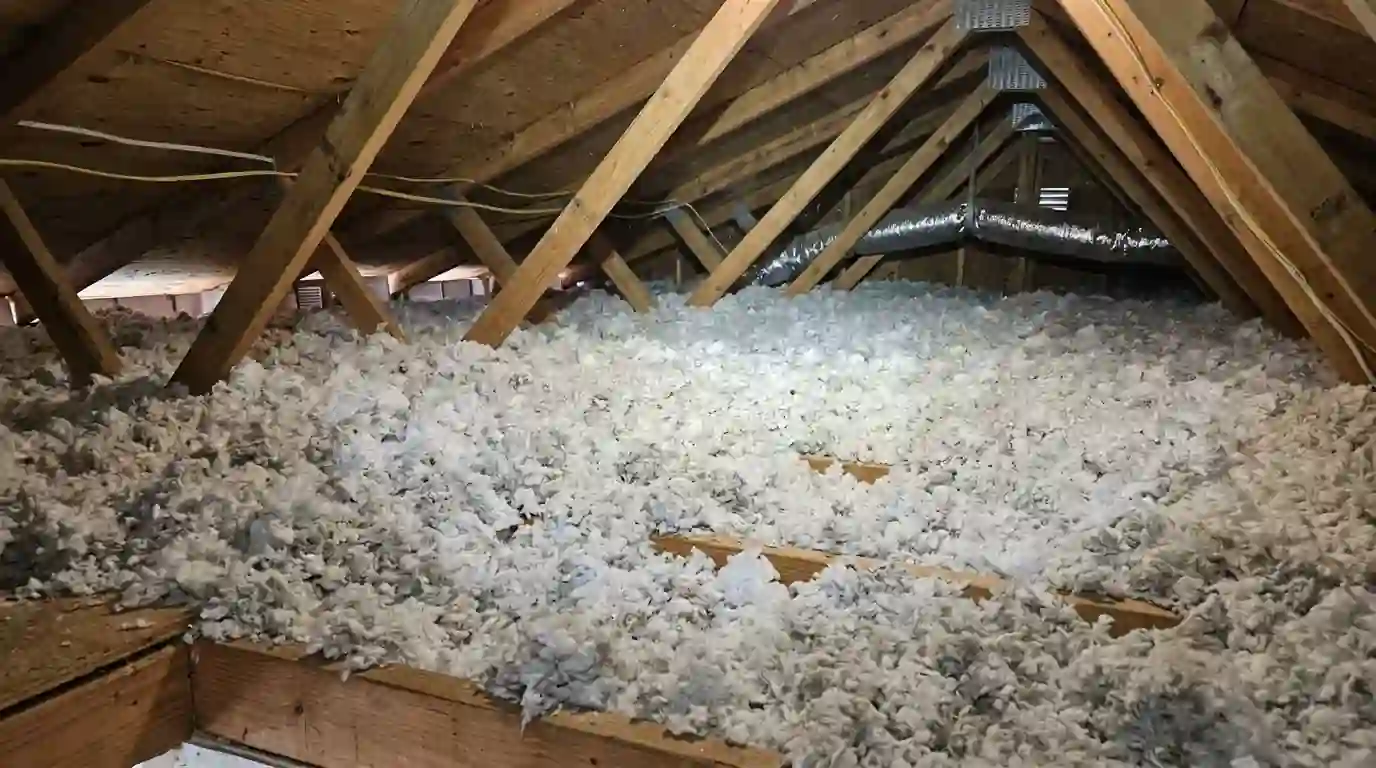
New blown-in insulation is installed to the recommended depth for Texas attics, restoring cooling efficiency. Vents and baffles are checked while the attic is open, and the exclusion points are confirmed sealed before the insulation goes down. Insulation depth is measured and noted so you have a record for future work or a sale. Recessed light housings and attic hatches get insulated or sealed too, since those are common heat leaks, and the finished attic is photographed so you can see the result without climbing up.
What moves the price
What attic cleanup costs turn on
It is priced by square footage and contamination level.
Attic square footage
Larger attics take more removal and new insulation.
Contamination depth
Spot cleanup versus full insulation removal.
Access
Low clearance and multiple attic spaces add time.
Insulation type
Blown-in versus batt replacement.
Animal type
Raccoon latrines take more care than mouse droppings.
Exclusion status
Cleanup is done after entry points are sealed.
Attic cleanup is quoted by square footage and contamination after an assessment; describe the attic and we give a range on the call.
On our Conroe routes
Rat-heavy rooflines, hot attics
Roof rats are routine calls across Conroe and Montgomery County, and attics are where they settle, so many local homes that have been through a rat problem carry droppings and flattened insulation they have never seen. Summer attic heat here also bakes odor into the space, which is why homeowners usually notice the smell in July rather than the winter when the rats were active. A cleanup restores both the air and the insulation the attic needs in a Texas summer.
How this job runs
From soiled attic to restored space
- 1
Assess the attic
Contamination level and insulation condition checked.
- 2
Confirm exclusion
Entry points sealed so the cleanup lasts.
- 3
Remove the material
Vacuum removal into sealed bags.
- 4
Sanitize
Enzyme treatment of framing and decking.
- 5
Re-insulate
New insulation installed to proper depth.
Asked about this job
Attic cleanup questions
If there are significant droppings, odor or soiled insulation, yes. Contamination stays behind and attracts new animals.
Light debris can be handled with gloves and a respirator, but disturbing heavy droppings dry can release harmful dust. Larger jobs need containment and proper equipment.
Restoring insulation to proper depth usually improves cooling performance, especially after rodents flattened or removed the old material.
Most attics take one to two days for removal, sanitizing and re-insulation.
No. Removal is vacuumed directly outside, and work stays in the attic.
Jobs that pair with this one
Related work from the same crews
Rodent Control
Clearing the rodents first.
Rodent Exclusion & Proofing
Sealing so the attic stays clean.
Raccoon Removal
Raccoon latrines in the attic.
Squirrel Removal
Squirrel nests in the eaves.
Plant the flag on it
Attic smell getting worse?
Call for an assessment; the cleanup scope and price come back after we look.