Pest control across Montgomery County, Texas
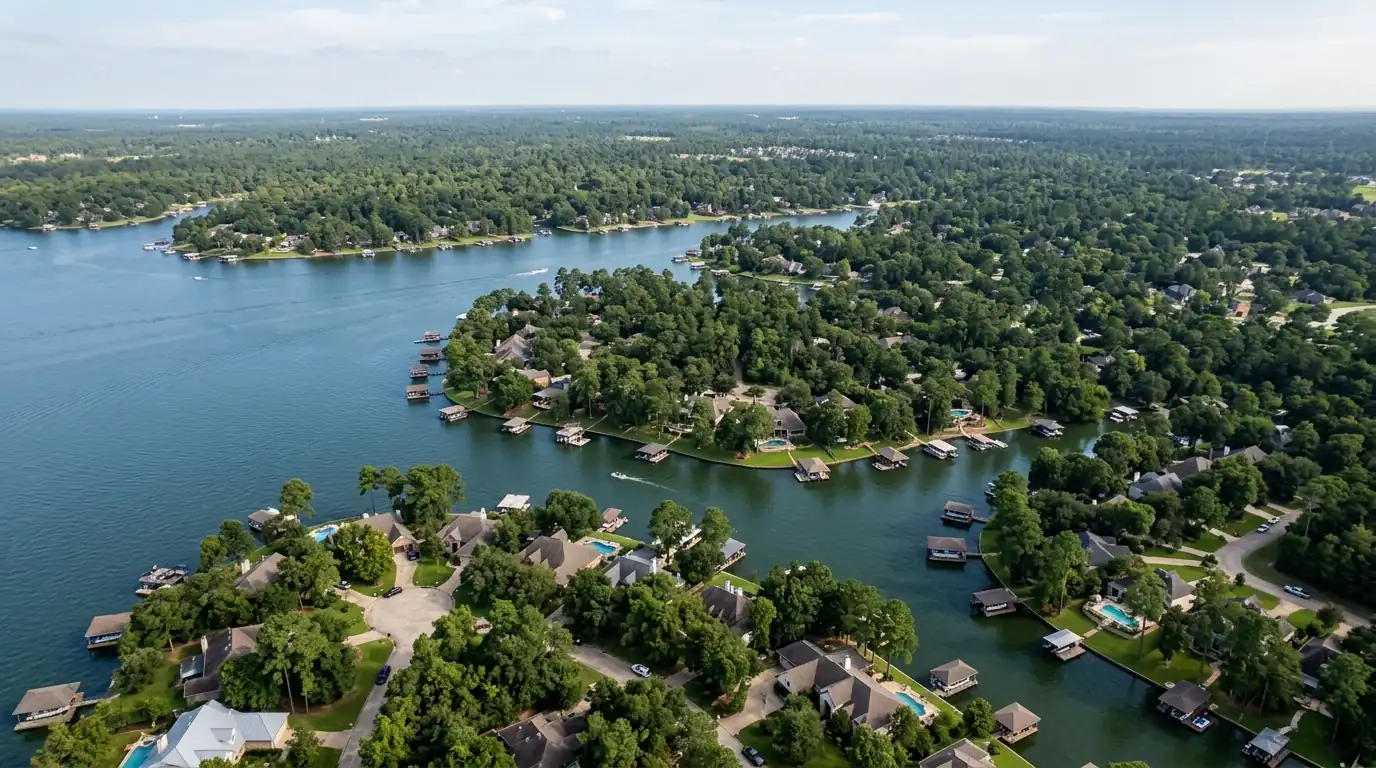
Montgomery County is where our routes start and where most of our trucks spend the day. Pine canopy, lake water and fast-growing subdivisions give the county more pest pressure than most of the Houston area, and our schedule is built around it.
- Answered 24/7, every day
- Same-week visits countywide
- Termite, pest and wildlife
Most-booked here
- Conroe-based routes
- Termite and mosquito programs
- Rural acreage scheduling
Updated October 2026
Pest control in Montgomery County, TX deals with three big pressures at once: subterranean and Formosan termites under the Piney Woods canopy, mosquitoes around Lake Conroe and the county's retention ponds, and fire ants, rodents and termites pushed out by new construction. Our routes cover the whole county from Conroe, with most addresses on a regular same-week schedule.
Pests in Montgomery County
Why this county keeps us busy
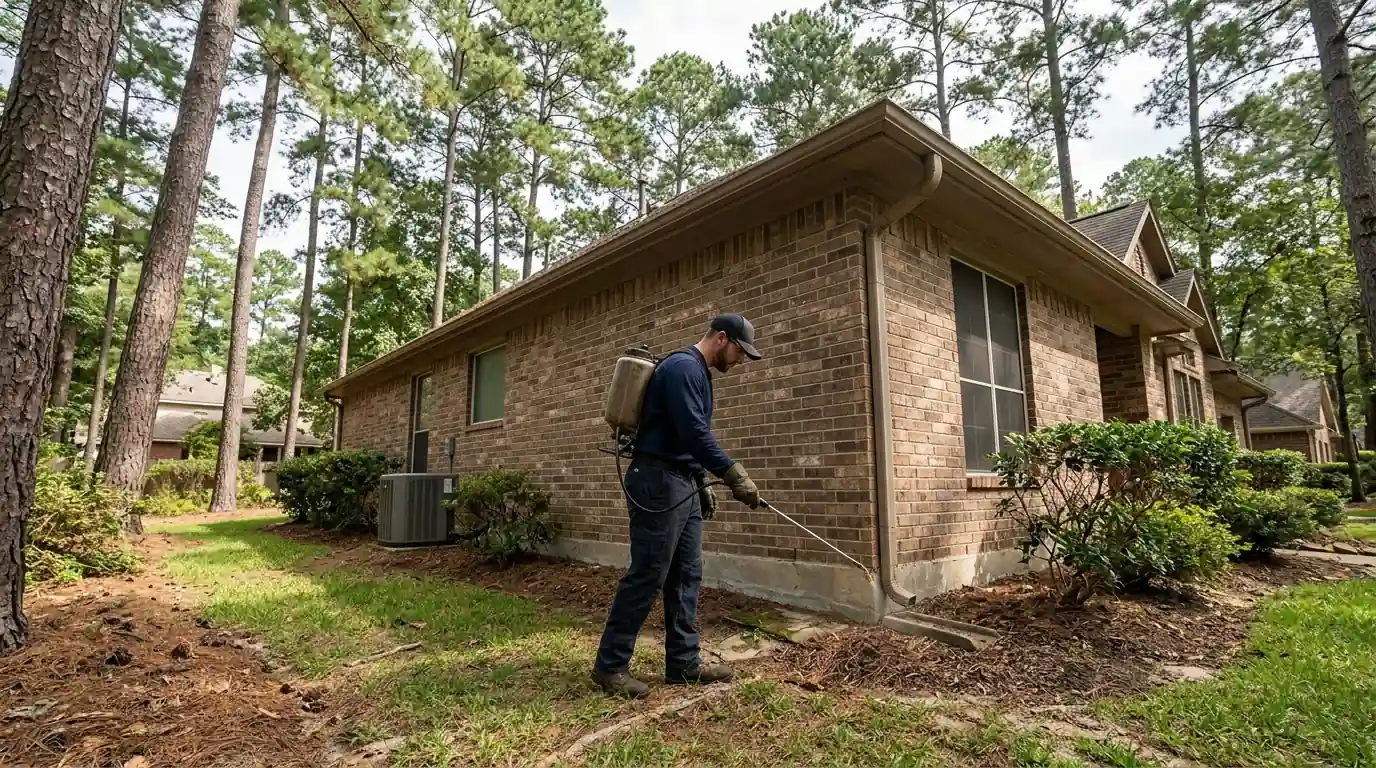
Montgomery County sits at the southern edge of the East Texas Piney Woods. The shade and pine litter that make neighborhoods here attractive also keep soil damp and give termites, carpenter ants and roof rats a direct path from the trees to the house. Formosan subterranean termites are documented in the county alongside native colonies, which is why our inspections here assume the worse species until the evidence says otherwise.
Water is the second factor. Lake Conroe, the San Jacinto River forks and the retention ponds built into newer subdivisions feed a long mosquito season, and homes close to the lake carry some of the heaviest pressure in the county.
Growth is the third. Conroe is the county's fastest-growing city, and every cleared tract along SH 242, FM 1488 and the Grand Parkway corridor displaces fire ant colonies, rodents and termites into the streets next door.
What gets booked here
The most common jobs in Montgomery County
Every service runs here; these are the ones this area calls about most.
Soil treatment for active termites
The single most common big-ticket job in the county.
Monthly mosquito programs
Lake-adjacent and pond-backed lots need them from March on.
Yard-wide fire ant baiting
New sod and cleared lots fill with mounds after every rain.
Roof rat trapping
The canopy gives rats a bridge onto almost every roof.
A seasonal quarterly plan
Lot-driven pressure here returns on a cycle.
Termite and WDI inspections
Closings across the county need the Texas form.
Coverage
How Montgomery County visits are scheduled
Conroe and the Lake Conroe shoreline sit at the center of the schedule, so most addresses in the county get a same-week visit. The southern end around The Woodlands runs on its own daily loop, and the rural acreage east toward Splendora and west toward Montgomery is grouped by day so drive time stays off the bill.
Next door
Close by, the pages for The Woodlands, Willis and Magnolia cover what changes next door, and the coverage overview shows how the routes fit together.
Asked in Montgomery County
Questions from Montgomery County
The whole county. Conroe is where routes start, but trucks run through every corner of Montgomery County each week.
Montgomery County carries both native and Formosan subterranean termites, with heavy canopy and clay soil that holds moisture, so pressure is high. Houston has Formosans too; the shade and soil here just keep conditions good for them year-round.
They need the full program rather than a light one, because shoreline and nearby ponds keep producing new mosquitoes. Monthly barrier work plus breeding-site checks is the standard there.
Yes. Larger rural lots are grouped by day so travel time does not add to the bill, and fire ant and perimeter work is priced by treated area.
Plant the flag on it
Pest problem in Montgomery County?
Describe what you are seeing and give us the address; the visit gets set on the same call.