Updated October 2026 · Reviewed for current Texas market ranges
A termite inspection in Conroe, TX covers the full structure: foundation line, garage, plumbing penetrations, attic and any crawlspace, looking for tubes, galleries, frass and conducive conditions. For a real estate transaction it ends in the official Texas Wood Destroying Insect report; for a homeowner it ends in a plain answer about what is active and what it will take to fix.
Inside the visit
Eight things the visit always covers
- Foundation and slab-edge tube check, all elevations
- Garage expansion joints and bath-trap zones
- Attic framing, decking and vent lines
- Crawlspace piers and soil line where present
- Moisture and conducive-condition notes
- Probe tests on suspect trim and sills
- Photo documentation of every finding
- Official Texas WDI form when a sale needs it
What the inspector actually does
Reading a house the way termites use it
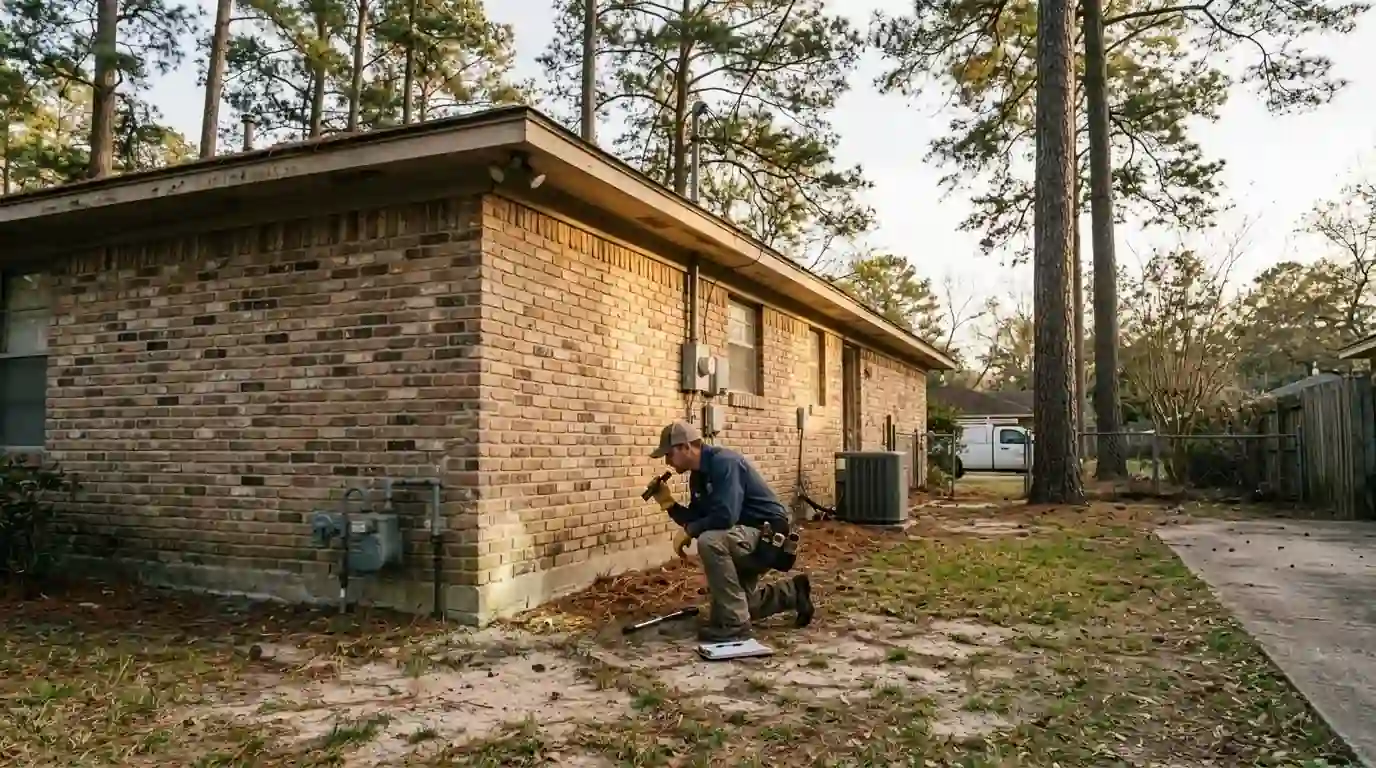
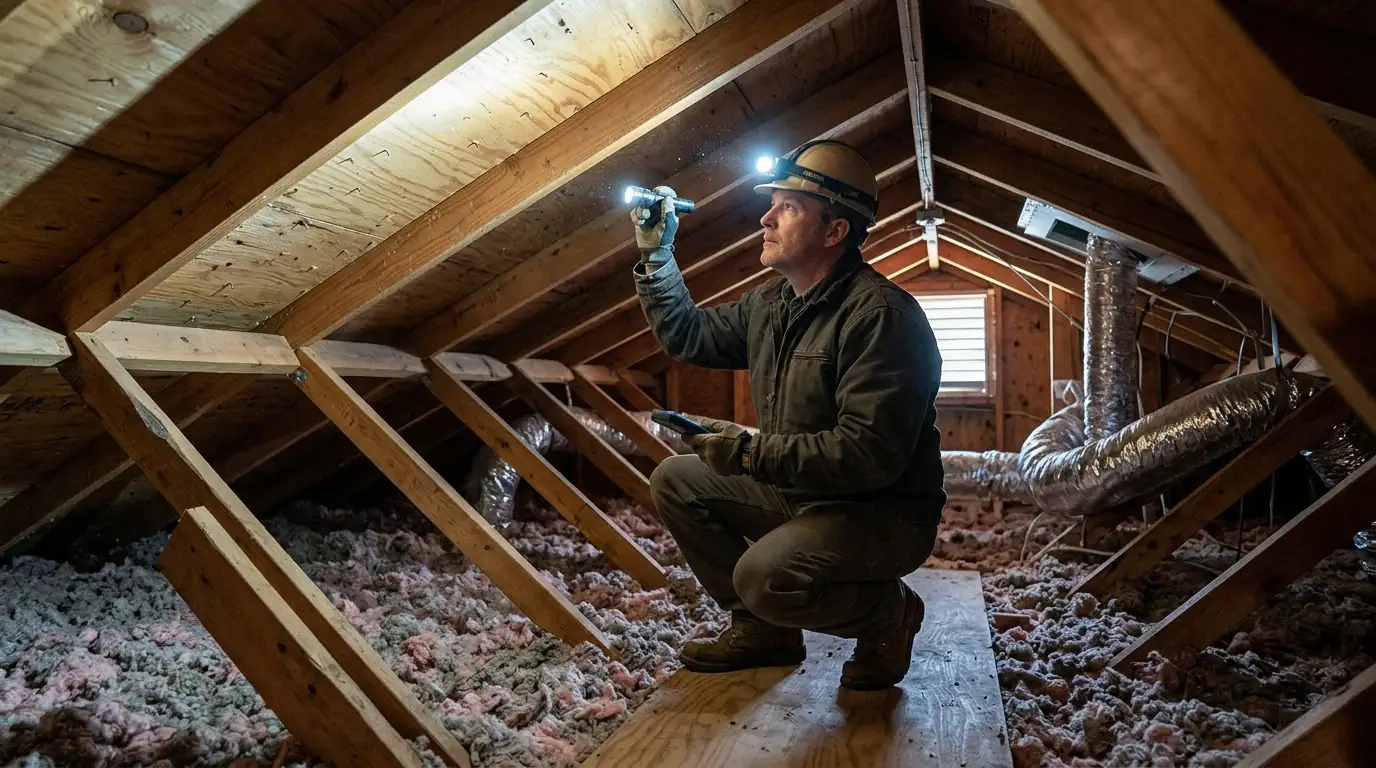
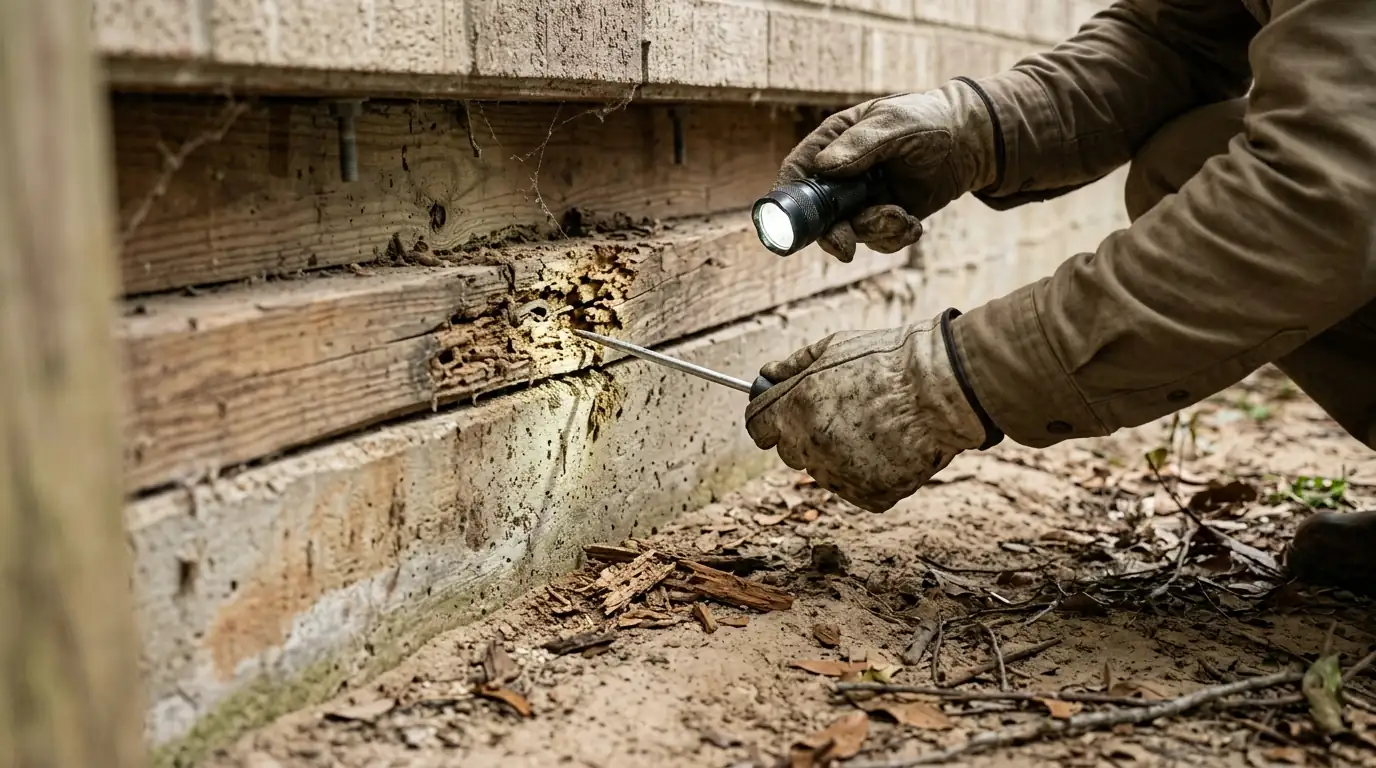
An inspection here is not a walk around with a flashlight. The inspector works the slab edge foot by foot, probes trim and sills where moisture collects, pulls the attic hatch, and checks the places this county's termites favor: bath traps, garage expansion joints, siding that touches grade, and the shaded wall under the pine canopy that never fully dries.
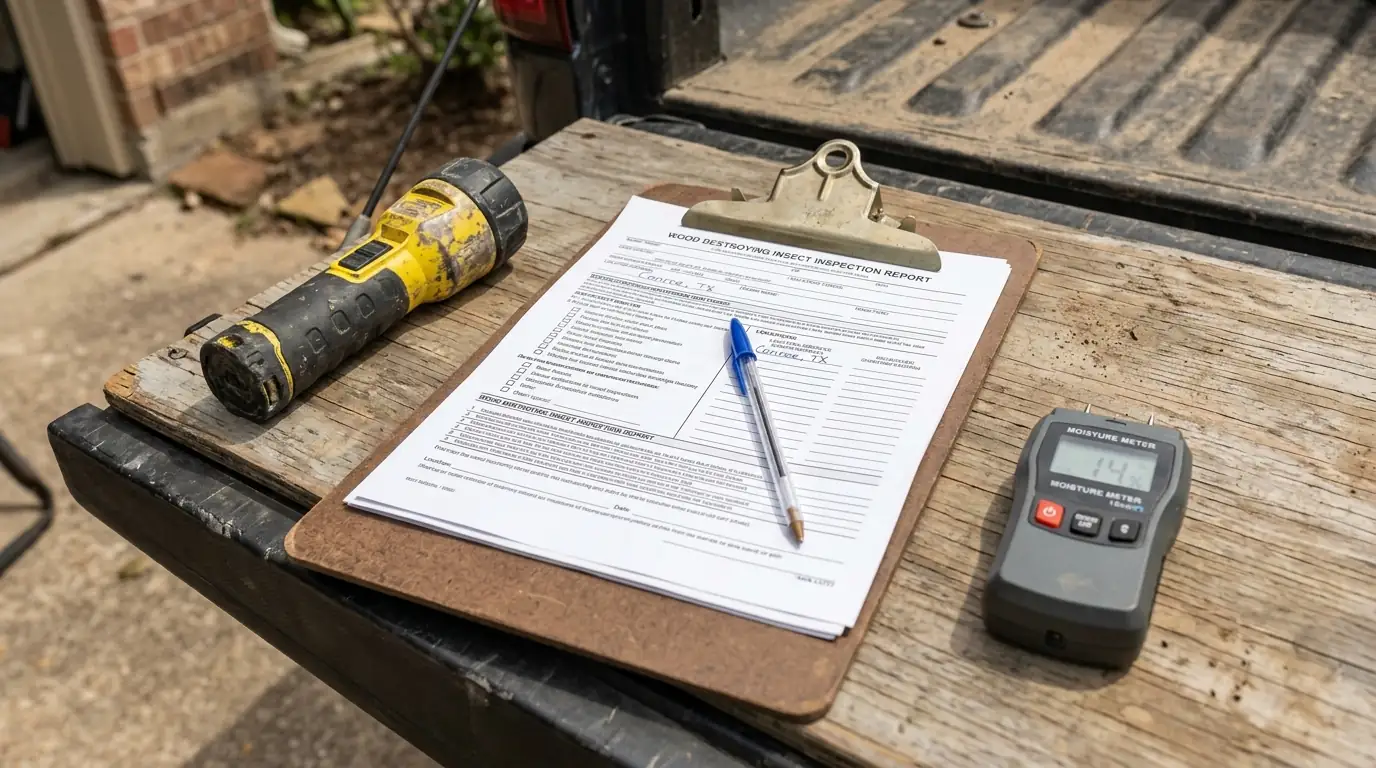
The deliverable depends on why you called. Homebuyers and sellers get the Texas WDI form their title company expects, covering the wood-destroying insects the state cares about, not just termites. Homeowners who found something get photos of exactly what we saw, a verdict on whether it is live, and a written scope if treatment is warranted.
We also say so when the house is clean. An inspection that always finds something to sell is not an inspection.
Three reasons people book it
Closings, checkups, and that thing you just found
Real estate WDI reports
Texas practice puts a Wood Destroying Insect report into most property transfers, and the form covers more than termites: subterranean, drywood and Formosan species, carpenter ants, carpenter bees and powder post beetles all belong on it. We inspect to the form's standard, document evidence and conducive conditions, and deliver it on the timeline a closing actually runs on, because an option period does not wait.
Annual termite checks
A yearly look costs little and catches the thing termite damage depends on: time. The visit re-walks the slab line, checks past repair and treatment areas, and flags new conducive conditions like mulch piled against siding or a new bed holding moisture at the foundation. Homes with a prior treatment get the barrier's weak points, disturbed soil, new penetrations, checked specifically.
Suspicion calls
You found wings on a sill, soft trim, or a line of dirt where dirt should not be. This visit answers one question first, is it live and is it termites, before anything else gets discussed. Half of these calls turn out to be old damage or carpenter ants, and you will hear it straight either way, with the photos to back it up.
On our Conroe routes
Three termite species, one form
Conroe sits in territory where all three Texas termite problems overlap: subterranean colonies in the soil, Formosans with their wall-void carton nests, and drywood termites living entirely inside the lumber. That spread is exactly what the state's WDI form exists to document, and it is why an inspection here reads the attic and the rafters as carefully as the slab line. The county's heavy carpenter ant population ends up on the same form, since their galleries get mistaken for termite work constantly.
What moves the price
What an inspection costs and why
Inspection pricing is simple compared to treatment; here is what moves it.
Purpose of the report
A formal WDI for closing carries documentation and liability work a quick homeowner checkup does not.
Structure size and access
A 3,800 square foot two-story with a crawlspace takes real time; a one-story slab home does not.
Outbuildings
Detached garages, shops and sheds on the form each add their own walk.
Treatment credit
Published guides put pest inspections at $75 to $200, and operators commonly credit the fee when treatment follows.
Timeline pressure
A closing-week rush is usually accommodated, but booking early in the option period keeps choices open.
Re-inspection needs
A repair-and-reinspect sequence for a lender adds a second trip to the same form.
The $75 to $200 figure is a published national planning range for pest inspections, often credited against treatment. Your exact fee is confirmed on the phone before anyone drives out.
How this job runs
Booking to report in plain steps
- 1
Tell us the reason
Closing date, annual check, or something you found; it decides the form and the timeline.
- 2
Walk the structure
Slab line, garage, plumbing walls, attic and crawl, probed and photographed.
- 3
Call it live or old
Every find is dated as best evidence allows; old galleries are not a sales pitch.
- 4
Write it up
WDI form for transactions, photo summary for homeowners, delivered promptly.
- 5
Scope what is next
If treatment is warranted you get a written scope and price; if not, you get told that.
Timeline
About an hour on site
Most Conroe inspections run 45 minutes to an hour and a half on site, with crawlspace homes at the longer end. WDI paperwork follows quickly after the walk, fast enough to fit inside a standard option period without drama.
Asked about this job
Inspection questions buyers and owners ask
The form is a fixture of Texas real estate practice: lenders and title companies expect it on most transfers, and VA loans require it. A sale without one invites renegotiation later, so sellers increasingly order it before listing.
The Texas WDI standard covers wood-destroying insects as a class: subterranean, drywood and Formosan termites, carpenter ants, carpenter bees and powder post beetles. Around here carpenter ants are the most common non-termite finding, and the report distinguishes their galleries from termite damage.
Prior treatment is noted, but current evidence is what matters. Barriers age and soil gets disturbed, so the inspection checks whether old protection still holds at additions, new penetrations and re-landscaped beds.
Old, inactive damage is reported honestly but is not a death sentence; buyers mostly want to know it is dead and what repair costs. Surprises at closing are the real problem, and early inspection prevents them.
Yes, the most common booking. Coordinate access through your agent, attend if you can, and findings plus the WDI form go to you as the client, not the seller.
You get photos, the species call, and a written treatment scope with the published cost ranges attached, and the report documents it either way. Whether the fix is negotiated into the sale or handled after is your call; our job is making the finding undeniable.
Related guide: WDI Termite Reports When Buying a Home in Texas
Jobs that pair with this one
Related work from the same crews
Subterranean Termite Treatment
Soil-line treatment when the finding is live.
Drywood Termite Treatment
In-wood colonies the attic check exists to catch.
Termite Bait Station Systems
Monitored protection after a clean or treated result.
Home Pest Inspections
The general version for everything that is not termites.
Plant the flag on it
Closing soon, or just can not stop wondering?
Either way it is an hour on site; call with your timeline.