Updated October 2026 · Reviewed for current Texas market ranges
Subterranean termite treatment in Conroe, TX works at the soil, where the colony lives: a liquid termiticide barrier around the foundation kills workers that cross it and spreads through the nest. Spots handle isolated activity; a Formosan find calls for the full perimeter.
Worth a phone call when you see
Five signs the colony has moved in
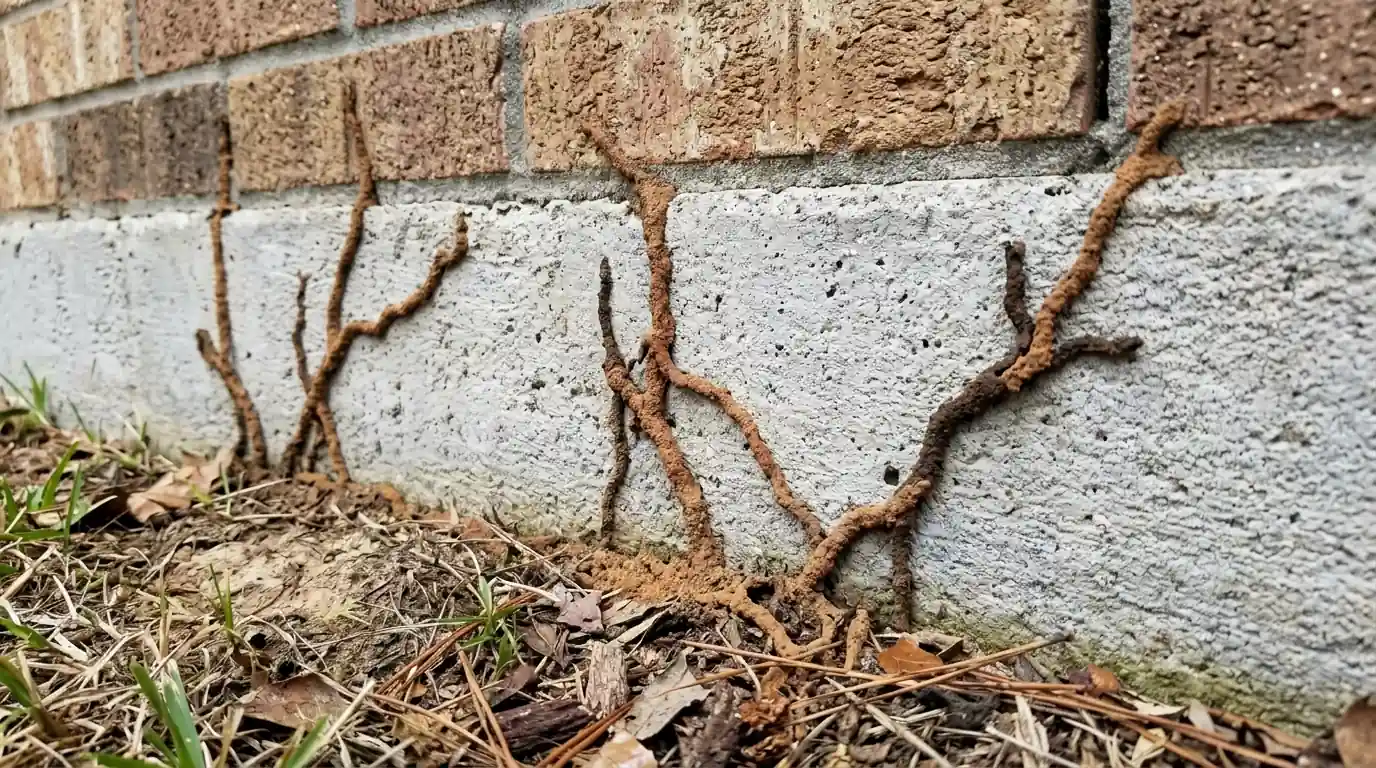
Mud tubes on the foundation
Pencil-width soil tunnels climbing slab or piers; an active one breaks open wet with workers inside.
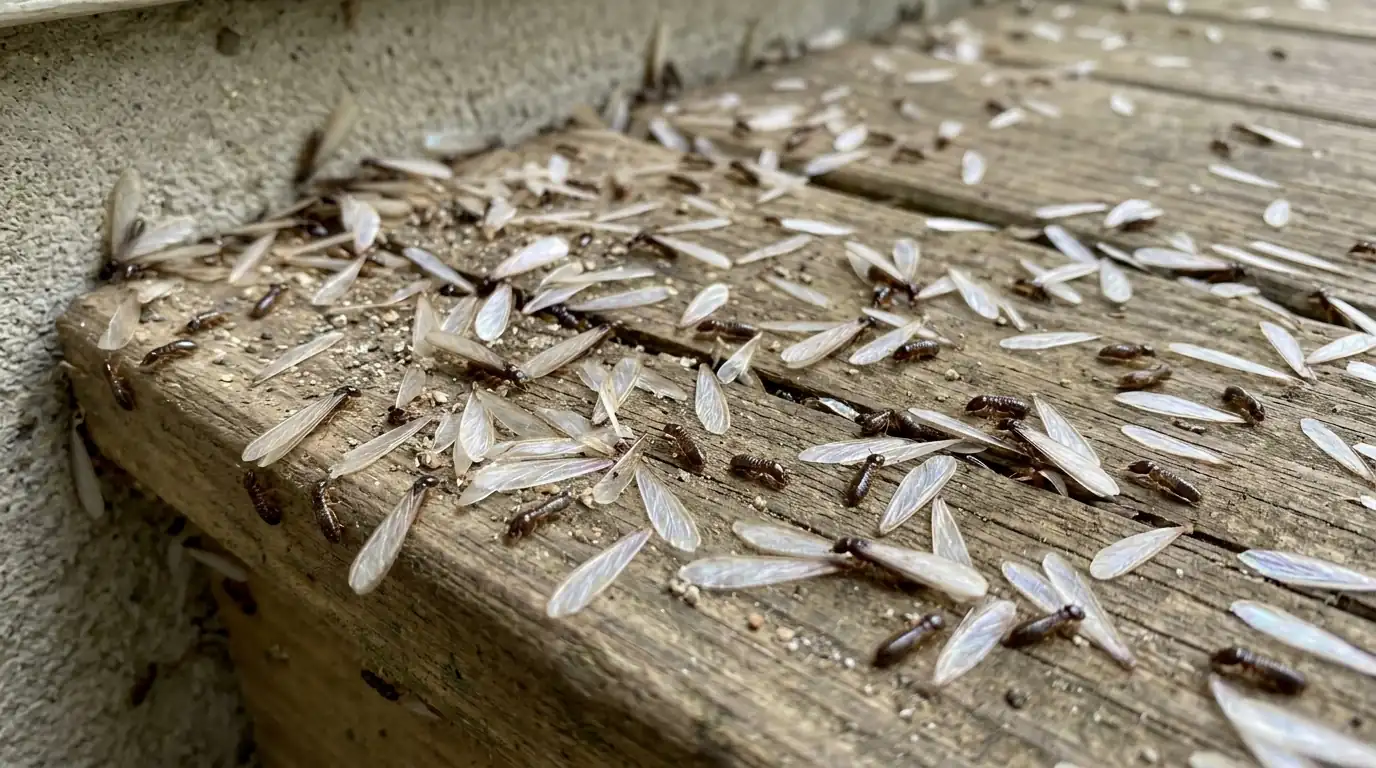
Swarmers or shed wings
Winged termites indoors, or equal-length wings piled on sills: a mature colony close enough to split.
Hollow or blistered wood
Trim and studs sounding papery under a knuckle, or paint bubbling over galleries.
Doors that stopped fitting
Activity moisture swells frames; a door suddenly sticking near a damp wall deserves a probe.
Carton material in voids
Chewed, soil-like nest material in a wall or attic void points at Formosans.
What this treatment is
A barrier the colony has to cross
The termites under Montgomery County lawns never see daylight; they move through soil tubes from nest to sill plate, so spraying visible wood does almost nothing. Working treatment sits where they travel: a trench around the foundation, rodded termiticide beneath it, and drilled applications wherever concrete meets the house.
Non-repellent termiticides are the point of the method: workers cannot detect the treated zone, keep foraging through it, and carry the active ingredient back into the colony. Over the following weeks the nest collapses instead of shifting to an untreated wall.
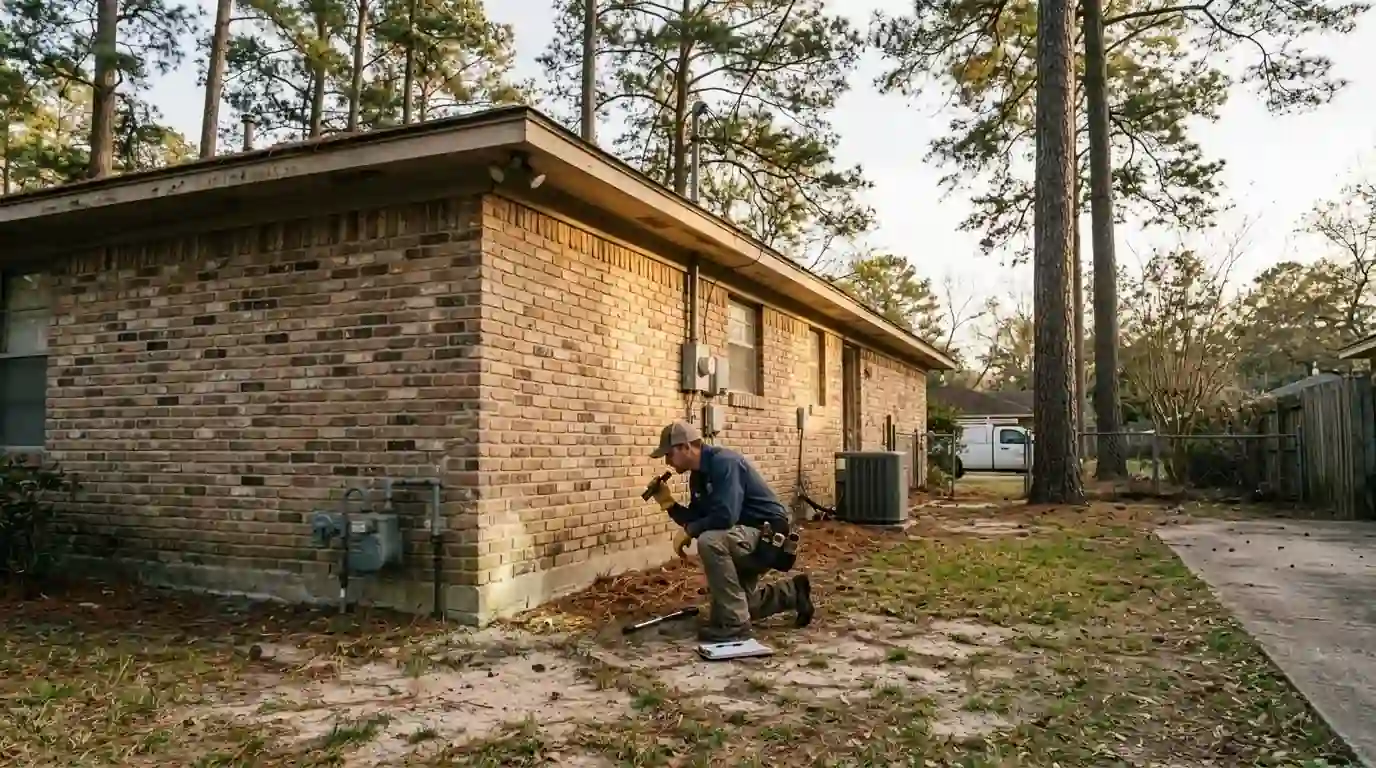
Every treatment starts with the inspection that scopes it: the slab line tube-mapped, damaged wood probed, and spot-versus-perimeter settled before any price is quoted.
Three ways the job goes
Formosan, full barrier, or a targeted spot
Formosan colony treatment
Formosan subterranean termites are documented in this county, and they change the job: colonies run into the millions and build carton nests in wall voids that survive without soil contact. When the evidence points Formosan, we treat the full perimeter rather than spots, check voids and roofline moisture, and set re-inspections, because partial treatment against this species is money wasted.
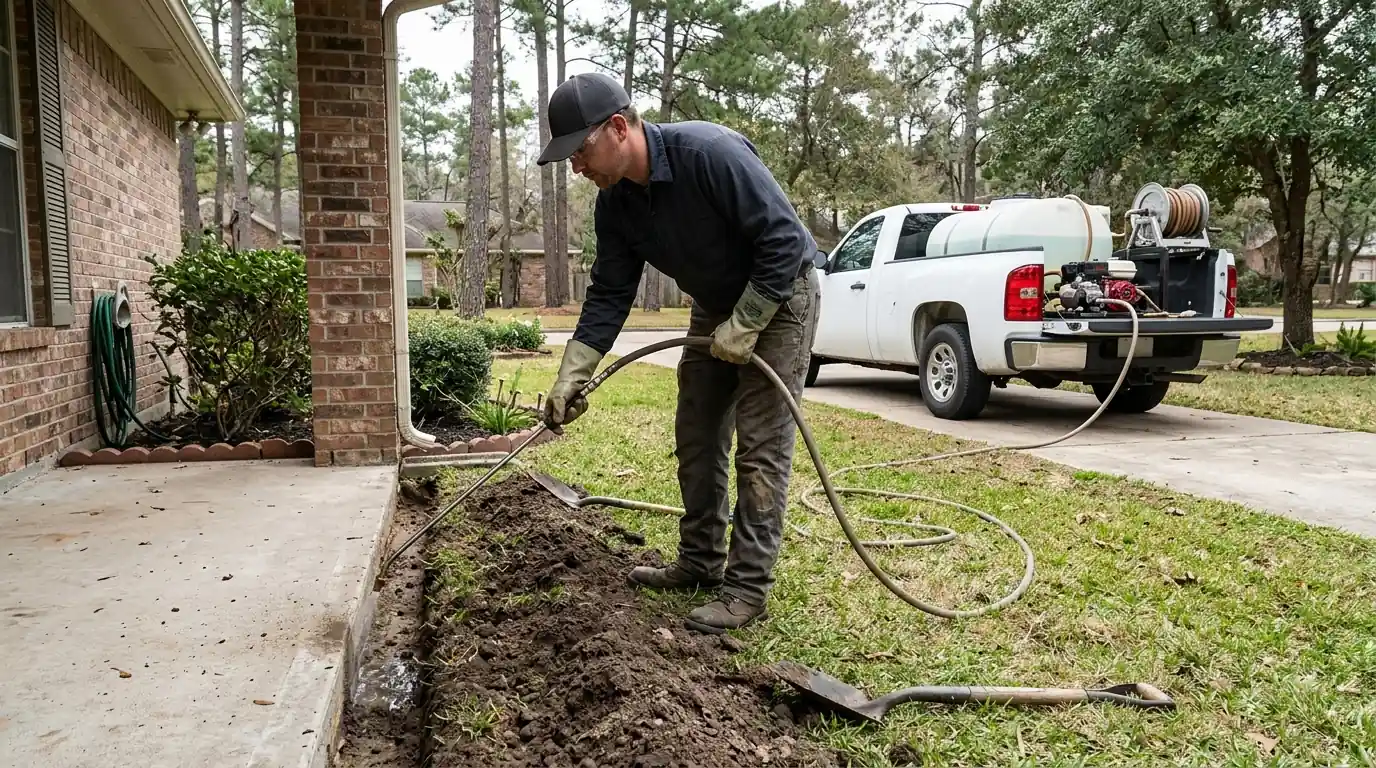
Liquid soil barrier
The standard whole-home defense: trenching along the foundation, rodding termiticide into the trench, and drilling through abutting patios, walks and garage slabs at set intervals so the treated zone runs continuous around the entire structure. A typical Conroe one-story takes most of a day of careful work. Done right, the barrier protects for years, which is why we document every linear foot treated and name the product used in your records.
Spot treatment
When activity is genuinely isolated, a bath trap, one garage expansion joint, a single exterior corner, a targeted application costs far less than a full perimeter and gets the problem handled in a couple of hours. The honest caveat: spot work gambles that the colony has only one way into the structure. We only recommend a spot after the tech has mapped the whole slab line and found nothing else, and we say plainly when a perimeter is the smarter spend for the house in front of us.
Timeline
Hours for the work, weeks for the kill
A spot runs two to three hours; a full perimeter takes most of a day, and you stay home for exterior soil work. The colony itself collapses over weeks as the non-repellent circulates: dying stragglers early on are normal, new wet tubes are not, and the follow-up checks exactly that.
On our Conroe routes
Why Conroe slabs stay busy
Montgomery County carries both native eastern subterranean termites and documented Formosan colonies, which is why our inspections here assume the worse species until the evidence says otherwise. The county’s clay-heavy, moisture-holding soil keeps mud tubes workable year-round, so there is no off season on a Conroe slab; a tube line found in January is as live as one found in June. Shaded foundations under pine canopy stay damp longest, and those are the walls we probe first.
How this job runs
From first tube to collapsed colony
- 1
Call and describe it
Tubes, swarmers or soft wood: say what you found and the inspection books.
- 2
Map the activity
The tech works the full slab line and probes wood until extent and species are known.
- 3
Pick the treatment
Spot, perimeter or Formosan protocol, quoted with footage and product named.
- 4
Treat the soil line
Trench, rod and drill until the zone is continuous; voids treated where needed.
- 5
Verify it died
Follow-ups confirm tubes stay dry and dead, with watch-points named between visits.
What moves the price
The price drivers on termite work
Published Texas ranges, so the inspection quote lands where you expect it to.
Linear footage
Perimeter jobs price by the foot of foundation; wrapped porches and long patios add trench and drill time.
Concrete to drill
Slabs, walks and pool decks against the house need drilled injection points, slower than open soil.
Species and spread
A localized native spot sits at the low end; a Formosan perimeter with void work sits at the top.
Construction type
Pier-and-beam crawls treat differently than slabs; stucco and foam-wrapped foundations need grade-line care.
Warranty structure
Annual renewable bonds commonly follow treatment; published renewals run $200 to $400 a year.
Re-treatment access
Landscaping, decks and stored items along the foundation add prep before the trench opens.
Published Texas figures: localized treatments run $290 to $1,150, liquid perimeters $1,200 to $2,500, Houston-area whole-structure jobs $1,500 to $4,500. Planning ranges, not a quote; your number follows the inspection.
Asked about this job
Termite treatment questions from this area code
Surface-spraying kills a few hundred workers out of a colony holding hundreds of thousands. The nest is in the soil, not the wood, so treatment has to sit where they travel; soil applications are what actually end an infestation.
The evidence pattern talks: very heavy tube networks, carton material in voids and large dusk swarms lean Formosan. We confirm with soldier specimens, and a Formosan call means the full perimeter, because partial measures fail against colonies that size.
The termiticide goes in a trench and below grade, not broadcast over the lawn, and binds to the soil where applied. We flag treated zones, cover re-entry timing, and route around vegetable beds and wells.
A proper liquid barrier protects for years, but soil gets disturbed: new beds, plumbing repairs, settling. That is why Texas operators pair treatment with an annual inspection or renewable bond, so a breach is caught early.
Baiting is a real alternative, monitored stations the colony feeds on over months, and better where trenching is impractical. The inspection says which method fits your slab; we install both.
Related guide: What Termite Treatment Costs in Conroe, TX
Jobs that pair with this one
Related work from the same crews
Termite Inspections & WDI Reports
The report and mapping that scopes any treatment.
Termite Bait Station Systems
Monitored stations, the low-disruption alternative.
Pre-Construction Termite Treatment
Soil pre-treats before a slab pours.
Carpenter Ant Control
The county's other wood-destroyer.
Plant the flag on it
Found a tube? Do not knock it down yet.
Leave it intact so the inspector can read it, and call; the next step gets priced on the phone.