Updated October 2026 · Reviewed for current Texas market ranges
Scorpion control in Conroe, TX targets the striped bark scorpion, the climbing species that turns up in bathtubs and shoes: treatment works the harborages they wait in, wood piles, bed stone, leaf litter, block voids, bands the perimeter and weep holes with products that hold on their waxy armor, and names the entry gaps worth sealing. UV flashlight inspections after dark find what daylight misses, because the species fluoresces.
Know the enemy's habits
A climber that hunts at night and hides all day
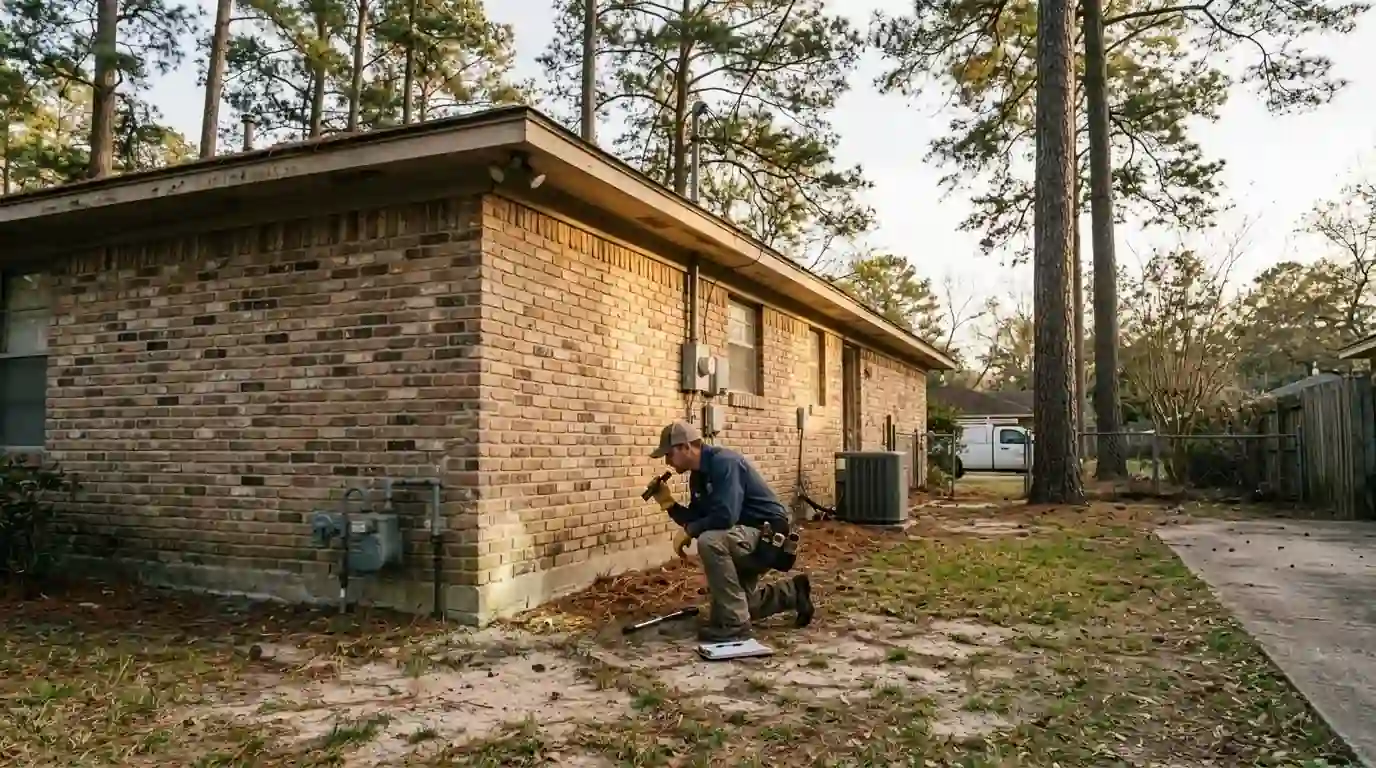
The striped bark scorpion is the one Texas species that routinely gets indoors, and it gets there by climbing: brick, siding, tree limbs touching the roofline, then in through weep holes, door corners and attic vents. A scorpion in a second-floor bathtub did not take the stairs.
Daytime, they compress into tight, dark, slightly damp spaces, under bed stones and landscape timbers, in wood piles, behind bark, inside block voids and expansion joints. That harborage map is the treatment map, and thinning the harborage itself does as much as any product.
Scorpions also track their food. A property with a healthy cricket and roach population under the same stones is feeding them, which is why scorpion work rides on a general barrier: starve the hunter and treat its hiding places, and the sightings fall off together.
How the work splits
Treat the hides, hunt by UV, close the gaps
Harborage and perimeter work
The visit treats where scorpions actually wait: direct applications under bed stones, timbers and wood piles, into block voids and expansion joints, along fence lines and tree bases, then a perimeter band and weep-hole dusting using products that perform on scorpions' notoriously resistant exteriors. We will also tell you plainly which harborage to remove outright, the stone stack against the siding has no treatable version, only a gone version.
UV night inspections
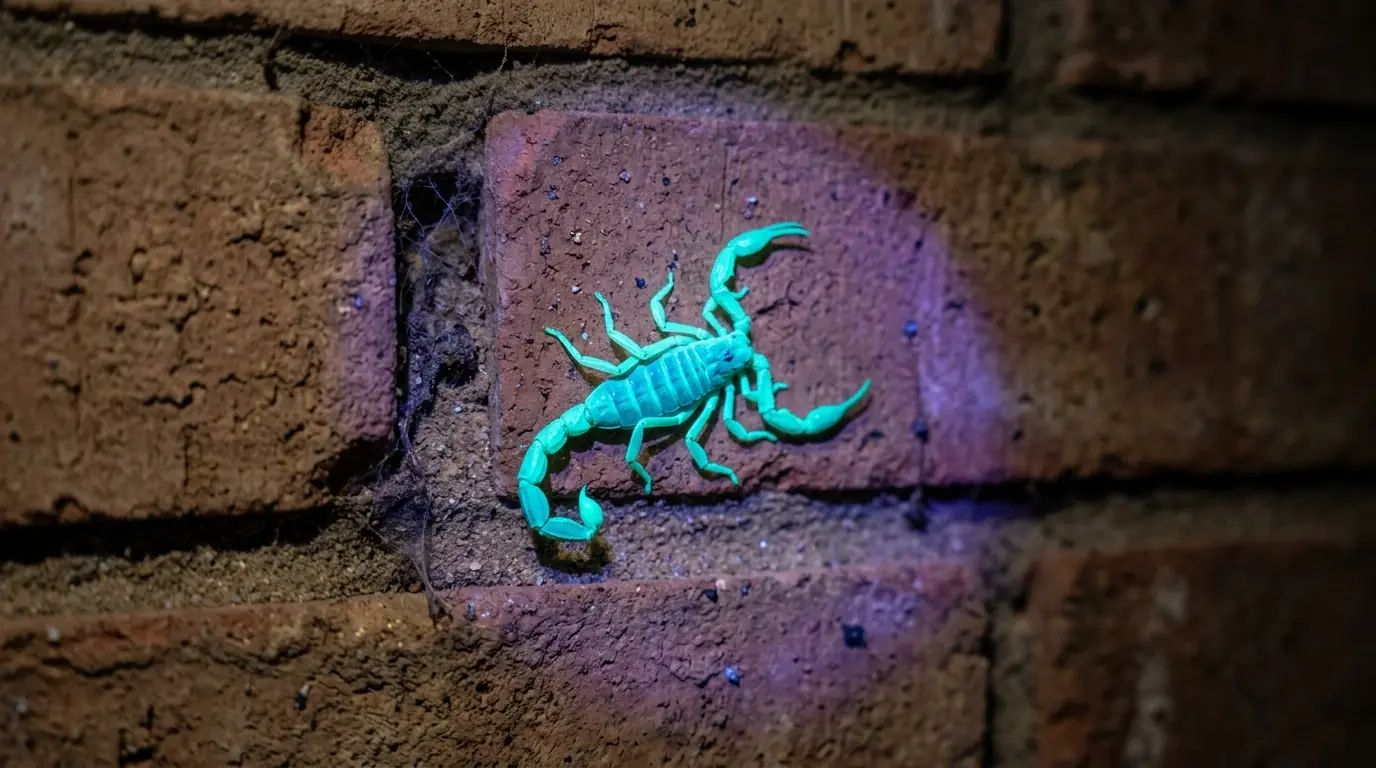
Bark scorpions fluoresce blue-green under ultraviolet light, so an after-dark UV walk reads a property in a way daylight cannot: how many, where they hunt, and which wall they climb. On heavy-pressure properties we run the UV inspection before quoting a program, because counting the enemy beats guessing, and homeowners who buy a UV flashlight afterward tend to become very motivated about door sweeps.
Sealing and exclusion findings
Products kill scorpions that cross them; gaps let scorpions skip the crossing. Every job closes with the entry findings in writing: the garage door corner gaps, the unscreened weep holes, the attic vent screens, the door sweeps worn to daylight. Most are inexpensive fixes you or a handyman close in an afternoon, and they are the difference between fewer scorpions and none in the shoes.
Worth a phone call when you see
Signals worth acting on
A scorpion in the tub or sink
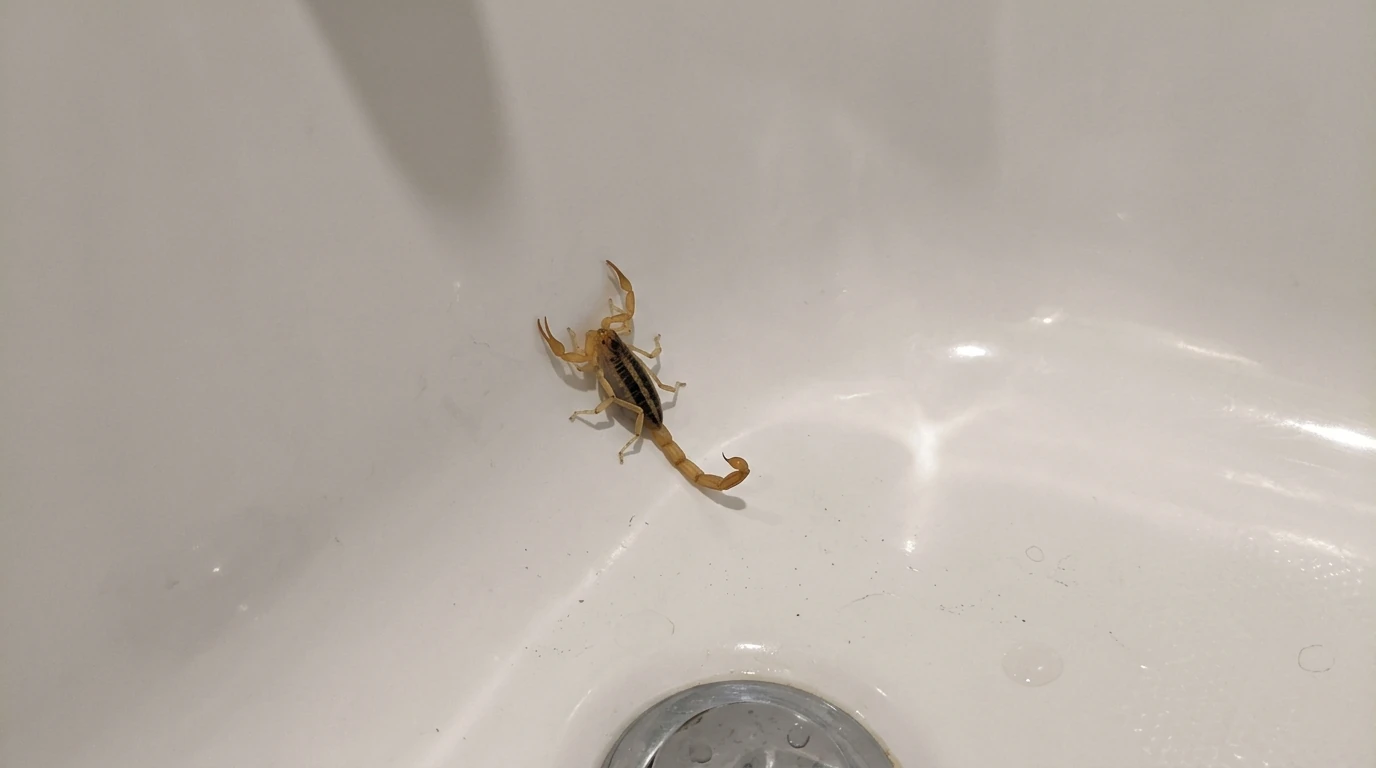
Climbers fall into slick basins and cannot get out; the route in was above, not the drain.
Sightings after storm weeks
Rain flushes harborage and drives scorpions to walls in waves.
Loose bark and stone stacks
Any stacked material against the house is prime harborage worth lifting carefully.
Cats fixated on a wall spot
Pets notice the night hunters first; a staring cat has found something.
Stings felt in bedding or shoes
Check and shake both in heavy-pressure homes; it is habit, not paranoia.
What moves the price
What scorpion work costs turn on
It prices as exterior treatment plus inspection time; here is the spread.
Harborage density
Stone, timber and woodpile count sets the direct-treatment workload.
Published context
Published Texas one-time treatments run $150 to $350, and most scorpion visits price inside general-treatment territory.
UV inspection
The night walk adds a visit but scopes heavy-pressure programs honestly.
Structure height and texture
Two-story brick with heavy weep lines takes more banding and dusting.
Standing service
Scorpion riders on a quarterly plan keep season pressure down at plan rates.
Your sealing share
The exclusion fixes are yours to make cheaply; we supply the list, not an invoice for it.
The $150 to $350 figure is the published 2026 Texas one-time range, shown for context; your quote follows the property description and, where warranted, the UV count.
On our Conroe routes
Wooded lots are scorpion lots
Conroe properties run from lakeside lots to heavily wooded acreage, and scorpion pressure tracks that gradient directly: the more leaf litter, stacked stone, pine bark and shaded moisture a lot holds, the more striped bark scorpions it supports, so prevention here is adapted to the property instead of templated. A manicured slab-on-grade lot may need little beyond the perimeter band and door sweeps, while a treed acreage home gets the full harborage program, and the first walk is what sorts one from the other.
How this job runs
From bathtub surprise to boring summers
- 1
Describe the sightings
Rooms, frequency and lot character stage the pressure level.
- 2
Walk or UV-count
Daylight harborage walk, or the after-dark UV census on heavy lots.
- 3
Treat the harborages
Stones, voids, joints, fence lines and bases handled directly.
- 4
Band and dust
Perimeter application and weep-hole dusting with scorpion-rated products.
- 5
Hand over the gaps
Sealing findings in writing; re-treatment rhythm set to the pressure.
Timeline
Weeks to quiet, storms excepted
The treatment visit runs one to two hours depending on harborage; UV inspections add an evening. Expect sightings to drop over two to three weeks as harborages die off and gaps close, with storm weeks producing stragglers at the walls, which is pressure arriving, not treatment failing.
Asked about this job
Scorpion questions from this county
Painful, comparable to a bad wasp sting, and for most healthy adults it resolves with ice and time. Small children, elderly family members and sting allergies deserve a doctor's call. Either way, nobody should find them in bedding, and that is the standard the work aims at.
They climb walls and ceilings hunting at night, fall into the tub, and cannot climb the glazed surface back out. It reads like they came up the drain; they almost never did. The fix is overhead and at the entries, weeps, vents, door corners, not down the pipes.
Not automatically; a sighting a month on a wooded lot is normal pressure finding gaps, while weekly indoor finds point at harborage against the structure and open routes. Frequency is the honest gauge, and it is the first question we ask.
Glue boards along garage walls genuinely catch and count them; we use them as monitors. Repellent claims, cedar included, do not hold up on this species. Money spends better on harborage removal, rated perimeter products and door sweeps, in that order.
A treed Conroe acreage produces scorpions continuously, so the honest target is none indoors and few at the walls, hit through harborage work, banding and sealing. Homes that do the sealing half see indoor sightings drop to roughly never, and that is the result worth paying for.
Jobs that pair with this one
Related work from the same crews
Spider Control
The other low-light hunter on the same lots.
Occasional Invader Control
The crickets that feed the whole food chain.
Residential Pest Control
The general barrier scorpion work rides on.
Quarterly Pest Control Plans
Season-long coverage for wooded properties.
Plant the flag on it
Shaking out shoes is not a lifestyle.
Describe the lot and how often you are seeing them; the program, and whether a UV count is worth it, gets settled on the call.