Updated October 2026 · Reviewed for current Texas market ranges
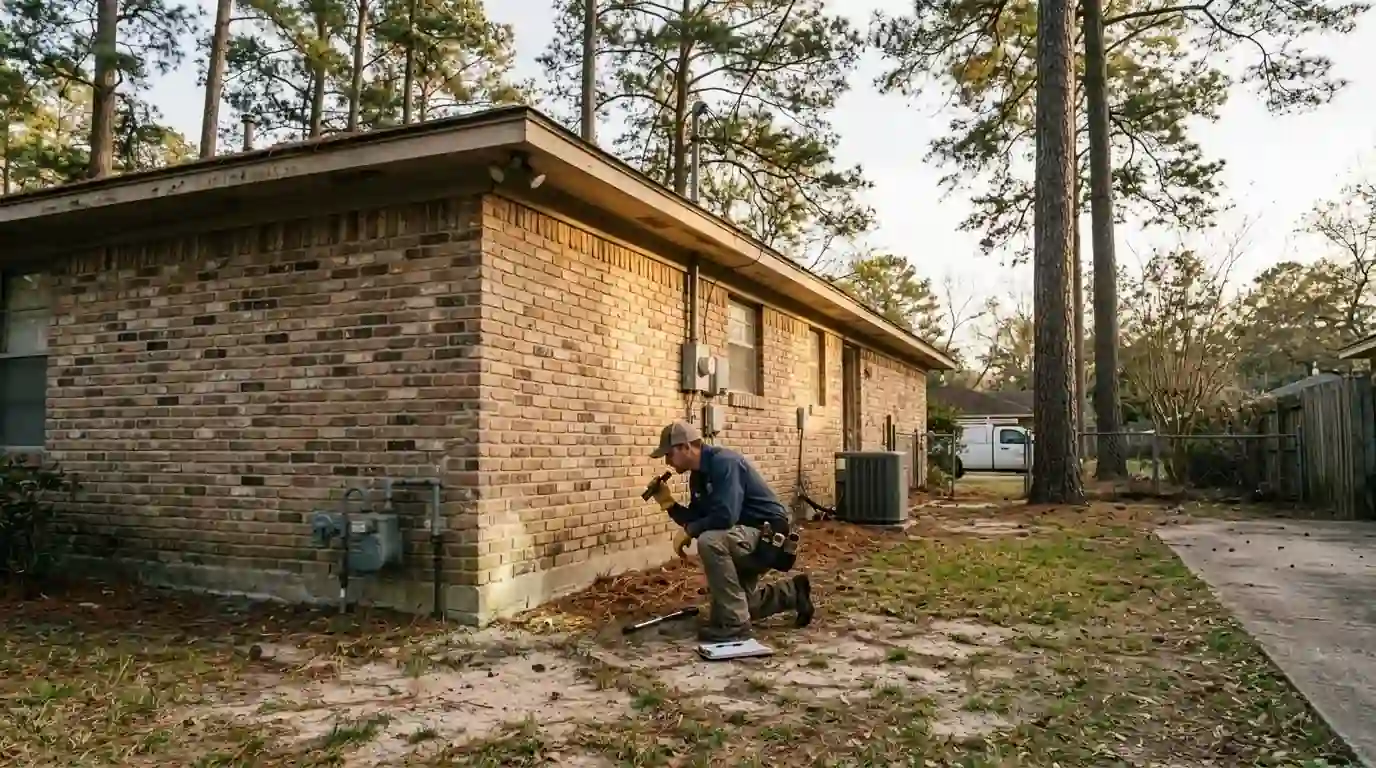
Occasional invader control in Conroe, TX covers the weather-driven crawlers, crickets, millipedes, earwigs, silverfish, pillbugs, that surge indoors when rain, heat or the first cool snap moves them: treatment works the damp mulch lines, bed edges and slab margins they breed in, bands the perimeter and thresholds they cross, and names the door-sweep and gap fixes that end the pattern instead of renting relief.
Inside the visit
The invader visit, itemized
- Granular treatment through mulch and bed lines
- Direct treatment under stones, timbers and litter
- Slab-margin and perimeter band application
- Threshold, garage-door and weep-hole attention
- Garage slab-joint and storage-zone treatment
- Silverfish interior placements where patterned
- Humidity and moisture findings in writing
- Pre-wave scheduling for the next season turn
What counts as an occasional invader
Outdoor breeders that arrive in waves
The category is defined by behavior: species that live and breed in the landscape, then appear indoors in bursts when conditions push them, a soaking week drowning millipedes out of mulch, August heat driving crickets to cool slabs, the first cold snap sending everything toward warmth. They do not establish indoors; most die within days of arriving.
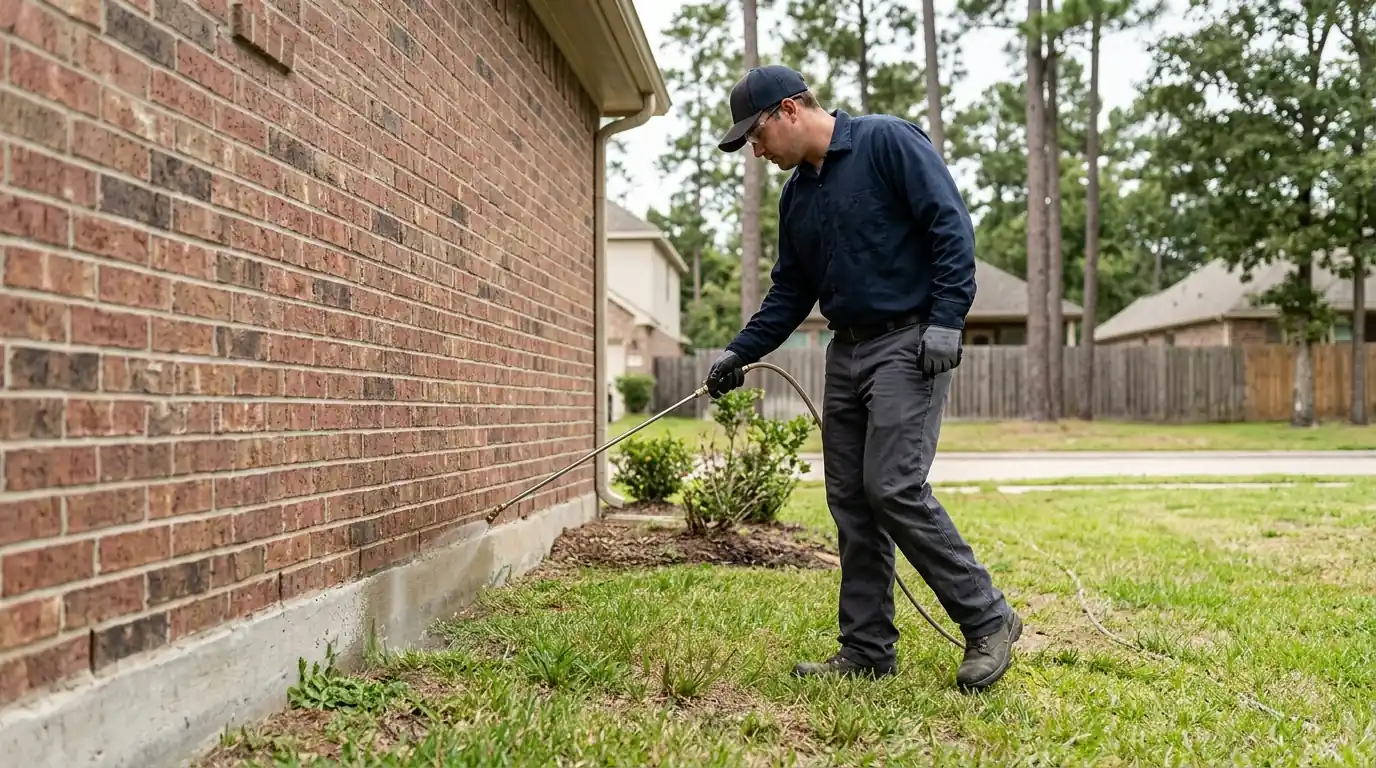
That biology is good news, because it means the fix is positional. Treat the moist margins where the populations build, mulch beds against the foundation, leaf litter, stones and timbers, weep screeds, and band the crossing points, and the waves break outside instead of in the hallway.
Silverfish are the category's one indoor exception, settling bathrooms, attics and book boxes where humidity allows, so a silverfish pattern gets interior placements and a dehumidification note alongside the perimeter work.
The category, handled
Perimeter waves, garage crickets, humid-corner silverfish
Wave-season perimeter work
The core treatment runs the band where house meets landscape: granular product through mulch and bed lines, direct treatment under stones, timbers and leaf litter, a perimeter application at the slab margin, and attention at thresholds, garage doors and weep holes, the crossing points every wave funnels through. Timed ahead of the spring soak and the fall cool-down, it turns surge weeks into something you read about in our visit summary instead of sweeping up.
Cricket and garage pressure
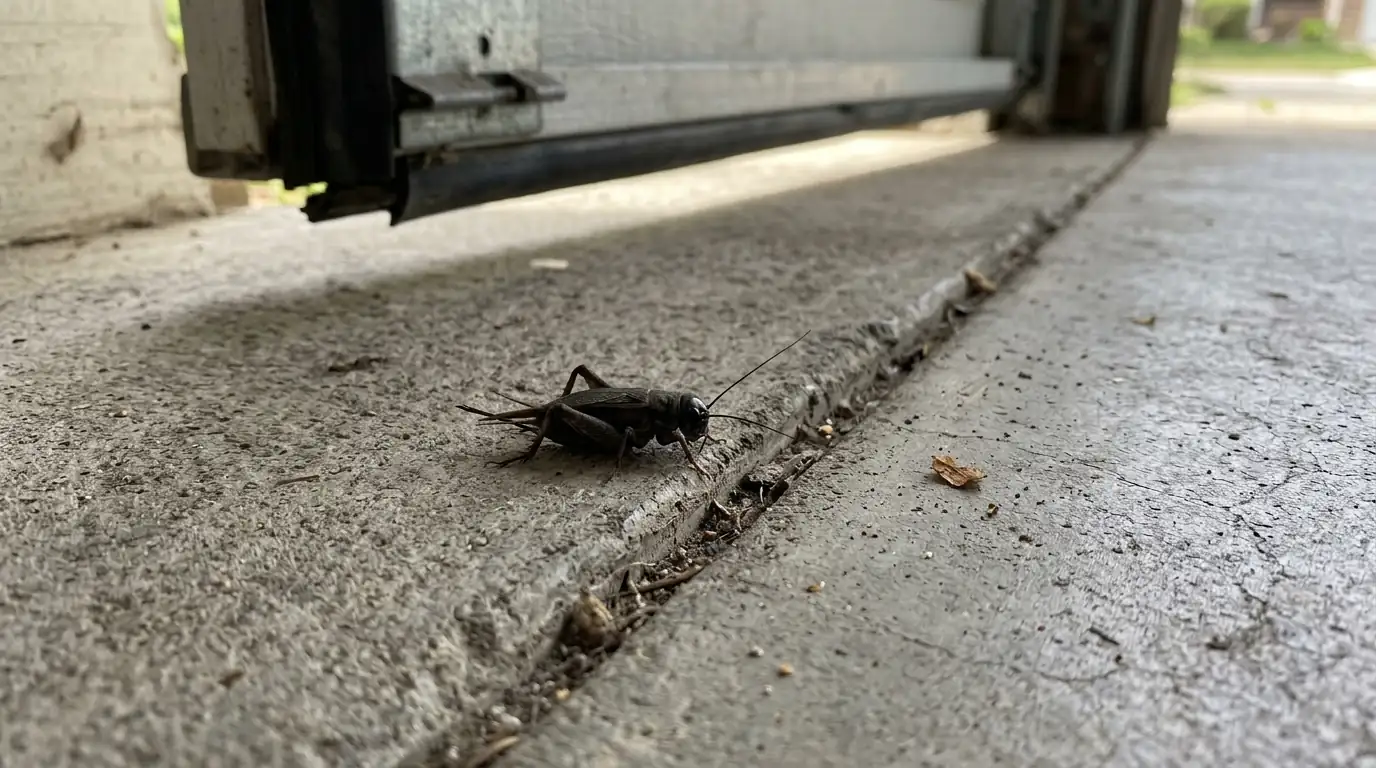
Crickets deserve their own line because they feed everything else, scorpions and spiders hunt the cricket population, so knocking it down pays twice. Garages are cricket central: the slab joints, the door-corner gaps, the stored cardboard. The visit treats the joints and perimeter, and the chirping-in-the-wall call we get every August is usually one gap in a garage door sweep away from never happening.
Silverfish and humidity zones
A silverfish pattern means a humidity pocket: a bathroom that never fully dries, an attic edge, stored paper and cardboard in a garage corner. Treatment places product in the harborage cracks and the stored-goods zones, and the lasting half is environmental, ventilation, a dehumidifier where the reading justifies it, and cardboard swapped for sealed bins. We state the humidity findings plainly, because without them the treatment is rent.
On our Conroe routes
Scheduled to this county's weather
Homeowners around Conroe, Willis and Spring already book pest work by the calendar, prevention as spring opens, sealing ahead of the first cool snaps, and occasional invaders are the category that logic fits best, because the waves here are weather events: the first sustained soak flushes millipedes and earwigs out of saturated mulch, August heat drives field crickets to shaded slabs, and the autumn turn pushes everything toward warm foundations at once. Treating the margins two weeks ahead of each turn is the whole trick.
What moves the price
What this service costs turn on
It prices as perimeter work, with the pattern deciding the extras.
Bed and margin footage
The treated mulch, stone and slab lines set the base time.
Published context
Published Texas one-time treatments run $150 to $350, and most invader visits sit inside that range.
Species pattern
A silverfish interior program adds placements a cricket wave does not.
Garage complexity
Slab joints, storage volume and door condition shape the garage share.
Season timing
Pre-wave scheduled treatments beat reactive surge visits on both price and result.
Plan coverage
Quarterly plans absorb all of this at plan pricing; the fit is natural.
The $150 to $350 figure is the published 2026 Texas range for one-time treatments, given for context; your quote follows the lot and pattern description on the phone.
How this job runs
Getting ahead of the next wave
- 1
Name the crawler
Crickets, millipedes, earwigs or silverfish each point the visit differently.
- 2
Walk the margins
Beds, litter, stones, slab edges and the garage read for breeding moisture.
- 3
Treat the band
Granular margins, direct harborage treatment and the perimeter application.
- 4
Handle the exceptions
Silverfish interiors and cricket garages get their targeted placements.
- 5
Close the gaps
Sweeps, thresholds and weep findings in writing; pre-wave timing booked.
Timeline
An hour now, a quieter season turn later
The visit runs about an hour on a typical lot, and a wave already underway thins over several days as the margins take effect; the real result shows at the next weather turn, when the surge that used to fill the garage simply does not arrive. Indoor stragglers from a treated wave die on their own and sweep up once.
Asked about this job
Occasional invader questions
A saturated week flooded them out of the mulch and lawn thatch where they breed, and the foundation was the nearest dry ground. They cannot survive indoors and the wave dies on its own; treating the margins before the next soak is what keeps the sequel outside.
They mean the landscape right against it is moist and sheltered, which is normal for this county, not a defect. Repeated waves do flag the fixable half: mulch piled against siding, beds that stay wet, door sweeps showing daylight. Those findings come with every visit.
No, the category is nuisance-grade: no bites worth the name, no disease story, no structural damage, though crickets chew fabrics given time and silverfish work paper and photos. The real cost is the nightly sweeping, and that is exactly what the perimeter work removes.
Same service, different emphasis: that pattern is a humidity pocket, so the visit adds interior crack placements and a straight answer about ventilation or a dehumidifier. Silverfish are the one category member that settles in, which is why the pattern is worth naming at booking.
Two weeks before the season turns: ahead of the first sustained spring rains, and again before the first real cool snap of fall. Those two treatments, or a quarterly plan that lands visits there anyway, cover the overwhelming share of wave traffic this county produces.
Jobs that pair with this one
Related work from the same crews
Scorpion Control
The hunter the cricket population feeds.
Spider Control
The web-builders working the same porch lights.
American & Smokybrown Roach Control
The biggest crawler the storm weeks move.
Quarterly Pest Control Plans
The plan whose visits land on the season turns.
Plant the flag on it
Beat the next wave by two weeks.
Tell us which crawler and which rooms; the margin treatment gets timed to the season on the same call.