Updated October 2026 · Reviewed for current Texas market ranges
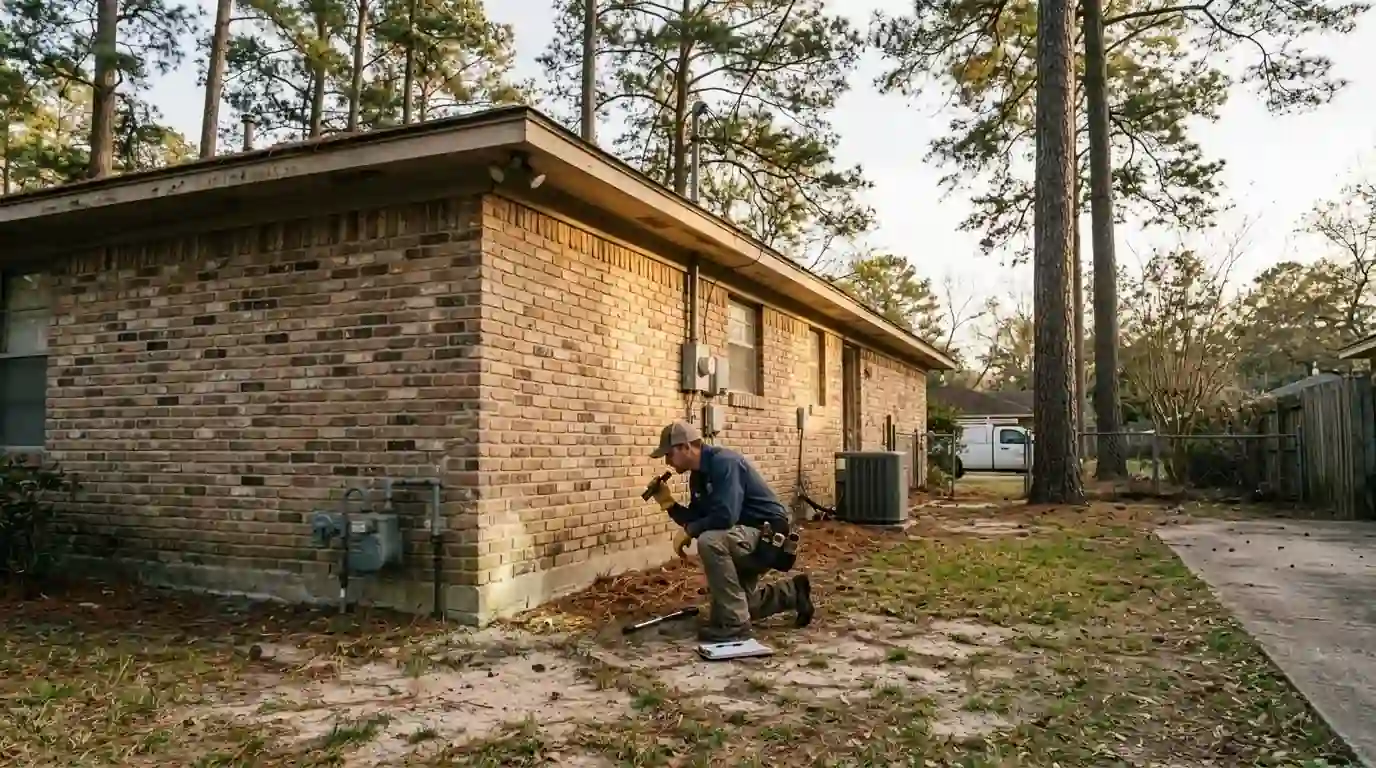
Flea and tick treatment in Conroe, TX treats the house and the yard together: carpets, rugs and pet resting areas indoors get an adulticide plus an insect growth regulator that stops flea eggs and larvae from developing; outdoors, shaded lawn edges, leaf litter and the wood line where ticks wait get a targeted application. Pets need treatment from your vet at the same time, and a follow-up visit catches the next hatch.
Why one spray rarely ends it
A life cycle that hides in the carpet
Most of a flea population is not on the pet; it is eggs, larvae and pupae in carpet, rugs, furniture and pet bedding. Pupae are protected and hatch over weeks, which is why fleas seem to return after a treatment. The growth regulator stops new larvae from maturing, and vacuuming and a follow-up visit catch the pupae as they emerge.
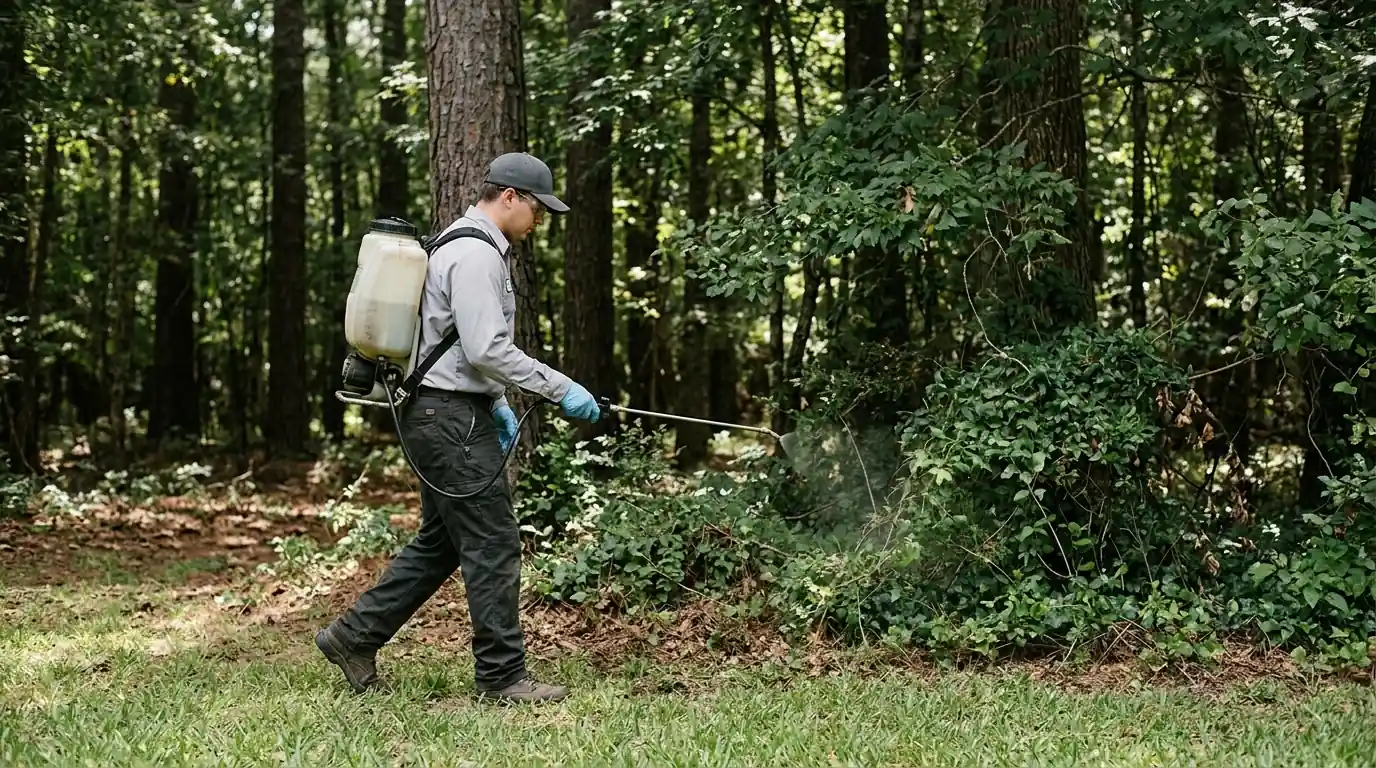
Ticks live outside, waiting on grass blades and low brush at shaded edges for a passing host. Treating the whole lawn is rarely necessary; treating the edges where yard meets woods, under shrubs and along fence lines does most of the work, especially combined with trimming and leaf-litter cleanup.
Inside the visit
What the visit covers
- Carpet and rug treatment
- Upholstered furniture and pet bed areas
- Insect growth regulator indoors
- Shaded lawn and bed treatment
- Wood line and fence edge treatment
- Under-deck and crawl edges
- Leaf litter and wildlife notes
- Follow-up visit scheduling
How the treatment splits
Inside, outside, and the second round
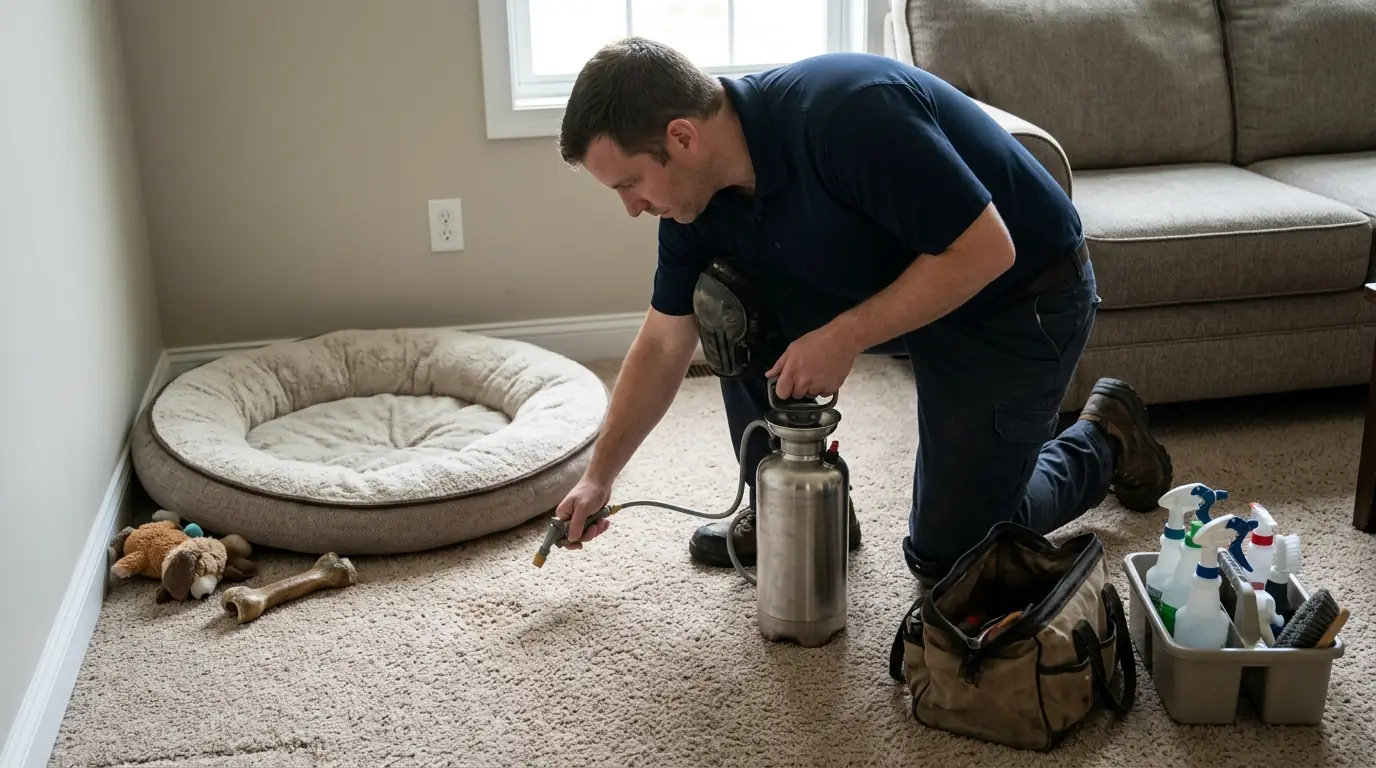
Indoor flea treatment
Carpets, rugs, upholstered furniture and pet sleeping areas get an adulticide and a growth regulator. You vacuum thoroughly before the visit, wash pet bedding, and keep vacuuming daily for two weeks afterward, because vibration brings pupae out to meet the treatment. The prep list is short and specific, and it is half of the result. Pets should be out of the home during treatment and until the surfaces have dried, which the tech times for you on the day.
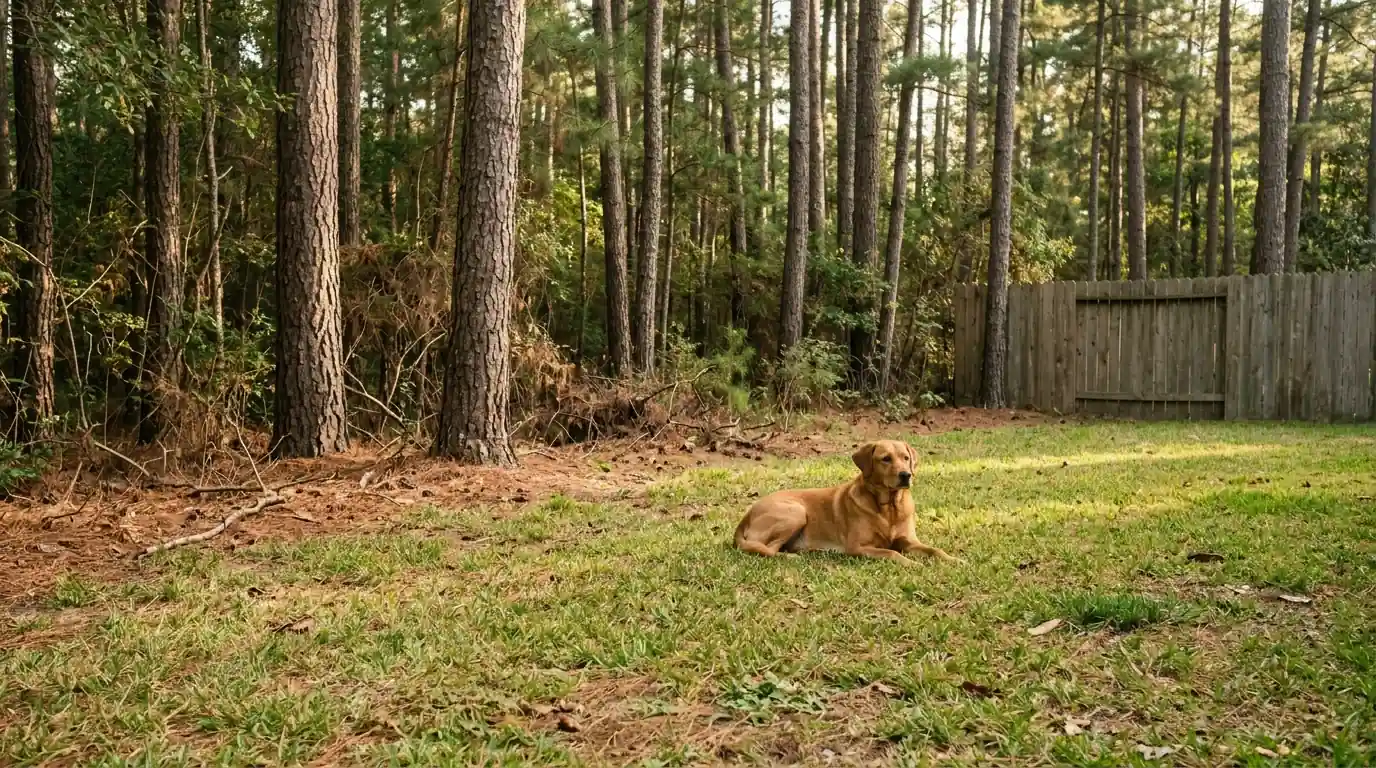
Yard and tick-edge treatment
Outdoors, the treatment targets shaded lawn, beds, the area under decks and the wood line where ticks and outdoor fleas gather. Sunny open lawn usually needs little. We point out leaf litter, overgrown edges and wildlife entry points that keep bringing ticks in, because those are cheap to fix. Keeping grass short at the tree line and clearing leaf piles near play areas makes the treated edge last longer between visits and cuts how many ticks reach the lawn at all.
Follow-up and prevention
A second visit about two weeks later catches fleas emerging from protected pupae and confirms the yard edges are holding. Ongoing tick-season treatments can ride on a quarterly plan, which is the simplest way to keep wooded lots under control through the warm months. The follow-up timing is set so it lands as the protected pupae in the carpet are hatching, which is exactly when a second application does the most good and why skipping it is the usual reason fleas come back.
What moves the price
What flea and tick work costs turn on
Indoor area, yard edges and the follow-up set the price.
Indoor square footage
Carpeted rooms and pet areas set the indoor scope.
Yard edges
Wooded edges, beds and under-deck areas set the outdoor scope.
Infestation level
Heavy indoor flea activity may need an extra follow-up.
Follow-up visit
Included in our quote to catch the next hatch.
Plan add-on
Season-long tick treatments can ride a quarterly plan.
Published context
Published Texas one-time general treatments run $150 to $350.
The $150 to $350 figure is the published 2026 Texas range for one-time treatments, for context; your quote follows the home and yard description.
On our Conroe routes
Ticks at the tree line
Wooded Montgomery County lots carry Lone Star tick pressure at levels most Houston suburbs do not see, because the pine and hardwood edges, deer traffic and leaf litter give ticks exactly the shaded, humid cover they need. For Conroe households with dogs or kids who play near the trees, the edge where lawn meets woods is the part of the yard that matters most, and it is where our outdoor treatment concentrates rather than spraying open, sunny turf that ticks avoid anyway.
How this job runs
From itchy pets to a broken cycle
- 1
Book with your vet
Pets get treated by your vet the same week as the house.
- 2
Prep the house
Vacuum, wash bedding, clear floors for treatment.
- 3
Treat inside
Adulticide plus growth regulator in carpets and pet areas.
- 4
Treat the yard edges
Shaded edges, beds and wood line targeted.
- 5
Follow up
A second visit catches the emerging pupae.
Asked about this job
Flea and tick questions
Yes. Treating the house without treating the pet, or the other way round, lets the cycle continue. Talk to your vet about the right product and time it with our visit.
Pupae in carpet hatch over the following weeks and meet the treatment as they emerge. Seeing some fleas for a week or two is normal; daily vacuuming speeds it up, and the follow-up visit closes it out.
Once the treatment has dried, usually a few hours. The tech gives you the exact time for that day's conditions.
Usually not. Ticks prefer shade and cover, so treating edges, beds and the wood line does most of the work. Open sunny lawn rarely holds many.
Yes. Raccoons, opossums, feral cats and deer carry both onto a property. If wildlife is denning under a deck or in a crawl space, dealing with that is part of a lasting fix.
Related guide: Are Pest Treatments Safe for Pets and Kids?
Jobs that pair with this one
Related work from the same crews
Mosquito Control
The other yard biters in summer.
Opossum, Armadillo & Skunk Removal
Animals that bring fleas and ticks in.
Bed Bug Inspections
When the bites might be bed bugs.
Quarterly Pest Control Plans
Season-long yard coverage.
Plant the flag on it
Scratching dog, itchy ankles?
Call and we will time the house and yard treatment around your vet visit.