Updated October 2026 · Reviewed for current Texas market ranges
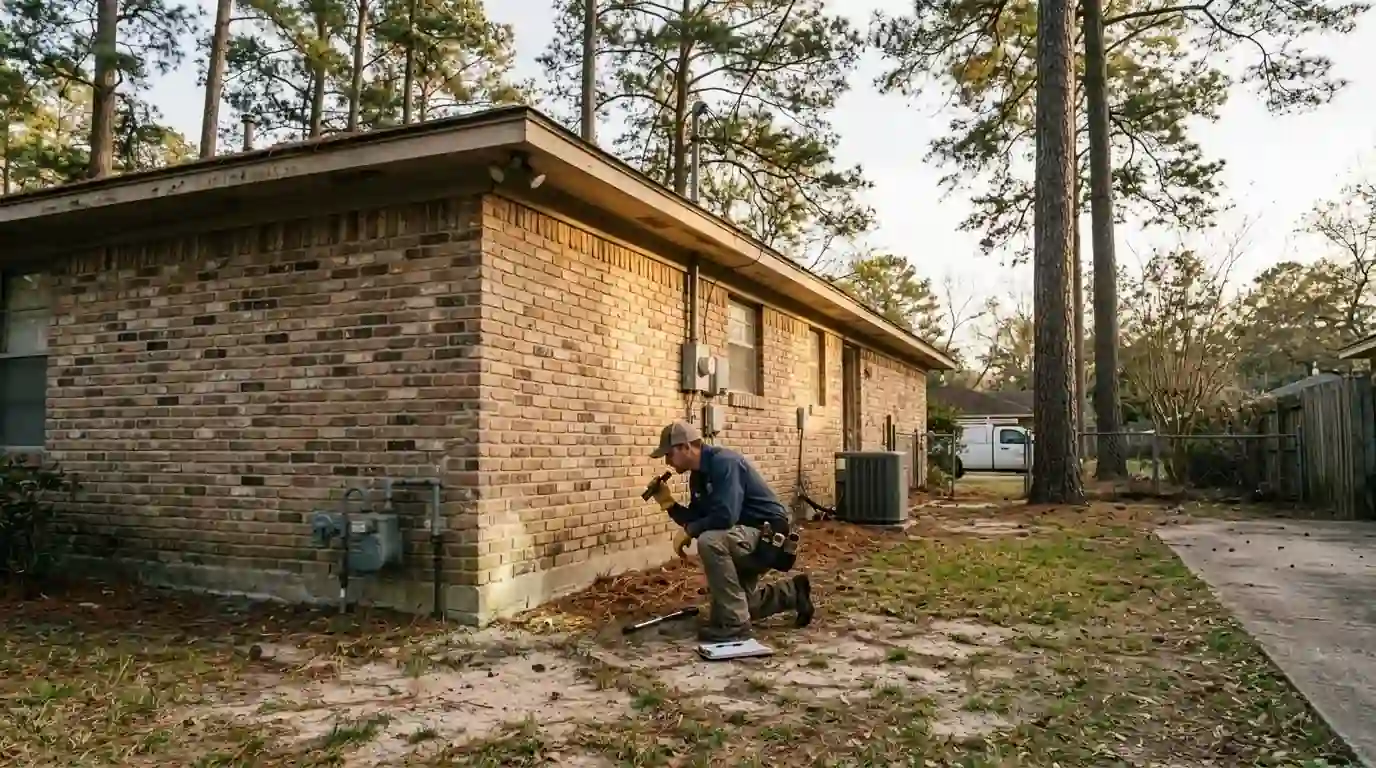
Raccoon removal in Conroe, TX starts with finding the den and the entry, often a torn soffit, roof vent or chimney. Adults are removed with humane traps or one-way doors, and in spring, babies are removed by hand and reunited with the mother so none are left inside. The entry is then repaired with heavy-gauge material and any latrine areas are cleaned, because raccoon droppings carry roundworm.
Worth a phone call when you see
Signs a raccoon has moved in
Heavy thumping at night
Loud movement in the attic after dark, heavier than rats.
Torn soffits or vents
Bent or ripped material along the roofline.
Chittering sounds
High-pitched cries in spring usually mean babies.
Droppings piles
Concentrated droppings on the roof or in the attic mean a latrine.
Trash and pet food raided
Nightly raids often trace to a nearby den.
Why raccoons are a different job
Strong, smart, and often raising young
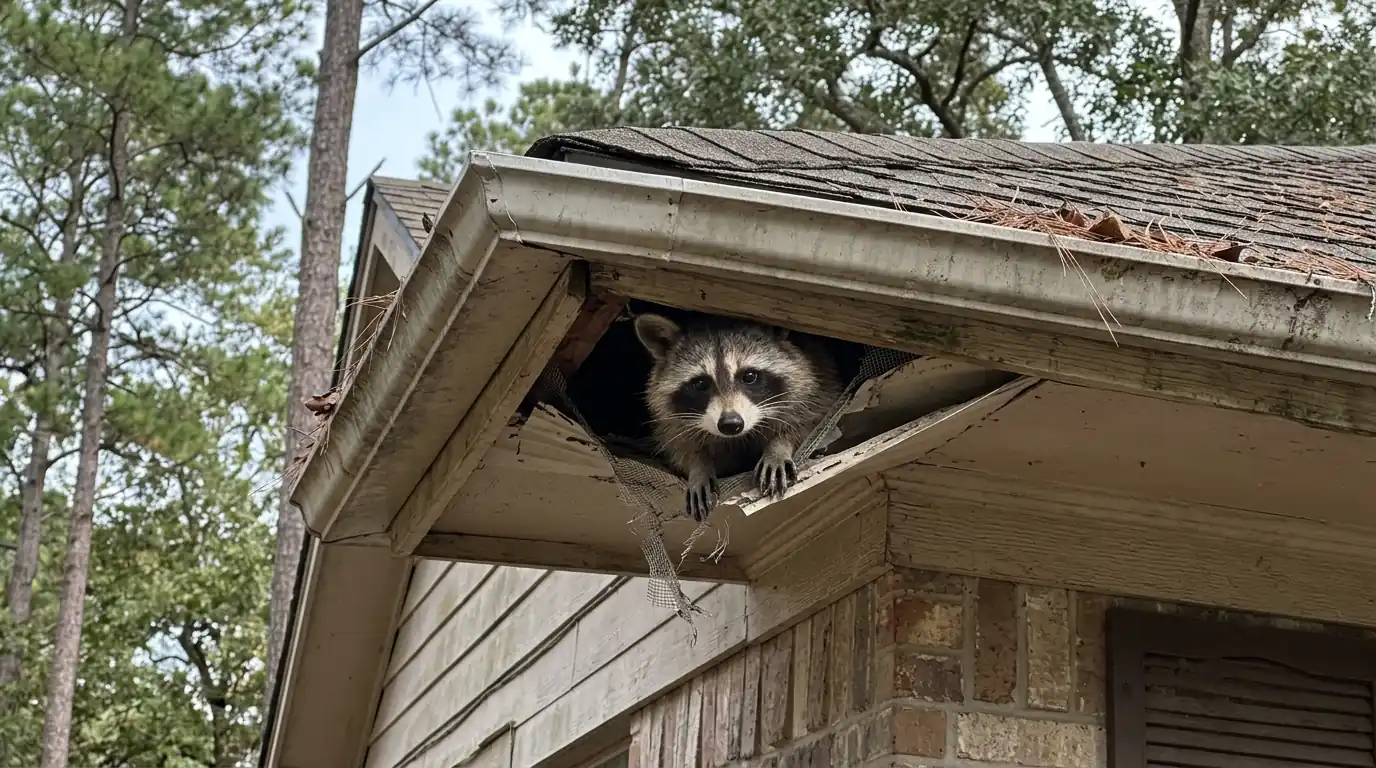
Raccoons tear open soffits, lift shingles and bend vent covers to get into attics and chimneys. Once inside they den, raise young, and use one area as a latrine. The damage, the noise and the health risk from droppings make them one of the more urgent wildlife calls.
Spring is baby season. Removing a mother and leaving her young inside creates a far bigger problem, so the inspection looks for litters first, and removal plans keep the family together.
Repairs need to be stronger than the original material, because a raccoon that knows a den site will try hard to get back in.
Where raccoons den
Attics, chimneys, and under the deck
Attic and soffit raccoons
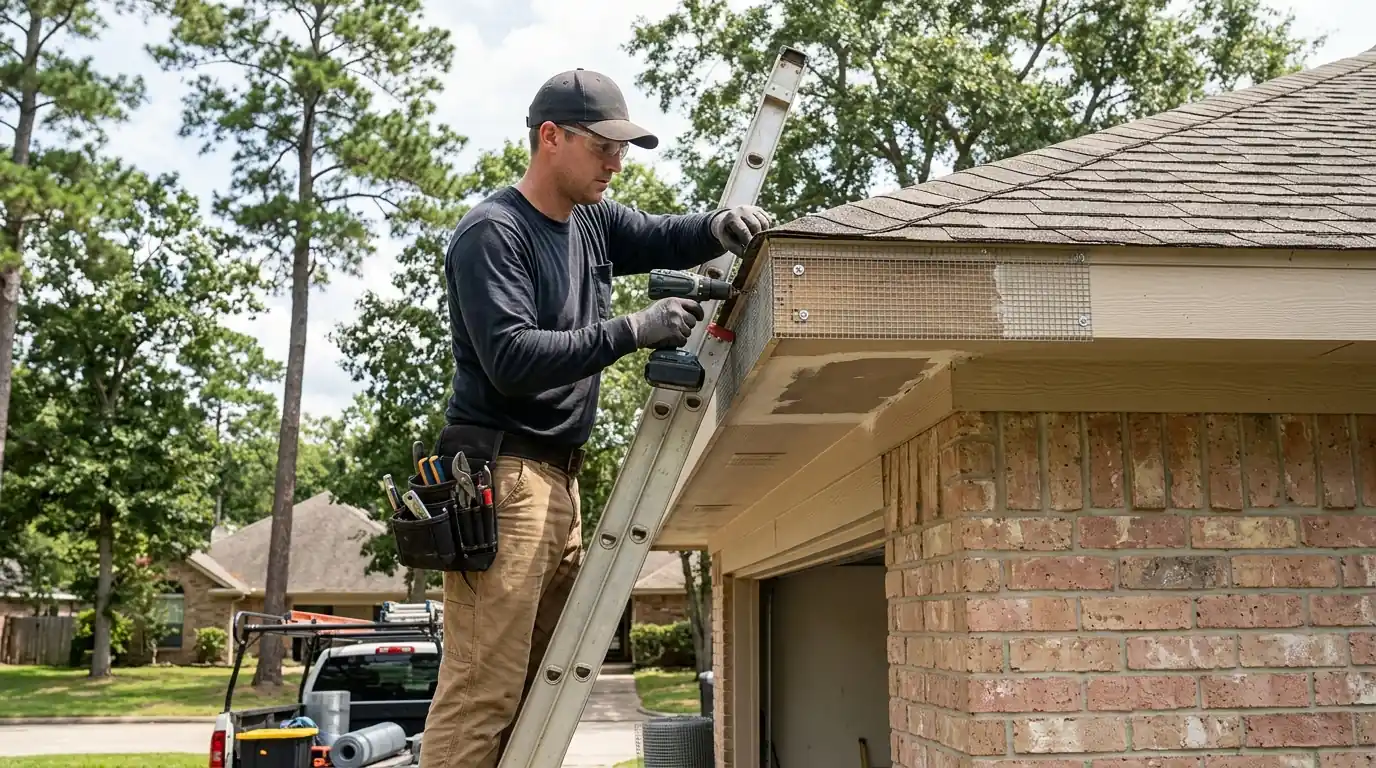
Attic raccoons usually enter through soffits, roof returns or roof vents and den in the insulation near the eaves. Removal combines one-way exclusion doors or traps at the entry with a search for young. Once the attic is confirmed empty, the opening is rebuilt with heavy-gauge mesh and repaired so it cannot be torn open again. Damaged insulation and latrine areas are noted for cleanup in the same visit.
Chimney raccoons
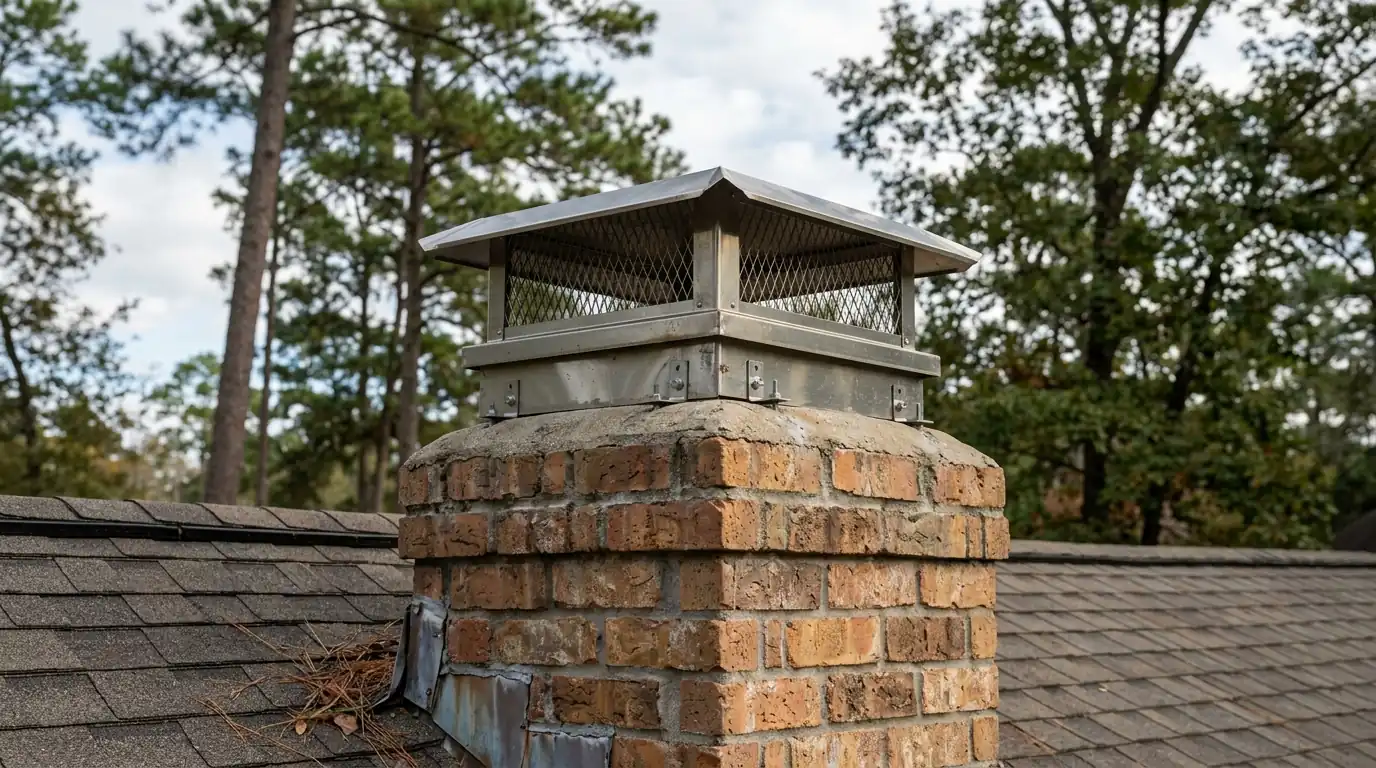
Uncapped chimneys are favorite den sites, especially for mothers with litters on the smoke shelf. Raccoons are removed from the chimney humanely, never smoked out, and a stainless steel chimney cap is installed afterward. Do not light a fire if you suspect a raccoon in the chimney. The flue and smoke shelf are checked for nesting debris after removal, and a chimney sweep is recommended before the fireplace is used again if material has collected there.
Deck, shed and crawl space dens
Raccoons also den under decks, sheds and in crawl spaces, tearing vents and digging under skirting. Removal follows the same approach, then the space is closed with buried hardware cloth or an L-shaped footer so they cannot dig back in. Crawl space vents and access doors get heavy-gauge screens, and any insulation or ductwork the raccoon damaged under the house is noted so you can decide whether to repair it. Food sources like pet bowls and unsecured trash cans are noted too.
Timeline
Days to remove, then repair
Most raccoon removals take a few days to a week, depending on whether young are present. Repairs are made once the den is confirmed empty, and cleanup follows the same week.
On our Conroe routes
Wooded lots, wildlife traffic
Wooded Montgomery County lots carry tick pressure most Houston suburbs do not see, and part of the reason is the wildlife moving through them: raccoons, opossums and deer bring ticks right up to the house when they den under decks or in crawl spaces. Removing a raccoon from a wooded Conroe lot is often also part of fixing a tick or flea problem on the same property, and our visit notes that link when we see it.
How this job runs
From thumping to a sealed roof
- 1
Inspect the den
Entry, den site and any young located.
- 2
Remove humanely
One-way doors or traps; babies reunited with mother.
- 3
Confirm empty
Follow-up checks before sealing.
- 4
Repair the entry
Heavy-gauge mesh and repair at the opening.
- 5
Clean up
Latrine and nesting cleanup with sanitizing.
What moves the price
What raccoon removal costs turn on
Removal, repair and cleanup are each part of the quote.
Den location
Attic, chimney or under-deck removal differs in time and equipment.
Babies present
Litters need hand removal and reuniting.
Entry repair
Soffit, vent or roof repair with heavy-gauge materials.
Chimney cap
Stainless caps are an added item where needed.
Latrine cleanup
Droppings removal and sanitizing.
Trip count
Trap checks and follow-ups until the den is empty.
Raccoon jobs are quoted per property after the den and entry are inspected; describe what you hear and see and we give a range on the call.
Asked about this job
Raccoon questions
Trapping and relocating wildlife has rules, and trapping a nursing mother leaves babies inside to die. Professional removal handles both safely.
Yes. They can carry raccoon roundworm. Do not handle them without protection; latrine cleanup is part of our service.
Not through a properly repaired entry. Reinforced repairs and chimney caps are what stop it.
No. Smoke can kill young and drive a frightened animal into the house. Call for humane removal instead.
Yes. Opossums, armadillos and other wildlife are covered under our wildlife removal service.
Jobs that pair with this one
Related work from the same crews
Opossum, Armadillo & Skunk Removal
Opossums, armadillos and more.
Attic Cleanup & Sanitation
Latrine and insulation cleanup.
Squirrel Removal
The other roofline climbers.
Rodent Exclusion & Proofing
Sealing the roofline after removal.
Plant the flag on it
Something heavy in the attic tonight?
Call any hour; the inspection and humane removal plan get set up on the call.