Updated October 2026 · Reviewed for current Texas market ranges
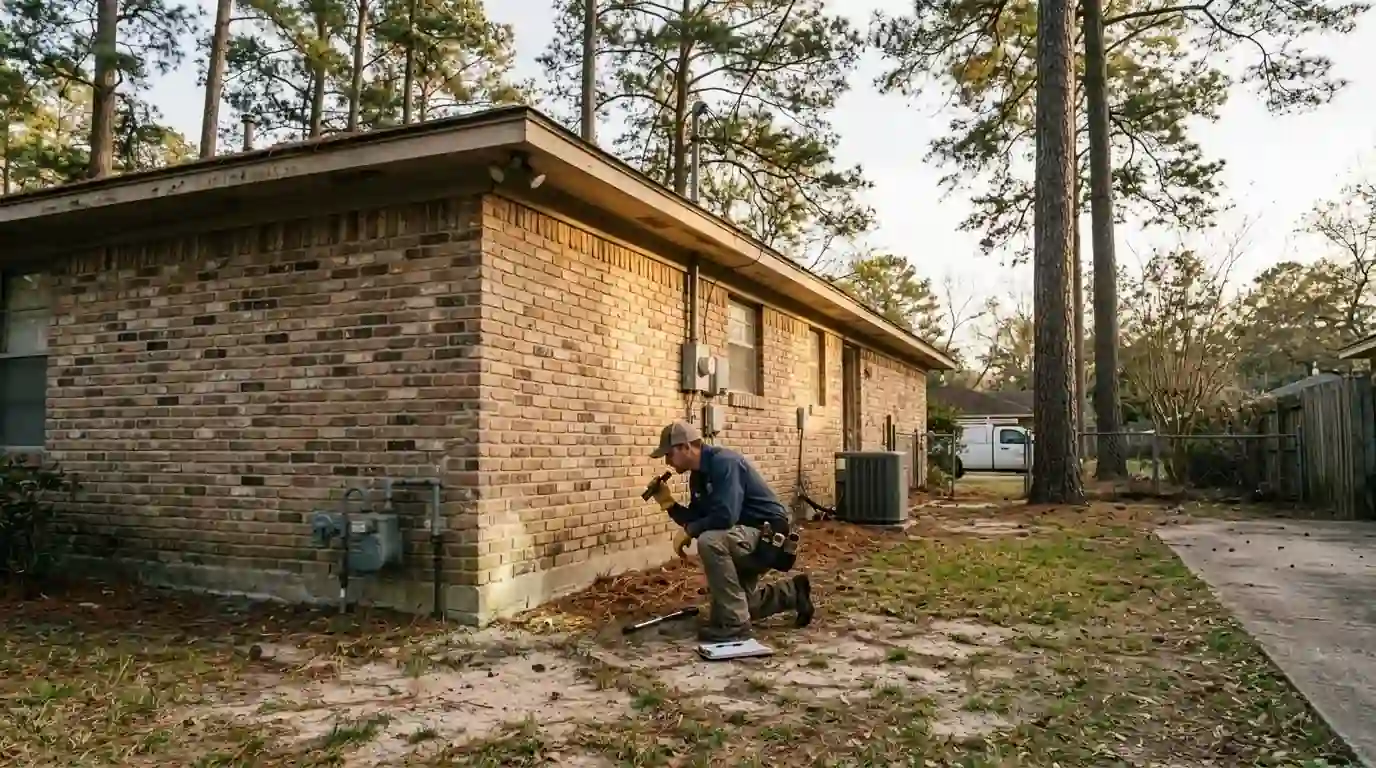
Yellow jacket control in Conroe, TX targets nests you usually cannot see: underground burrows and wall voids with a single busy entrance. The entrance is dusted so returning workers carry the product deep into the nest, and nothing gets sealed until activity has stopped, because blocking a live void sends the colony chewing through drywall into the house. Late summer, when colonies peak, is when most calls come in.
Worth a phone call when you see
When to call before the next mow
Steady traffic at one hole
Insects flying straight in and out of a lawn hole or wall gap is a nest entrance.
A ticking sound in a wall
Chewing inside a wall near a known entry means the colony is expanding inward.
Yellow jackets indoors
Workers appearing inside often means a sealed or blocked void entrance.
Multiple stings at once
Yellow jackets sting repeatedly and recruit; allergic reactions need 911 first.
Patio swarming in late summer
Heavy forager traffic around food usually means a nest close by.
Why these nests are different
One entrance, thousands of defenders
A yellow jacket colony by late summer can hold thousands of workers in a nest the size of a basketball, built underground or inside a wall, with one entrance you see only as steady traffic. Mowing over the hole or blocking the gap is how most stings in this category happen.
Dust is the working tool, applied into the entrance where foragers walk through it and carry it to the comb. Sprays at the entrance kill only the workers they touch. On ground nests, the dust goes in at dusk; on wall voids, the cavity is treated through the entry and sometimes through a drilled access point.
Where they build
Ground, walls, and the patio scramble
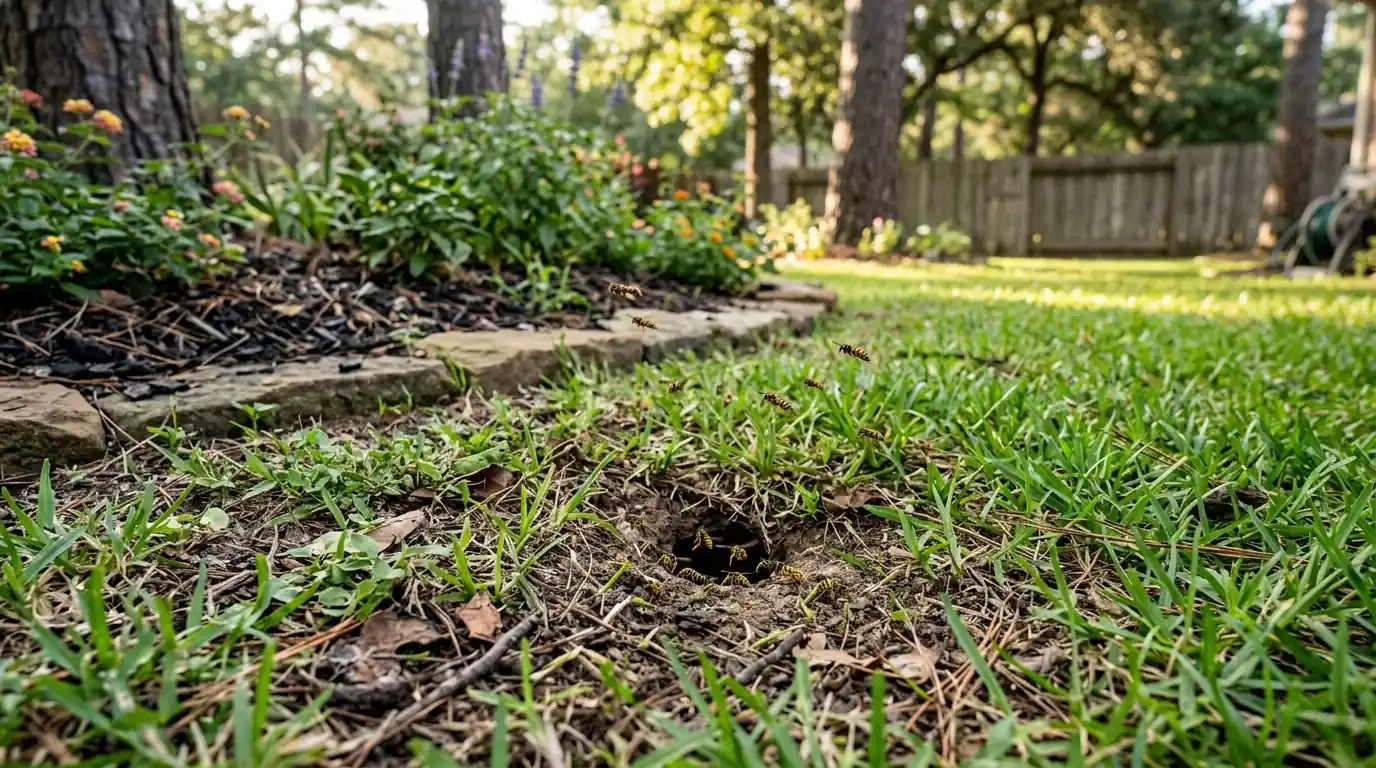
Ground nests in lawns and beds
Old rodent burrows under the lawn, gaps beneath landscape timbers and the soft soil of flower beds are the usual sites, found when a mower or a string trimmer passes over. We locate the entrance by flight path, treat it at dusk when the colony is home, and flag the spot so nobody mows it for a day. Most ground nests are dead within a day, and the hole is filled once the traffic stops.
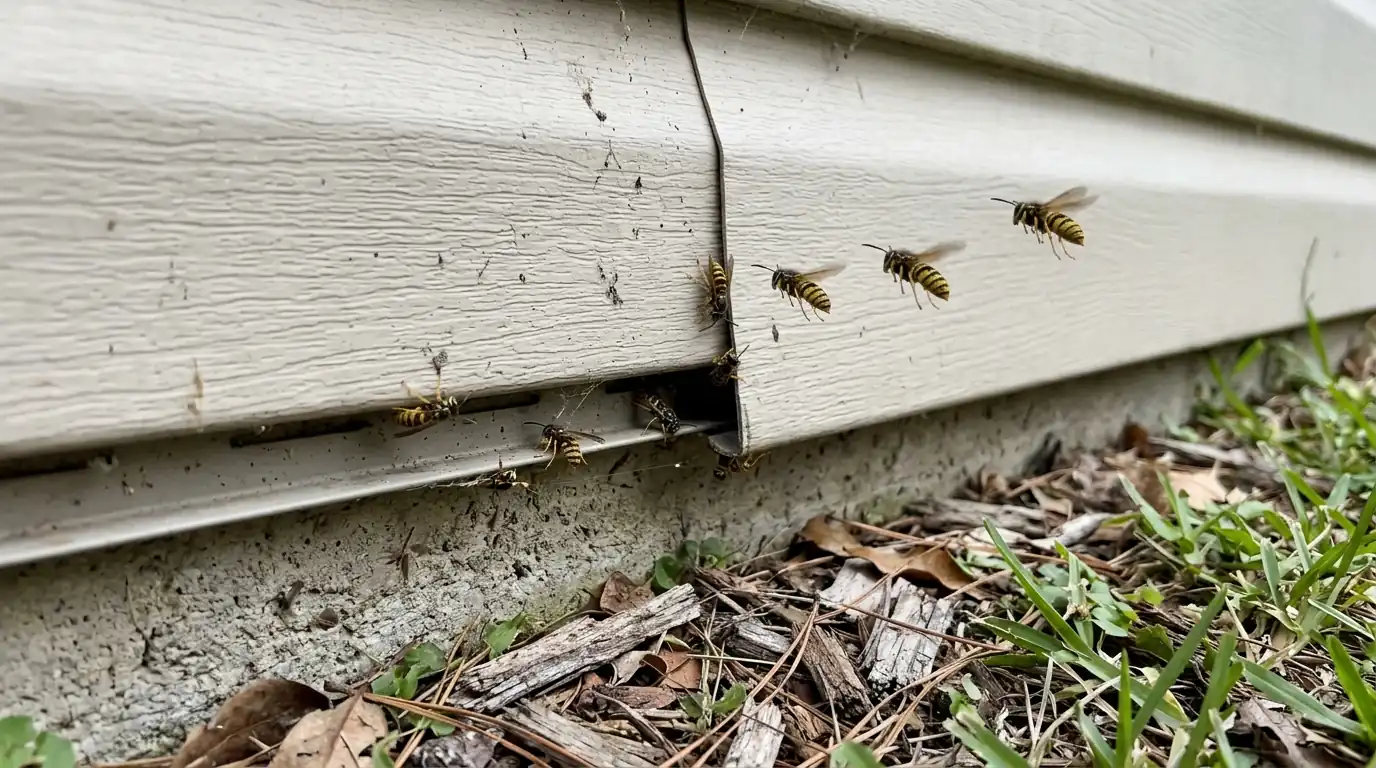
Wall-void and attic nests
Yellow jackets moving in and out of a siding gap, a weep hole or a soffit vent are building inside the structure. Sealing the hole is the one wrong move: the colony chews inward and comes through a ceiling or outlet plate. The void gets dusted through the entry, activity is watched until it stops, and then the gap is sealed. Large or old void nests can leave comb and odor behind, and we say so plainly when removal is worth the opening.
Late-season pressure around outdoor living
By August, foraging yellow jackets swarm trash cans, grills, patio drinks and fallen fruit, and a nest within the yard multiplies that traffic. Finding and killing the nest is the fix that matters; traps catch foragers but leave the queen producing more. Covering trash and food outdoors cuts the draw while the colony dies off. If the patio crowd shows up every afternoon, the nest is usually within a couple hundred feet, and a short walk at dusk following the flight line often finds it.
On our Conroe routes
New lots, old burrows
Conroe is Montgomery County’s fastest-growing city, and the cleared lots and fresh sod of new construction leave plenty of disturbed soil, buried roots and abandoned burrows that ground-nesting yellow jackets move straight into. New homeowners tend to discover them the way everyone does, behind a mower in late summer, so a single steady stream of insects from a hole in a newer lawn here is worth taking seriously before the next cut rather than after.
How this job runs
From a hole in the lawn to a quiet yard
- 1
Mark and stay clear
Note the entrance from a distance and keep mowers and kids away.
- 2
Locate by flight path
The tech confirms the entrance and nest type before treating.
- 3
Dust at dusk
Product goes into the entrance when the colony is home.
- 4
Watch the traffic stop
Activity drops over hours; voids are monitored before sealing.
- 5
Seal and fill
Ground holes filled and wall gaps sealed once the colony is dead.
What moves the price
What yellow jacket work costs turn on
Hidden nests price on access more than size.
Nest location
Open-lawn ground nests are quick; voids inside finished walls take longer.
Number of nests
Late-season properties sometimes carry two or three colonies.
Access to the void
A drilled access point for a deep cavity adds time and patch guidance.
Comb removal
Opening a wall to remove a large old nest is optional and quoted separately.
After-hours timing
Dusk treatment is standard; urgent sting calls are answered at any hour.
Published context
Published Texas one-time treatments run $150 to $350, and most single-nest visits fit inside it.
The $150 to $350 figure is the published 2026 Texas range for one-time treatments, for context; your price is confirmed on the call from the nest location.
Asked about this job
Yellow jacket questions
Gasoline and boiling water are how people get hurt or poison soil, and they often miss a nest that runs sideways. Dust carried in by the workers reaches the comb; that is why it is the professional method.
Not while the nest is active. A blocked colony chews through to the inside of the house looking for a new exit. Treat first, confirm activity has stopped, then seal.
They catch foragers and reduce patio traffic a little, but the queen keeps producing workers. Finding and killing the nest is the fix; traps are a supplement at best.
They are a type of wasp, but the ground and void nesting, larger colonies and repeated stinging make them their own job. Paper wasps under eaves are a different, simpler visit.
Late summer into fall, when colonies are at peak size and foragers turn to sugars. That is when mower encounters and patio swarming spike, and when most of these calls come in.
Related guide: Wasp Nest on the Eaves: What to Do First
Jobs that pair with this one
Related work from the same crews
Wasp & Hornet Nest Removal
Open nests under eaves and in hedges.
Bee Swarm Removal
Honeybee swarms, handled differently.
Rodent Exclusion & Proofing
Sealing the gaps nests use once they are dead.
Residential Pest Control
The general line for everything else outside.
Plant the flag on it
Found the hole the hard way?
Keep everyone clear of it and call; the treatment is timed to tonight if it can be.