Updated October 2026 · Reviewed for current Texas market ranges
German cockroach control in Conroe, TX runs as an indoor elimination program, not a spray: harborages in the kitchen and bath are located and flushed, gel baits matched to the population go into the cracks they live in, and an insect growth regulator breaks the breeding cycle so the nymphs maturing in the walls never reproduce. Two to three visits typically finish an established kitchen.
Why this roach is different
An indoor breeder on a two-week clock
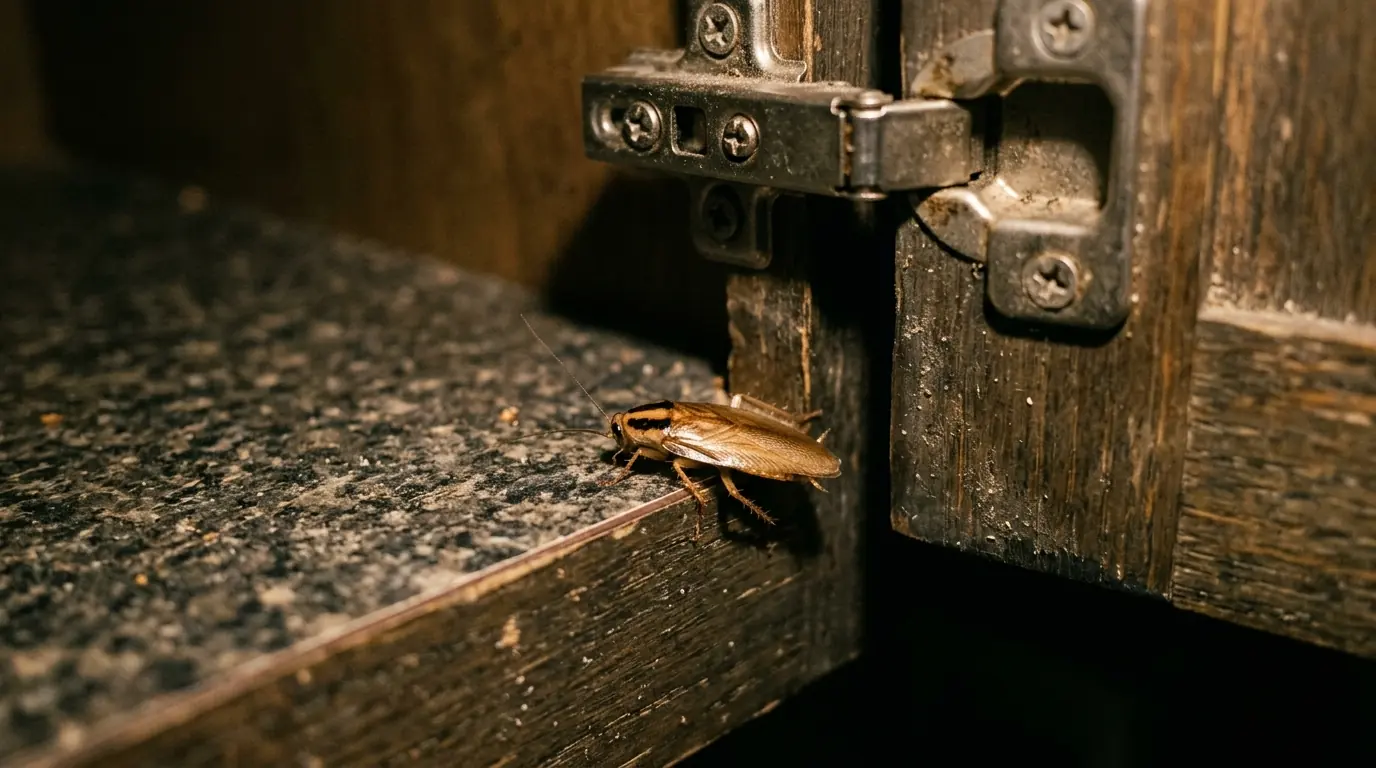
German cockroaches are not the big outdoor roaches that wander in; they are small, tan, and complete their whole life cycle inside your cabinets and appliance voids. One surviving female carries an egg case of thirty-plus nymphs, which is why half-measures produce populations that bounce back in a month.
The program hits the biology at both ends. Gel baits placed in the harborages, hinge lines, the warm void behind the fridge, the dishwasher kick space, under the sink rim, feed the population a dose they also carry back and spread through their own droppings. The growth regulator rides along and sterilizes the nymphs the bait misses.
Prep decides the margin of victory: a degreased, crumb-free kitchen makes the bait the best food available. We hand you a short, specific prep list before the first visit, and the difference between a prepped kitchen and an unprepped one shows up directly in how many visits the job takes.
The program, honestly
Bait, break the cycle, follow up
The baiting program
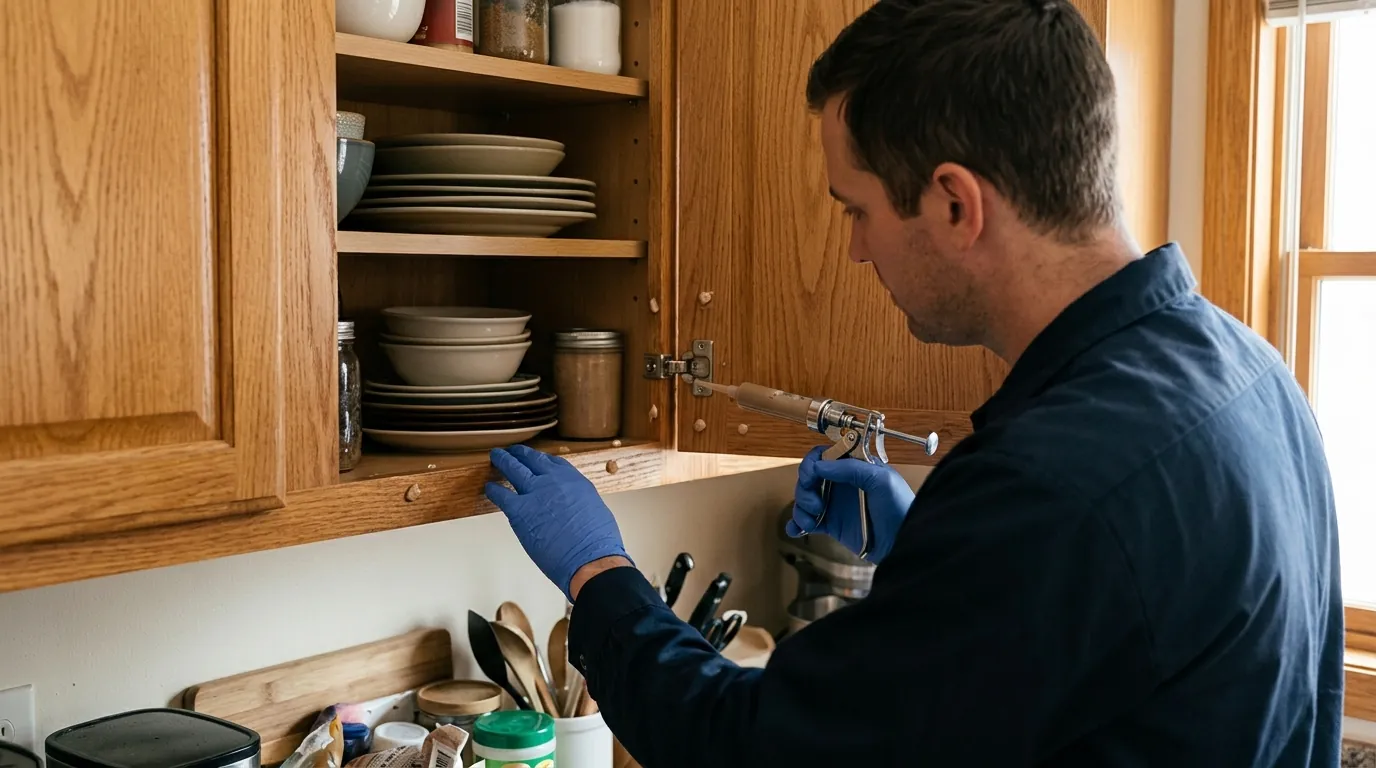
First visit flushes the harborages so we see the true population, then places gel bait by the dot in every crack the roaches actually use, rotated by product so bait aversion never gets a foothold. The growth regulator goes into the same geography. Follow-ups at two to three week intervals re-read activity with monitors, refresh eaten placements and chase the population into its last voids.
Why sprays fail here
Repellent sprays are how a German roach problem becomes a whole-apartment problem: the population scatters off the treated surfaces into deeper voids, adjacent rooms and the neighbor's wall, and the egg cases keep hatching behind them. If someone has been fogging the kitchen, say so at booking, because baits placed over fresh repellent get avoided and the program starts by working around it.
Multi-unit and shared-wall jobs
In duplexes and apartments the colony treats both sides of a shared wall as one territory, so single-unit treatment forever chases re-invasion from next door. We coordinate adjoining-unit treatment where landlords and neighbors allow it, and when they do not, the program leans harder on void dusting and bait placement at the shared lines, so that whatever crosses over finds your side of the wall a dead end.
Worth a phone call when you see
Five signs it is German roaches
Small tan roaches at night
Half-inch tan roaches with two dark stripes, scattering when the kitchen light flips on.
Pepper-like droppings
Fine dark specks along hinge lines, drawer corners and the fridge top.
A musty, oily odor
Established populations give kitchens a distinct greasy smell.
Egg cases in cracks
Small tan capsules, purse-shaped, tucked in cabinet joints and appliance voids.
Daytime sightings
German roaches by daylight mean the harborages are full; the clock matters now.
What moves the price
What elimination pricing turns on
Visit count is the real variable, and the first inspection predicts it.
Infestation stage
A few sightings versus roaches visible by day are different programs; daytime sightings mean saturation.
Published base range
Published Texas one-time treatments run $150 to $350; established German roach jobs usually need the multi-visit program quoted up front.
Kitchen complexity
Appliance count, cabinet age and void access set placement time.
Prep compliance
A prepped kitchen routinely saves a visit; the list is short and we insist on it.
Shared walls
Adjoining units add coordination or extra void work at the party lines.
Monitoring
Follow-up monitors are included in the program price, not line-itemed later.
The $150 to $350 figure is the published 2026 Texas one-time range, shown for context; German roach eliminations are quoted as a program with visit count stated before work starts.
On our Conroe routes
Where German roach calls cluster
German cockroach work in this market clusters where kitchens are oldest and closest together: the aging street grids near Historic Downtown Conroe and along the I-45 corridor combine older cabinetry, more rental turnover and shared walls, which gives the species exactly the warm, tight geography it breeds in. None of that is a hygiene verdict on anyone’s home, a single grocery bag or a secondhand appliance seeds a spotless kitchen just as easily, but it does mean the older the kitchen, the more harborage lines the first visit has to read.
How this job runs
From night sightings to empty monitors
- 1
Book and prep
You get the prep list at booking; the kitchen meets us degreased and cleared.
- 2
Flush and read
Harborages flushed, population staged, placements mapped.
- 3
Bait and regulate
Gel dots and growth regulator into every active crack and void.
- 4
Re-visit on schedule
Two to three week intervals, placements refreshed, monitors read.
- 5
Call it eliminated
Clean monitors across visits, in writing, with prevention notes.
Asked about this job
German roach questions, answered plainly
They arrive in cardboard, grocery bags, secondhand appliances and visitors' belongings, and a clean kitchen slows them without stopping them. Cleanliness controls how fast they grow, not whether they arrive, which is why nobody on our crews treats a roach call as a judgment.
A caught-early kitchen often clears in two; an established one runs three with monitors proving it. The first inspection stages the population and the quote states the expected count, because 'we will keep coming until' is not a plan, it is a meter running.
Yes. The program is gel placements and growth regulator in cracks and voids, not space spraying, so kitchens stay usable the same day. The prep list covers clearing cabinets once; after that, visits work around normal life.
Foggers coat open surfaces the roaches do not live on and scatter the population into deeper voids, while the egg cases sit unharmed. Every fogged kitchen we take over costs extra visits; it is the single most expensive shortcut in this service line.
Inspect incoming cardboard and used appliances, fix drips, and keep the degreasing habit the prep list started. The monitors stay down after elimination, and a single catch months later is a phone call, not a program restart.
Related guide: German Roaches vs Palmetto Bugs: Which Is in Your Kitchen?
Jobs that pair with this one
Related work from the same crews
American & Smokybrown Roach Control
The big outdoor roaches with the opposite fix.
Apartment & Property Management Pest Control
Shared-wall programs for rental properties.
Restaurant & Food Service Pest Control
Commercial kitchens on health-inspection clocks.
Residential Pest Control
The general line for everything else indoors.
Plant the flag on it
Seen one by daylight? The clock is running.
Describe what you are seeing and when; the program, visit count and prep list come back on the same call.