By Hugh Satterfield, Pest Control Guides Editor · Updated October 2026 · 5 min read
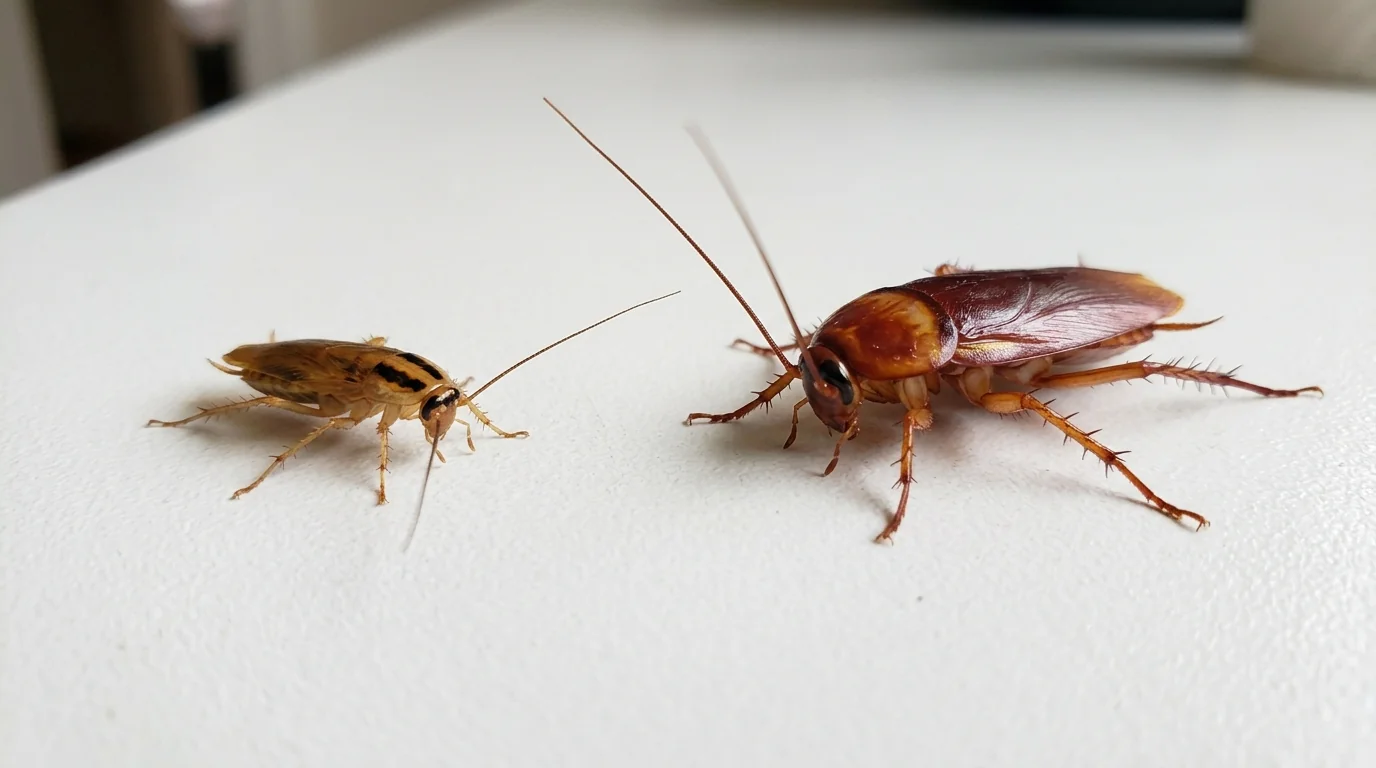
German cockroaches are about half an inch long, tan, with two dark stripes behind the head, and they live and breed indoors near kitchens and bathrooms. Palmetto bugs, the local name for American and smokybrown cockroaches, are one and a half to two inches long, reddish or dark brown, and breed outdoors. German roaches need an indoor baiting program; palmetto bugs need outdoor treatment and sealing.
Key points from this guide
- German roaches are small, tan, two-striped and breed indoors near kitchens and baths.
- Palmetto bugs are large, reddish or dark brown and breed outdoors.
- German roaches need an indoor baiting and growth-regulator program.
- Palmetto bugs need outdoor treatment, sealing and water in unused drains.
- Daytime sightings of small roaches usually mean a large hidden population.
Size, color and markings
German cockroaches are small, about half an inch, light tan, with two dark parallel stripes on the shield behind the head. Nymphs are darker and smaller still. American cockroaches are about one and a half to two inches, reddish brown, with a pale yellowish band behind the head. Smokybrown cockroaches are similar in size but a uniform dark mahogany. Both large species can fly, especially on warm nights.
Where each one lives
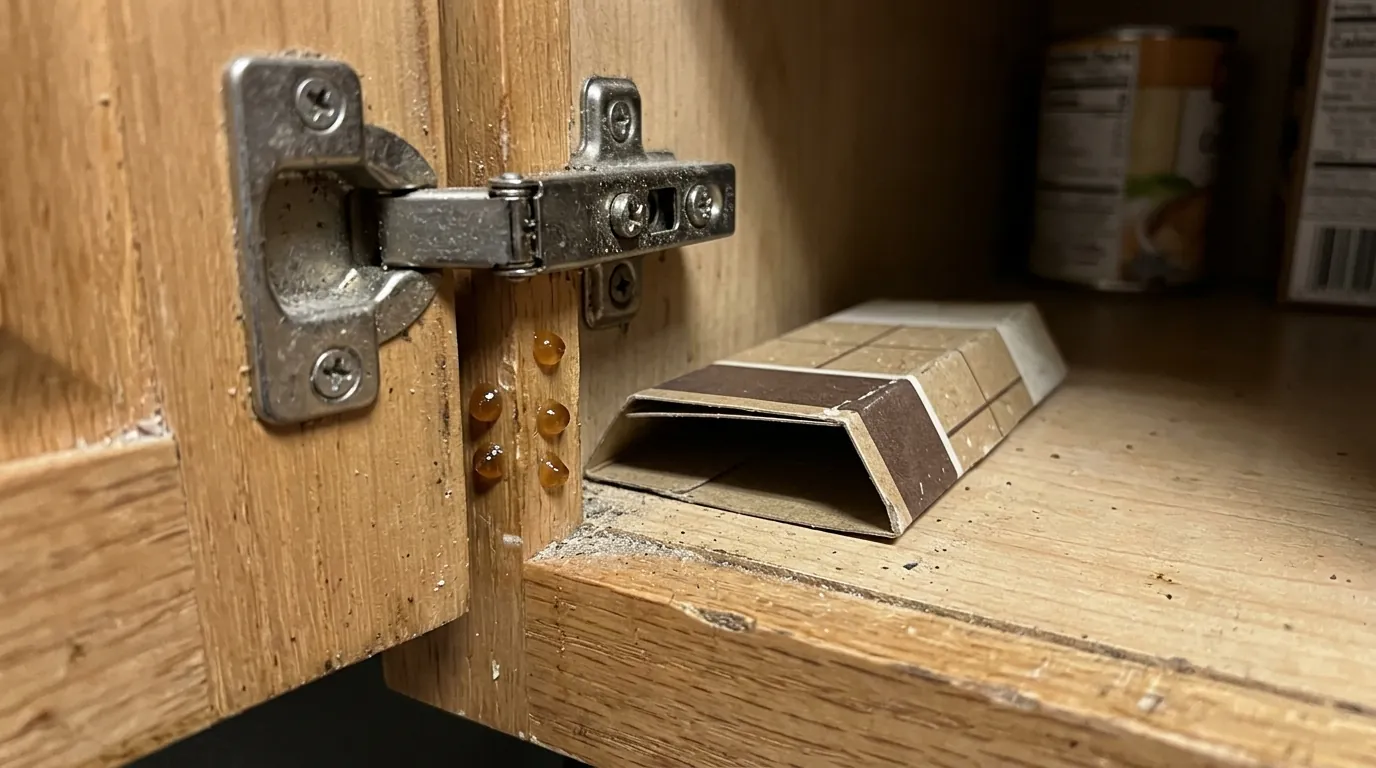
German roaches spend their whole life indoors, close to food, warmth and water: behind the refrigerator and stove, inside cabinet hinges, under the sink and in the dishwasher kick space. They breed fast; a female carries an egg case with dozens of young.
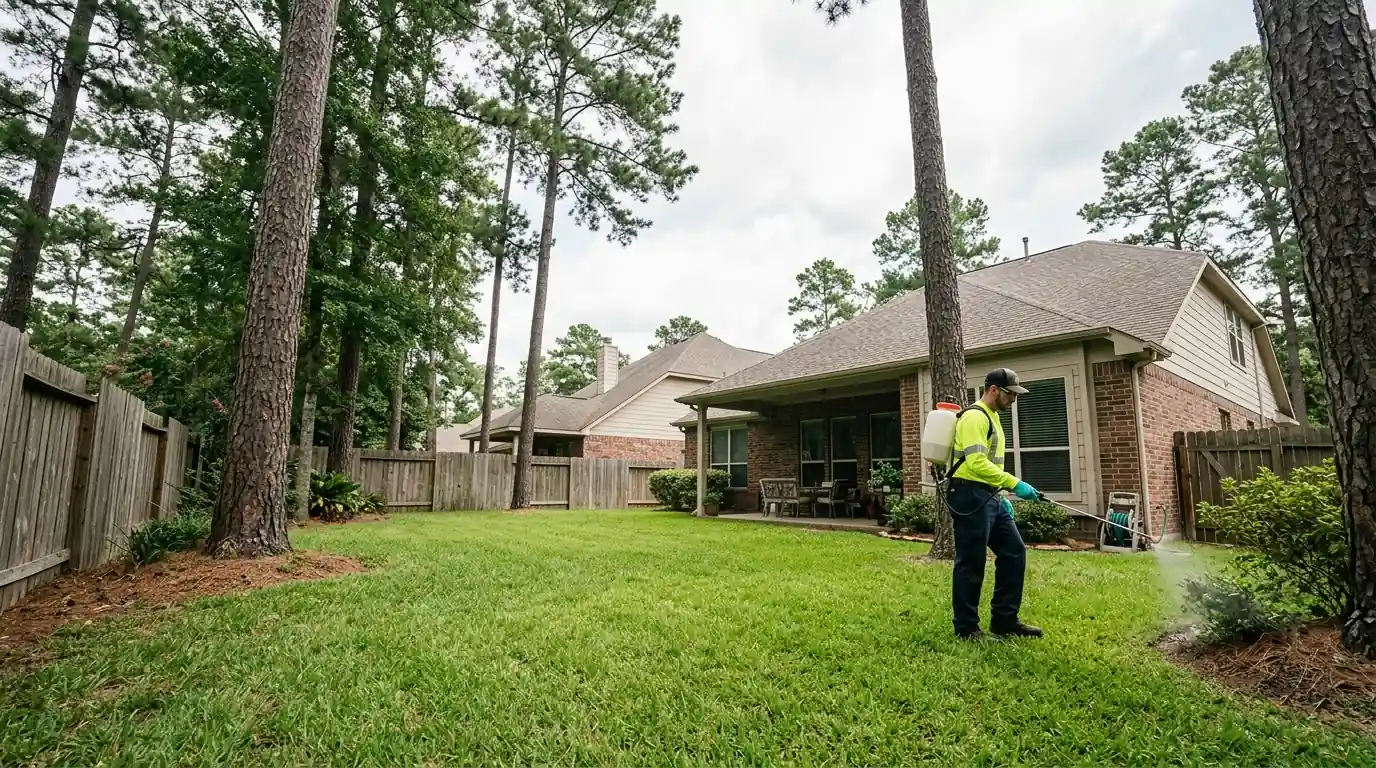
Palmetto bugs breed outdoors in mulch, leaf litter, tree holes, woodpiles, drains and sometimes attics. Smokybrown and American cockroaches are routine calls across Conroe and Montgomery County because the pine litter and mulched beds here suit them well. Seeing one indoors usually means one wandered or flew in, not that the house is infested.
Why the difference matters
The treatments are close to opposites. Spraying the outdoors does nothing for German roaches breeding in your cabinets, and baiting inside does little for palmetto bugs coming from the mulch. Misidentifying the roach is the most common reason a roach problem keeps coming back.
Seeing this at your place?
Describe what you found and we will tell you on the phone what it is likely to take.
Call (281) 626-0856What fixes German roaches
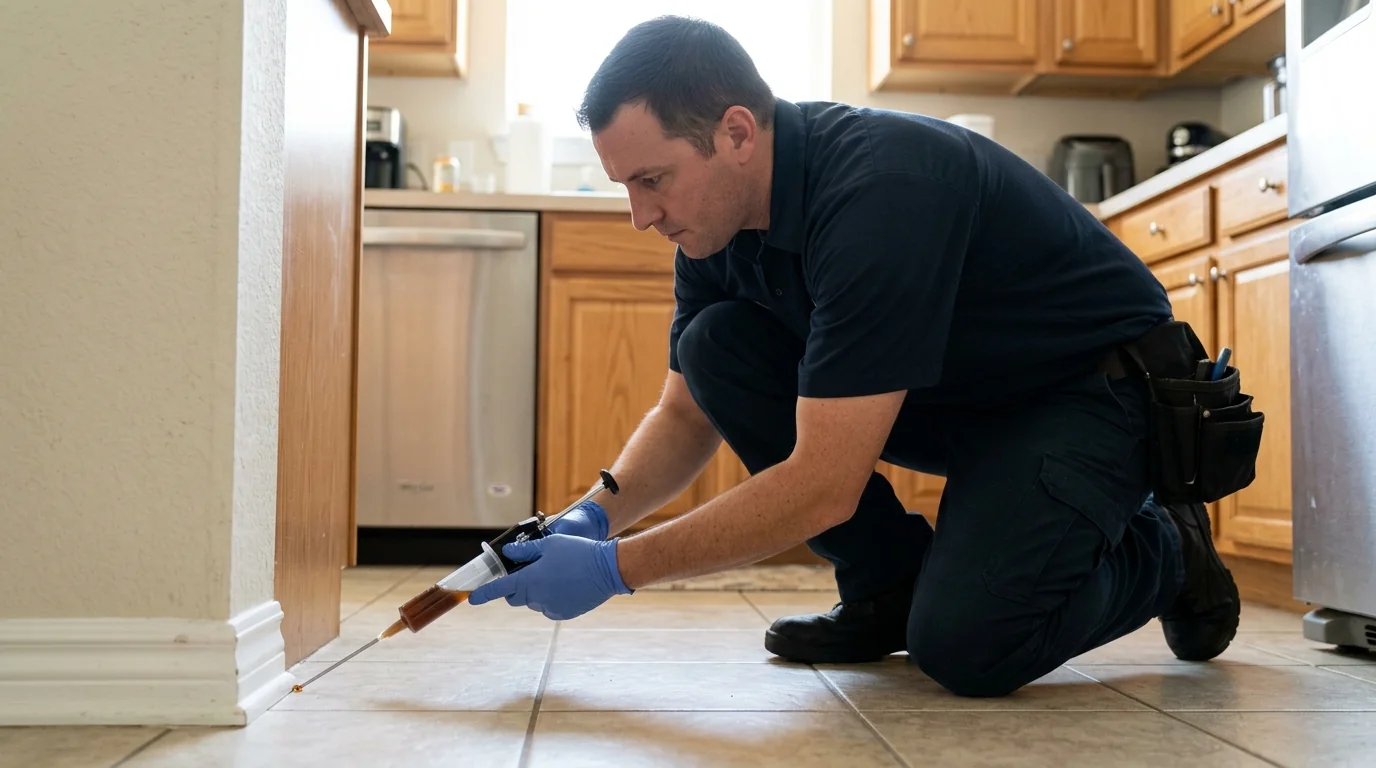
A German roach program uses gel baits placed in the cracks they live in, plus an insect growth regulator that stops nymphs from reproducing, with follow-up visits until monitors stay empty. Degreasing the kitchen and removing cardboard help the bait work. Foggers usually make things worse by scattering the population deeper into walls.
Other insects that get mistaken for roaches
Brown-banded cockroaches are small like German roaches but have two light bands across the body and prefer drier, warmer spots higher up, such as upper cabinets, behind picture frames and inside electronics. They need the same indoor baiting approach as German roaches, with placements higher in the room.
Wood cockroaches sometimes wander in from woodpiles on wooded lots; they are outdoor insects and rarely survive indoors. Ground beetles and large crickets also get reported as roaches after rain. A clear photo of the insect, ideally next to a coin for size, usually settles the question in seconds.
If you are not sure, trap one under a clear cup or on a piece of tape and keep it. Identification is the step that decides whether the fix happens inside or outside the house.
How German roaches get into a clean home
German cockroaches almost always arrive by hitchhiking. Cardboard boxes from stores and warehouses, grocery bags, used appliances, secondhand furniture and moving boxes are the most common carriers. Visitors' bags and items brought home from a workplace with roaches can carry them too.
Once inside, a few roaches find the warmest spots near food and water: behind the refrigerator, under the dishwasher and inside the cabinet nearest the stove. They breed quickly, so a small introduction can become noticeable within weeks.
Prevention is mostly about checking what comes in. Unpack groceries and deliveries quickly, break down cardboard and take it out of the house, and inspect used appliances and furniture before bringing them inside. In apartments, shared walls mean roaches can arrive from next door, which is why building programs matter. If you are moving, ask the previous occupant or landlord about any roach treatment, and inspect cabinets, under sinks and behind appliances before unpacking. A move-in treatment while the kitchen is empty is the easiest time to stop an infestation before it starts.
What fixes palmetto bugs
Large roach treatment works outside: granular bait in mulch and beds, treatment of tree holes and woodpiles, weep-hole and perimeter work, and attention to the attic where smokybrowns settle. Inside, keep drain traps filled with water, fix door sweeps and seal gaps around plumbing. Those simple fixes cut indoor sightings sharply.
Common questions
Questions readers ask about this
Probably not. A single large roach indoors is usually a palmetto bug that came in from outside.
Yes. German roaches seen in daylight usually mean a large population, and a baiting program should start soon.
They can survive for a while in damp spots like drains or attics, but they breed outdoors.
Yes. They arrive in boxes, bags and used appliances. Cleanliness slows them but does not prevent them.
For German roaches, sprays often scatter them. Baits work better. For palmetto bugs, outdoor treatment and sealing matter more.
Saturated mulch and flooded drains push palmetto bugs toward drier ground, often into garages and homes. Sightings usually drop again within days.
Rarely. They can glide short distances but mostly run. Large palmetto bugs fly much more readily.