By Hugh Satterfield, Pest Control Guides Editor · Updated October 2026 · 5 min read
To avoid bringing bed bugs home after travel, check the hotel mattress seams and headboard before unpacking, keep luggage on a rack or in the bathroom, and when you get home unpack outside the bedroom, run clothes through a hot dryer for at least 30 minutes and vacuum the suitcase. Bites alone do not confirm bed bugs; look for live bugs, eggs, shed skins or dark spots.
Key points from this guide
- Check hotel mattress seams and headboards before unpacking.
- Keep luggage on a rack or in the bathroom, never on the bed.
- Unpack outside the bedroom and run fabrics through a hot dryer for 30 minutes.
- Bites alone do not confirm bed bugs; look for bugs, eggs, skins and spots.
- Do not spray if you find signs; call for an inspection first.
Two minutes in the hotel room
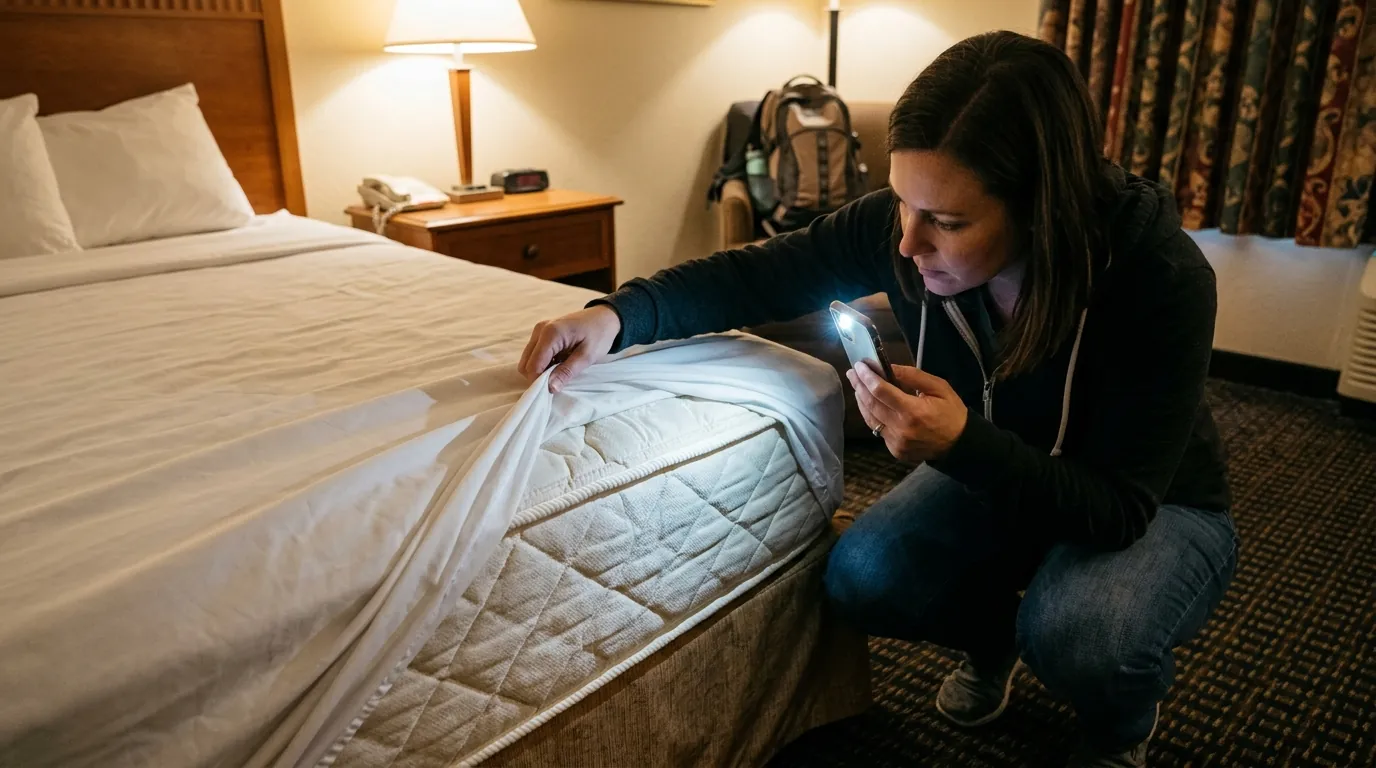
Before you unpack, pull back the sheets at the head of the bed and check the mattress seams, corners and tag area with your phone light. Look behind the headboard if it lifts, and along the edges of the box spring. You are looking for small brown bugs, pale eggs, shed skins and rust-colored or dark spotting.
Keep your suitcase on the luggage rack or in the bathroom, never on the bed or the floor beside it. If you find signs, ask for a different room, ideally not next door or directly above or below.
Unpacking at home
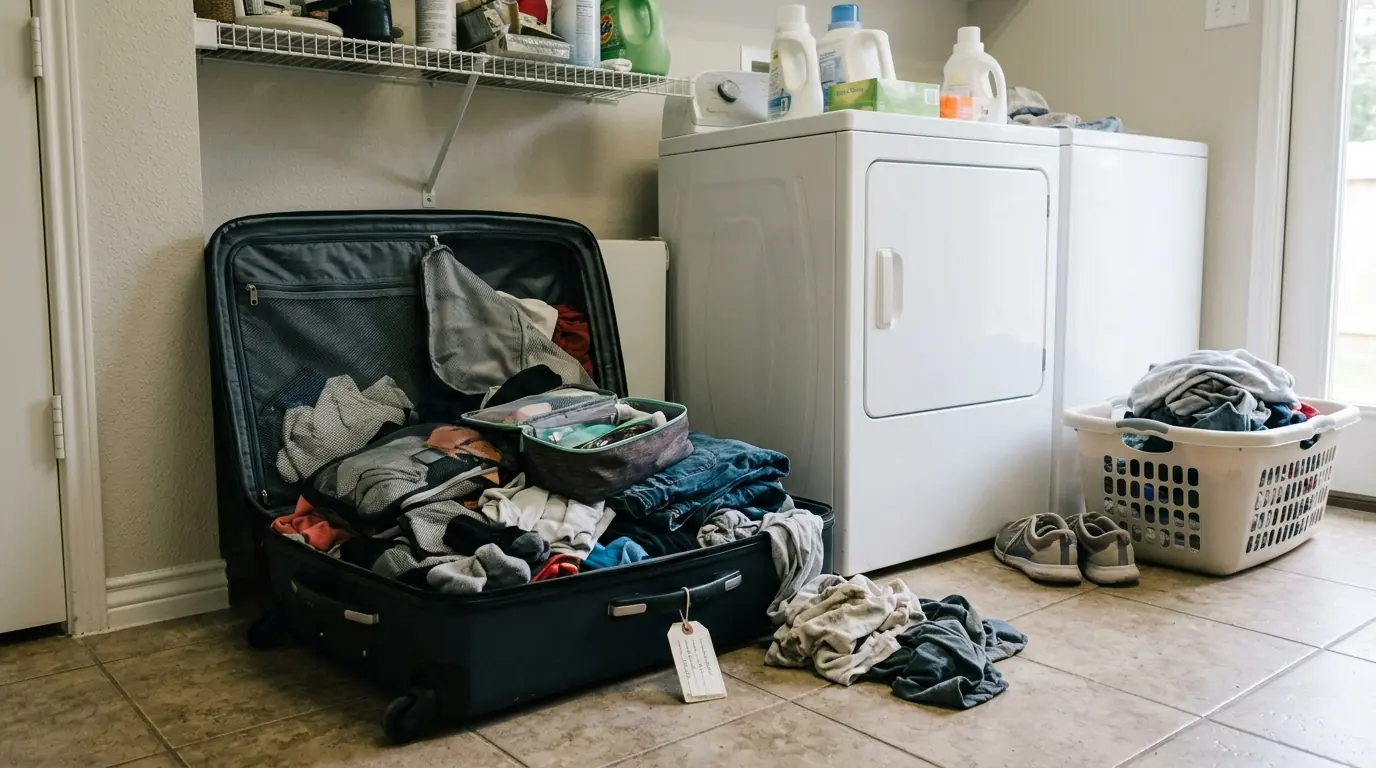
Unpack in a garage, laundry room or hard-floored area rather than the bedroom. Put clothing, worn or not, straight into the washer or dryer. Heat is what kills bed bugs and eggs: a dryer on high for at least 30 minutes handles most fabrics. Vacuum the suitcase inside and out, especially seams and pockets, and store it away from bedrooms.
Why moves and secondhand furniture matter too
Travel is only one route. Moving, used couches and mattresses, and furniture from rentals carry bed bugs just as often. The subdivision growth along the SH 242 corridor between Conroe, The Woodlands and Porter brings a steady stream of moves, which is why a quick inspection before or after a move costs far less than treating a house that has been settled for months.

Seeing this at your place?
Describe what you found and we will tell you on the phone what it is likely to take.
Call (281) 626-0856If you find signs at home
Do not spray or move things between rooms; that scatters bed bugs and hides the evidence. Photograph what you found, keep a specimen in a sealed bag or tape if you can, and call for an inspection. If bed bugs are confirmed, heat treatment reaches mattress seams and furniture joints that sprays struggle to reach, usually in a single day.
Setting up a simple check at home
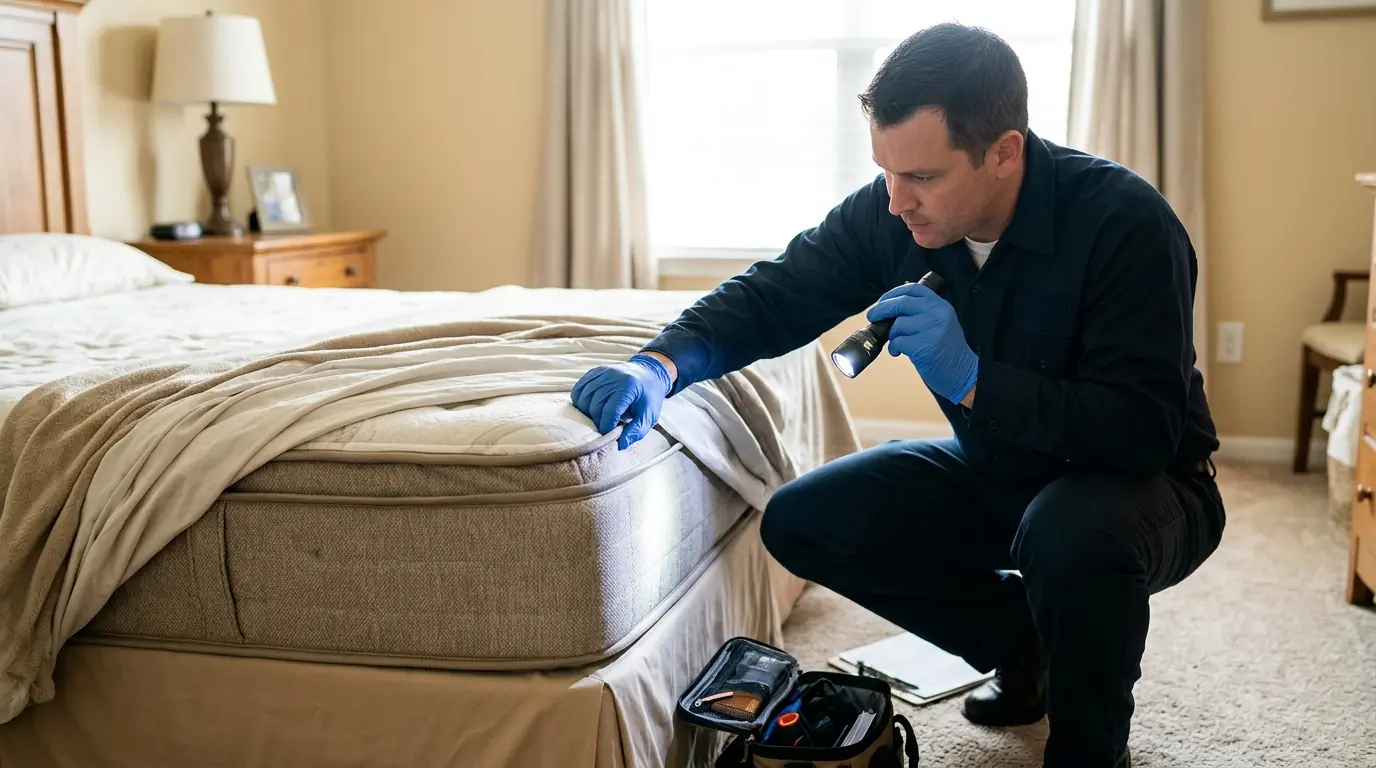
If you travel often, put interceptor cups under the legs of your bed. These simple monitors catch bed bugs climbing up or down and give you early warning long before bites become a pattern. Check them weekly for a month after any trip where you had doubts about the room.
Keep the area under and around the bed clear of stored items, which removes hiding spots and makes inspection easier. A light-colored mattress encasement makes any spotting easy to see and traps any bugs already inside.
Kids' sleepovers, camps and college dorm move-outs are common sources too. Treat their bags the same way you treat your own suitcase: unpack outside the bedroom and run fabrics through a hot dryer.
What to do with a suitcase you are worried about
If you suspect a suitcase carried bed bugs home, keep it out of bedrooms, ideally in a garage or on a hard floor. Empty it completely and run every fabric item through a hot dryer for at least 30 minutes, even clean clothes. Vacuum the suitcase inside and out, paying attention to seams, zippers and pockets, then empty the vacuum outside.
Hard-shell suitcases are easier to inspect and clean than fabric ones. Some travelers seal luggage in a large plastic bag between trips. Storing luggage away from bedrooms, rather than under the bed, removes an easy path into sleeping areas.
If you find live bugs or eggs on luggage, call for an inspection of the bedroom too, since a few bugs may already have moved. Early finds are much cheaper to deal with than a settled infestation, so a quick inspection after a doubtful trip is money well spent. Keep the suspect suitcase sealed in a plastic bag until then.
What bites can and cannot tell you
People react to bites very differently. Some have no reaction at all, others have itchy welts in lines of two or three. Many bites blamed on bed bugs turn out to be fleas, mosquitoes or skin irritation. Physical evidence is what confirms bed bugs, which is why inspection comes before treatment.
Common questions
Questions readers ask about this
It is possible but less common. Vacuum seats and luggage areas and inspect if you suspect exposure.
The dryer is more reliable. High heat for at least 30 minutes kills bugs and eggs.
No. They travel in luggage and furniture into clean homes just as easily.
They are not known to spread disease, but bites can itch and cause sleep loss and stress.
A small introduction can take weeks to become noticeable, which is why early checks matter.
It is possible but uncommon. Hotels, rentals, dorms and secondhand furniture are far more frequent sources.
They can survive for months without feeding in cool conditions, which is why heat and vacuuming matter.