By Hugh Satterfield, Pest Control Guides Editor · Updated October 2026 · 5 min read
Quarterly pest control in Texas publishes at about $100 to $300 per visit, four visits a year, usually with free re-service between visits. One-time treatments publish at about $150 to $350. A single visit fits move-ins, events and isolated problems; a quarterly plan fits homes where the pressure comes from the lot itself, such as shaded, wooded or lakeside properties around Conroe.
Key points from this guide
- One-time treatments publish at about $150 to $350 in Texas.
- Quarterly plans publish at about $100 to $300 per visit, usually with free re-service.
- A single visit fits move-ins, events and problems with one fixable cause.
- A plan pays off when shade, moisture or nearby water keep pests coming back.
- Ask what is covered, how re-service works and how to cancel before signing.
What each option costs
Published 2026 Texas ranges put one-time general treatments at about $150 to $350, quarterly plans at about $100 to $300 per visit, and monthly service at about $40 to $75 per month. The first visit of a plan is usually priced higher, because it includes a full interior and exterior knockdown.
Over a year, a quarterly plan costs more than one single visit, but often less than two or three reactive visits, especially when free re-service between visits is included.
When one visit is enough
A single treatment works when the problem has one cause: a vacant house before move-in, a party in the backyard, one ant trail after a rain, a wasp nest. If the cause is fixed, such as a door sweep replaced or a leak repaired, the problem may never come back.
When a plan pays off
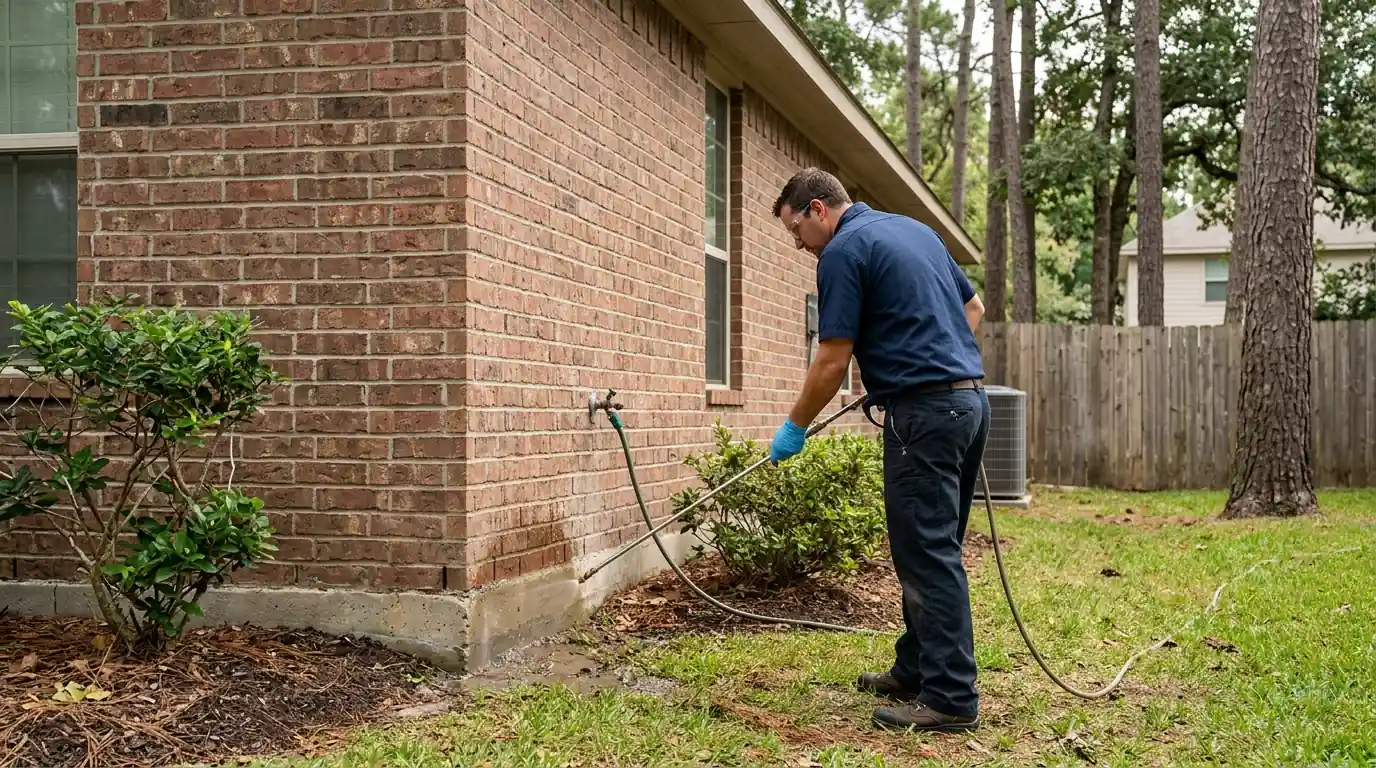
If the pressure comes from your property, it returns. Heavy pine canopy, mulch against the foundation, irrigation, nearby woods or water keep pests cycling through the year. Homeowners around Conroe, Willis and Spring tend to schedule pest work around the seasons for exactly that reason: ant and mosquito prevention in early spring, rodent exclusion before the cold snaps.
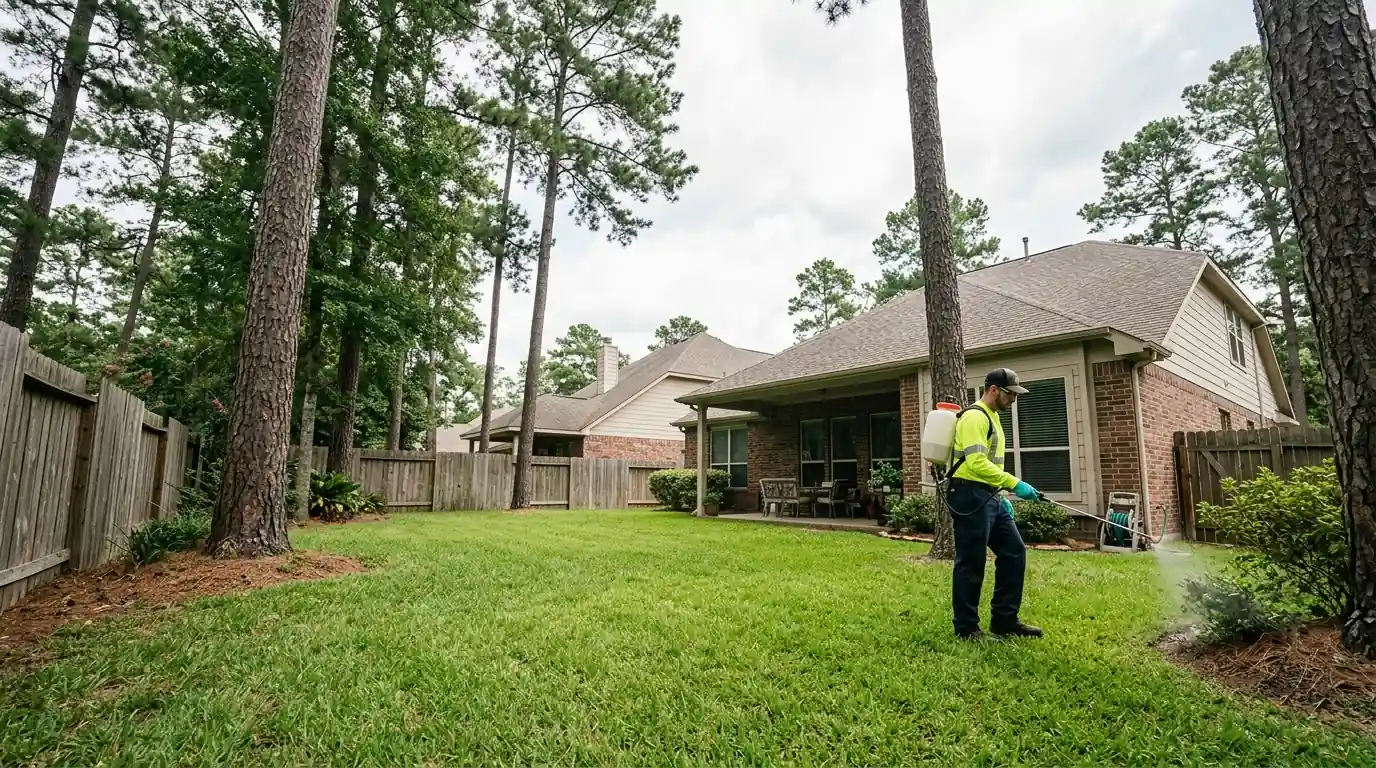
A quarterly plan times its visits to those seasons and keeps the exterior barrier from lapsing. Spring and early summer bring the region's biggest surge in fire ants, mosquitoes and roaches, so the spring and summer visits do the heavy lifting.
Seeing this at your place?
Describe what you found and we will tell you on the phone what it is likely to take.
Call (281) 626-0856Questions to ask before signing up
Ask what pests the plan covers, whether re-service between visits is free, how long the contract runs and how to cancel. Ask whether termites, mosquitoes and wildlife are separate, because they usually are. A good plan explains what it does not cover as clearly as what it does.
What a good quarterly visit includes
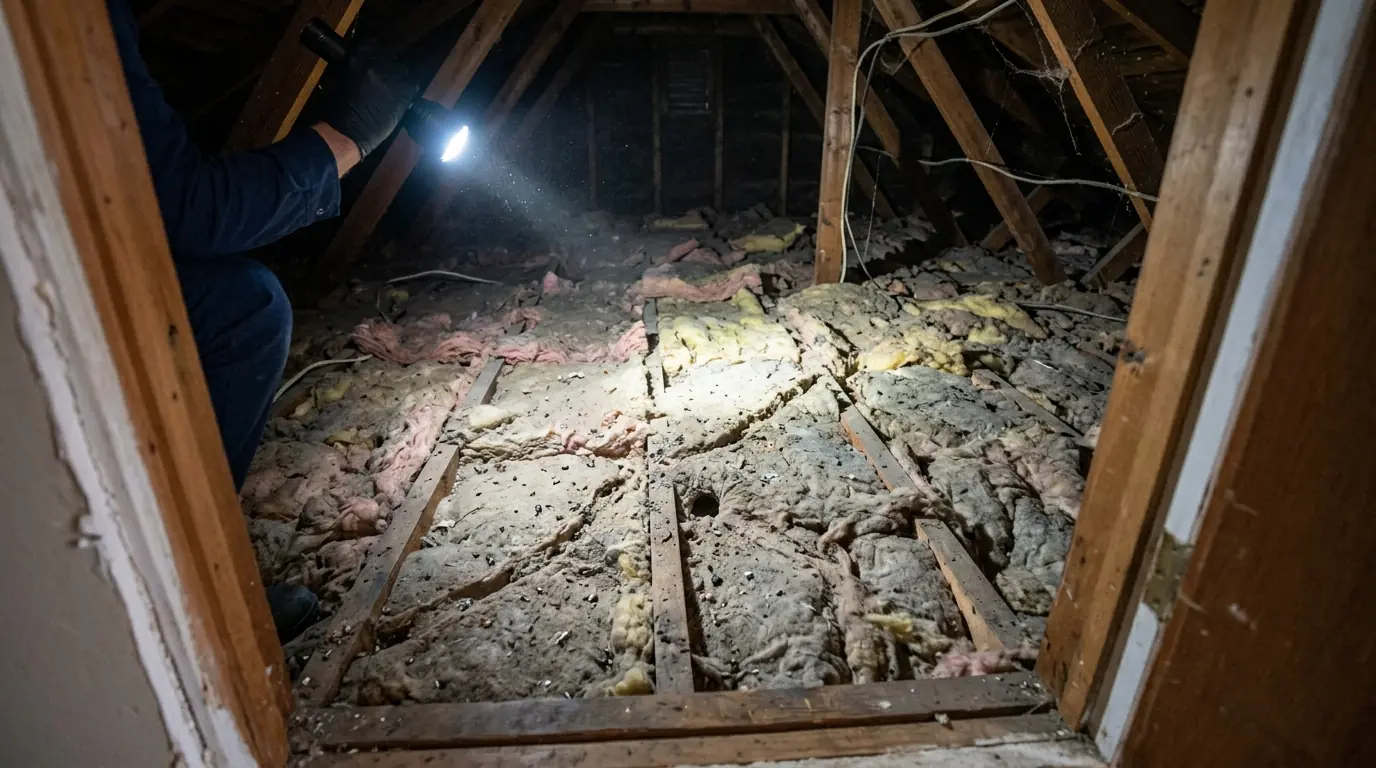
The first visit should treat inside and out: kitchens, bathrooms and garages where pests are active, plus the exterior foundation, weep holes and eaves. After that, regular visits usually focus on the outside, renewing the barrier band around the foundation, removing webs from eaves, treating beds and mulch lines and checking for new mounds or nests.
Every visit should end with notes: what was treated, what was found, and anything you could fix, such as a gap under a door, mulch against the siding or a branch touching the roof. Those notes are how you can tell a plan is being worked, not just billed.
Free re-service between visits is the other half of a good plan. If ants or roaches break through in the second month, a call should bring a technician back without a new invoice.
A simple cost comparison over one year
Using published Texas ranges, a single one-time treatment costs about $150 to $350. If pests return and you book three single visits over a year, the total lands somewhere around $450 to $1,050. A quarterly plan at $100 to $300 per visit runs about $400 to $1,200 a year, usually with free re-service between visits.
That means the plan and repeated single visits often land in a similar range, but the plan includes free re-service visits and keeps the barrier from lapsing, while single visits are reactive. If you only need help once or twice a year, single visits are the better value. If pests come back with every season, the plan usually wins.
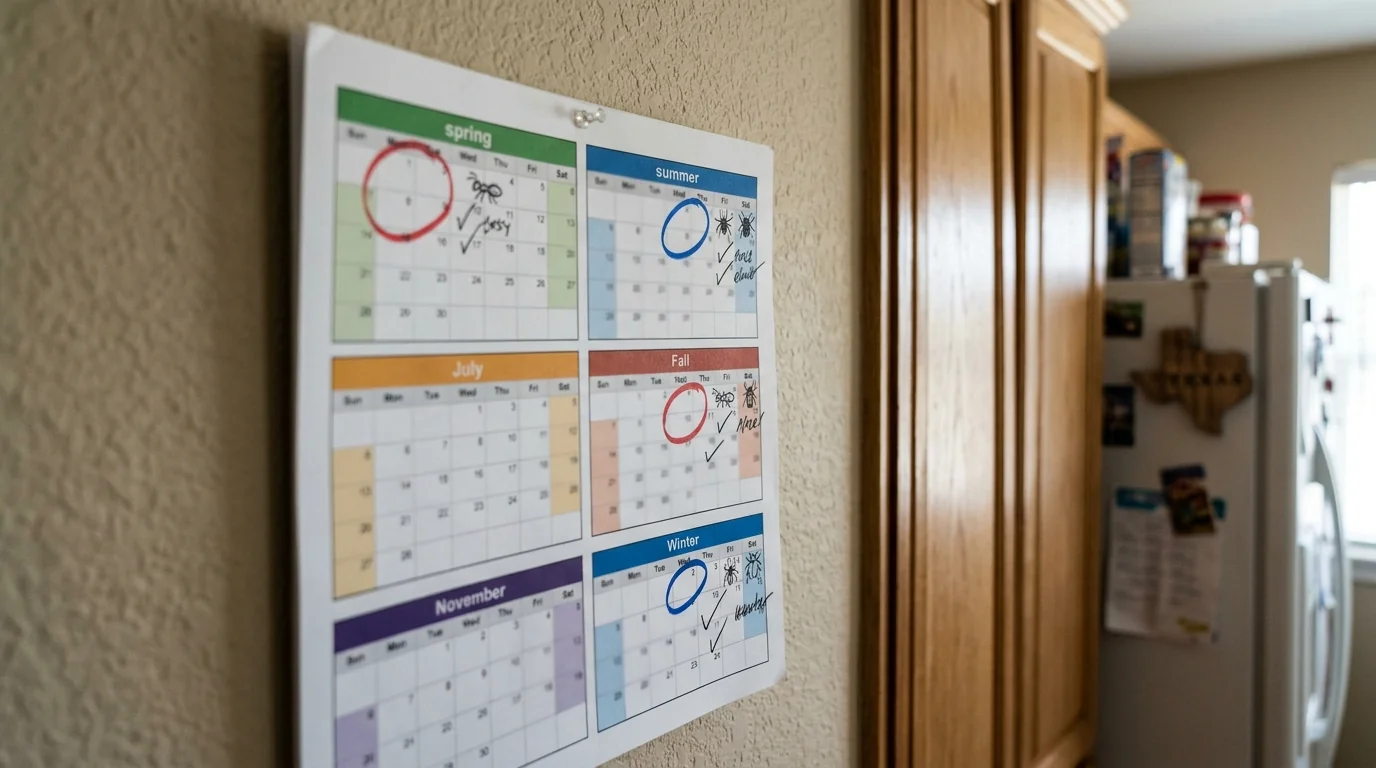
These are planning ranges, not quotes; your home's size, lot and pest pressure decide where you land in each range. Keep a simple note of every pest visit and what it was for over a year. That record makes the decision obvious the next time: a single summer ant call is a one-time job, while ants in spring, roaches in summer and spiders in fall point to a plan.
A simple way to decide
Start with a home inspection or a single treatment if you are unsure, and watch what happens over the next few months. If the same pests return as the season turns, the lot is driving it and a plan is the better value. If the house stays quiet, you saved the subscription.
Common questions
Questions readers ask about this
Most plans run visit to visit and can be paused or stopped. Ask about the terms before signing.
Usually not. Termite work is a separate service with its own methods and warranty.
Only for severe pressure, food businesses or properties that keep breaking through. Most homes do well quarterly.
It includes a full interior and exterior treatment to reset the property, while later visits maintain it.
Usually not after the first visit, since most of the work is exterior.
Yes. Many homeowners start with a single visit and move to a plan once they see the same pests returning with the seasons.
Yes, as separate lines. Mosquito and fire ant treatments can often ride along on the same visits.