Updated October 2026 · Reviewed for current Texas market ranges
Rodent exclusion in Conroe, TX seals the openings rats and mice use to get inside: roof returns, soffit and fascia gaps, vents, plumbing and AC line penetrations, garage door corners and foundation gaps. Openings are closed with galvanized mesh, metal flashing, sealant and hardware cloth rather than foam alone, which rodents chew through. Exclusion follows trapping so no rodents are sealed inside.
What exclusion involves
Every gap, closed with the right material
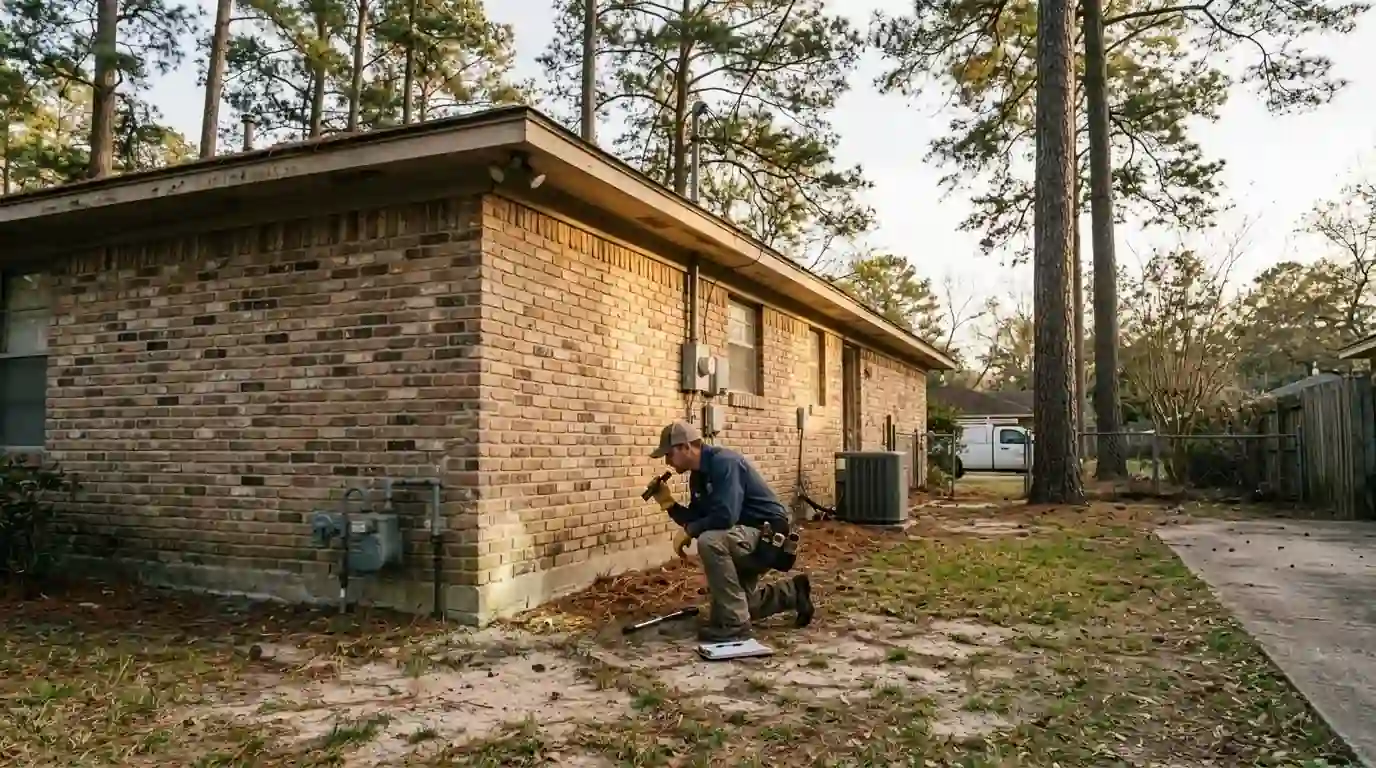
A rat needs a gap the size of a quarter; a mouse needs one the size of a pencil. A typical house has dozens of openings that size, and rodents find them by following airflow and scent. Exclusion starts with a full map of every gap, from the ridge vent to the slab edge.
Materials matter. Expanding foam alone is chewed through in a night. Exclusion uses galvanized hardware cloth, metal flashing, copper or steel mesh packed into gaps, and sealant over the top, with vent covers and screens on roof and gable openings.
Timing matters too. Sealing a house with rodents still inside traps them in the walls. Exclusion is done after trapping has cleared the activity, with one-way exits used where animals may still be present.
Inside the visit
What the exclusion covers
- Roof returns and fascia gaps
- Ridge, gable and soffit vents
- Plumbing and AC line penetrations
- Dryer and exhaust vents
- Garage door corners
- Siding-to-slab gaps
- Brick weep hole covers
- Tree branch and wire notes
Where the sealing happens
Roof, foundation, and the bridges in between
Roofline sealing
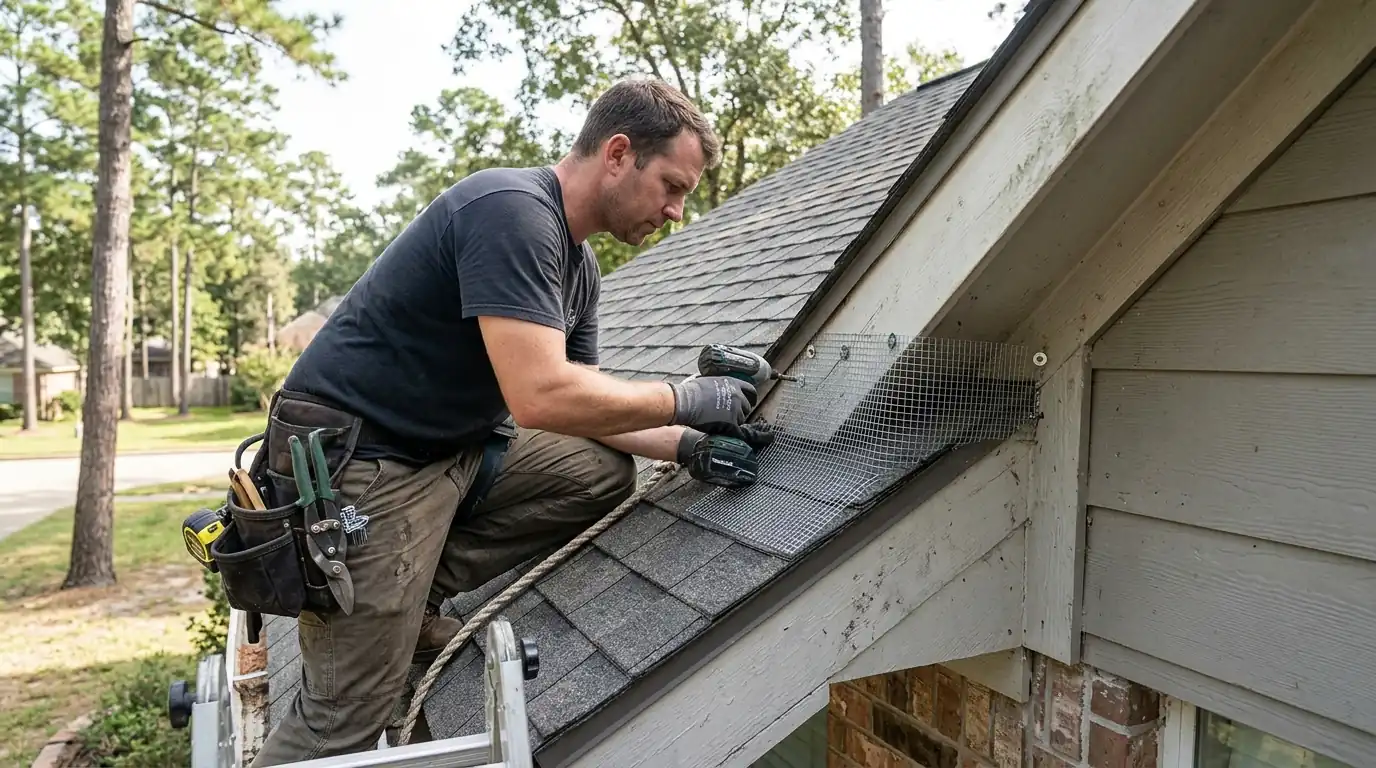
Roof returns, where the roofline meets a second-story wall, are the most common roof rat entry on Conroe homes, followed by gaps behind fascia, around attic vents and at the ridge. These are closed with metal flashing and mesh shaped to the roofline, painted to blend where it shows. Ladder and roof work is part of the job, and every sealed point is photographed for your records.
Foundation and utility gaps
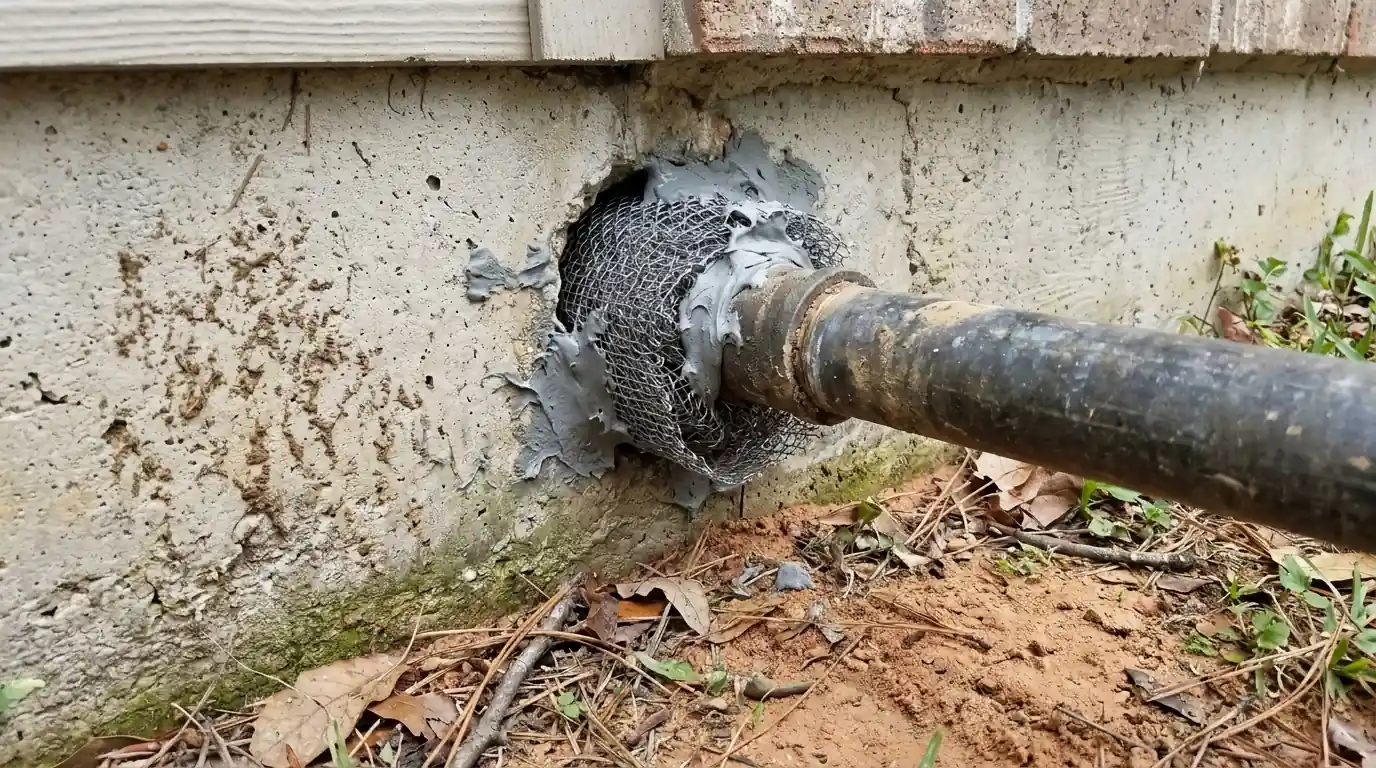
Plumbing penetrations, AC line sets, dryer vents, cable entries and gaps where siding meets the slab are mouse highways. Each gets packed with steel or copper mesh and sealed, and garage door corners get rodent-proof seals. Weep holes on brick are covered with breathable mesh so they keep draining while staying closed to mice. The AC line set where it enters the wall is one of the most commonly missed gaps on Texas homes, and it gets specific attention on every map.
Tree and wire management
Roof rats use overhanging branches and utility lines as bridges. The exclusion report notes every branch within reach of the roof so it can be trimmed back, and line guards can be added where wires run to the house. Closing the bridge reduces how often rats test the sealed roofline. On most Conroe lots that means pines and oaks along the back fence; even a single limb touching the gutter is enough to keep rats testing the roof every night after the seal goes on.
What moves the price
What exclusion costs turn on
It is construction work priced by the openings found.
Number of openings
The entry map sets the scope; most homes have more than owners expect.
Roof access
Steep or two-story roofs take more time and equipment.
Materials
Metal flashing and custom vent covers cost more than mesh plugs.
Construction age
Older homes usually need more sealing points.
Tree trimming
Branch clearance is noted for you or your tree service.
Warranty
Re-check visits on sealed points are part of the quote.
Exclusion is quoted from the entry-point map after inspection, since the number and height of openings drive the price.
On our Conroe routes
Old grids, mature canopy
The older street grids near Historic Downtown Conroe and along the I-45 corridor combine aging structures with mature pine canopy, and roof rats travel the overhanging branches straight onto those rooflines. Older homes there also tend to have more settled fascia, loose roof returns and unsealed utility runs added over the years, so an exclusion job on a downtown bungalow usually finds more openings than one on a new slab home out by the lake.
How this job runs
From entry map to a sealed house
- 1
Clear the activity
Trapping first, so nothing gets sealed inside.
- 2
Map every gap
Roofline to foundation, photographed and listed.
- 3
Approve the scope
You see every point and the price before work starts.
- 4
Seal with metal
Mesh, flashing, hardware cloth and sealant installed.
- 5
Check the seal
Follow-up confirms no new activity.
Asked about this job
Exclusion questions
Rodents chew through foam quickly. It works only as a finish over metal mesh, never on its own.
That is why trapping comes first. Where animals may still be inside, one-way exits are used before final sealing.
Metal-based exclusion lasts for years. New gaps can open from storms, roofing work or settling, which is why re-checks are part of the job.
A few monitoring traps for a short period confirm the seal is working. After that, they are rarely needed.
Weep holes need to drain, so they get breathable metal covers rather than being plugged.
Related guide: Noises in the Attic: Roof Rats in Conroe Homes
Jobs that pair with this one
Related work from the same crews
Rodent Control
Clearing the rodents before sealing.
Attic Cleanup & Sanitation
Insulation cleanup after rodents.
Squirrel Removal
Squirrels use the same roof gaps.
Raccoon Removal
Larger animals at the roofline.
Plant the flag on it
Rats keep finding a way back?
Call and we will map every way in before quoting a single seal.