Updated October 2026 · Reviewed for current Texas market ranges
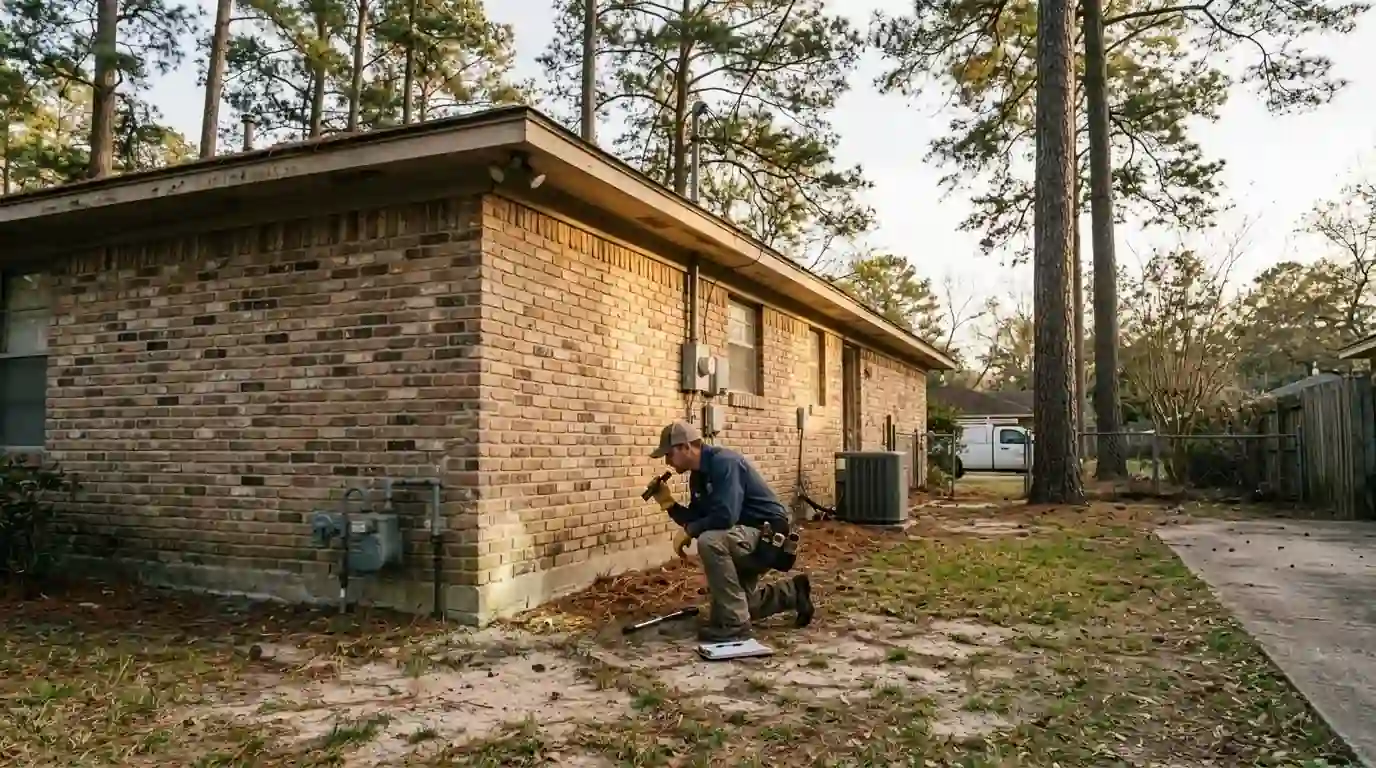
A termite bait system in Conroe, TX is a ring of in-ground stations spaced around the foundation, installed in a day with no trenching or drilling. Foraging termites find the stations, feed on growth-inhibitor bait, and carry it into the colony, which collapses over the following months. The system stays in place and gets checked on a monitoring schedule, so it is protection, not just a one-time kill.
How baiting actually works
Slow bait, patient monitoring, dead colony
Subterranean termites forage constantly and randomly through the top foot of soil, which is the behavior baiting exploits. Stations go in at set intervals around the structure, closer together near known activity, and intercept that foraging. Once termites hit a station, the cellulose matrix inside gets swapped for active bait.
The active ingredient is a chitin synthesis inhibitor: workers feed, share it through the colony, and fail at their next molt. It is deliberately slow, fast-acting toxins teach a colony to avoid a spot, and the slowness is what lets the dose spread nest-wide before anything seems wrong.
What you trade for the gentleness is patience and discipline. Baiting takes months to kill a colony and only works if somebody actually checks the stations, which is why ours come with the monitoring schedule attached rather than sold as an afterthought.
Choosing between the options
Bait, liquid, or both
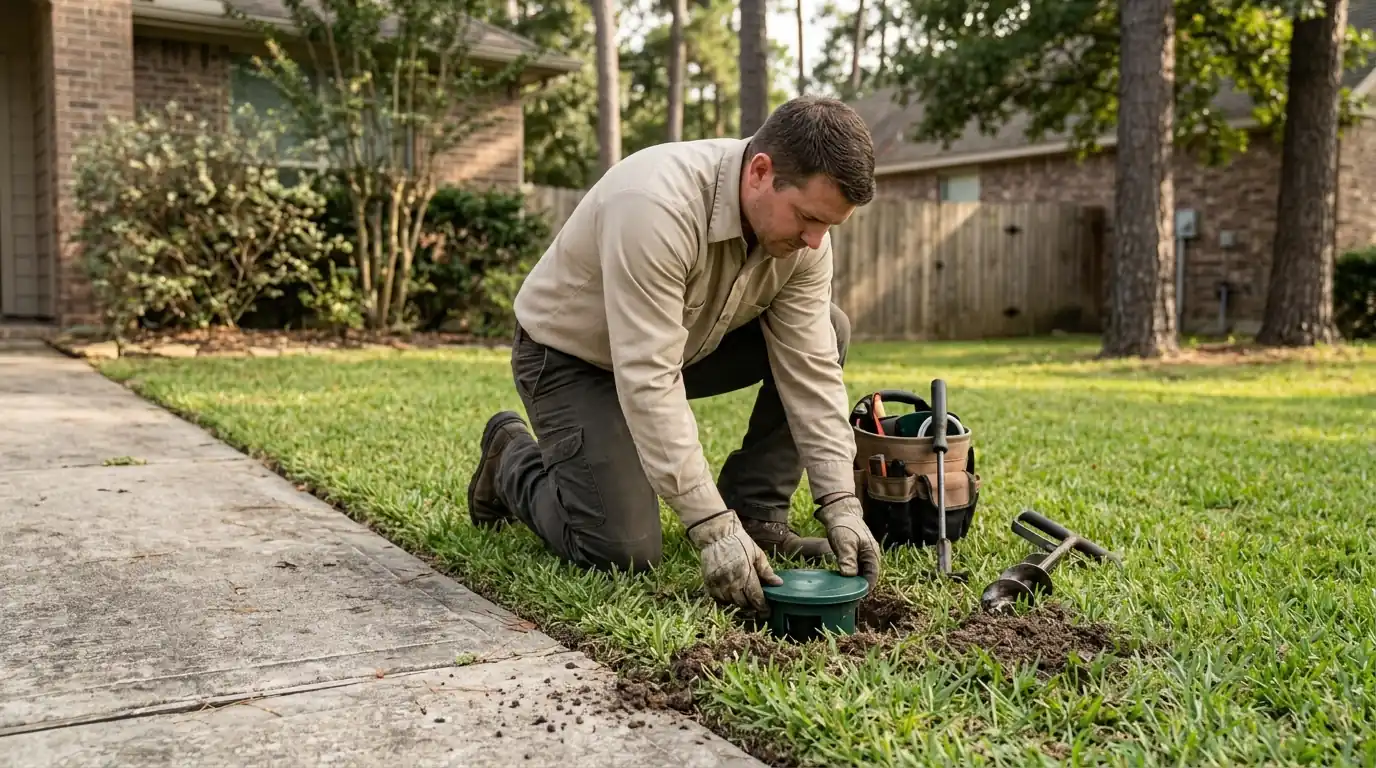
No trench, no drilling, kind to landscaping, and protective for as long as monitoring continues. Slower to kill, and dependent on the check schedule being kept.
$800 to $1,500 installFast, immediate protection and the stronger answer to a live Formosan find, at the cost of a day of trenching and drilled concrete. Published Texas perimeters run $1,200 to $2,500.
$1,200 to $2,500Live activity plus long-term protection: targeted liquid at the active wall, stations everywhere else. Priced as the sum of its scoped parts, quoted in writing.
Scoped per homeThe system in three parts
Install it, watch it, feed it
Station installation
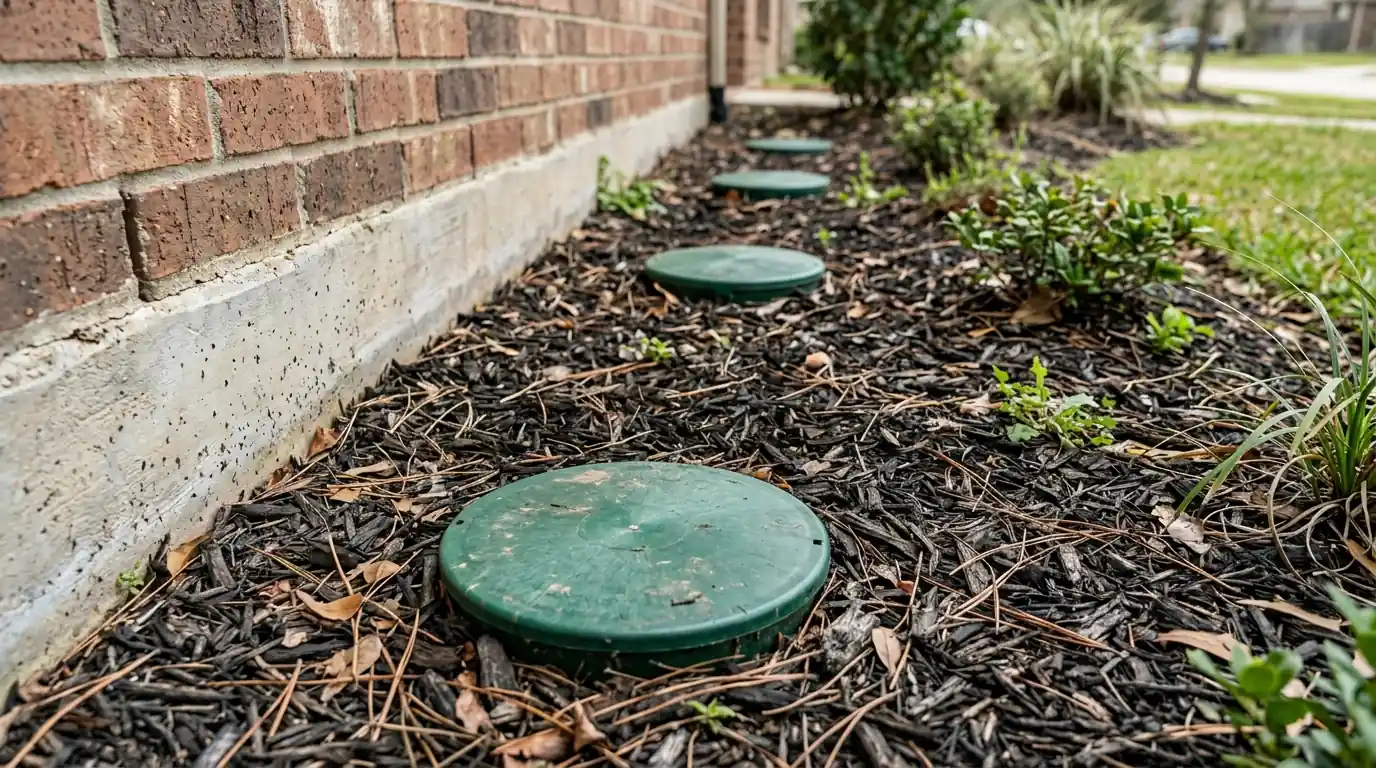
Install day is quiet: stations augered into soil every ten to twenty feet around the foundation, tighter near tubes or past activity, with locked caps sitting flush to the lawn. No trench, no drilled patio, no product broadcast anywhere. A typical Conroe lot is done in a morning, and the station map goes in your file so every later check covers the same ring.
Scheduled monitoring
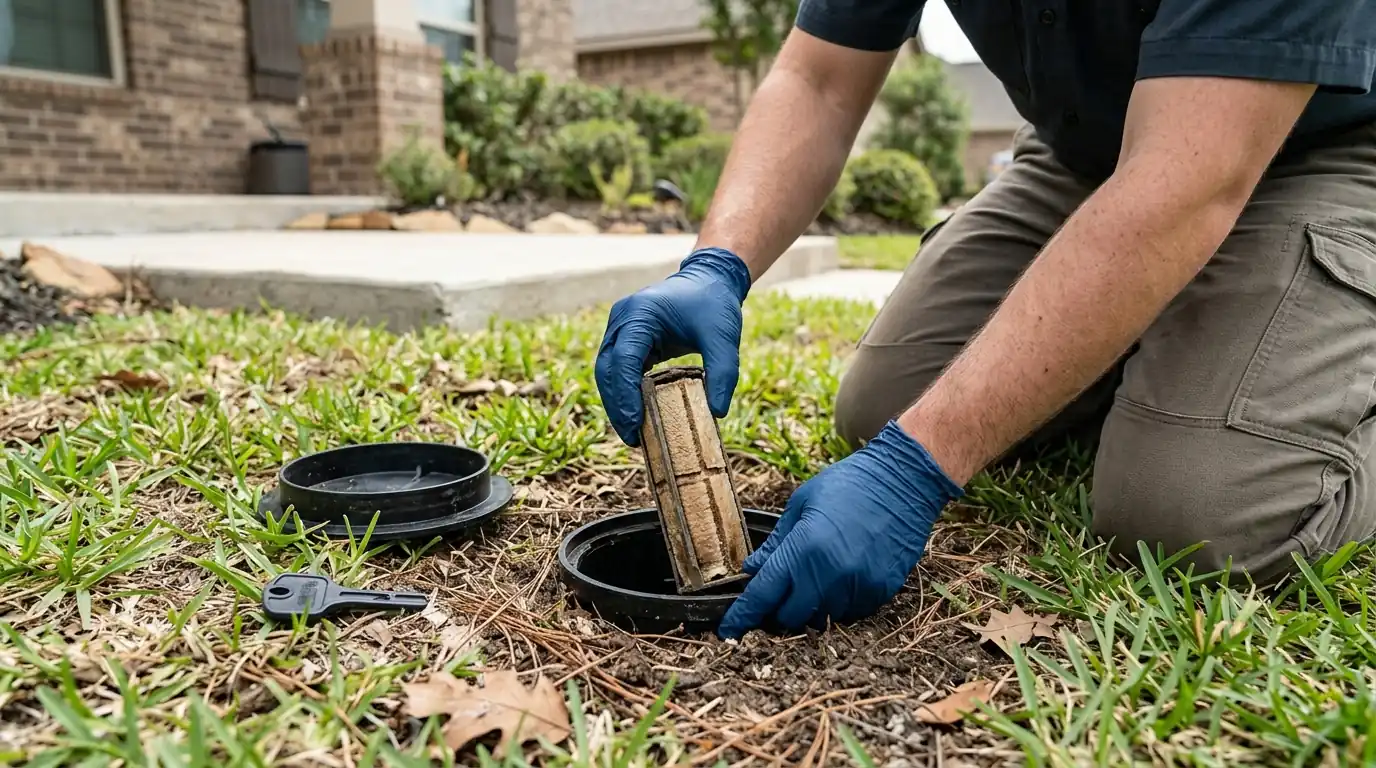
The system is only as good as its checks, which is why monitoring is sold with the install rather than as an option. On each visit the tech opens every station on the ring, logs what is feeding, replaces degraded matrix and photographs hits. Texas pricing guides put the annual monitoring layer at $200 to $400, and that line item is the difference between a protective system and plastic buried in the yard.
Bait response on a hit
A station with termites in it is good news: the colony has found the system and the real treatment phase begins. Active stations get loaded with bait, neighboring stations get checked harder, and visit spacing tightens until feeding stops. You are told at each step what the activity curve looks like, because watching a colony decline on paper beats wondering whether anything is happening underground.
What moves the price
Bait system pricing, in the open
Two published numbers matter: the install and the monitoring that keeps it honest.
Perimeter length
Stations are spaced by the foot of foundation, so a wrapped, attached-garage plan takes more hardware than a compact one.
Published install range
Texas guides put bait system installation at $800 to $1,500 for a typical home.
Monitoring plan
The $200 to $400 published annual range covers the scheduled checks and bait replacement.
Active infestation
A home with live tubes may pair stations with targeted liquid work, priced separately and said up front.
Lot obstacles
Decks, dense beds and irrigation lines shape station placement and add layout time.
System brand
We install the monitored station platforms named on this site; hardware differences are explained, not hidden.
Install $800 to $1,500 plus $200 to $400 a year of monitoring are published Texas planning figures, not our quote; your layout count sets the real number and we confirm it on the phone.
On our Conroe routes
Where baiting fits a Conroe lot
Conroe yards at the edge of the Piney Woods carry constant termite pressure from the trees themselves: pine litter, mulch beds and fallen wood keep foragers active within feet of most foundations, which means stations here get found and hit faster than in drier markets. The same canopy is why we favor baiting on heavily hardscaped or intricately landscaped lots, where a liquid trench would mean cutting through root zones and decking that a station ring simply goes around.
How this job runs
From layout to a quiet perimeter
- 1
Walk the perimeter
Foundation measured, activity noted, station count and spacing mapped.
- 2
Install the ring
Stations augered in flush and locked, map recorded, lawn left looking untouched.
- 3
Check on schedule
Every station opened and logged on the monitoring calendar.
- 4
Load active stations
Hits get bait; surrounding stations get tightened checks.
- 5
Track the decline
Feeding tapers as the colony fails; the log shows you the whole curve.
Asked about this job
Bait system questions, answered straight
Plan on months, not days: feeding has to start, spread, and ride the molt cycle, and most colonies collapse within a season of first hit. Live termites in the house today is a liquid-treatment conversation, and we will say so.
The bait sits inside locked, tamper-resistant stations below grade; nothing is sprayed or spread on the surface. The active ingredient targets insect molting, which is why stations can ring a vegetable bed without anxiety.
Eventually, because the workers in your walls are the same colony feeding at the stations. Active structural infestations usually get targeted liquid work alongside the ring so the house stops taking damage while the bait works.
The system stops meaning anything: unchecked stations fill with degraded matrix, hits go unnoticed, and the ring becomes decoration. That is why install and monitoring are one program here.
Stations sit flush with grade, cap-up, and irrigation lines are located before the auger touches soil. Mowing goes right over them; most owners forget where half of them are.
Yes, a common sequence: the aging barrier keeps doing what it can while the ring takes over long-term protection. The install visit maps the old treatment so the layers complement, not duplicate.
Related guide: What Termite Treatment Costs in Conroe, TX
Jobs that pair with this one
Related work from the same crews
Subterranean Termite Treatment
The liquid answer when activity is live today.
Termite Inspections & WDI Reports
The mapping that decides bait versus barrier.
Pre-Construction Termite Treatment
Protection poured in before the slab is.
Quarterly Pest Control Plans
General pest routes that pair with the station checks.
Plant the flag on it
Want protection you do not have to think about?
Give us the address and we will count the stations off the plat before you ever commit to an install.