By Hugh Satterfield, Pest Control Guides Editor · Updated October 2026 · 5 min read
Termite treatment in Conroe, TX usually costs $290 to $1,150 for a localized treatment, $1,200 to $2,500 for a full liquid perimeter, and $1,500 to $4,500 for whole-structure work in the Houston area. Bait systems publish at $800 to $1,500 to install plus $200 to $400 a year for monitoring. The species, the foundation and the amount of concrete to drill decide where a house lands.
Key points from this guide
- Spot treatments publish at about $290 to $1,150; full liquid perimeters at about $1,200 to $2,500.
- Houston-area whole-structure jobs run about $1,500 to $4,500 because of regional Formosan pressure.
- Bait systems cost about $800 to $1,500 to install plus $200 to $400 a year to monitor.
- Species, foundation type and concrete to drill decide where your house lands.
- Compare quotes by species, method, footage and warranty, not by the total alone.
Why termite prices vary so much here
Termite work is priced by the job the house actually needs, not by a flat rate. A single active spot at a garage expansion joint is a two-hour treatment; a slab home with activity on three sides, a wrapped porch and a pool deck is a full day of trenching and drilling. Both are called termite treatment, and that is why two neighbors can get quotes thousands of dollars apart.
Montgomery County adds two local factors. Formosan subterranean termites are documented here alongside native colonies, and Formosan finds usually call for the full perimeter rather than spot work. The county's clay-heavy, moisture-holding soil also keeps colonies active year-round, so a thorough inspection before any quote is the step that keeps the number honest.
Published ranges for each type of treatment
The figures below are published Texas and Houston-area planning ranges, collected from pricing guides and listed so you can sanity-check a quote:
Localized or spot treatment runs about $290 to $1,150, with roughly $500 typical. A full liquid soil barrier around the perimeter runs about $1,200 to $2,500. Whole-structure jobs in the Houston area run about $1,500 to $4,500, reflecting the regional Formosan pressure. Bait station systems run about $800 to $1,500 to install, plus $200 to $400 a year for monitoring. Drywood tenting, when an infestation is truly structure-wide, runs about $2,000 to $8,000.
What actually moves the number on your house
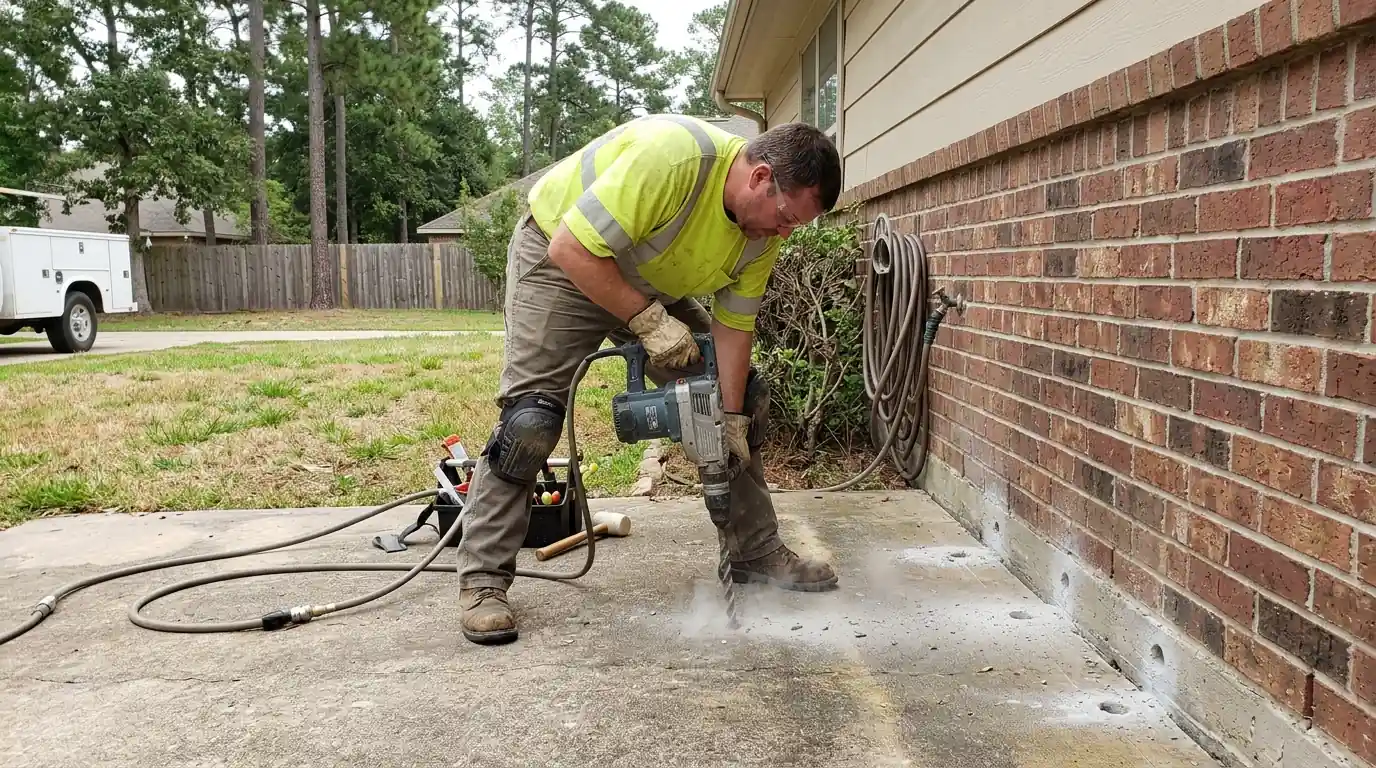
Linear footage of foundation is the base of most liquid quotes. Concrete is the next biggest factor: every patio, walkway, driveway apron and pool deck against the house needs drilled injection points, which takes longer than open soil. Pier-and-beam homes treat differently from slabs, because the crew works soil inside the crawl space and around every pier.
Species matters as much as size. A native subterranean spot sits at the low end of every range; a Formosan colony with carton nests in a wall void sits at the top. Access matters too: decks, dense beds and stored items along the foundation all add prep before the trench can open.
Seeing this at your place?
Describe what you found and we will tell you on the phone what it is likely to take.
Call (281) 626-0856Bonds, warranties and the yearly line item
Many Texas operators pair treatment with an annual renewable bond or warranty, and published renewals run about $200 to $400 a year. The renewal pays for a yearly inspection and, depending on the terms, re-treatment if activity returns. Read whether the bond covers repair of new damage or only re-treatment; those are very different promises.
If you are selling within a few years, a transferable bond can help a buyer feel comfortable, and a current WDI report is usually part of that conversation.
What a fair termite quote should spell out
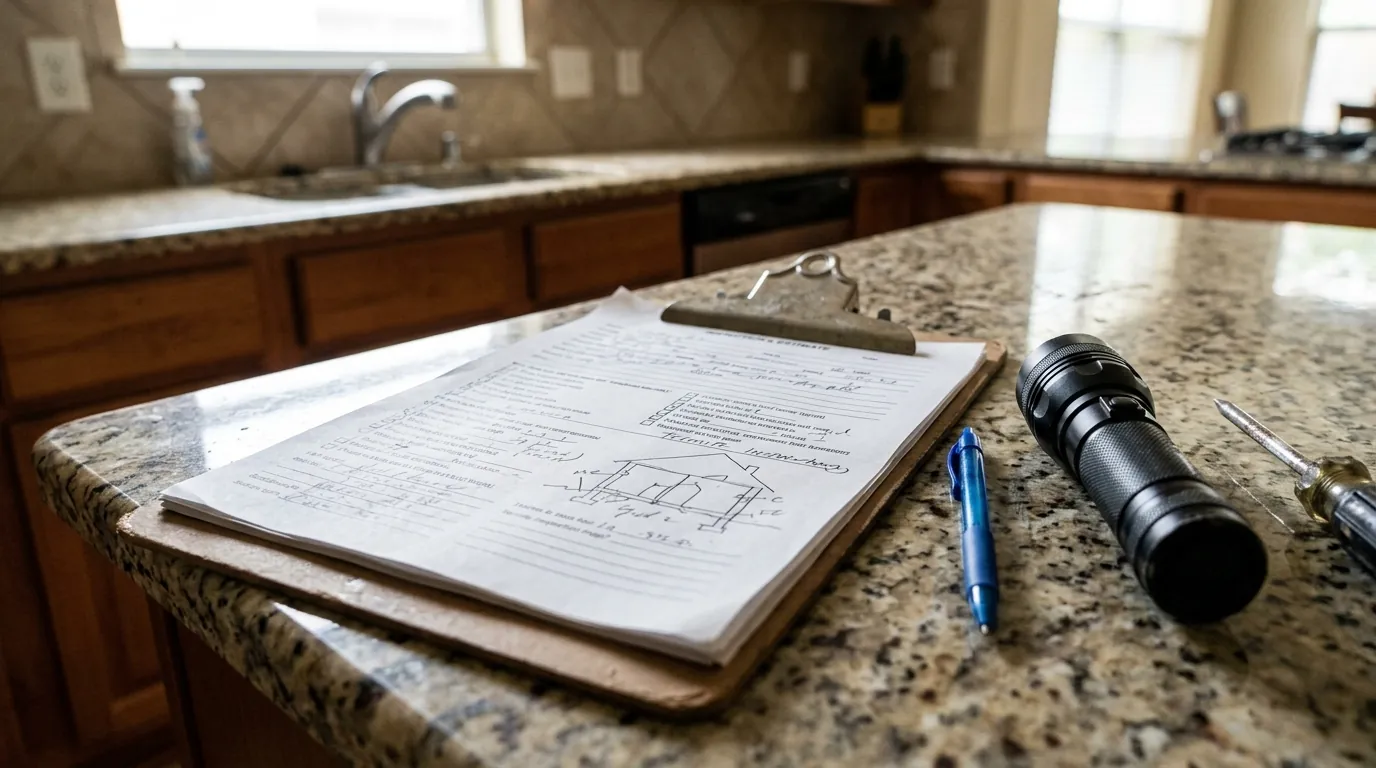
A quote you can trust names the species the inspector found, the method, the product, and the linear feet or number of stations it covers. It says whether interior wall voids, crawl spaces or attached structures such as a porch or garage are included, and it shows a simple diagram of where the activity was.
It should also explain the follow-up: when the first re-check happens, what triggers re-treatment, and what the yearly renewal costs if you keep the warranty. If a quote cannot answer those questions in writing, it is hard to compare with anything else, and that alone is a reason to ask again.
Repairs to damaged wood are almost always separate from treatment. A pest company treats the colony; a carpenter or contractor repairs the framing or trim. Budget for both if the inspection finds real damage, and ask the inspector to show you exactly where it is so the repair estimate covers the right boards.
How long each treatment keeps working
A liquid barrier keeps protecting for years when the soil around the foundation is left alone, which is why yearly inspections focus on spots where soil was disturbed. Bait systems protect for as long as monitoring continues. Spot treatments protect the treated area only, which is why they suit isolated activity and not a house with several entry points.
How to compare two quotes fairly
Ask each company to name the species, the treatment method, the product, the linear feet treated and what the warranty covers. A cheap spot quote and an expensive perimeter quote are not comparable if one assumes a single entry point and the other treats the whole slab. The right question is which plan matches what the inspector actually found, and whether the report shows it.
Common questions
Questions readers ask about this
Only if it treats what was actually found. A spot treatment on a house with activity on several walls tends to cost more in the end, because the colony simply uses another entry.
Published inspection pricing runs about $75 to $200, and many operators credit it toward treatment. The inspection is what makes the quote accurate.
The install is often similar or lower, but monitoring adds $200 to $400 a year. Over several years the totals can end up close; the choice usually turns on the slab and landscaping.
Most standard policies exclude termite damage as a maintenance issue. Check your own policy, but plan as if treatment and repairs are out of pocket.
A properly applied barrier lasts years, but soil disturbance from new beds, plumbing work or additions can open gaps. Yearly inspections catch that early.
Store products can handle a single spot in some cases, but they rarely create the continuous barrier a slab needs, and they will not reach a Formosan colony. Most failed DIY jobs cost more in the end.
Usually not for a personal home. For rental or business property, ask your tax preparer.