Updated October 2026 · Reviewed for current Texas market ranges
Residential pest control in Conroe, TX treats the house as a system: interior cracks, voids and wet rooms where pests live, a perimeter band at the foundation where they enter, and granular yard treatment where populations build. One visit covers the crawling regulars, ants, roaches, spiders, scorpions and occasional invaders, and the same scope runs as a one-time treatment or the base of a recurring plan.
What the visit covers
Inside, perimeter, and the yard that feeds both
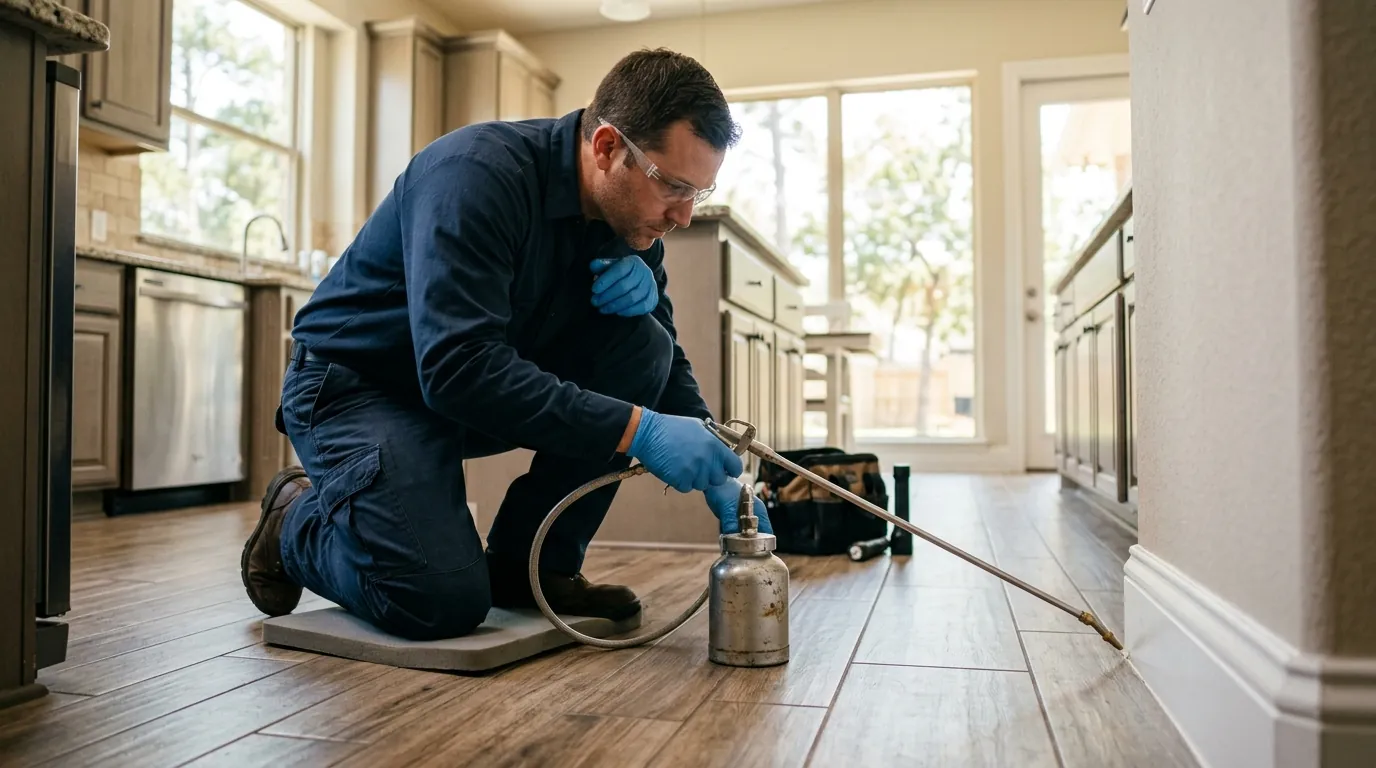
The service starts where the pests actually are, which is rarely the middle of a room. Kitchens and baths get crack-and-crevice treatment along plumbing lines, voids get dusted, garages and utility rooms get attention at the slab joints, and the tech is looking the whole time for the entry story: the gap, the moisture, the trail.
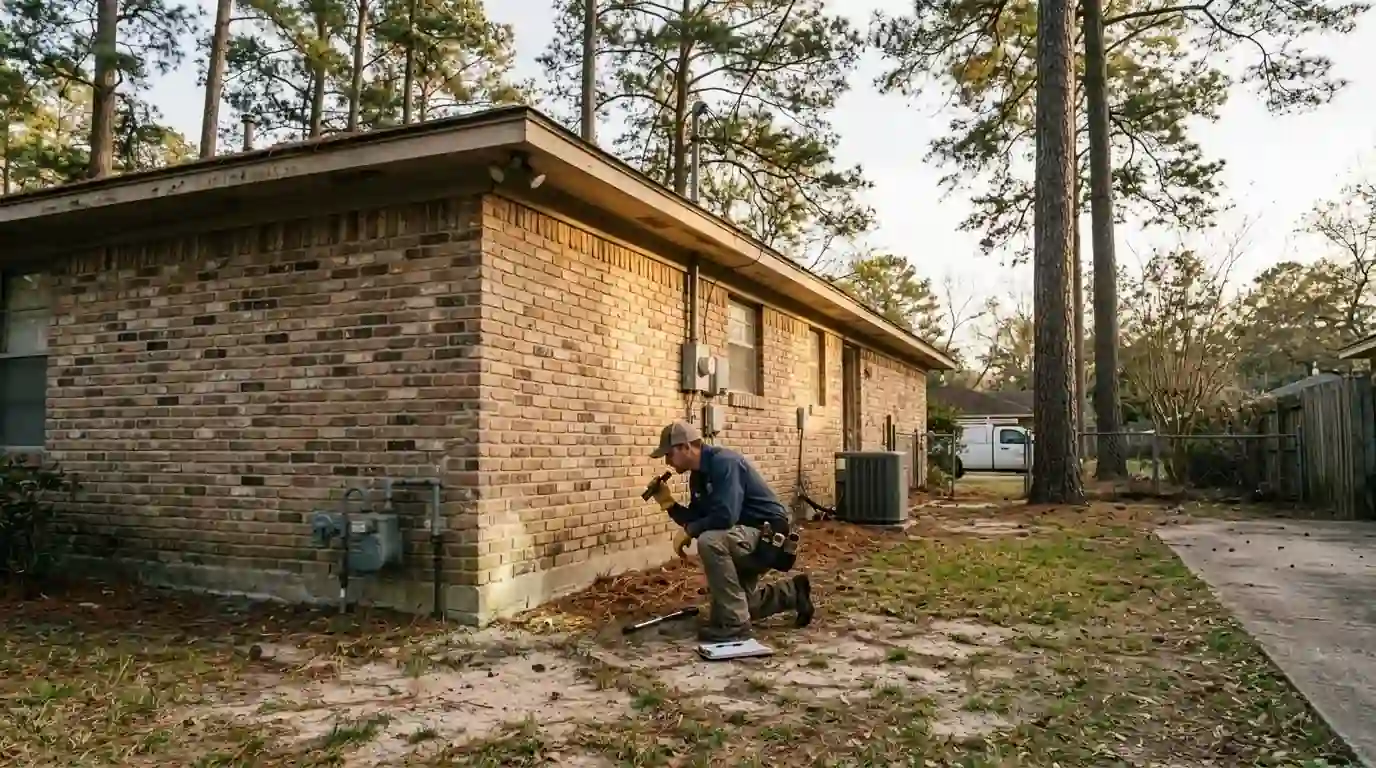
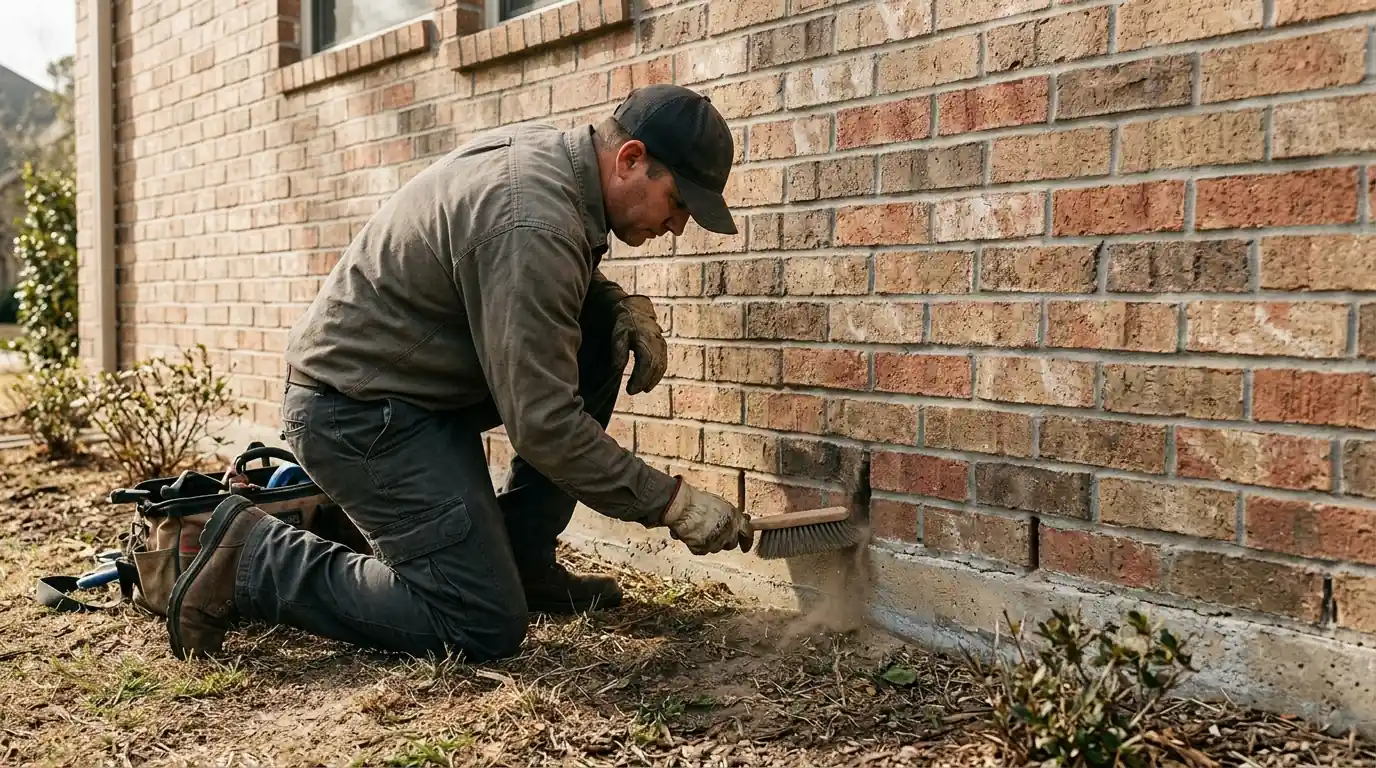
Outside is where the lasting work happens. A barrier band goes around the foundation, weep holes get dusted, beds and turf margins get granules, and webs come off the eaves. On the shaded, mulched lots this city favors, that exterior layer is the difference between an occasional scout indoors and a trail across the counter.
Every visit ends with the part a sprayer cannot do: what we found, what is driving it, and which fix, a door sweep, a gutter problem, a mulch line against siding, would make the chemistry's job smaller. Conroe Exterminator sells treatments, but the notes are free.
Inside the visit
The standing scope, every visit
- Kitchen and bath crack-and-crevice treatment
- Wall-void and cabinet dusting where active
- Garage and utility slab-joint attention
- Continuous foundation barrier band
- Weep-hole dusting on brick elevations
- Eave and soffit web removal
- Bed, mulch-line and turf granules
- Written visit summary with findings
The three layers of the service
Rooms, foundation line, landscape
Interior treatments
Crack-and-crevice work along baseboards, plumbing penetrations and cabinet voids in the rooms showing activity, using targeted applications rather than broadcast spraying across open floors, with gel baits placed where ant and roach behavior calls for them instead of contact products. You will know exactly which rooms were treated, with which products, and what re-entry timing applies, on every single visit.
Perimeter barrier
A continuous treated band at the foundation line, around door thresholds and garage returns, paired with weep-hole dusting on brick homes where the cavity behind the veneer is its own highway. It is the workhorse of residential service in this climate, intercepting the ants, roaches, spiders and scorpions that pressure a slab year-round before any of them find a way inside.
Yard granule treatment
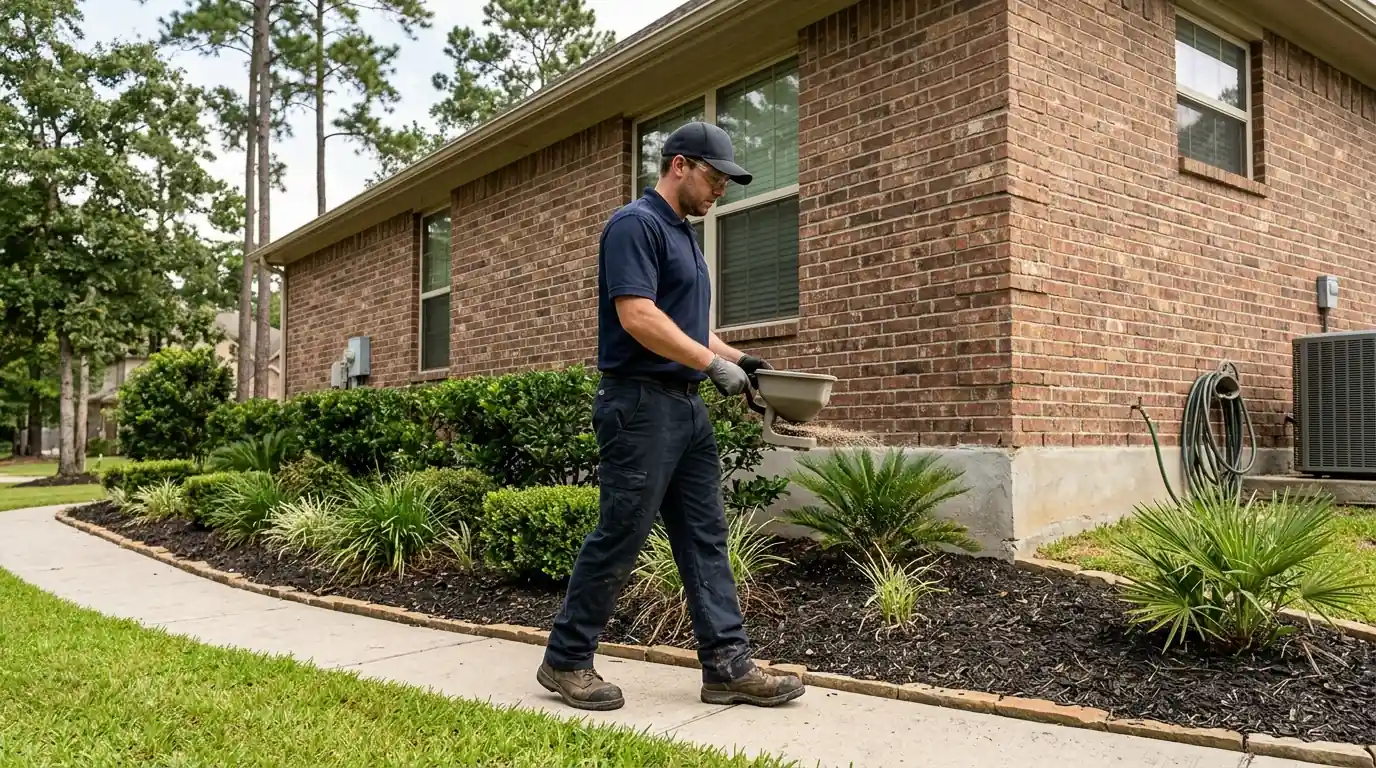
Granular product through beds, mulch lines and turf margins hits the populations that shaded, irrigated landscaping sustains all year. It extends the barrier outward past the foundation, knocks down the cricket and earwig reservoirs that feed indoor sightings, and sets the stage for the fire ant and flea programs when a given lot turns out to need those added on.
What moves the price
What residential service costs
Published Texas ranges below; the lot read sets where in them you land.
Visit type
A published $150 to $350 covers one-time general treatments across Texas; recurring visits price lower each.
Home size
Treated square footage and perimeter length scale the time on site.
Activity level
An active German roach kitchen or heavy scorpion pressure takes more product and follow-up than maintenance.
Lot character
Canopy, mulch beds, irrigation and water features raise the exterior workload.
Plan versus single
Monthly Texas service publishes at $40 to $75, quarterly at $100 to $300 per visit; singles cost more per visit by design.
Add-on programs
Mosquito, flea-and-tick and fire ant lines bundle onto the same truck roll at reduced rates.
All figures are published 2026 Texas planning ranges, quoted here so the phone estimate has context, never our price list. Your number gets confirmed before the visit books.
On our Conroe routes
Built for lots like these
No two Conroe properties carry the same pressure: this market runs from lakeside lots with water on two sides to heavily wooded acreage where the canopy never lets the soil dry, and prevention that works on one fails on the other. That is why the visit opens with the lot read, shade cover, soil moisture, landscaping density, irrigation habits, before any product choice is made, and why the treatment map for a pier-and-beam bungalow downtown looks nothing like the one for a new slab home backing onto pines.
How this job runs
One visit, start to finish
- 1
Book around your day
The line answers 24/7; most addresses fold into a route within a day or two.
- 2
Read the lot
Shade, moisture, entries and activity mapped before anything is applied.
- 3
Treat the interior
Crack, crevice and void work in the rooms that need it, explained as it happens.
- 4
Band the exterior
Perimeter barrier, weep holes, eaves and yard granules in one pass.
- 5
Leave the notes
What was found, what was used, and the fixes that would shrink the next visit.
Asked about this job
General service questions we hear daily
The phone answers around the clock and our trucks run Conroe streets daily, so most visits land within a day or two as a route stop. Stinging emergencies and active roach or rodent situations move to the front.
Depends on the problem, and we say which honestly. An isolated nest or pre-move-in treatment is genuinely one-and-done; pressure that comes from the lot itself returns on a cycle, and that is when a plan stops being upsell and starts being math.
For standard service, no; applications go into cracks, voids and the exterior band, not across open floors. The tech names which spots need drying time and keeps pets off them briefly. Jobs with different rules, like flea cycles, come with written prep.
Flushed harborage: products pull insects out of the cracks they lived in, so a brief uptick of dying, disoriented sightings is the treatment visibly working. It settles within days; anything thriving after two weeks is what the re-service call is for.
Yes, and after the first visit exterior-only is the normal rhythm; a held perimeter is what keeps interiors quiet. We still ask what you are seeing indoors each time, because interior sightings are the barrier's report card.
Termites, bed bugs, mosquitoes and wildlife each run their own line because the methods genuinely differ: soil treatment, heat, breeding-site work, trapping. The general visit identifies them on sight and quotes the right program.
Related guide: How Much Pest Control Costs in Conroe, TX
Jobs that pair with this one
Related work from the same crews
Quarterly Pest Control Plans
The same scope on a standing seasonal rhythm.
One-Time Pest Treatment
The single-visit version for isolated problems.
German Cockroach Control
The kitchen specialist when baiting cycles are needed.
Scorpion Control
The pressure-specific add-on this county earns.
Plant the flag on it
Describe what you are seeing. We will name it on the phone.
Trail, web, sting or scurry: a clear description usually identifies the pest and the price range before a truck ever rolls.