Updated October 2026 · Reviewed for current Texas market ranges
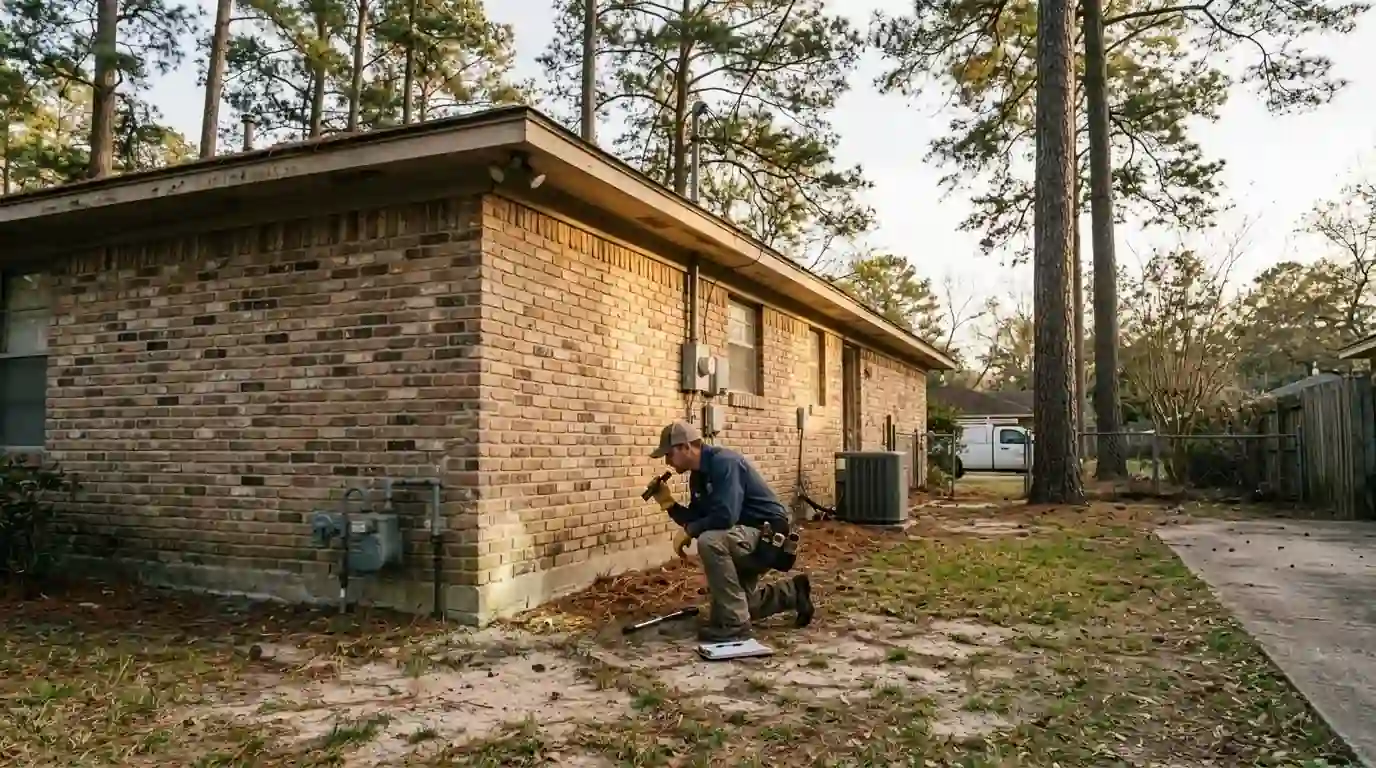
Wasp and hornet removal in Conroe, TX means identifying the species, treating the nest so the colony dies inside it, then physically removing the comb so the site stops attracting new queens. Paper wasp nests under eaves are the most common call; baldfaced hornet nests in shrubs and trees are the most dangerous. Both are treated in protective gear, timed to when the colony is home.
Worth a phone call when you see
Five reasons to call today
Traffic at a soffit gap
Wasps flying steadily into a crack in the eaves means a hidden nest in the void.
A gray paper ball in a hedge
Enclosed nests in shrubs are hornets; do not trim near them.
Nests over doorways
Anything above a door, mailbox or play area gets moved up the priority list.
Stings with swelling beyond the site
Hives, breathing trouble or facial swelling are a 911 call first.
Wasps indoors in winter
Overwintering queens in the attic mean a nest site worth treating before spring.
What the job involves
Treat the colony, then take the nest down
Knocking a nest down with a broom scatters angry foragers and leaves the queen to rebuild a few feet away. The working sequence is the reverse: a residual dust or foam goes into the nest when the colony is inside, kills the workers and the developing brood, and only then does the comb come down.
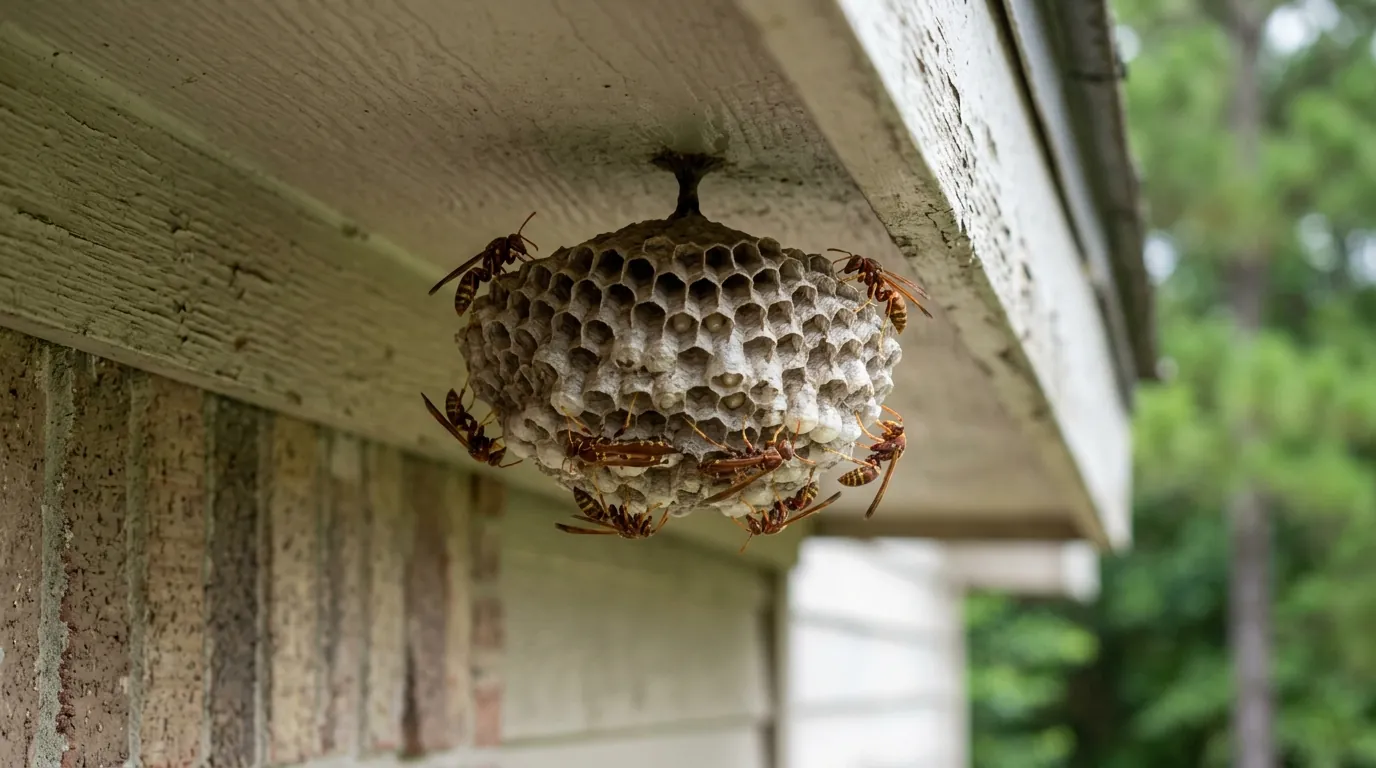
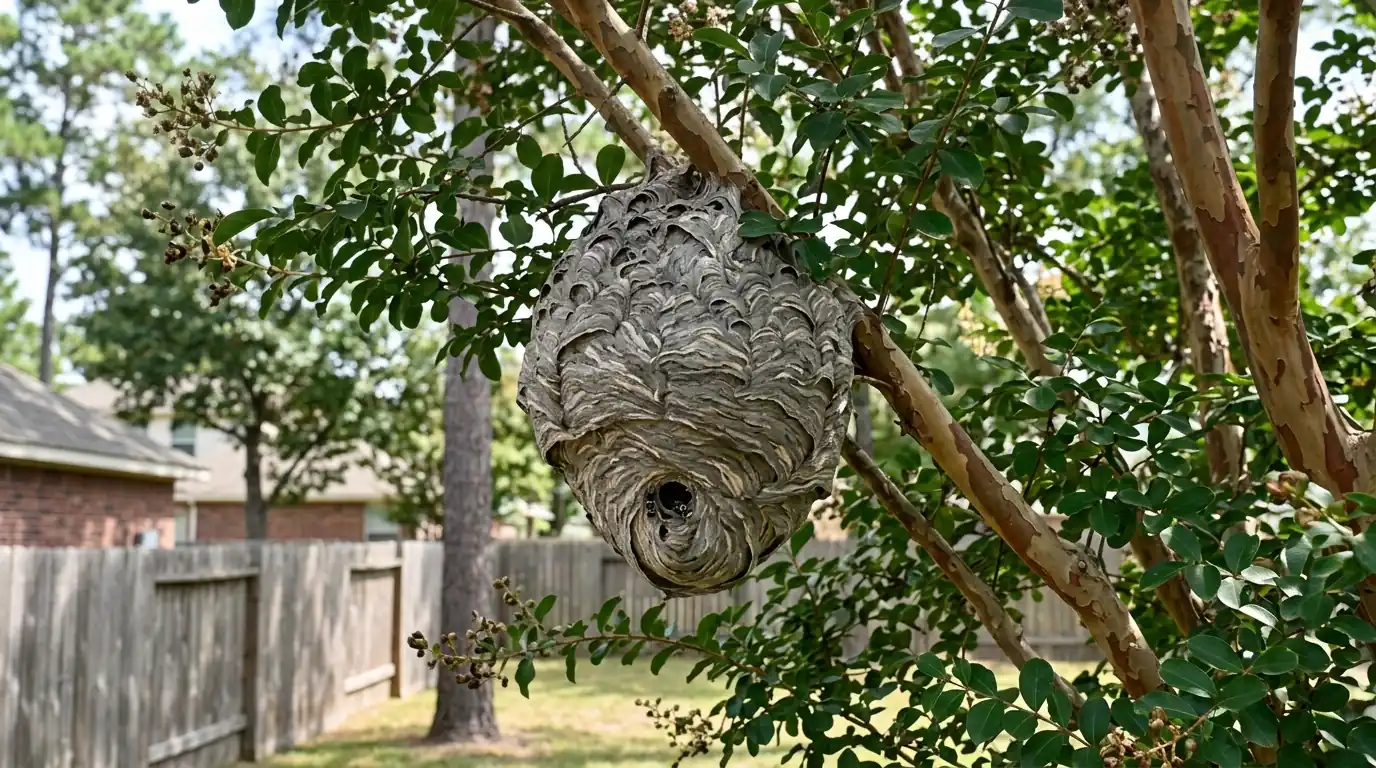
Species changes the approach. Paper wasps build open umbrella combs under eaves, porch ceilings and railings; baldfaced hornets build enclosed gray paper balls in shrubs and trees and defend them aggressively; mud daubers rarely sting and mostly need their tubes scraped. The identification takes seconds and decides the gear and the timing.
The visit finishes with the sites that keep attracting nests: the same soffit corner, the open gable vent, the porch light fixture. A light residual at those spots discourages the next spring queen from picking the same address.
Three places nests turn up
Eaves, hedges, and the hidden ones
Eave and soffit nests
Most Conroe calls are paper wasps under eaves, soffits, shutters and porch ceilings, and many sit at second-story height where a ladder plus an agitated colony is a bad combination for a homeowner. The tech treats from a stable position with an extension applicator, waits for the knockdown, then scrapes the comb and cleans the attachment point so the pheromone scent stops advertising the spot to the next queen.
Hornet nests in shrubs and trees
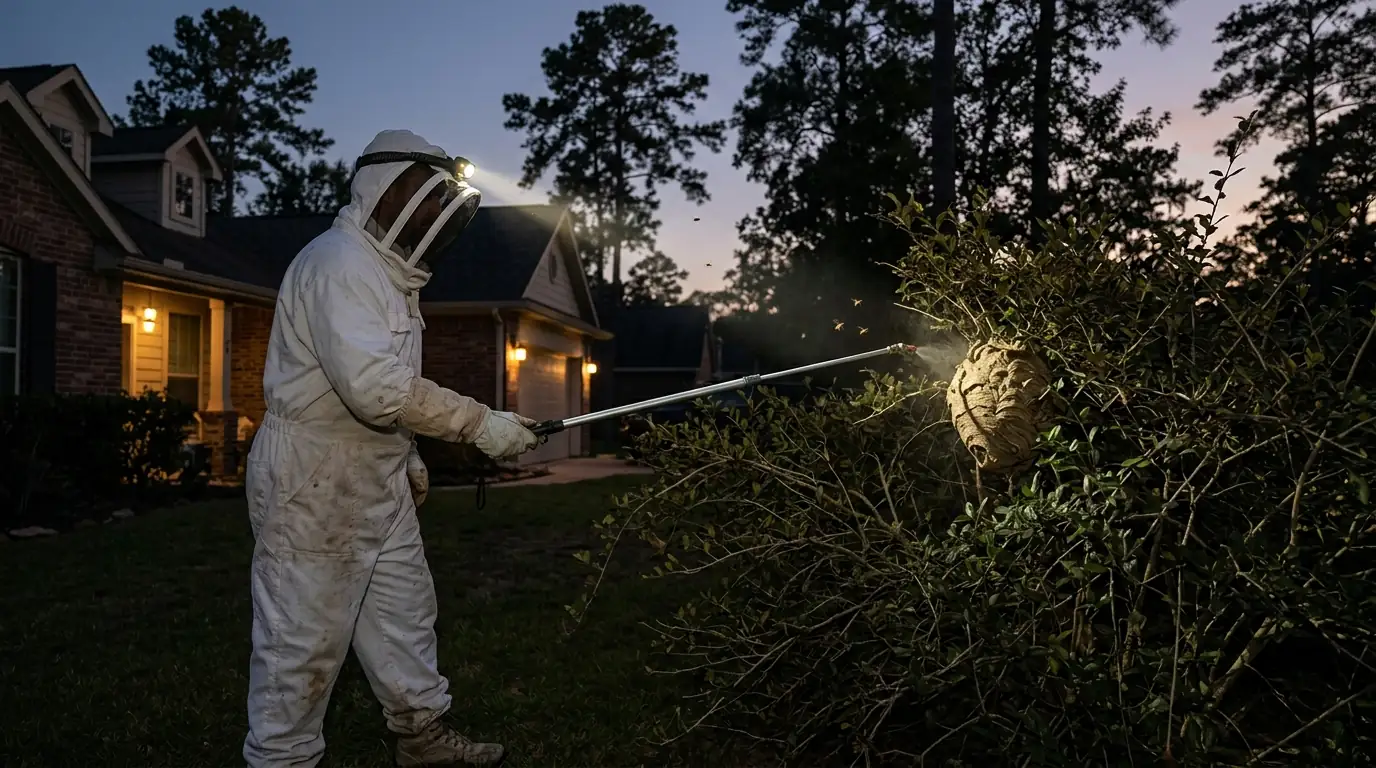
Baldfaced hornets build football-sized enclosed nests in hedges, crepe myrtles and low tree limbs, and they defend a wide perimeter, which is how a lawn mower finds them the hard way. These get treated at dusk when foragers are home, through the nest entrance, in full protective gear. Once the colony is confirmed dead the nest is cut free and bagged rather than left hanging as a curiosity.
Wall-void and ground nests
When wasps disappear into a gap in siding or a hole in the ground, the nest is hidden and spraying the entrance only traps them inside the wall to chew through drywall. Void nests get dust injected into the cavity so foragers carry it inward; the entry gets sealed only after activity stops. If the insects are yellow jackets, which build most of the hidden nests here, the job moves to that service's method.
Timeline
Under an hour, done by evening
A typical single-nest visit takes under an hour, with the colony dead in minutes to a few hours depending on species. Stragglers returning from foraging may circle the empty site for a day; they find nothing to defend and die off quickly.
On our Conroe routes
Canopy lots, busy eaves
Conroe properties run from open lakeside lots to wooded acreage, and stinging-insect pressure follows that range: shaded eaves under pine canopy, wide porches and heavily planted hedges give paper wasps and hornets more sheltered nest sites per house than a typical open suburban lot. That is why a wasp visit here walks the full roofline and the landscape rather than just the one nest you spotted, because a property with one obvious nest usually has two less obvious ones built the same week.
How this job runs
From spotted nest to clean eave
- 1
Describe the nest
Size, shape, height and location identify the species and the timing.
- 2
Keep people clear
Kids and pets stay away from the zone until the visit.
- 3
Treat the colony
Residual applied into the nest when the colony is home.
- 4
Remove the comb
Nest scraped or cut free and bagged once activity stops.
- 5
Treat the favorite spots
Light residual at recurring nest sites to discourage next season.
What moves the price
What nest removal costs turn on
Most nest jobs are single-visit work; here is what moves the price.
Nest count
One porch nest and a soffit line with six are different visits.
Height and access
Second-story and gable nests need extension work or ladders.
Species
Hornet nests in shrubs take dusk timing and more protective handling.
Hidden nests
Wall-void work adds dusting time and a later seal-up check.
Urgency
After-hours sting calls are answered; we state any timing difference on the phone.
Published context
Published Texas one-time treatments run $150 to $350, and most single-nest jobs sit inside it.
The $150 to $350 figure is the published 2026 Texas range for one-time treatments, for context; nest jobs are quoted on the call from the nest count and location.
Asked about this job
Wasp and hornet questions from Conroe porches
For a small, low paper wasp nest, many homeowners do, and we will say so. Height, hornets, hidden nests and anyone with a sting allergy in the house are where the protective gear and timing earn their cost. Spraying a void entrance is the one mistake that reliably makes things worse.
Old comb and its scent mark a site as proven, and sheltered spots stay attractive year after year. Removing the comb and treating the attachment point is what breaks the pattern; leaving a dead nest up invites the next queen to the same corner.
Away from doors and walkways they are pest-eating neighbors many people tolerate. Over a door, a grill or a play set they are a sting statistic waiting to happen, and that placement is the honest test we use when you ask whether to bother.
Hornet and wall-void work is often timed to dusk on purpose, when foragers are home and calmer. Emergencies where someone is being stung get answered whatever the hour; the phone runs 24/7 for exactly that.
Mud daubers rarely sting and are mostly a cleanup issue: the mud tubes get scraped, and a light residual at the eave discourages rebuilding. We include them in a nest visit at no drama, but they are not an emergency.
Related guide: Wasp Nest on the Eaves: What to Do First
Jobs that pair with this one
Related work from the same crews
Yellow Jacket Control
The ground and wall nesters with a different method.
Bee Swarm Removal
Honeybees, handled for relocation.
Quarterly Pest Control Plans
Eave treatments that discourage spring queens.
Spider Control
The same eaves, webbed instead.
Plant the flag on it
Do not take the ladder up there.
Describe the nest; timing and price get settled on the call.