Updated October 2026 · Reviewed for current Texas market ranges
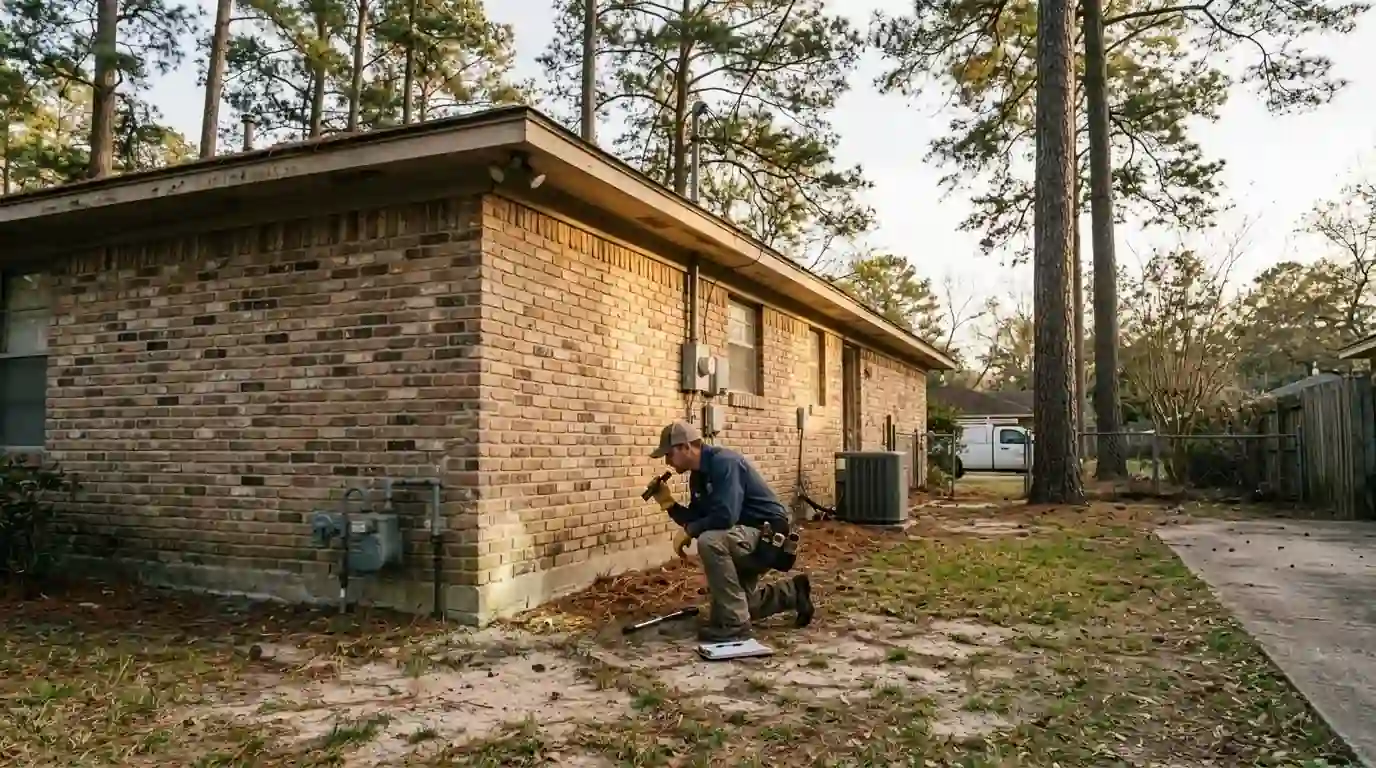
Dead animal removal in Conroe, TX starts by tracing the odor, flies and stains to the carcass, usually a rat or mouse in a wall or attic, or a larger animal under a deck or in a crawl space. It is removed and bagged, the area is sanitized and treated for odor and flies, and the gap the animal used is noted for sealing. Walls are opened only when the carcass cannot be reached any other way.
Worth a phone call when you see
Signs something died nearby
A sweet, rotten odor
A smell that is strongest near one wall, ceiling or vent.
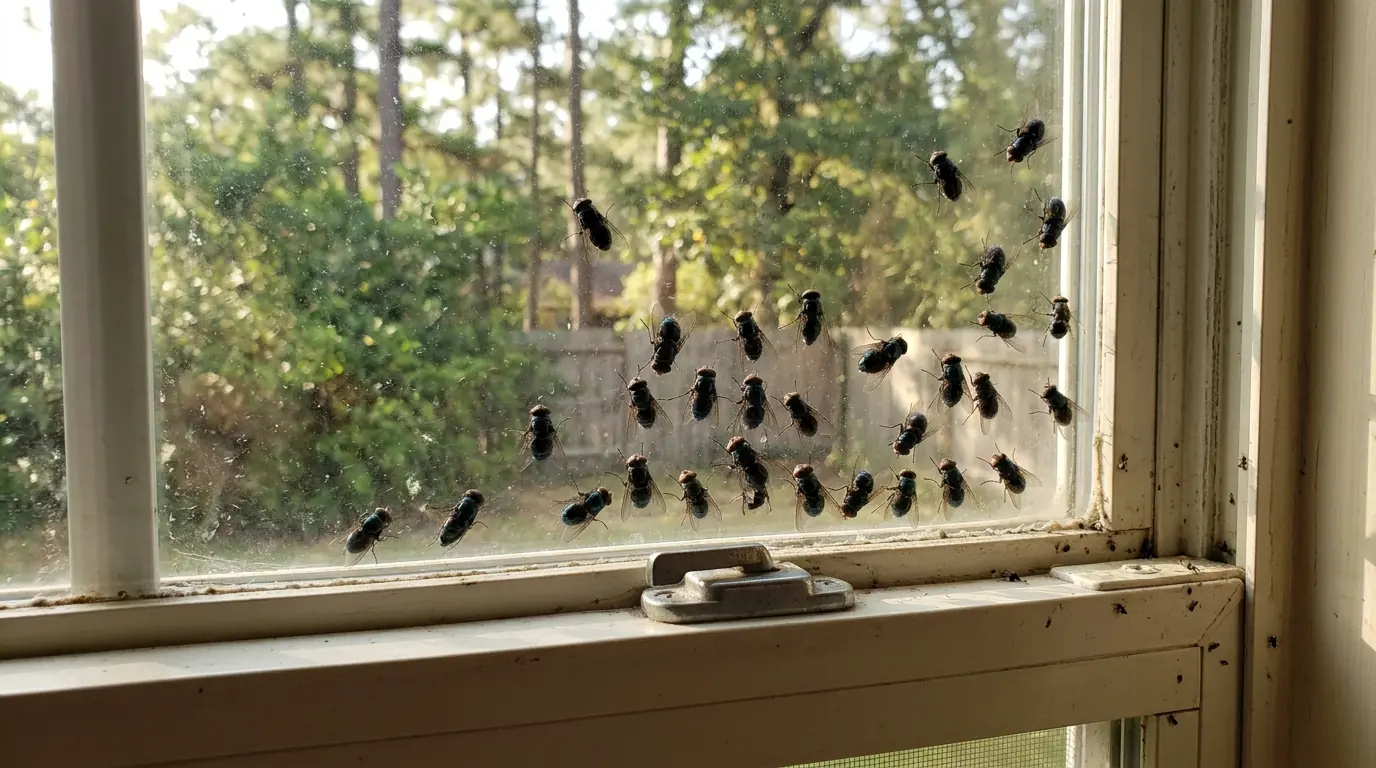
Flies at the windows
Large metallic flies appearing suddenly inside.
Stains on ceilings or walls
Dark spots spreading on drywall.
Recent rodent baiting
Bait used indoors often leads to dead rodents in voids.
Pets fixated on one spot
Dogs and cats often find it first.
Why the smell lingers
Find it fast, then treat the source
Odor peaks a few days after an animal dies and can last weeks in a closed wall or attic, especially in summer heat. Blow flies arrive quickly and start appearing at windows, which is often the first sign.
Most cases inside the house are rodents that ate bait or died in a void. Under decks, sheds and crawl spaces, opossums, raccoons, armadillos and squirrels are common. The search uses the strongest odor point, fly activity, stains and the paths the animals were known to use.
How the job runs
Locate, remove, treat
Locating the carcass
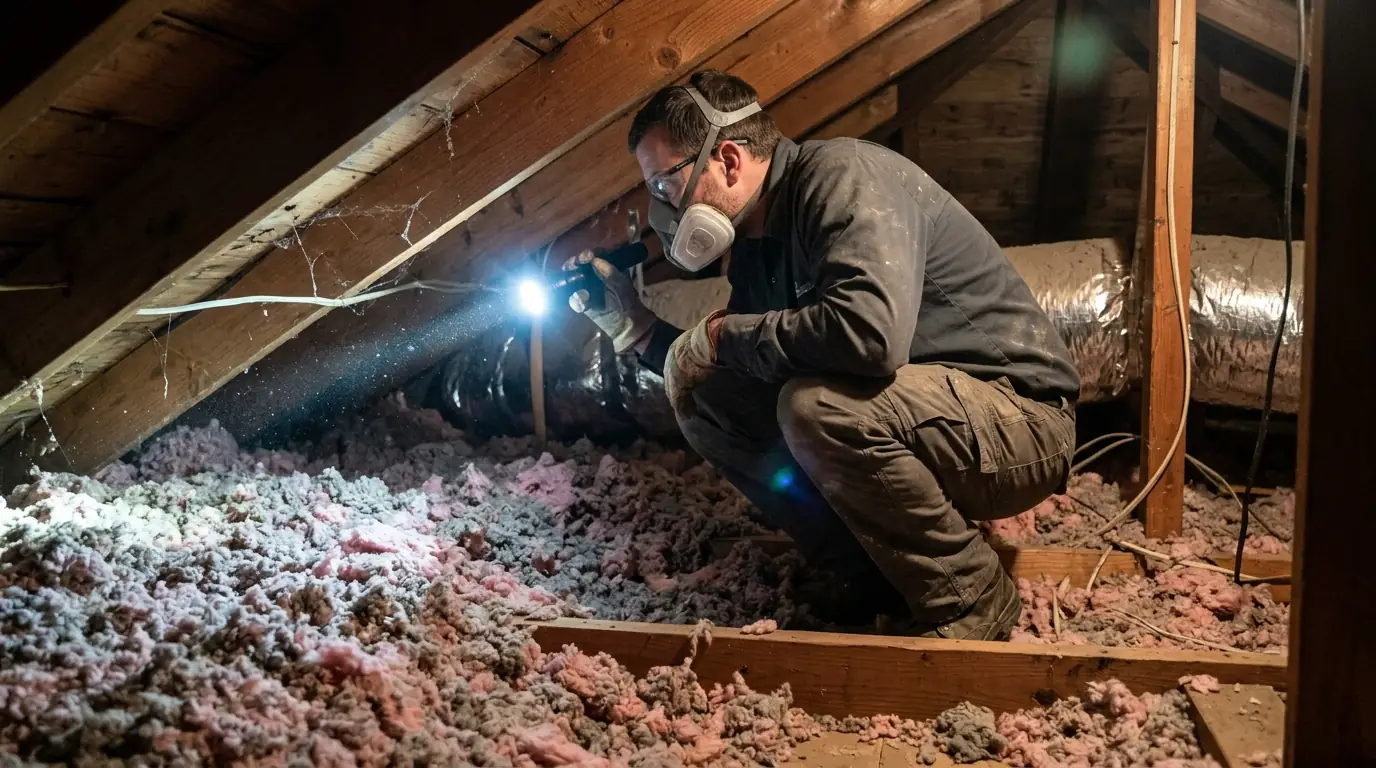
The tech follows the odor gradient room by room, checks attic insulation along known rodent runways, looks for fly activity and staining on ceilings and walls, and checks crawl spaces and under decks with a light. A moisture meter and an inspection camera through a small access hole help pin down a spot inside a wall before anything is opened.
Removal from walls, attics and crawls
Carcasses in attics and crawl spaces are removed directly. When one is sealed inside a wall, the smallest possible access cut is made in the least visible spot, often inside a closet or behind an appliance, and the patch is left clean for drywall repair. Everything removed is bagged and taken away. Under decks and slab porches, larger animals are reached by removing a skirting panel rather than cutting into the structure.
Odor and fly treatment
After removal, the area is sanitized with an enzyme cleaner that breaks down fluids, and soiled insulation is removed. A deodorizer treats lingering odor, and fly larvae and adults are handled so the swarm at the windows stops. The entry the animal used is noted, and our exclusion work can seal it. Most homes smell normal again within a day or two, sooner with fans and open windows.
Timeline
A visit, then fresh air
Most removals take one to two hours on site, longer if a wall needs an access cut. Odor usually clears within a day or two after removal and treatment, and fly activity drops within a few days.
On our Conroe routes
Heat makes it worse
Conroe summers are long and hot, and attics here regularly run far hotter than the rooms below, which speeds up decomposition and makes odors travel through vents and ceiling fixtures. That is why a dead rat in an attic can be noticeable within a day or two in July, and why prompt removal matters more here than in cooler places. Calls peak in summer and after rodent treatments when baits were used inside the house.
How this job runs
From odor to a fresh room
- 1
Tell us where it smells
Which rooms, how strong, and any flies.
- 2
Trace the source
Odor, flies, stains and runways followed.
- 3
Remove the animal
Carcass bagged and taken away.
- 4
Clean and deodorize
Enzyme treatment, insulation removal, odor control.
- 5
Close the entry
Gap noted and sealed to stop a repeat.
What moves the price
What dead animal removal costs turn on
Most jobs are a single visit; access drives the price.
Location
An open crawl space is quicker than a sealed wall.
Access cuts
Opening a wall adds time; patching is left for drywall repair.
Animal size
A rat is simpler than an opossum or raccoon under a slab porch.
Odor treatment
Enzyme sanitizing and deodorizing are included.
Insulation removal
Soiled insulation adds cleanup time.
Exclusion
Sealing the entry is quoted separately.
Dead animal removal is quoted on the call from the odor location and access.
Asked about this job
Dead animal questions
Eventually, but it can take weeks, with flies the whole time. Removing the carcass and treating the area clears it in days.
Only when the animal cannot be reached any other way, and then with the smallest cut in the least visible spot.
Carcasses and fluids can carry bacteria and parasites. If you do it, use gloves, a mask and bags, and sanitize the area.
Blow flies find a carcass within hours. The flies stop once it is removed and the area is treated.
Seal the gaps animals use and avoid scattering poison bait inside the house.
Related guide: Noises in the Attic: Roof Rats in Conroe Homes
Jobs that pair with this one
Related work from the same crews
Rodent Control
The rodents usually behind it.
Fly Control
The flies that follow a carcass.
Attic Cleanup & Sanitation
Insulation cleanup after removal.
Opossum, Armadillo & Skunk Removal
Animals under decks and crawls.
Plant the flag on it
Can't stand the smell?
Call any hour; we will find it and get it out.