By Hugh Satterfield, Pest Control Guides Editor · Updated October 2026 · 5 min read
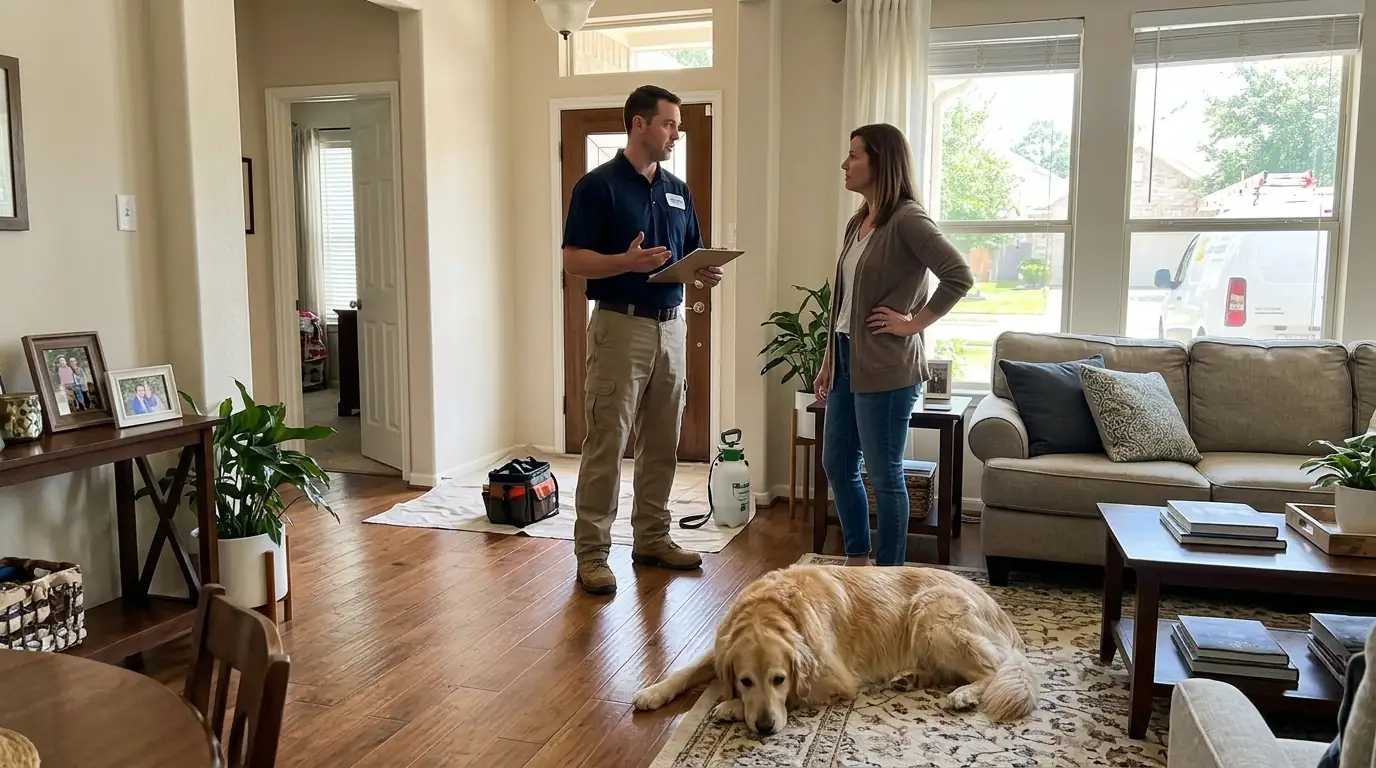
Professional pest treatments can be used safely around pets and children when products are applied according to their labels, placed where people and animals do not touch them, and family members stay off treated surfaces until they dry, usually a few hours. Baits go inside stations or cracks, aquariums and bird cages need extra care, and you can always ask for the product names before the visit.
Key points from this guide
- Placement matters most: baits in cracks and stations, barriers at the foundation.
- Keep kids and pets off treated surfaces until dry, usually a few hours.
- Cover aquariums, turn off air pumps and move birds during indoor work.
- Tell the company about pregnancy, asthma or sensitivities when you book.
- Ask for the product names and label or safety data sheet before the visit.
Where the product goes matters most
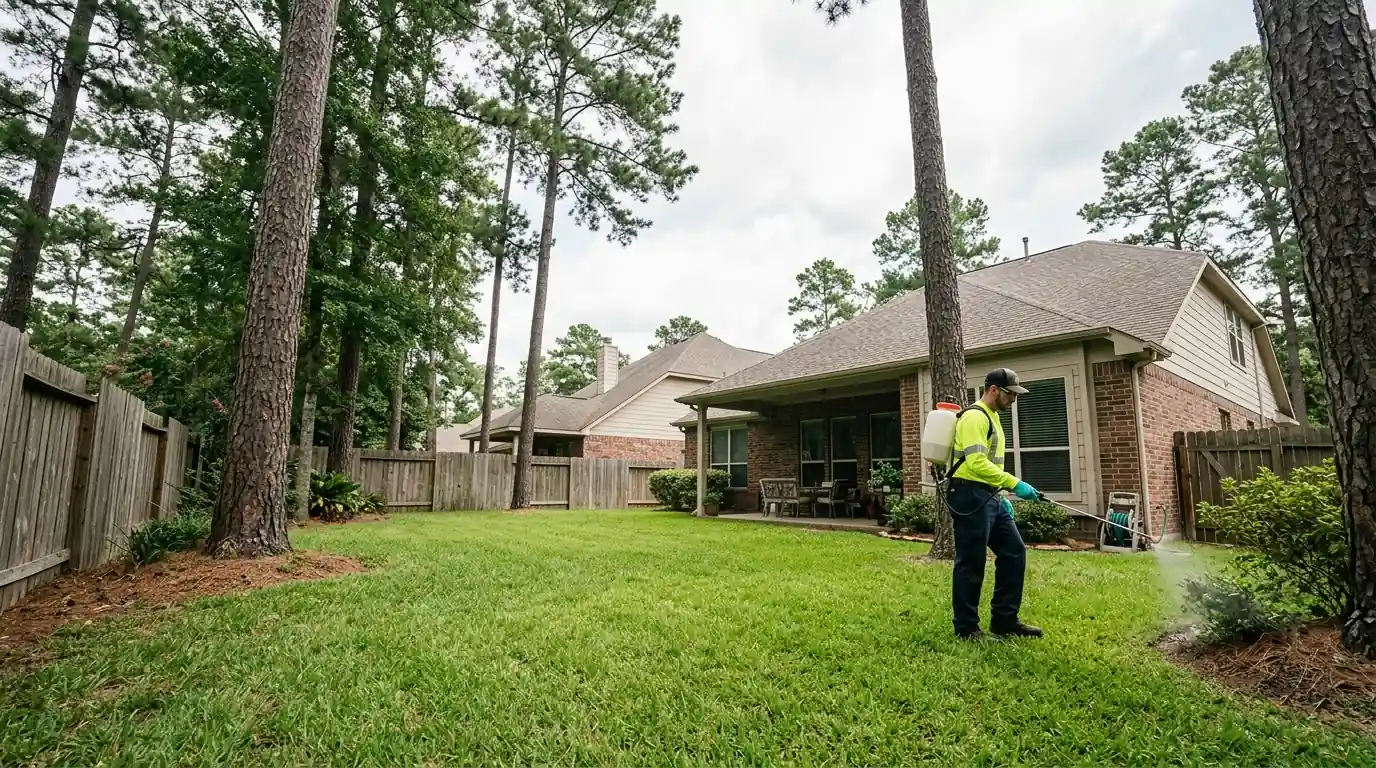
Modern pest control relies far less on spraying open floors than people expect. Gel baits go into cracks and hinge lines, bait stations are locked, dusts go inside wall voids, and exterior barriers sit at the foundation line. Those placements keep products out of the places hands and paws reach.
If you prefer the lowest product use possible, a green program leans on inspection, sealing gaps and baits before any spray.
Drying time and re-entry
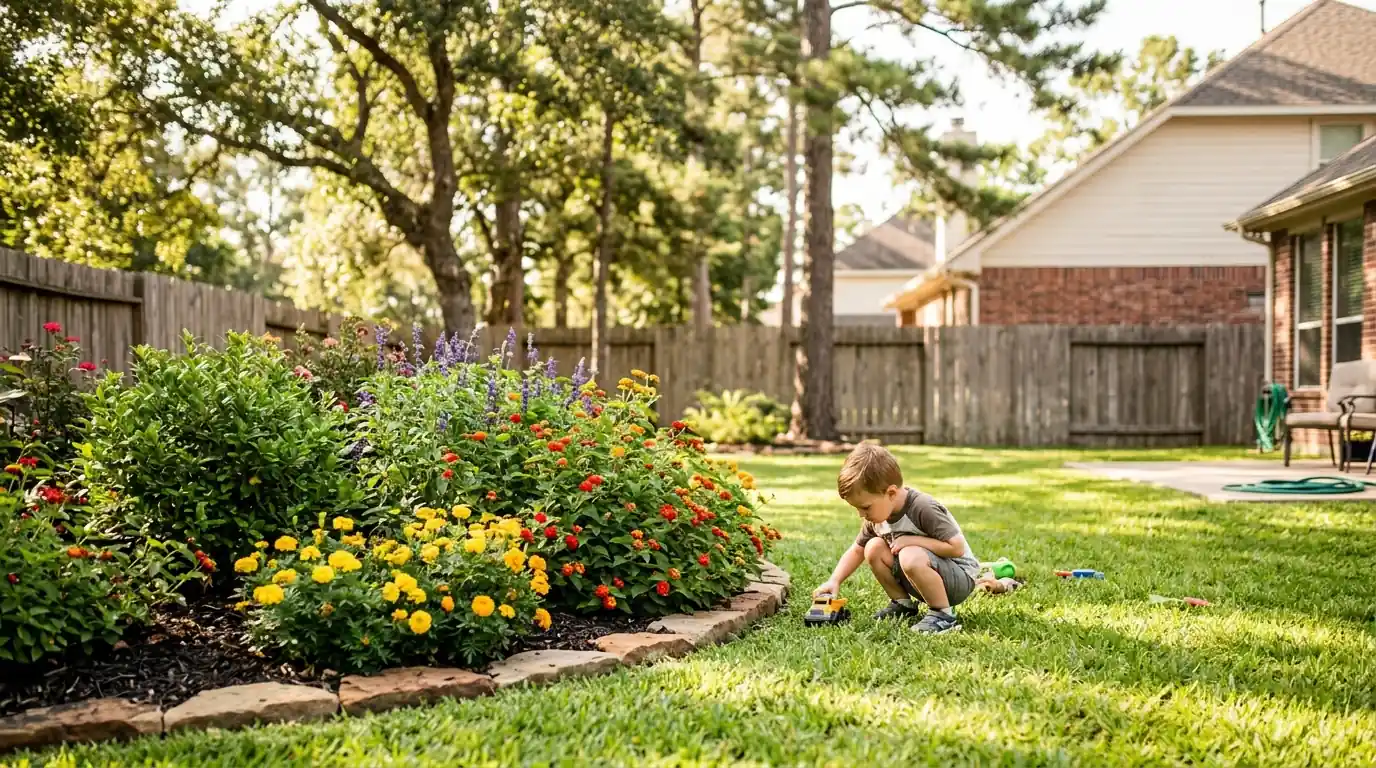
Liquid applications need time to dry, often a couple of hours inside and longer outside in humid weather. Keep children and pets off treated areas until the surface is dry, and follow the time the technician gives for that day's product and conditions. Granules in the yard usually need watering in or a set period before play resumes.
Indoors, open windows and run fans after a treatment if you prefer, and wipe down food-prep surfaces only if the technician says they were treated, which they usually are not.
Pets that need extra care
Fish and birds are more sensitive than cats and dogs. Cover aquariums and turn off air pumps during indoor treatment, and move birds to another room or outside the treatment area. Keep cats and dogs out of rooms being treated and away from bait stations, and pick up pet bowls and toys from the yard before an exterior visit.
Flea work is the one job where pets and the house must be treated together; talk to your vet about the pet side and time it with flea treatment at home.
Seeing this at your place?
Describe what you found and we will tell you on the phone what it is likely to take.
Call (281) 626-0856Children, pregnancy and sensitivities
Children spend time on floors and lawns, so keep them off treated areas until dry and wash hands after outdoor play. If someone in the home is pregnant, has asthma or has chemical sensitivities, say so when you book; the plan can change to baits, exclusion and targeted placements, and that person can stay away during treatment. For medical questions, ask a doctor.
Reading a product label without a chemistry degree
Every registered pest product carries a label that sets how and where it can be used, and the label is the rule the technician follows. Signal words on the front, such as Caution or Warning, show the product's relative hazard, and the directions explain re-entry times and where it may not be applied.
You do not need to read every line. Ask the technician for the product name, then check the re-entry and pet sections of the label or the safety data sheet. If anything is unclear, ask before the visit, not after, so the plan can change if needed.
A simple routine for treatment day
Before the technician arrives, pick up pet bowls, toys and children's items from the yard and floors, and decide which room pets and kids will stay in. During the visit, keep them in that room or away from the house, and ask the technician which areas were treated and for how long to keep them off.
Afterward, let treated areas dry completely, open windows if you like, and wash hands after outdoor play for the rest of the day. If a pet or child does come into contact with a wet treated surface, wash the skin or paws with soap and water and call your vet, your doctor or Poison Control with the product name if you are concerned.
That routine takes a few minutes and covers almost every question families ask about treatment day.
What to ask before any visit
Ask which products will be used and where, how long to stay off treated areas, whether any food, toys or bowls need moving, and whether pets need to be out of the house. Reputable companies will answer plainly and can provide product labels or safety data sheets on request.
Common questions
Questions readers ask about this
Once the application has dried or the granules have been watered in, as the technician directs for that product.
Stations are designed to keep bait away from pets and children. Place them where pets cannot chew or move them.
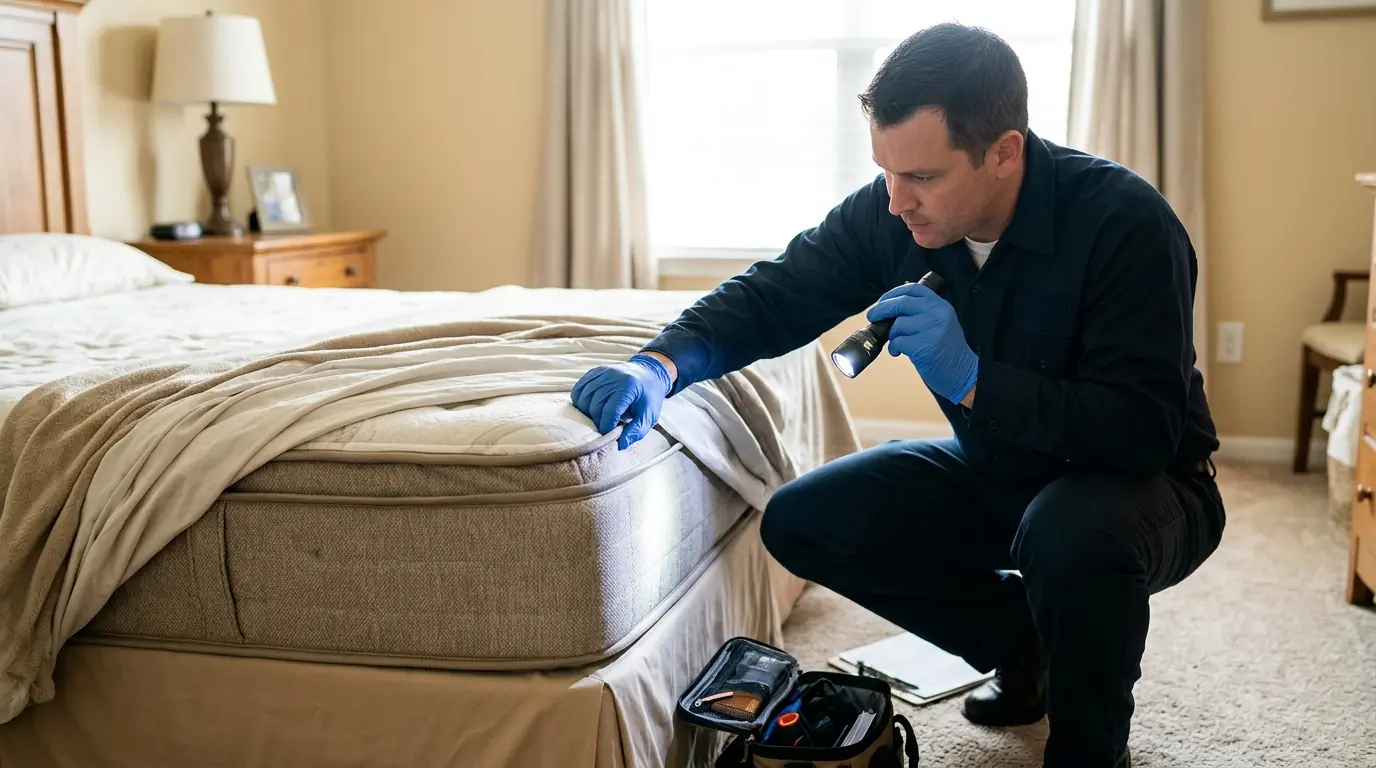
For standard service, usually not. Some jobs, like bed bug heat treatment, need the house cleared for the day.
Not automatically. Any product should be used by its label. Placement and drying time matter as much as the product type.
Yes. Ask when you book and the technician can tell you what will be used and where.
Keeping cats inside until the exterior application dries is a simple precaution, usually a few hours.
Wash the area or paws with soap and water, and call your vet with the product name. Keep the product label handy for that call.