
By Hugh Satterfield, Pest Control Guides Editor · Updated October 2026 · 5 min read
Mosquito season near Lake Conroe typically runs March through October, peaking in early summer, and daytime-biting Aedes mosquitoes stay active from roughly February into November along the shoreline. Homes within about half a mile of the lake see some of the heaviest pressure in Montgomery County. Removing standing water weekly and treating the shaded foliage where mosquitoes rest are the two steps that make the biggest difference.
Key points from this guide
- The local season runs about March through October and peaks in early summer.
- Homes within about half a mile of Lake Conroe see some of the heaviest pressure.
- Daytime biters breed in small containers, so weekly tip-and-toss matters most.
- Professional treatment targets shaded foliage where adults rest between flights.
- Use repellent at dawn and dusk and keep window screens in good repair.
When the season starts and peaks
In Montgomery County the mosquito season usually starts in March and runs through October, with the peak in early summer. Warm falls can stretch it further. Aedes mosquitoes, the daytime biters that breed in small containers, stay active from roughly February through November around Lake Conroe's shoreline communities, which is why bites in the afternoon are common here.
Why lakeside neighborhoods get hit hardest
Waterfront properties and neighborhoods within about half a mile of the lake see some of the highest mosquito pressure in the county. The lake itself is only part of it: shoreline vegetation, coves and the retention ponds built into newer subdivisions all hold water and shelter.
Montgomery County runs active West Nile virus mosquito surveillance every summer, and both floodwater and container-breeding species thrive around Conroe. That is a good reason to take bites seriously rather than treat them as just a nuisance.
The weekly habits that cut breeding
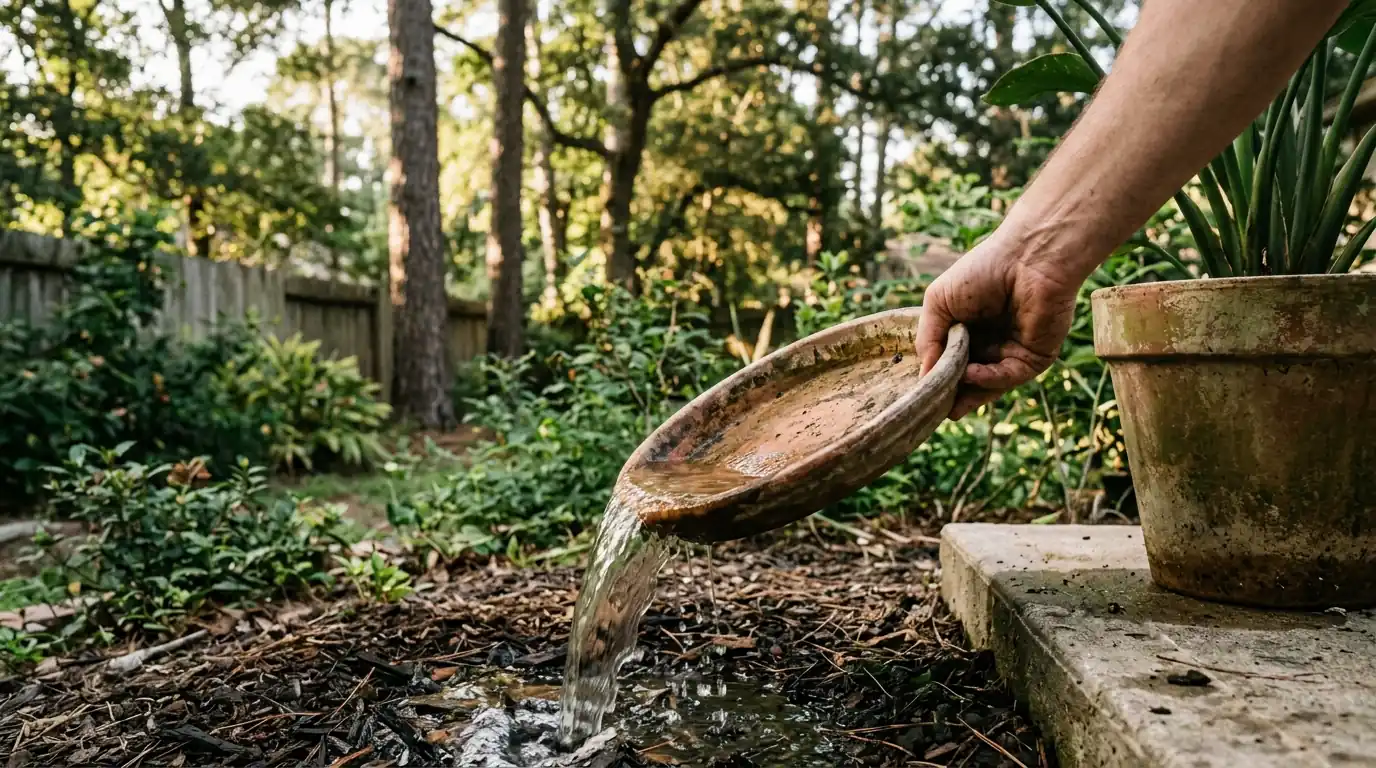
Most mosquitoes that bite you in your yard bred within a short distance of it. Once a week, tip and toss anything holding water: plant saucers, buckets, toys, tarps, pet bowls left outside and bird baths. Clean gutters, especially under pines where needles clog them. Check French drain basins, irrigation boxes and boat covers.
A single bottle cap of water can raise a batch of mosquitoes in about a week in summer heat, so consistency matters more than any one big cleanup.
Seeing this at your place?
Describe what you found and we will tell you on the phone what it is likely to take.
Call (281) 626-0856What professional treatment adds
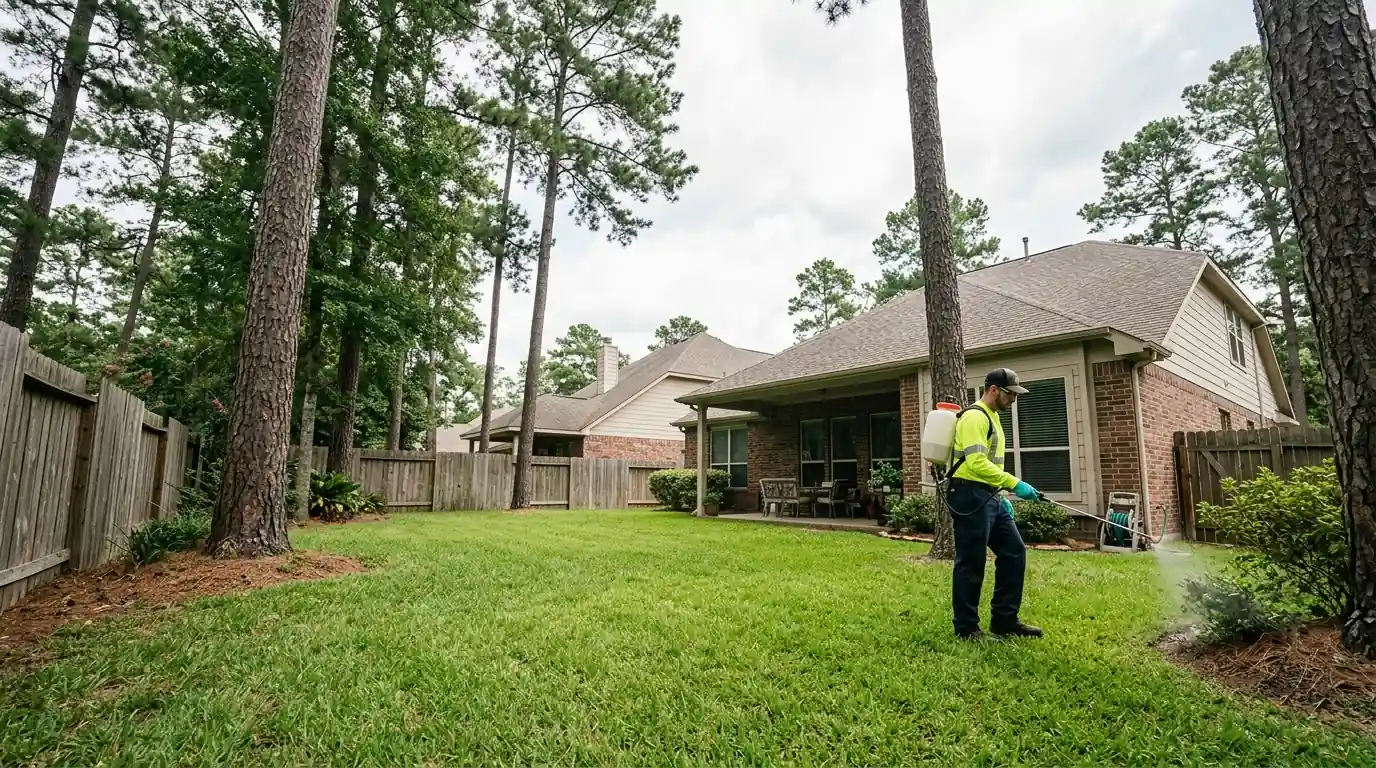
A monthly mosquito program treats the shaded foliage where adult mosquitoes rest between flights and checks the property for breeding sites every visit. Where pressure is constant, a misting system adds timed sprays at dawn and dusk. Either works best alongside the weekly water habits above, not instead of them.
A five-minute weekly yard walk
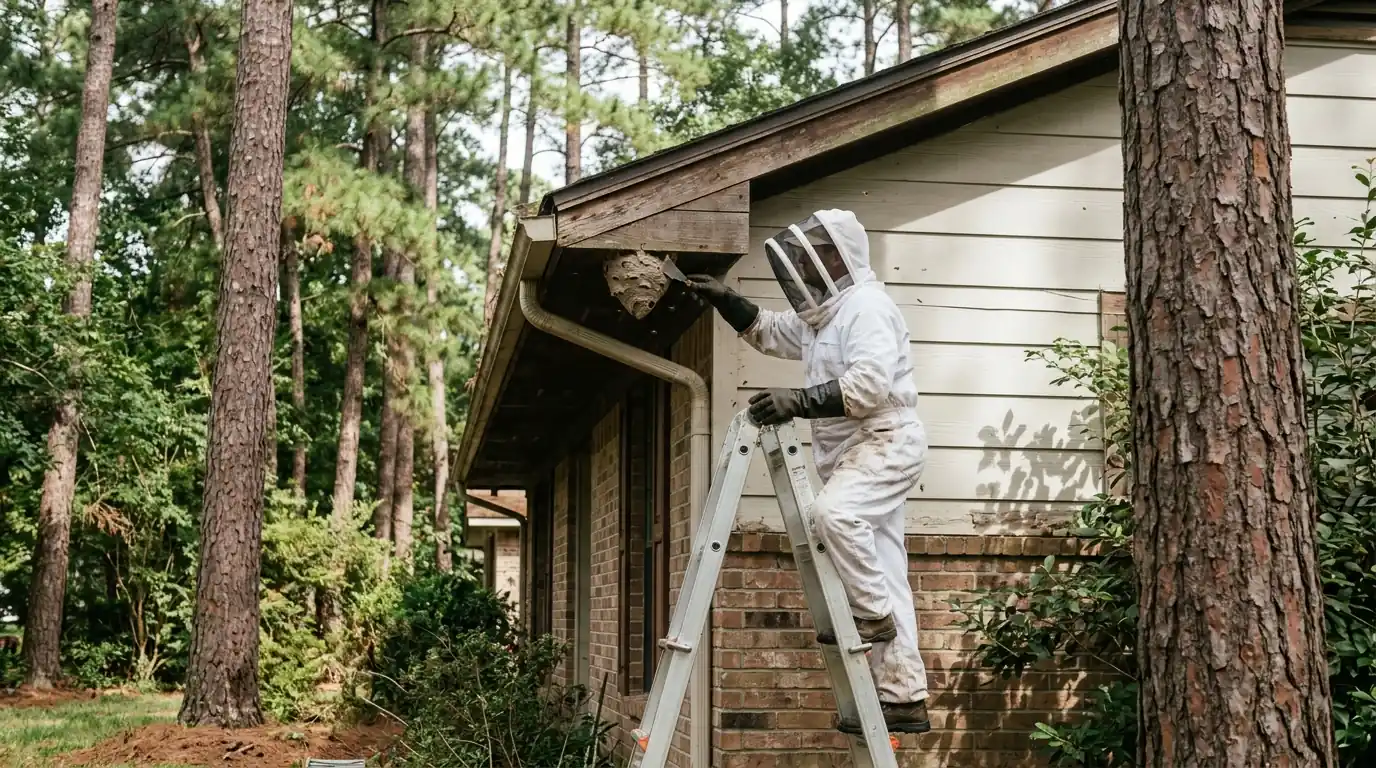
Pick one day a week and walk the yard with a single question: where is water sitting? Check plant saucers, buckets, wheelbarrows, kids' toys and pet bowls, then the less obvious spots: tarps over boats or firewood, corrugated drain extensions, the bottom of recycling bins, and clogged gutters under the pines.
Change bird bath water weekly and keep pool covers drained. Look at low spots in the lawn that stay wet for days after rain; those may need a bit of grading or a drain. If you have a pond, fish that eat mosquito larvae help, and moving water breeds far fewer mosquitoes than still water.
If neighbors have obvious breeding sites, a friendly word often helps more than any treatment, because mosquitoes do not stop at the property line. Whole-street habits make the biggest difference on lake streets.
Which mosquitoes are biting, and when
Not every mosquito keeps the same hours. Aedes mosquitoes, including the small black-and-white ones many people notice, bite during the day and breed in small containers around homes. Culex mosquitoes, the group most associated with West Nile virus, bite mainly from dusk through the night and breed in stagnant water such as storm drains, ponds and neglected pools.
That difference shapes what helps. Daytime biters point to containers in your own yard and your neighbors', so weekly tip-and-toss makes a big difference. Evening biters point to larger standing water and shaded resting spots, which is where barrier treatments and larvicides in water that cannot be drained come in.
Montgomery County's summer surveillance tracks both groups, and paying attention to when you get bitten tells you which habits to focus on first. Keep a simple note of when bites happen for a week; it points straight at the breeding sites to fix first.
Protecting yourself on the worst evenings
Use an EPA-registered repellent when you are outside at dawn and dusk, wear light long sleeves near the water, and keep window screens in good repair. Fans on a patio help more than people expect, because mosquitoes are weak fliers. If anyone in the family develops fever, headache or body aches after bites, talk to a doctor.
Common questions
Questions readers ask about this
By March, before the population builds. Starting after the peak means chasing an established problem.
Aedes mosquitoes bite in daylight and breed in small containers around homes, which is why weekly tip-and-toss matters so much.
They kill lots of insects but few biting mosquitoes. Removing water and treating resting foliage works better.
A single treatment a day or two before an event can help for that weekend, but it fades within weeks.
Open, moving water breeds fewer than you might think. Shoreline vegetation, coves, ponds and backyard containers do most of the work.
Professional treatment targets shaded foliage on your property, not the water, and avoids applying near the shoreline. Ask the technician to point out where they treat on lakefront lots.
Heavy rain can wash some product off foliage and creates new breeding sites. A follow-up treatment after a big storm keeps the program on track.